The global ecommerce landscape is undergoing a profound paradigm shift. No longer defined solely by standard digital storefronts, multi-channel marketplaces, and traditional logistics, the industry is entering an era dominated by automation, hyper-localization, and agentic artificial intelligence. This week’s roundup of services for ecommerce merchants highlights a wave of technological leaps designed to eliminate operational silos, reduce friction in cross-border trade, and redefine how small, mid-market, and enterprise retailers interact with consumers.
From the rapid proliferation of autonomous AI agents capable of running entire store operations to novel merchant-of-record (MoR) frameworks bridging the gap between local compliance and global ambition, the tools available to merchants have evolved drastically. Major infrastructure providers, payments giants, and logistics leaders are systematically dismantling legacy bottlenecks. Platforms like dLocal and Paysafe are redefining international expansion, while logistics pioneers like ShipStation and OneRail are merging freight with parcel networks and introducing real-time, AI-driven decisioning. Meanwhile, creator ecosystems are bleeding directly into mega-retail channels, as evidenced by YouTube Shopping’s integration with Amazon, and generative AI is transforming how non-technical founders build custom applications and manage day-to-day business mechanics.
This report provides an exhaustive, investigative breakdown of the latest product releases, strategic partnerships, and technological upgrades reshaping the commerce ecosystem.
Detailed Chronology of New Merchant Services
1. Global Expansion and Merchant-of-Record (MoR) Solutions
Expanding internationally has historically been fraught with complex tax implications, localized compliance hurdles, and payment processing barriers. This week, two major payment powerhouses addressed these friction points head-on.
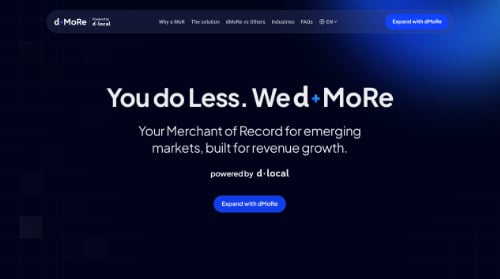
dLocal Launches dMoRe: Emerging markets payment platform dLocal introduced dMoRe, a dedicated Merchant of Record service tailored for enterprises looking to scale globally without setting up costly local legal entities. By combining dLocal’s direct payment rails with an integrated legal and compliance framework, dMoRe acts as the local seller of record. It leverages established banking partnerships and localized payment methods within a single unified platform.
Paysafe and FastSpring Partner for MoR: In a similar strategic move, payments giant Paysafe teamed up with FastSpring to launch a co-branded MoR solution. Specifically designed for digital goods, software, gaming, and AI businesses, this infrastructure handles complex administrative tasks such as global tax calculation, collection, and remittance, localized payment compliance, and comprehensive chargeback management.
2. Marketplace Integration and Creator Commerce
The boundaries between content creation, social media, and traditional marketplace retail continue to blur, opening unprecedented monetization pathways for digital creators and brands.
YouTube Shopping Integrates Amazon Affiliates: In a landmark collaboration, Amazon joined the YouTube Shopping Affiliate Program. U.S.-based creators can now tag Amazon products directly in their short-form videos, long-form content, and livestreams. Creators access a product picker tool within YouTube Studio or utilize auto-tagging features to seamlessly recommend Amazon inventory and earn commissions from resulting sales.
LTK Introduces Agentic Creator Marketing: Creator commerce platform LTK rolled out an expanded brand platform experience featuring agentic AI capabilities. Brands can now outline their campaign goals in plain language, allowing LTK’s intelligence engine to plan strategies, source ideal creators, launch and optimize programs, and autonomously surface emerging trends and recommended actions in the background.
3. Logistics, Supply Chain, and Last-Mile Innovation
Fulfillment continues to be one of the most volatile and costly areas for retailers. Recent platform updates are injecting advanced intelligence and heavier freight options directly into standard merchant workflows.
ShipStation Unveils LTL Freight Integration: Following the merger of Auctane and WWEX Group to form ShipStation Global, ShipStation announced its first major platform integration: Less-Than-Truckload (LTL) freight delivery. Merchants can now access real-time LTL rate quotes, book heavy shipments, and track freight alongside traditional parcel shipments within a single, unified workflow.
OneRail and NVIDIA Launch OmniSTAR: Last-mile orchestration platform OneRail debuted OmniSTAR, an AI-powered delivery decisioning platform developed in collaboration with NVIDIA. OmniSTAR allows enterprise retailers and wholesalers to evaluate every available fulfillment channel—ranging from owned fleets to third-party couriers and parcel carriers—selecting the optimal route for service and cost in real time.
Blue Yonder Enhances Supply Chain Cognitive Solutions: Supply chain software provider Blue Yonder released advanced agentic AI retail features designed to combat stockouts and returns. The updates integrate forecasting, inventory planning, fulfillment, and customer service into a unified workspace featuring predictive intelligence and deep network visibility.
4. Financial Services and Consumer Financing
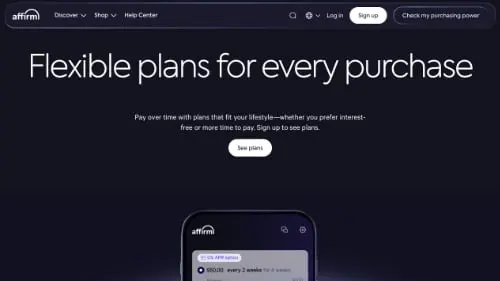
Affirm and Shopify Bring Shop Pay Installments to Australia: Buy-now-pay-later (BNPL) leader Affirm expanded its deep partnership with Shopify by launching Shop Pay Installments in the Australian market. Eligible Australian merchants can activate the feature via their admin dashboard in just a few clicks, enabling shoppers to split purchases into flexible fortnightly or monthly payments.
5. CRM, Communication, and Omnichannel Tools
HoneyBook Introduces Business Phone & SMS: CRM platform HoneyBook launched a paid add-on called Business Phone & SMS, providing independent businesses with a dedicated toll-free number. The service integrates voice calls (complete with automatic transcriptions) and two-way text messaging directly into client records alongside proposals, invoices, contracts, and project files.
6. Agentic AI and Autonomous Operations for Small Businesses and Amazon Sellers
The rise of Model Context Protocols (MCP) and autonomous AI agents has shifted AI from a simple conversational assistant to a proactive worker capable of executing business tasks.
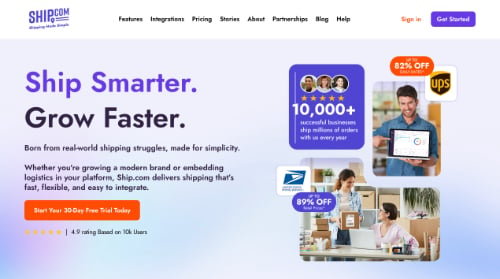
Ship.com Deploys AI Shipping Manager and MCP Tools:Ship.com announced Ship AI, a proactive shipping manager for online sellers, alongside Ship MCP, which integrates the platform’s delivery capabilities into tools like Claude and agentic commerce workflows.
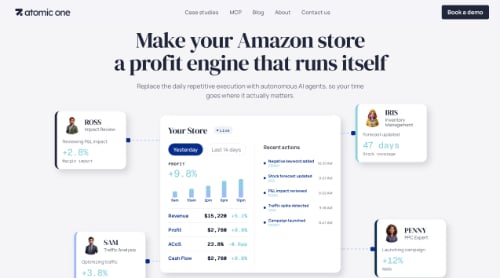
Helium 10 and Atomic One Launch Amazon AI Agents: Multichannel management tool Helium 10 (a Pacvue company) launched Helium, an AI agent that diagnoses operational issues and surfaces opportunities for Amazon sellers. Simultaneously, Atomic One introduced a system of autonomous agents designed to manage Amazon advertising, inventory, pricing, and ranking, supported by MCP connectors for plain-language data queries.
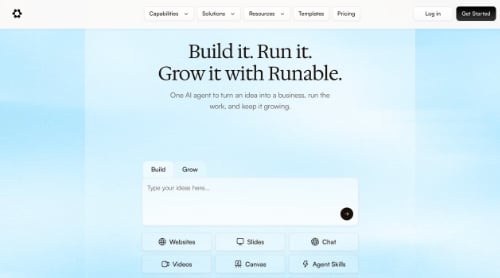
Runable Secures $21M Series A Funding: AI agent platform Runable raised $21 million in a Series A round co-led by Susquehanna Venture Capital and Nexus Venture Partners. Runable uses AI agents to help small businesses build, operate, and grow—handling tasks from marketing campaigns and competitor tracking to search engine optimization and customer support.
Cashfree Payments Deploys Relay: India-based Cashfree Payments introduced Relay, an AI-powered application designed to run payment operations. With merchant oversight, Relay’s agents analyze transaction histories, reach out to abandoned cart buyers, retry failed payments, and confirm cash-on-delivery orders.
7. Custom App Development and Connected TV Advertising
Nitro Commerce Launches Prompt-Based App Builder for Shopify:Nitro Commerce released an AI-powered tool that allows Shopify merchants to build private backend applications simply by typing text prompts. The platform generates, installs, and maintains the application while ensuring the merchant retains full ownership of the underlying code.
Broadpeak Debuts Click2Cart for CTV: Streaming tech provider Broadpeak introduced Click2Cart, an evolution of its interactive advertising tool. Viewers can now use their TV remotes to add products directly to a shopping cart during a streaming commercial, bridging the gap between connected TV (CTV) advertising and immediate checkout.
Supporting Context & Metrics
The convergence of agentic AI and multi-channel infrastructure reflects a broader macroeconomic pressure on retailers to do more with less. According to recent industry data, supply chain inefficiencies, cross-border regulatory compliance, and cart abandonment continue to siphon billions of dollars annually from global retail revenue.
Cross-Border Friction: Research indicates that nearly 60% of international shoppers abandon transactions due to unexpected duties, complex currency conversions, or unfamiliar checkout layouts. Merchant-of-record models like those introduced by dLocal and Paysafe/FastSpring directly target this drop-off by localizing the entire transaction layer.
The AI Agent Economy: The emergence of platforms like Runable, Atomic One, and Helium highlights a shift from software-as-a-service (SaaS) to service-as-software. Rather than requiring merchants to manually navigate complex dashboards, AI agents are actively executing tasks—such as re-engaging abandoned cart users via Cashfree’s Relay or optimizing delivery routes via OneRail’s NVIDIA-backed OmniSTAR—reducing administrative overhead by an estimated 30% to 50% for early-adopting small businesses.
Official Statements
Industry leaders emphasized the transformative nature of these latest releases:
"Operating globally has historically meant navigating a labyrinth of local regulations, tax entities, and payment rails. With dMoRe, we are abstracting that complexity into a single, seamless infrastructure, allowing enterprises to focus entirely on growth rather than administrative compliance."
— dLocal Representative
"Integrating less-than-truckload freight alongside parcel shipping within ShipStation is a milestone moment for merchants dealing in heavy or oversized goods. By unifying these workflows under ShipStation Global, we are removing decades of legacy friction in logistics management."
— ShipStation Global Leadership
"We are moving past the era where AI is merely a chatbot answering queries. With agentic workflows and Model Context Protocols, AI is now an active operator—diagnosing supply chain blockages, launching creator campaigns, and writing custom code directly from natural language prompts."
— Industry Analyst Commentary
Future Outlook
As the ecommerce sector matures through the remainder of the decade, several clear trajectories are emerging:
The Rise of Zero-UI and Prompt-Driven Commerce: Tools like Nitro Commerce’s app builder and Ship.com’s MCP integrations signal a future where non-technical merchants can build, scale, and modify their entire digital infrastructure using conversational prompts rather than traditional coding or modular app configuration.
Hyper-Fragmented Yet Unified Logistics: The blurring lines between parcel delivery, freight (LTL), and last-mile orchestration will force logistics platforms to offer end-to-end visibility. Solutions like OneRail’s OmniSTAR and Blue Yonder’s cognitive updates point toward fully automated, predictive supply chains that self-heal in the face of stockouts or routing delays.
Creator Commerce as Default Distribution: The integration of Amazon products into YouTube Shopping and LTK’s agentic campaign builders underscore that content creation and commerce are now inextricably linked. Brands that fail to integrate their product catalogs into creator-led ecosystems risk losing top-of-funnel discovery to more agile competitors.
Ultimately, the merchants who thrive in this new operating environment will be those who successfully delegate repetitive administrative, logistical, and marketing tasks to autonomous AI systems, freeing human capital to focus on brand storytelling, product innovation, and customer experience.