The digital commerce landscape is undergoing a structural paradigm shift. As consumer expectations for instantaneous fulfillment, hyper-personalized purchasing pathways, and cross-border accessibility reach unprecedented heights, the underlying technological scaffolding supporting merchants must evolve in lockstep. This week’s global product releases and strategic infrastructure deployments underscore a definitive industry-wide pivot: manual software configuration is rapidly giving way to agentic artificial intelligence, deeply integrated multichannel workflows, and frictionless cross-border expansion services.
From cutting-edge merchant-of-record (MoR) platforms lowering the barriers to international trade to autonomous AI agents capable of diagnosing storefront errors, optimizing supply chains, and constructing private applications via natural language prompts, the ecosystem is rapidly consolidating around automation. Concurrently, dominant players in social media, shipping logistics, and payment processing are forging powerful cross-platform alliances—exemplified by Amazon products entering the YouTube Shopping ecosystem and ShipStation expanding into heavy freight.
This comprehensive briefing analyzes the most critical service updates, technological breakthroughs, and strategic enterprise maneuvers impacting ecommerce merchants, marketplace operators, and digital service providers this week.
Detailed Chronology of New Tools and Services
1. Global Compliance and Merchant-of-Record (MoR) Expansion
Scaling operations across international borders has historically presented merchants with a labyrinth of localized tax liabilities, payment processing hurdles, regulatory compliance frameworks, and cross-border friction. To combat this, foundational payment infrastructure providers are launching dedicated Merchant of Record solutions.
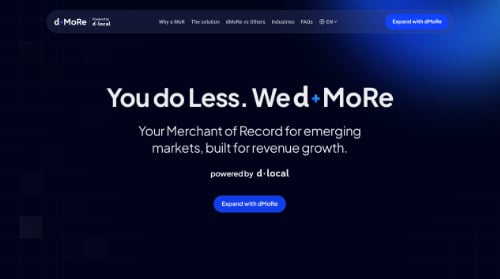
dLocal Launches dMoRe: Emerging markets payment specialist dLocal has officially rolled out dMoRe, a comprehensive merchant-of-record service designed to help enterprise-level businesses scale globally with minimal administrative friction. By fusing dLocal’s proprietary direct payment rails with an integrated legal framework, dMoRe acts as the local seller of record. The platform leverages established local banking partnerships, region-specific alternative payment methods, and embedded compliance teams into a single unified architecture.
Paysafe and FastSpring Partnership: In a parallel move to capture the booming digital goods, software, and AI application markets, Paysafe has teamed up with MoR provider FastSpring. This strategic co-branded solution handles the heavy lifting of global sales, absorbing complex operational, regulatory, and administrative duties. These include automated multi-jurisdictional tax calculation and remittance, local payment method compliance, and robust chargeback mitigation.
2. Social Commerce and Affiliate Marketing Integrations
The convergence of entertainment and commerce continues to compress the path from product discovery to transaction. Social media platforms are deepening their monetization pipelines by integrating massive retail inventories directly into user feeds.
YouTube Shopping Welcomes Amazon: In a milestone integration for creator-led commerce, Amazon has officially joined the YouTube Shopping Affiliate Program. U.S.-based creators can now seamlessly tag Amazon products within their long-form videos, Shorts, and livestreams, earning commissions on resulting purchases. Following a straightforward account-linking process, creators can utilize YouTube Studio’s native product picker. Furthermore, an auto-tagging feature allows YouTube’s system to scan recent video uploads and intelligently apply tags for eligible Amazon products in the background.
LTK Scales Creator Marketing into the Agentic Era: Creator commerce platform LTK has upgraded its brand platform experience with advanced agentic AI capabilities. Rather than manually configuring campaigns, brands can now interact with LTK’s intelligence layer using conversational prompts. The system assists in strategic campaign planning, identifying high-performing creators, launching programs, and prescribing proactive next steps based on emerging real-time market trends.
3. Logistics, Supply Chain, and Fulfillment Innovations
Fulfillment efficiency remains a primary differentiator for online retailers. This week’s updates demonstrate a significant push toward unifying disparate freight classes and harnessing predictive intelligence to slash operational costs.
ShipStation Bridges Freight and Parcel: Marking its first major product integration since the completion of the strategic merger between Auctane and WWEX Group to form ShipStation Global, ShipStation has introduced less-than-truckload (LTL) freight shipping directly into its core platform. Small and mid-sized merchants can now pull real-time LTL rate quotes, book heavy shipments, and track freight alongside traditional parcel workflows without switching applications.
OneRail Introduces OmniSTAR with NVIDIA AI: Last-mile delivery orchestration platform OneRail unveiled OmniSTAR, a revolutionary AI-powered delivery decisioning platform built in collaboration with NVIDIA. OmniSTAR evaluates every available delivery channel for an order—encompassing owned fleets, local couriers, and traditional parcel carriers—to instantly select the optimal route meeting service-level agreements at the absolute lowest cost.
Blue Yonder Enhances Cognitive Solutions Portfolio: Supply chain giant Blue Yonder has rolled out new agentic AI capabilities within its Cognitive Solutions suite. Designed to target stockouts and returns—two of retail’s most costly operational bottlenecks—the platform unifies forecasting, inventory planning, fulfillment, and a streamlined customer service workspace to boost network visibility.
4. Autonomous AI Agents and Workflow Automations
The rise of Model Context Protocols (MCP) and agentic workflows has transformed AI from a reactive chat assistant into an autonomous workforce capable of executing complex business processes.
Runable Secures $21M Series A: AI business-building platform Runable announced a $21 million Series A funding round co-led by Susquehanna Venture Capital and Nexus Venture Partners. Runable’s platform is engineered to autonomously build, operate, and scale small businesses—handling tasks ranging from executing marketing campaigns and tracking competitors to optimizing search engine rankings and managing customer support.
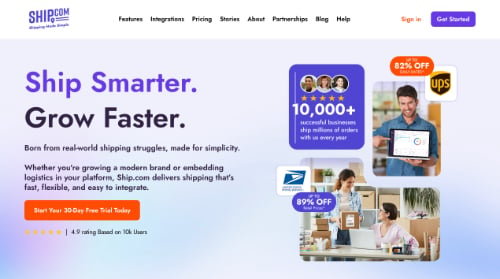
Ship.com Debuts AI Shipping Manager and MCP Integration:Ship.com introduced Ship AI, a proactive shipping management tool for online sellers, alongside Ship MCP, a protocol integration enabling developers to embed shipping operations directly into Claude and other agentic commerce architectures.
Helium 10 and Atomic One Empower Amazon Sellers: Both Helium 10 (backed by Pacvue) and Atomic One launched autonomous AI agent ecosystems tailored for Amazon merchants. These tools continuously monitor storefronts, diagnose advertising inefficiencies, adjust pricing strategies, and utilize Model Context Protocol connectors so sellers can query store data in natural language using platforms like ChatGPT, Gemini, and Claude.
Cashfree Payments Deploys Relay AI: India-based Cashfree Payments rolled out Relay, an AI-powered agentic application designed to automate payment operations. With merchant approval, Relay’s agents inspect transaction ledgers, engage abandoned cart buyers, retry failed transactions, and verify cash-on-delivery orders prior to dispatch.
5. CRM, Financial Services, and App Development
HoneyBook Introduces Business Phone & SMS: CRM leader HoneyBook launched a dedicated "Business Phone & SMS" add-on. Independent businesses can now acquire a toll-free number to conduct voice calls (complete with automated transcriptions) and two-way text messaging directly within the app, consolidating calls, emails, proposals, and project files into unified client records.
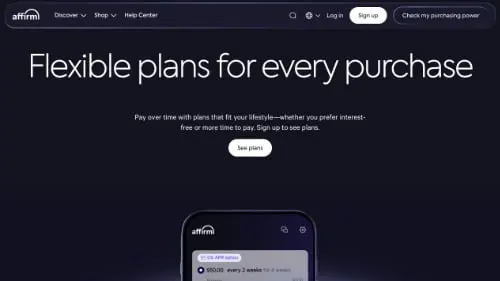
Affirm and Shopify Expand Shop Pay Installments: Buy-now, pay-later leader Affirm has expanded its partnership with Shopify to bring Shop Pay Installments to Australia, allowing merchants to activate flexible fortnightly or monthly payment plans with a few clicks.
Nitro Commerce Allows Prompt-Driven App Building:Nitro Commerce launched an AI-powered platform enabling Shopify merchants to build private backend applications purely through natural language prompts. The system generates and deploys the requested utility while ensuring the merchant retains absolute ownership of the underlying code.
Broadpeak Debuts Click2Cart: Streaming tech provider Broadpeak unveiled Click2Cart, transforming interactive connected television (CTV) advertising by allowing viewers to add items directly to their shopping carts using a TV remote during commercial breaks.
Ordoro and TeamCentral Collaborate: Order management platform Ordoro partnered with data automation firm TeamCentral to deliver no-code connectors, giving merchants greater flexibility when synchronizing industry-specific systems into their core tech stacks.
Supporting Context & Metrics
The velocity of these product releases reflects broader macroeconomic and technological currents reshaping the digital economy:
The Rise of Agentic Commerce: According to industry analysts, enterprise investment in autonomous AI agents has accelerated by over 140% year-over-year. Platforms like Runable, Ship.com, and Helium 10 moving toward agentic workflows illustrate that merchants no longer want static dashboards; they require proactive digital workers that execute tasks independently.
Cross-Border Complexity: With emerging markets driving a significant percentage of global ecommerce growth, solutions like dLocal’s dMoRe and Paysafe’s FastSpring collaboration address a critical pain point: regulatory fragmentation. Merchant-of-record models remove the administrative overhead of localized tax collection, enabling hyper-fast international expansion.
Multichannel Consolidation: The integration of Amazon tagging within YouTube Shopping demonstrates that walled gardens are increasingly permeable. As social video platforms morph into primary product discovery engines, traditional retail giants must meet consumers wherever attention is highest.
Official Statements and Industry Insights
Industry leaders highlighted the transformative nature of this week’s technological deployments:
"Operating across borders should not require an enterprise to rebuild its operational foundation in every jurisdiction. With dMoRe, we are bridging the gap between global businesses and emerging markets by absorbing the regulatory, compliance, and payment complexities under a single, unified legal framework," noted representatives from dLocal.
On the logistics front, the fusion of heavy freight and parcel delivery represents a major milestone for SMB logistics. Executives from ShipStation Global remarked:
"Bringing less-than-truckload freight and parcel delivery into a single, cohesive workflow eliminates administrative silos for growing merchants who deal in heavy or oversized goods, streamlining supply chains from end to end."
Regarding the paradigm shift toward autonomous software, investors and founders emphasized the democratization of business management. Commenting on their recent funding round, the executive team at Runable stated:
"Small businesses should be able to focus on product and vision while AI agents handle the operational mechanics—from marketing and SEO to customer support and supply chain tracking."
Future Outlook
As we look toward the remainder of the year and into the next technological cycle, several clear trajectories are emerging for the ecommerce sector:
Mainstreaming of Model Context Protocols (MCP): The rapid adoption of MCP connectors by shipping managers (Ship.com) and Amazon aggregators (Helium 10, Atomic One) signals that proprietary business silos are breaking down. Merchants will increasingly demand that their enterprise data be instantly queryable across any generative AI interface they choose.
Hyper-Personalized Connected TV (CTV) Conversion: Broadpeak’s Click2Cart points to a future where passive viewing experiences are universally shoppable. As streaming platforms refine ad-tech attribution, the boundary between television advertising and immediate point-of-sale conversion will continue to dissolve.
Autonomous Operations as a Standard Service: The transition from software-as-a-service (SaaS) to service-oriented AI agents (such as Cashfree’s Relay and LTK’s campaign planners) suggests that routine back-office tasks—recovering abandoned carts, resolving failed payments, and executing localized tax compliance—will become fully autonomous, fundamentally altering labor requirements for digital merchants worldwide.