Executive Overview
The global retail and digital commerce landscape is undergoing a structural paradigm shift, marked by the rapid institutionalization of artificial intelligence agents, cross-border payment reforms, and deeper logistics integrations. No longer confined to experimental pilot programs, autonomous AI systems are moving into the transactional core of e-commerce. From conversational advertising ecosystems embedded within foundational large language models to automated supply-chain management suites, technology providers are racing to build the infrastructure required for agentic commerce.
This transformation is simultaneously redefining how merchants handle complex international trade regulations, cross-border settlements, and multi-channel marketing. Major logistics providers like FedEx and DHL are deploying advanced digital ecosystems and AI-driven platforms to streamline global shipping for small and medium-sized enterprises (SMEs). Meanwhile, financial heavyweights including Visa, Mastercard, and Ant International are establishing new interoperable standards to securely authenticate and monitor machine-driven financial transactions.

This comprehensive briefing details the most critical product releases, strategic partnerships, and platform integrations impacting digital merchants, offering a granular analysis of how the commerce ecosystem is adapting to an automated future.
Detailed Chronology: Weekly Product Releases & Strategic Alignments
1. Global Logistics & Trade Compliance
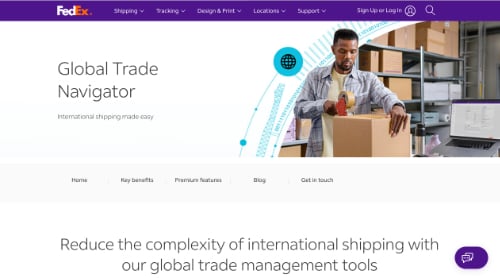
- FedEx Launches Global Trade Navigator: FedEx Corp. has rolled out a comprehensive suite of digital tools designed to eradicate friction in international shipping. Anchored by the Trade Planner—a self-service portal accessible on FedEx.com without requiring user authentication—the suite aims to democratize trade intelligence. Shopify merchants gain direct utility through the Duty and Tax app, enabling storefronts to display guaranteed duties and taxes dynamically at checkout. Furthermore, Global Trade APIs allow developers to embed product classifications, estimated landed costs, and regulatory compliance checks directly into proprietary workflows. Rounding out the suite, Ship Manager provides merchants with advanced verification capabilities for Harmonized System (HS) code classifications, customs valuations, and country-of-manufacture declarations.
- DHL and Alibaba.com Partner on AI-Powered Logistics: In a move bridging global freight forwarding with B2B e-commerce, DHL Group and Alibaba.com have forged a strategic alliance to integrate AI-powered logistics capabilities for SMEs. The partnership incorporates DHL Global Forwarding’s institutional logistics infrastructure into Alibaba.com’s agentic AI platform, Accio. This integration enables B2B buyers to instantly pull real-time freight forwarding quotes, evaluate multimodal shipping routes, and execute bookings directly through the conversational AI interface.
2. Financial Technology & Agentic Payment Standards
- Ant International, Visa, and Mastercard Establish AI Payment Frameworks: Recognizing the impending proliferation of autonomous purchasing agents, Ant International—operator of the Alipay+ wallet gateway—has initiated a landmark collaboration with financial giants Visa and Mastercard. The initiative focuses on the development of a universal "Know Your Agent" (KYA) security standard. This framework aims to build common protocols that link every AI buying agent to a verified legal entity, subsequently establishing dynamic protocols to monitor, assess, and regulate agent behavior during high-speed financial transactions.
- Xflow Opens Cross-Border Collections from India: Backed by industry heavyweights Stripe, PayPal Ventures, and General Catalyst, cross-border financial platform Xflow has launched native India collections for global businesses. The service empowers merchants worldwide to seamlessly accept payments from India-based customers across multiple instruments—including domestic credit/debit cards, bank transfers, and Unified Payments Interface (UPI) rails—while bypassing the capital-intensive requirement of establishing a local corporate entity or managing domestic tax compliance.
- Mastercard and Flowcart Drive Social Commerce in East Africa: To capture the exploding potential of social commerce, Mastercard has partnered with WhatsApp-focused e-commerce platform Flowcart. This integration embeds secure card payment gateways directly within chat-based purchasing journeys. Consumers can discover items, converse with digital assistants, and execute fully authenticated payments without leaving the messaging application. Initiated in Kenya, the partnership plans an aggressive expansion across East Africa, Nigeria, and Côte d’Ivoire.
3. AI Trust Infrastructure & Growth Stacks
- M11 Labs Introduces Agentic Trust Platform and OpenMarket: Addressing the emerging "trust gap" in machine-to-machine commerce, agentic commerce startup M11 Labs has launched a dedicated brand-protection platform. The software monitors brand accuracy and flags deceptive maneuvers or unfavorable positioning orchestrated by competing AI agents. Simultaneously, M11 Labs debuted OpenMarket, an agentic marketplace and research engine built upon the Universal Commerce Protocol. On OpenMarket, consumer queries are matched with competing brand agents, while M11 Labs audits and verifies every product claim in real time.
- Lightsage Secures $4 Million to Build Growth Infrastructure: Agent-led growth platform Lightsage (formerly Sapient) has closed a $4 million funding round led by Nexus Venture Partners. The capital will fuel the expansion of its infrastructure stack, which runs large-scale simulations across generative answer engines and coding agents. By analyzing where software brands appear in AI-generated recommendations and tracking real agent-driven traffic, Lightsage provides digital enterprises with actionable attribution and optimization metrics.
4. Conversational Advertising & Marketing Automation
- Amazon Ads Pilots Advertising within ChatGPT: In a milestone convergence of search, retail media, and conversational AI, Amazon Ads has partnered with OpenAI to test native advertising integrations inside ChatGPT. This pilot program allows select U.S. advertisers to extend their campaign reach directly into conversational workflows, engaging consumers as they research products, weigh alternatives, and formulate purchase decisions inside the ChatGPT interface.
- Mntn and Klaviyo Integrate Connected TV with B2C CRM: Connected TV (CTV) advertising leader Mntn has announced a deep integration with B2C CRM and email marketing platform Klaviyo. The synergy allows performance marketers to sync Klaviyo audience segments directly into Mntn Performance TV campaigns, while using television ad exposures as automated triggers to fire personalized email and SMS follow-up journeys.
- RankRabbit AI Expands with Reputation AI: Reputation management technology firm RankRabbit AI has added Reputation AI to its existing suite of brand visibility products (Search AI, Listing AI, and Social AI). The tool continuously tracks consumer reviews across distributed digital platforms, deploys natural language processing for sentiment analysis to isolate emerging customer dissatisfaction trends, and drafts context-aware responses for human review and publication.
- SurveyMonkey Unveils AI Analysis Suite: SurveyMonkey has introduced an advanced AI Analysis Suite designed to streamline qualitative data extraction. The platform allows users to query survey data using conversational natural language and automatically clusters thousands of open-ended text responses into core thematic insights, paired with automated design and branding toolkits.
5. Conversational Shopping Assistants & Marketplace Integrations
- Instacart Releases "Clementine" and Expands Cart Assistant: Grocery tech pioneer Instacart has rolled out Clementine, an advanced AI-powered grocery shopping assistant available across the Instacart Marketplace in North America. Concurrently, Instacart announced the deployment of new retail partners onto Cart Assistant, its white-label AI shopping widget. This tool equips independent grocers with branded conversational interfaces fueled by their proprietary inventory and customer catalogs.
- Mastercard Introduces Agent Connect: Expanding its merchant ecosystem, Mastercard launched Agent Connect alongside an upgraded Agent Suite. The infrastructure provides a unified integration layer connecting merchants, digital platforms, financial institutions, and autonomous AI agents, ensuring businesses retain strict authority over product pricing, customer data ownership, and fulfillment rules.
- Telesign and B2Metric Partner for Predictive Conversational Commerce: Digital identity provider Telesign has joined forces with predictive analytics firm B2Metric. By fusing B2Metric’s predictive behavioral models with Telesign’s secure messaging APIs for WhatsApp and email, brands can accurately predict critical purchase intent moments and engage shoppers via targeted conversational flows.
- Jungle Scout Launches AI Solutions for Amazon Sellers: Jungle Scout has introduced AI Solutions, featuring two core utilities: Ask Cobalt, an interactive Q&A interface providing granular insights into brand performance and market trends, and the Jungle Scout MCP, which bridges proprietary Amazon market data directly into enterprise AI workspaces like Claude, ChatGPT, Gemini Enterprise, and Microsoft Copilot.
- Shipt Debuts "Ask Shipt" for Same-Day Delivery: Same-day delivery marketplace Shipt has launched Ask Shipt, an integrated AI shopping assistant accessible within its mobile app and web platform. Consumers can interact conversationally by describing meal plans, uploading recipe links, or sharing food photographs to assemble precise grocery baskets from local retailers.
- TopDawg Integrates Temu into Dropshipping Network: Wholesale network and dropshipping provider TopDawg has announced a direct integration with marketplace giant Temu. Eligible retailers with active Temu seller accounts can now synchronize their storefronts with TopDawg to scale multi-channel operations utilizing vetted U.S.-based suppliers for inventory management and automated fulfillment.
Supporting Context & Operational Metrics
The acceleration of agentic commerce and cross-border enablement is rooted in profound shifts in consumer behavior and macro-logistics:
- The Shift to Conversational Intent: Industry estimates suggest that consumer reliance on foundational chat interfaces for discovery is growing exponentially. Platforms like ChatGPT and proprietary retail assistants (Clementine, Ask Shipt) are intercepting traditional search queries, forcing brands to optimize for machine readability rather than traditional SEO keyword density.
- Cross-Border Complexities: With platforms like Xflow opening access to Indian consumer bases via local instruments like UPI, cross-border B2B and B2C transactions are scaling without the historical barrier of physical entity establishment. Similarly, FedEx’s Global Trade Navigator addresses the high friction of landed-cost calculations, which historically caused cart abandonment rates exceeding 30% in international checkouts.
- Trust and Security Pressures: As autonomous agents begin executing financial transactions on behalf of users, systemic risk multiplies. The cooperative framework established by Ant International, Visa, and Mastercard represents a critical baseline intervention to prevent fraudulent "bot" activity and ensure secure, accountable machine spending.
Official Statements & Industry Perspectives
Executives across the financial, logistics, and technology sectors emphasized the transformative nature of these latest releases:
- On Logistics & AI Integration: "Integrating our global forwarding expertise into Alibaba.com’s Accio platform bridges the gap between digital discovery and physical execution for SMEs, removing traditional friction from international trade," noted representatives from DHL Group.
- On Agentic Trust & Security: "As AI buying agents assume transactional authority, the digital economy faces an unprecedented trust gap," stated the leadership team at M11 Labs. "Brands must monitor not only their own accuracy but defend against competitor agent manipulation in real time."
- On Conversational Payments: "Embedding secure payment rails directly into conversational environments like WhatsApp in East Africa changes the fundamental nature of social commerce," remarked Mastercard executives during the rollout of the Flowcart partnership. "Consumers no longer need to navigate away from a chat to complete a verified transaction."
Future Outlook: The Road Ahead for Digital Merchants
As the commercial ecosystem absorbs these innovations, several defining trends will shape the remainder of the decade:

- The Mandate for Agent Optimization (AO): Just as Search Engine Optimization (SEO) dictated digital visibility for the past twenty-five years, brands will need to master Agent Optimization. Platforms like Lightsage, M11 Labs, and Jungle Scout’s MCP signal that enterprise visibility will increasingly be determined by how cleanly proprietary data structures can be queried and validated by third-party AI agents.
- De-siloed Conversational Journeys: The boundary between advertising, research, and checkout is effectively dissolving. With Amazon Ads testing placements inside ChatGPT, and Mastercard providing infrastructure for agentic interoperability, consumers will complete end-to-end shopping journeys entirely within conversational mediums.
- Regulatory and Security Standardization: The collaborative efforts of Visa, Mastercard, and Ant International to establish "Know Your Agent" protocols mark the beginning of regulated machine commerce. Merchants failing to adopt standardized agent-authentication frameworks risk being locked out of automated purchasing loops.
In conclusion, digital merchants must transition from static, human-centric web architectures toward dynamic, API-driven ecosystems capable of servicing both human shoppers and autonomous machine agents simultaneously. Those who successfully integrate these advanced logistics, trust, and payment tools will capture disproportionate market share in the emerging era of agentic commerce.