Executive Overview
The landscape of American copyright enforcement is on the cusp of a profound transformation. In a move that has immediately sent shockwaves through the digital privacy and civil liberties communities, U.S. Representative Darrell Issa has formally introduced the American Copyright Protection Act (ACPA).
While early drafts of the legislation—circulated quietly over the past year—focused narrowly on traditional Internet Service Providers (ISPs) and Domain Name System (DNS) resolvers, the newly revealed full text of the bill expands its net significantly. Under the final legislative framework, Virtual Private Network (VPN) providers boasting a subscriber base of 100,000 or more American users could soon find themselves legally compelled by federal courts to block designated "foreign piracy sites."
This sweeping escalation bridges a long-standing gap in U.S. copyright law, aligning American legislative efforts with aggressive international precedents already unfolding across Europe. However, by thrusting VPNs into the crosshairs of domestic site-blocking mandates, the ACPA introduces unprecedented technological, legal, and operational dilemmas.
Questions regarding how privacy-centric networks can enforce geographic restrictions without compromising their foundational no-logging architectures remain entirely unanswered by the text. Furthermore, with Representative Issa set to retire at the end of the current congressional term, the clock is ticking loudly for the ACPA—even as it sparks a competitive legislative race on Capitol Hill.
Detailed Chronology: From Discussion Draft to Legislative Reality
The Long Road to the ACPA
The introduction of the American Copyright Protection Act represents the culmination of months of behind-the-scenes maneuvering, congressional hearings, and stakeholder lobbying. When Representative Issa first signaled his intent to file a competing site-blocking bill, digital rights organizations and tech policy groups braced for a revival of historical copyright battles reminiscent of the contentious Stop Online Piracy Act (SOPA) era of the early 2010s.
In June of the previous year, an initial discussion draft of the legislation surfaced. At that stage, the scope of targeted intermediaries was explicitly limited. The draft outlined compliance obligations solely for "both internet service providers (ISPs) and DNS resolvers," leaving privacy advocates relatively untroubled regarding the direct legal liability of intermediary masking tools.
The Sudden Shift: VPNs Enter the Fray
The true scope of the ACPA only became apparent when Public Knowledge, a prominent digital rights advocacy group, shared a copy of the official legislative text with Ars Technica. A thorough reading of the final bill confirmed that the text had undergone a critical expansion.
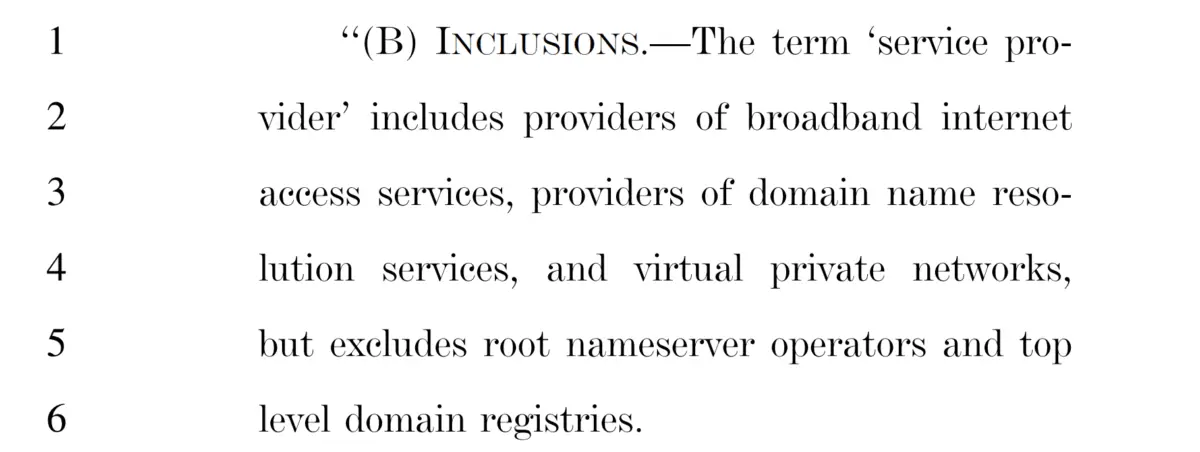
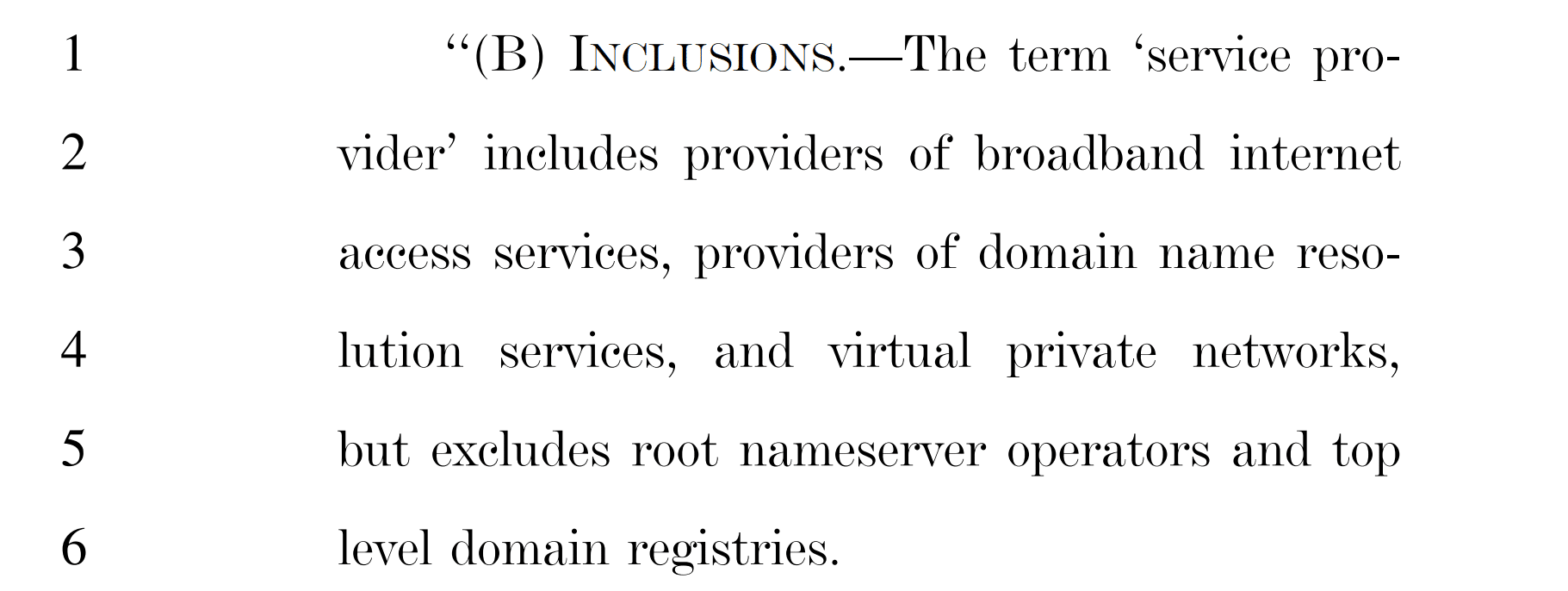
Buried within the definitions section of the final text is a clear, unambiguous inclusion of the digital privacy sector:
"The term ‘service provider’ includes providers of broadband internet access services, providers of domain name resolution services, and virtual private networks, but excludes root nameserver operators and top level domain registries."
By explicitly designating VPNs as covered service providers, the ACPA fundamentally alters the responsibilities of tools traditionally utilized to shield user traffic from surveillance, censorship, and data tracking. Under the bill’s provisions, copyright holders armed with a federal court declaration that a specific domain constitutes a "foreign piracy site" can petition for targeted blocking orders. Once granted, these orders will compel qualifying ISPs, DNS providers, and large-scale VPNs to implement technical blocks within 14 to 30 days.
Supporting Context & Metrics: Navigating the Technical Labyrinth
The 100,000-User Threshold
Recognizing the disproportionate burden that compliance could place on boutique or open-source privacy projects, the ACPA incorporates a targeted threshold. The legislation explicitly exempts:
"…any entity that provides services to fewer than 100,000 monthly users or subscribers in the United States."
While this carve-out protects smaller, independent privacy startups and localized services, it directly targets the heavyweights of the VPN industry—market leaders such as NordVPN, ExpressVPN, ProtonVPN, and Surfshark, all of which maintain substantial consumer bases within the United States. For these multi-national entities, ignoring a U.S. court order is not a viable business strategy, forcing them to weigh compliance against their core marketing promises of absolute user privacy.
The Technical Paradox: Blocking "From the United States"
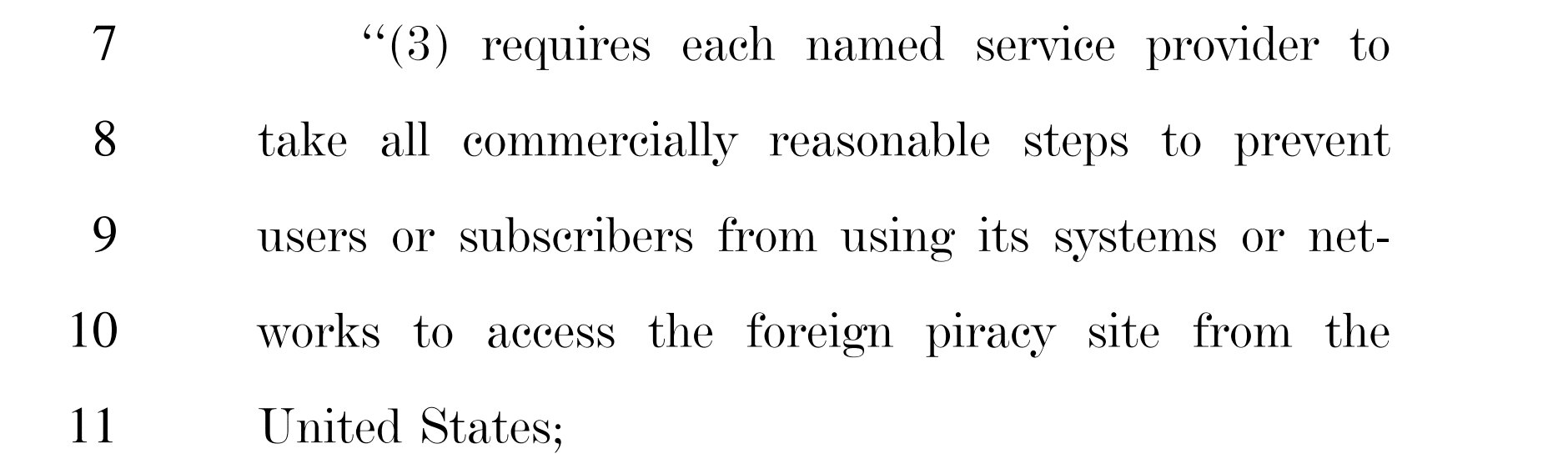
The most contentious element of the ACPA—and the one drawing the sharpest criticism from cybersecurity experts—lies in the vagueness of its technical mandates. The bill instructs covered entities to:
"…take all commercially reasonable steps to prevent users or subscribers from using its systems or networks to access the foreign piracy site from the United States."
For a standard ISP, this requirement is straightforward: traffic originating from a domestic customer’s home router is filtered at the carrier level. For a VPN provider, however, the architecture is vastly different. A typical commercial VPN operates thousands of servers distributed across dozens of jurisdictions worldwide.
This structural complexity creates a profound interpretive dilemma for compliance officers:
- The Server-Specific Approach: A VPN could choose to implement blocks exclusively on its physical servers located within the United States. Under this scenario, an American subscriber connecting through a server in Amsterdam or Toronto would bypass the block entirely, while a Canadian user routing their connection through a server in New York would be blocked.
- The Jurisdiction-Specific Approach: Alternatively, a VPN could block the designated pirate site for any user whose traffic originates from an American IP address, regardless of which global server they happen to route through.
Crucially, the ACPA deliberately avoids dictating how these measures should be implemented. The text explicitly prohibits judges from prescribing or requiring specific technical blocking mechanisms, leaving the burden of execution entirely on the providers.
While proponents argue this grants flexibility, critics point out that implementing jurisdiction-based filtering without violating user trust or maintaining intrusive logs presents a massive engineering paradox. Although some theoretical methods exist to filter traffic by billing country or exit node parameters without logging user activity, the operational friction remains immense.
The European Precedent
The decision to drag VPNs into the anti-piracy site-blocking debate does not occur in a vacuum. Lawmakers in Washington appear to be taking cues from aggressive judicial strategies across the Atlantic.
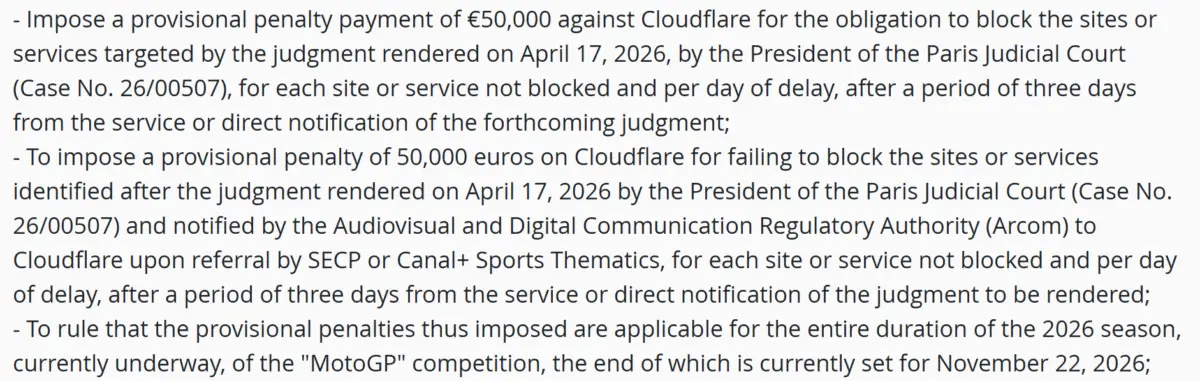
In recent years, courts in both France and Spain have issued landmark rulings ordering popular VPN providers—including ProtonVPN and NordVPN—to block access to unauthorized sports streaming and copyright-infringing platforms. Despite fierce pushback from privacy advocates and legal teams arguing that no-logging policies render such blocks technically unworkable or counterproductive, European courts have consistently ruled that privacy frameworks do not grant immunity from copyright enforcement orders.
The Live Sports Fast Track
Beyond the standard 14-to-30-day compliance window, the ACPA includes a critical fast-track mechanism tailored specifically to combat the real-time distribution of live entertainment.
Under the bill, federal courts possess the authority to truncate deadlines upon showing "good cause." This expedited framework is explicitly designed to target "time-sensitive events"—namely, live sports broadcasts. As Representative Issa argued during a House hearing earlier in the year, traditional legal enforcement moves far too slowly to matter when an un-authorized stream of a major sporting event can be spun up and monetized within a matter of hours or even minutes.
"[W]hat is the reasonable speed? Can we do it at the speed of sound? Can we do it at the speed of light? More importantly, in a 45 minute or sometimes a fraction of that live sports broadcast, can we do it soon enough to make it no longer profitable for those who pop up and sell their clandestine wares?" Issa noted during congressional proceedings.
In addition to live sports, this expedited carveout covers newly released films and television series that leak online within 24 hours of their initial authorized U.S. release.
Official Statements & Industry Reactions
As the text of H.R. 10364 circulates through tech policy circles, the political battle lines are rapidly solidifying.
Civil Liberties and Digital Rights Coalition
Opponents of the legislation have mobilized quickly. Organizations such as Public Knowledge and the Re:Create Coalition have published sharp rebukes of the bill, warning that the inclusion of VPNs represents a dangerous legislative creep that threatens foundational internet infrastructure and user security.
Critics argue that by forcing privacy tools to implement state-sanctioned censorship architecture, the ACPA undermines trust in secure communications and opens the door to mission creep, where site-blocking infrastructure built for copyright enforcement could easily be repurposed for broader political or social censorship.
Rightsholders and Industry Giants
Conversely, major rightsholders and content protection associations have maintained a calculated silence while reviewing the final statutory language. Representatives for the Motion Picture Association (MPA) indicated that comprehensive public statements would be forthcoming following the official release of the bill text by Representative Issa’s office. Hollywood studios, major record labels, and professional sports leagues have long lobbied for aggressive site-blocking tools, viewing them as essential weapons against rampant global digital piracy.
Future Outlook: A Race Against Time on Capitol Hill
Whether the American Copyright Protection Act of 2026 will successfully navigate the legislative maze remains deeply uncertain.
The most significant structural hurdle facing the bill is political time. Representative Darrell Issa is set to retire at the conclusion of the current congressional term. If H.R. 10364 fails to secure passage before the gavel falls on the present session, the bill will effectively die, requiring an entirely new sponsor to champion the initiative in a future Congress.
Adding to the legislative friction is internal competition on Capitol Hill. The ACPA is not operating in a vacuum; lawmakers are concurrently working on alternative legislative vehicles. Notably, Senator Thom Tillis and Representative Zoe Lofgren have been spearheading efforts to craft a unified, bicameral site-blocking bill.
This dynamic highlights a fascinating political reality: even as the lingering ghosts of the failed SOPA and PIPA legislation continue to haunt modern copyright debates, lawmakers are eager to establish a definitive legal framework to combat online piracy. Whether that framework will ultimately force millions of American VPN users to browse behind a filtered, state-monitored internet remains one of the most critical tech policy questions of the decade.