Executive Overview
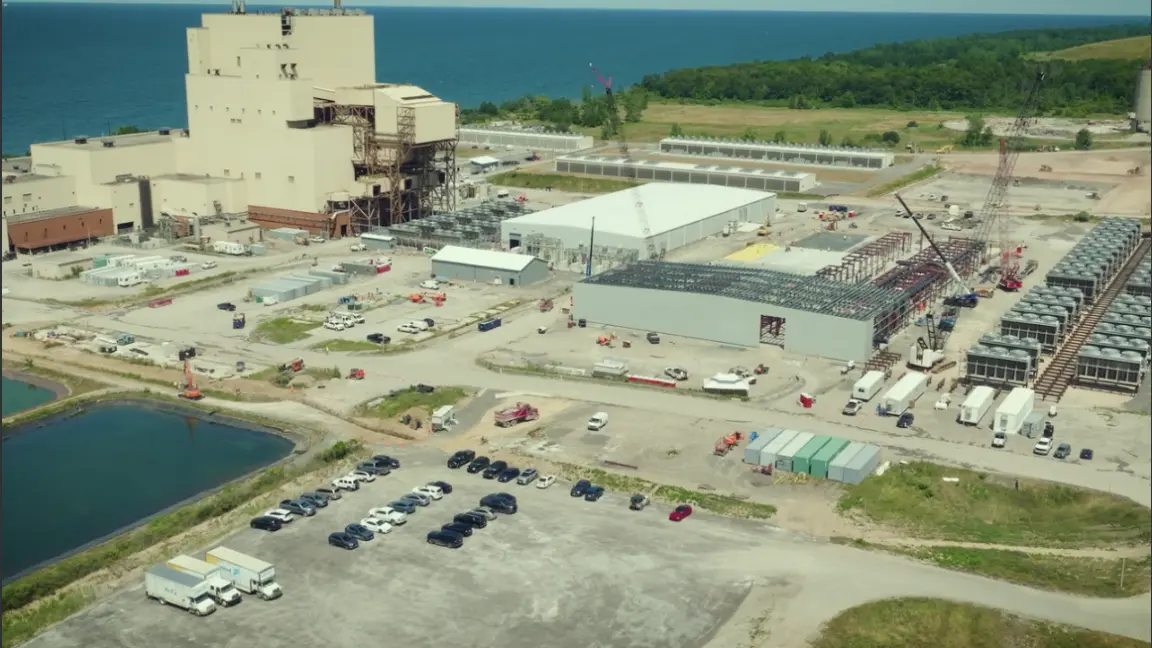
The rapid, unyielding expansion of artificial intelligence infrastructure is rewriting the physical landscape of the United States. Across the country, massive data center campuses are sprouting at an unprecedented rate to feed the insatiable computational appetites of large language models. However, the breakneck speed of this buildout has outpaced regulatory frameworks, safety protocols, and local government oversight.
When a fire erupted in an unfinished building at the Lake Mariner data center in Somerset, New York, it did more than scorch drywall—it laid bare a systemic vulnerability in the modern tech economy. The local fire department walked into an active emergency completely blind, hammed by a lack of operational disclosures, non-functioning fire alarms, absent suppression systems, and dead hydrants. Critical safety data sheets, legally required to protect first responders, had allegedly burned up in the blaze.
Worse yet, the incident revealed a murky web of corporate layering. Lake Mariner is a $3.2 billion leviathan sitting on a former coal mine on the shores of Lake Ontario, yet pinning down who holds ultimate responsibility for its safety, environmental footprint, and grid strain is an exercise in bureaucratic evasion. With responsibilities fractured among a landowner-CEO, an owner-operator, an international AI runner, venture-backed equity holders, and end-use tech giants, accountability has become a shell game. As AI data centers increasingly stress local water supplies, skyrocket electricity bills, and generate relentless noise pollution, the Lake Mariner disaster serves as a chilling case study of what happens when massive technological scale collides with diffused legal and moral responsibility.
Detailed Chronology: The Lake Mariner Fire and Regulatory Blind Spots
The crisis at Lake Mariner began quietly in early June, when flames licked through an uncompleted structure on the sprawling Somerset campus. For Chief Steve Matisz of the Barker Fire Department, the response quickly devolved into a nightmare scenario.
Arriving at the scene without functional alarms or pre-incident safety planning, Matisz’s crew encountered dense, toxic black smoke originating from unidentifiable chemicals. The safety data sheets (SDSs) meant to guide emergency personnel through hazardous material protocols had purportedly been incinerated in the fire itself—an excuse that left local officials deeply skeptical. Adding insult to injury, the firefighters discovered that three local hydrants were completely dry. Ultimately, emergency crews were forced to shuttle in water tanks manually, fighting a high-tech facility with antiquated, low-tech stopgaps.
"It’s been a difficult situation," Chief Matisz remarked, noting the absurdity of being expected to safely mitigate industrial fires while operating blind. Weeks later, despite corporate assurances that safety fixes were underway, Matisz reported that little had changed on the ground. When asked about local infrastructure fixes in August, he stated bluntly: "As far as I know, [the hydrants] are still dry… I haven’t seen work done on them."
Despite the severity of the incident, construction at the $3.2 billion campus never skipped a beat. No injuries were reported, which allowed corporate stakeholders to largely brush off the event as a minor growing pain. Yet, for the local community, the fire ripped away the veneer of preparedness surrounding the AI boom. It exposed an alarming regulatory vacuum where multi-billion-dollar buildouts are permitted to rise before basic municipal safety infrastructure is verified, let alone completed.
Supporting Context & Metrics: Promises versus Reality in Somerset
The friction between Lake Mariner’s developers and the town of Somerset extends far beyond fire safety. It is fundamentally rooted in a broken social contract between hyper-capitalized tech enterprises and the rural communities forced to host them.
The Employment Discrepancy
When the project’s foundational entities first sought economic development incentives, local leaders were promised substantial economic returns. In 2019, Somerset Operating Company—a landlord entity owned by TeraWulf CEO Paul Prager—applied for lucrative power discounts under projections that promised 165 permanent jobs and an $85 million capital investment.
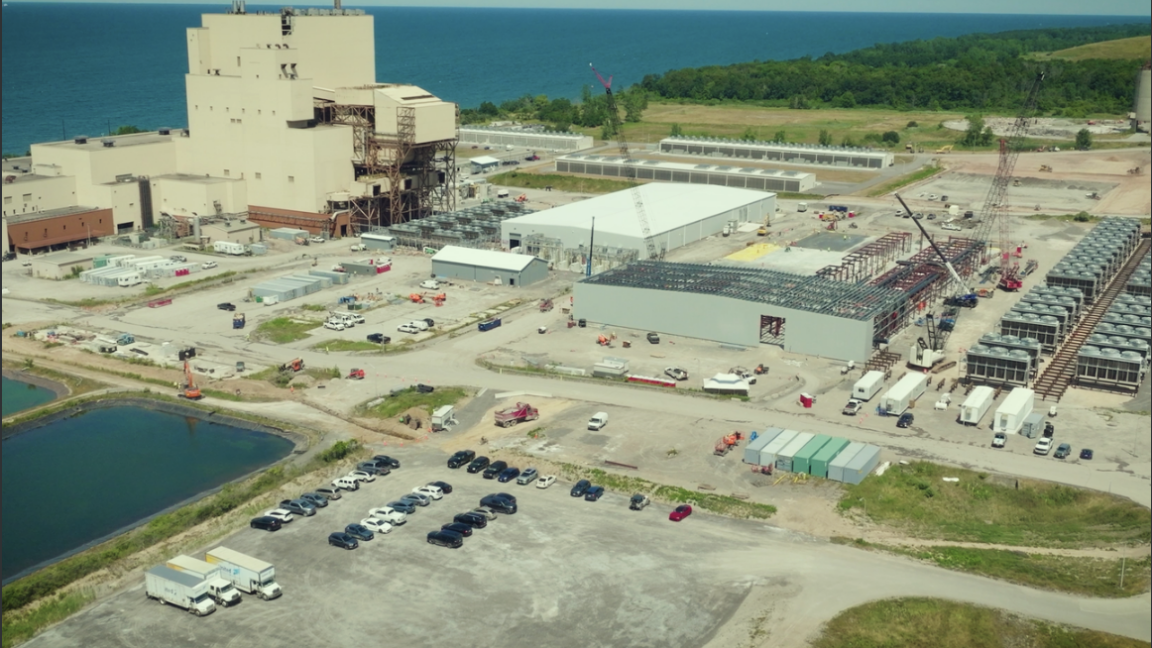
Fast forward to a 2024 planning board presentation, and the narrative had shifted dramatically. A project manager disclosed that the fully realized 500-megawatt campus would employ a mere 35 to 40 people. To put that in perspective, a facility drawing enough electricity to power a small city will permanently employ fewer people than a mid-sized fast-food franchise.
As former Department of the Interior Deputy Solicitor Pilar Thomas noted:
"You have to be honest that it’s 600 people building the project for six, 12, 18 months, depending on how big it is. And then after that, it’s three guys and a bottle of Windex… unless there’s a commitment to train up people in the local communities to take on the operations and maintenance of these data centers, which I have yet to see a data center agree to do."
The Toll of Noise and Grid Strain
Beyond jobs—or the lack thereof—residents are forced to live with the physical realities of hyperscale infrastructure. Beth Staples, a Somerset resident whose historic two-story home has stood since 1850, detailed in letters to the town board the psychological and physical toll of the facility’s perpetual operations. Describing a constant, unyielding mechanical hum that penetrates modern drywall, insulation, and new windows alike, Staples emphasized that the noise pollution is a 24/7 assault on local quality of life.
Furthermore, the macro-economic strain is felt in household budgets. Leah Stokes, a political scientist at UC Santa Barbara specializing in energy policy, points out that when a single facility adds hundreds of megawatts of near-constant, unyielding demand, the systemic costs skyrocket. Managing grid constraints, building transmission upgrades, and running expensive peak-load backup generation all drive up operational expenses. These costs are systematically socialized across everyday ratepayers’ electricity bills—forcing local families to subsidize the power consumption of trillion-dollar artificial intelligence models.
Official Statements and Corporate Finger-Pointing
Navigating the corporate ownership structure of Lake Mariner is akin to navigating a hall of mirrors. The campus is a multi-layered joint venture of financial dependencies:
- TeraWulf: Owns and operates the data center infrastructure on land leased from a private company owned by its own CEO, Paul Prager.
- Fluidstack: A UK-based AI enterprise contracted to run the day-to-day operations of the center.
- Google: Holds lucrative financial warrants securing a potential 14 percent equity stake in TeraWulf and contractually guarantees Fluidstack’s lease payments.
- Anthropic: A primary AI developer whose computational models consume the facility’s immense output.
When pressed for accountability following the June fire, TeraWulf’s Chief Strategy Officer, Kerri Langlais, asserted that her company bears absolute responsibility "for operational safety and emergency preparedness at the Lake Mariner Data Campus, including required safety systems and coordinating with local first responders." Langlais pointed to remedial measures implemented post-review, such as Knox boxes, new emergency "go-bags" containing safety data sheets, and promises of added hydrants. Yet, local officials on the ground maintain that these promises have largely failed to materialize into functional reality.
Compounding the problem, TeraWulf has erected a wall of silence against local civic leaders. Town Supervisor Jeffrey Dewart and various community boards have repeatedly hit a brick wall when attempting to secure transparent meetings with the company’s executive leadership to discuss community impacts, noise remediation, and safety compliance.
The Clean Energy Shell Game
Corporate messaging regarding Lake Mariner’s environmental footprint has undergone a subtle yet telling linguistic evolution. Initial Corporate Social Responsibility (CSR) reports from 2024 proudly boasted that Lake Mariner was powered by "95 percent zero-carbon energy." However, by April 2026, newly adopted board sustainability policies scrubbed the standalone term "zero-carbon," replacing it with hyphenated qualifiers like "low- and zero-carbon energy sources." A 2025 sustainable finance framework adjusted the metric downward, pegging clean energy usage at 91 percent.
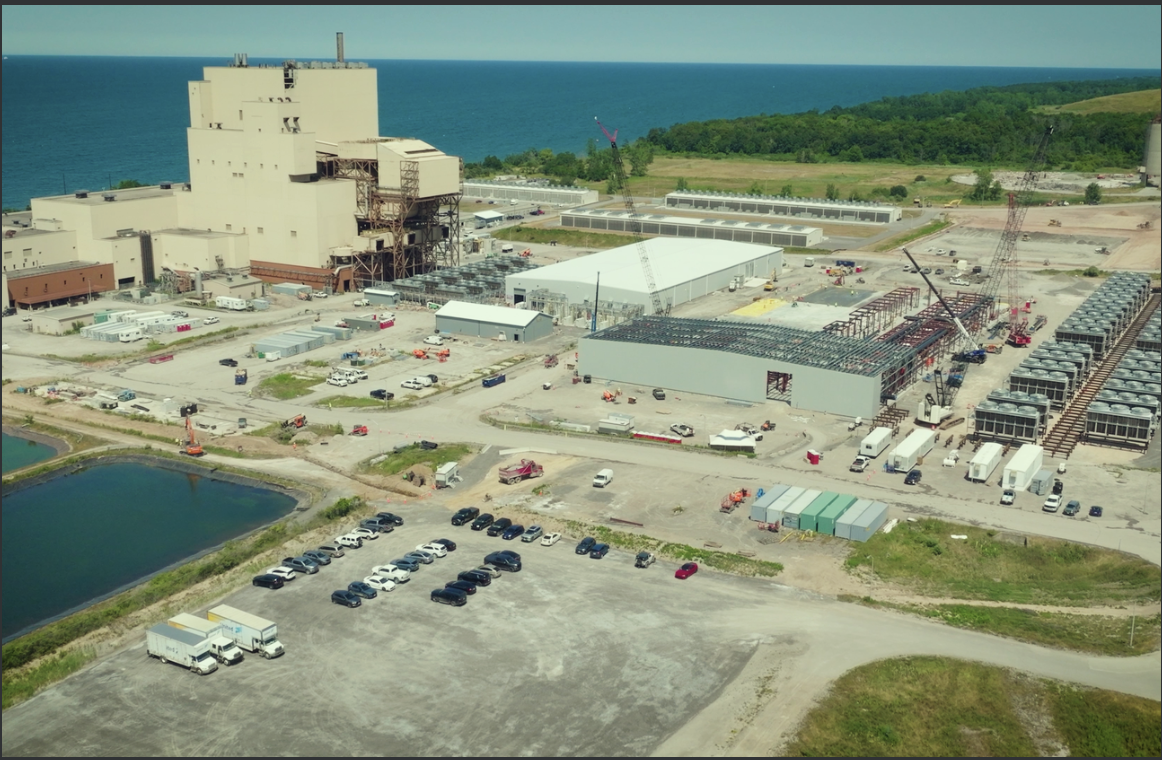
The reality behind these percentages is even more opaque. Langlais admitted that TeraWulf’s green claims do not stem from dedicated power purchase agreements tied to specific renewable generators. Instead, they rely entirely on the broader baseline generation mix of the regional grid—specifically the New York Independent System Operator (NYISO) Zone A. While that upstate region boasts a high percentage of zero-emission nuclear and hydroelectric generation (such as the Niagara Power Project), it also integrates roughly 90 megawatts drawn via the New York Power Authority’s (NYPA) High Load Factor Program.
NYPA spokesperson Alex Chiaravalle explicitly clarified the fungible nature of this energy:
"Just because an electron may be produced at a NYPA hydro facility, that doesn’t really mean that it’s NYPA hydropower. Electricity is sort of a fungible resource. To claim something is renewable energy, or to claim something is hydropower, it would either have to be a customer of the Power Authority or there would have to be that market attribute tied to it."
TeraWulf purchases zero Renewable Energy Certificates (RECs) to recharacterize its grid draw, relying instead on geographic proximity to justify its green branding. Meanwhile, tech giants like Anthropic and Google—despite their stringent, self-imposed sustainability mandates—appear to lack mechanisms (or the inclination) to audit whether Lake Mariner’s daily power consumption genuinely aligns with their public climate commitments.
Future Outlook: A Legislative Crossroads
The accountability crisis at Lake Mariner is not an isolated anomaly; it is the bleeding edge of a national structural failure. As AI infrastructure investments scale into the tens of billions of dollars, regulatory bodies are scrambling to establish guardrails after the gold rush has already begun.
New York is currently at the center of this legislative reckoning. In early June, the state legislature passed the Responsible Data Center Development Act, an ambitious omnibus bill designed to force accountability onto the tech sector. The legislation mandates rigorous environmental impact reviews via the Department of Environmental Conservation, enforces energy efficiency benchmarks, requires prevailing wage labor standards for construction workers, mandates a complete transition to renewables by 2040, and guarantees that host communities receive tangible, binding investments. Crucially, the bill also proposed a one-year moratorium on new permits for facilities drawing 20 megawatts or more.
Yet, months after its passage, the bill languishes unsigned on Governor Kathy Hochul’s desk. While Governor Hochul implemented a narrower executive order establishing a one-year moratorium on hyperscale data center permits exceeding 50 megawatts, it arrived too late for Somerset. Because Lake Mariner’s massive 500-megawatt buildout was permitted long before the executive order was enacted, it remains entirely grandfathered in and exempt from its restrictions.
Public interest advocates argue that loopholes of this magnitude threaten to render state-level climate and safety goals entirely toothless. Tyson Slocum, energy program director for Public Citizen, notes that corporate structures routinely exploit regulatory blind spots—such as using unexercised financial warrants to dodge federal disclosure requirements—to shield themselves from public oversight and community engagement.
As construction dust continues to settle over the shores of Lake Ontario, the residents of Somerset remain trapped in an unequal partnership with corporate technology titans. The fire at Lake Mariner was a warning shot across the bow of the American energy grid. Until federal and state lawmakers bridge the gap between corporate financial shielding and local municipal liability, communities across the nation will continue to bear the physical, environmental, and financial scars of the artificial intelligence revolution—while the servers hum endlessly in the dark.