







The Hybrid Playbook: Why SaaStr AI Relies on Third-Party Vendors for Volume, Yet Built Its Own Custom Outbound Prospecting Engine

Executive Overview In the rapidly evolving landscape of B2B sales automation, artificial intelligence promises a near-infinite scale of outreach. Yet, as organizations race to adopt AI-driven sales development representatives (SDRs) and outbound prospecting tools, a critical limitation has emerged: off-the-shelf software only sees a fraction of a company’s operational reality. Most commercial AI tools connect…
Read Full News

The Hybrid Outbound Playbook: How SaaStr AI Combines Commercial Vendors with Internal Prospecting Agents

Executive Overview In the rapidly evolving landscape of B2B sales and marketing, artificial intelligence has shifted from a novel experiment to core infrastructure. Yet, as companies race to deploy AI sales development representatives (AI SDRs) and automated outbound engines, a critical architectural debate has emerged: Should organizations rely entirely on commercial third-party platforms, or must…

Read Full News

The Hybrid Playbook: How SaaStr AI Combines Commercial Vendors with In-House Agents for Hyper-Personalized Outbound

Executive Overview The modern go-to-market (GTM) tech stack is undergoing a seismic shift. For years, B2B organizations have relied on a patchwork of software-as-a-service (SaaS) tools to manage outbound prospecting, customer relationship management (CRM), and email sequencing. However, the maturation of generative artificial intelligence (AI) and autonomous agents has forced a strategic reckoning. Companies are…

Read Full News

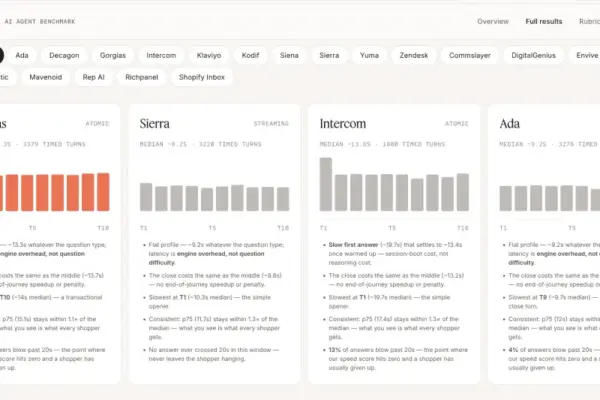
The Transparency Paradigm: Why B2B AI Vendors Must Open-Source Their Competitive Evaluations

Executive Overview In the hyper-competitive landscape of business-to-business (B2B) software, the rules of marketing are undergoing a seismic shift. For decades, tech vendors have relied on polished slide decks, static feature checklists, self-serving analyst quadrants, and gated PDF reports to claim market dominance. In this traditional playbook, every company claims to be the fastest, the…

Read Full News

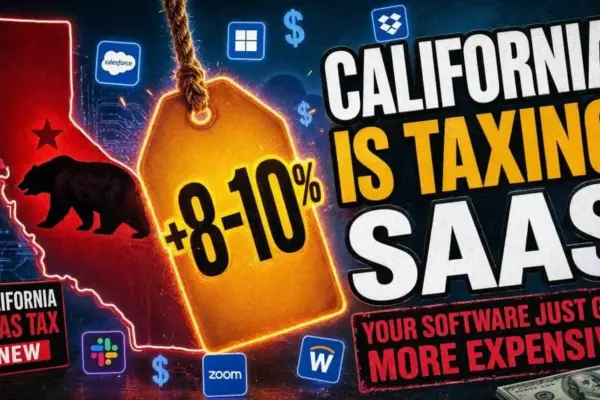
California’s Seismic Software Tax Shift: What SB 122 Means for Buyers, Vendors, and the Future of SaaS

Executive Overview The landscape of software commerce in the United States has fundamentally shifted. On June 29, 2026, California Governor Gavin Newsom signed Senate Bill 122 (SB 122) into law, effectively ending the state’s three-decade outlier status regarding digital commerce. Scheduled to take effect on January 1, 2027, the legislation mandates that California sales and…

Read Full News

The Cost of Friction: Why SaaS Vendors Must Learn to Let Churning Customers Go Gracefully

Executive Overview In the high-stakes world of B2B Software-as-a-Service (SaaS), customer acquisition cost (CAC) dominates boardrooms, investor pitches, and strategic roadmaps. Founders and revenue leaders spend countless hours optimizing sales funnels, trimming onboarding friction, and engineering marketing engines to secure every single logo. Yet, a counterintuitive truth often remains hidden in plain sight: how a…

Read Full News

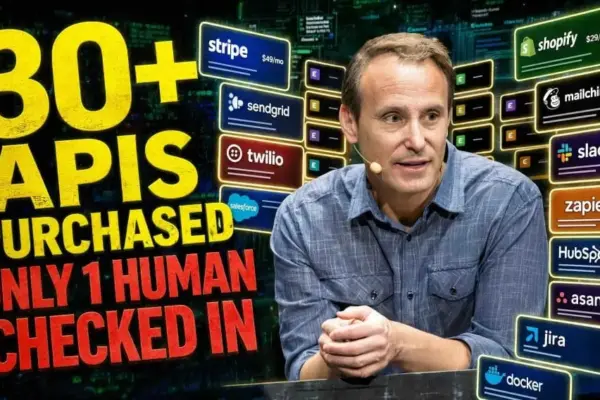
The Silent Majority: Why 30 API Vendors Ignored a Production Buyer—And the One That Won a 400-Word Product Spec with a Four-Sentence Email

Executive Overview In the hyper-accelerated ecosystem of modern B2B software, artificial intelligence agents, and infrastructure APIs, customer acquisition has become heavily automated. Companies deploy sophisticated marketing automation suites, multi-touch outbound sequences, intent data triggers, and behavior-driven drip campaigns designed to convert signups into paying customers at scale. Yet, beneath the polished veneer of modern growth-hacking…

Read Full News