Executive Overview
For over a decade, Radaris.com operated as a primary hub within the commercial data broker ecosystem. Aggregating personal details, home addresses, phone numbers, and family trees of hundreds of millions of Americans, the people-search platform earned an industry-wide reputation for stubbornly ignoring consumer opt-out requests. That business model has now hit a decisive legal barrier.
In a landmark ruling stemming from a lawsuit filed in New Jersey under the state’s law enforcement privacy statute known as Daniel’s Law, a judge ordered the forfeiture and transfer of radaris.com and more than a dozen affiliated data broker domains directly to the plaintiffs, Atlas Data Privacy Corp.
The court action represents a rare and severe sanction in civil litigation: the court-ordered expropriation of a company’s primary digital assets. The seizure followed years of aggressive delay tactics, corporate identity shifting, and offshore shell maneuvers employed by Radaris’s operators to evade legal accountability.
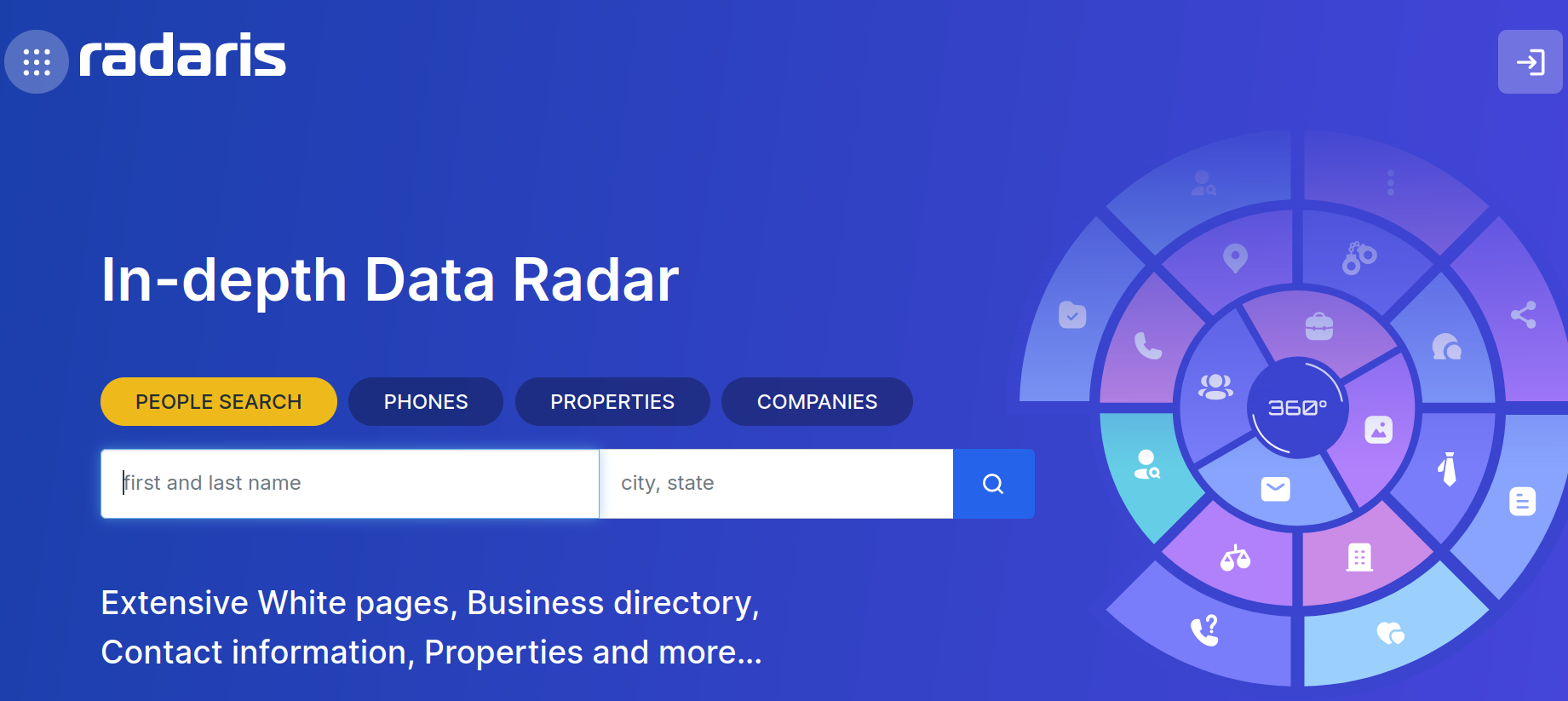
The court’s decision effectively dismantles one of the most persistent commercial people-search operations in the United States. Visitors accessing radaris.com no longer find detailed dossiers for sale; instead, they are redirected to a landing page controlled by Atlas, detailing the judicial domain transfer and highlighting the legal proceedings that brought down the site’s operations.
+-----------------------------------------------------------------------------------+
|                            THE RADARIS EMPIRE AT A GLANCE                         |
+-----------------------------------------------------------------------------------+
| Primary Operators   | Igor (Gary) & Dmitry (Dan) Lubarsky (Massachusetts-based)    |
| Operational Mask    | Fictitious CEO "Gary Norden"; offshore shell entities       |
| Primary Domain      | Radaris.com (Transferred to Atlas Data Privacy Corp)        |
| Key Revenue Streams | • Radaris.com Direct Sales: ~$42,000 / month               |
|                     | • Veripages.com Monetization: ~$45,000 / month              |
|                     | • Onerep Removal Partnership: ~$25,000 / month              |
| Key Legal Catalyst  | Violations of NJ's Daniel's Law ($1,000 fine per breach)    |
+-----------------------------------------------------------------------------------+
Detailed Chronology: The Decades-Long Shell Game and Legal Battle
The legal defeat of Radaris is the culmination of a multi-year effort by privacy advocates, litigators, and investigative journalists to trace the entity’s true ownership and hold it accountable under state privacy statutes.
[2017] ------------------------> [Feb 2024] ---------------------> [March 2024]
Class action default             Atlas sues Radaris               Exposé reveals Lubarsky
judgment ($7.5M); Radaris        under Daniel's Law;               brothers & fake CEO
escapes via offshore entity      Radaris defaults initially       "Gary Norden"
shift to Marshall Islands
                                                                         |
                                                                         v
[Aug 2026] <-------------------- [June 2025] <-------------------+
Court orders transfer            Atlas refiles expanded suit;
of 14 domains to Atlas           Radaris engages in offshore
                                 "island-hopping" strategy
The 2017 Precedent and Offshore Re-Incorporation
Radaris’s evasive legal strategy first surfaced in 2017 during a class-action lawsuit, Huebner v. Radaris LLC. After Radaris failed to contest the claims against it, a court issued a $7.5 million default judgment in favor of the plaintiffs. When the plaintiffs were unable to collect the monetary damages, the presiding judge ordered domain registry Verisign to transfer ownership of radaris.com to the plaintiffs.
At that critical juncture, attorney Val Gurvits of the Boston Law Group stepped in to challenge the domain seizure. Gurvits argued that the court had failed to name the actual legal entity holding the domain registration—a Cyprus-based corporation named Bitseller Expert Limited—and claimed that transferring the domain would violate due process rights.
The court relented and halted the domain transfer, allowing the plaintiffs an opportunity to refile. Shortly thereafter, Radaris shifted its operational entity from Bitseller to Andtop Company, an offshore entity registered in the Marshall Islands in October 2020. Exhausted by legal delay tactics, the plaintiffs abandoned the case—a pattern of corporate attrition that protected the platform for nearly a decade.
February 2024: Atlas Files Suit Under Daniel’s Law
The landscape shifted significantly when Atlas Data Privacy Corp launched a legal offensive against commercial data brokers operating in New Jersey. Atlas targeted firms violating Daniel’s Law, a statute enacted after the murder of Judge Esther Salas’s son by a disgruntled attorney who obtained her home address online. The statute allows law enforcement personnel, judicial officers, prosecutors, and their immediate families to mandate the removal of their personal information from commercial databases, levying statutory fines of $1,000 per violation for non-compliance.
In February 2024, Atlas filed suit against Radaris for failing to comply with mandatory takedown demands concerning state law enforcement personnel.
March 2024: Unmasking the Operators
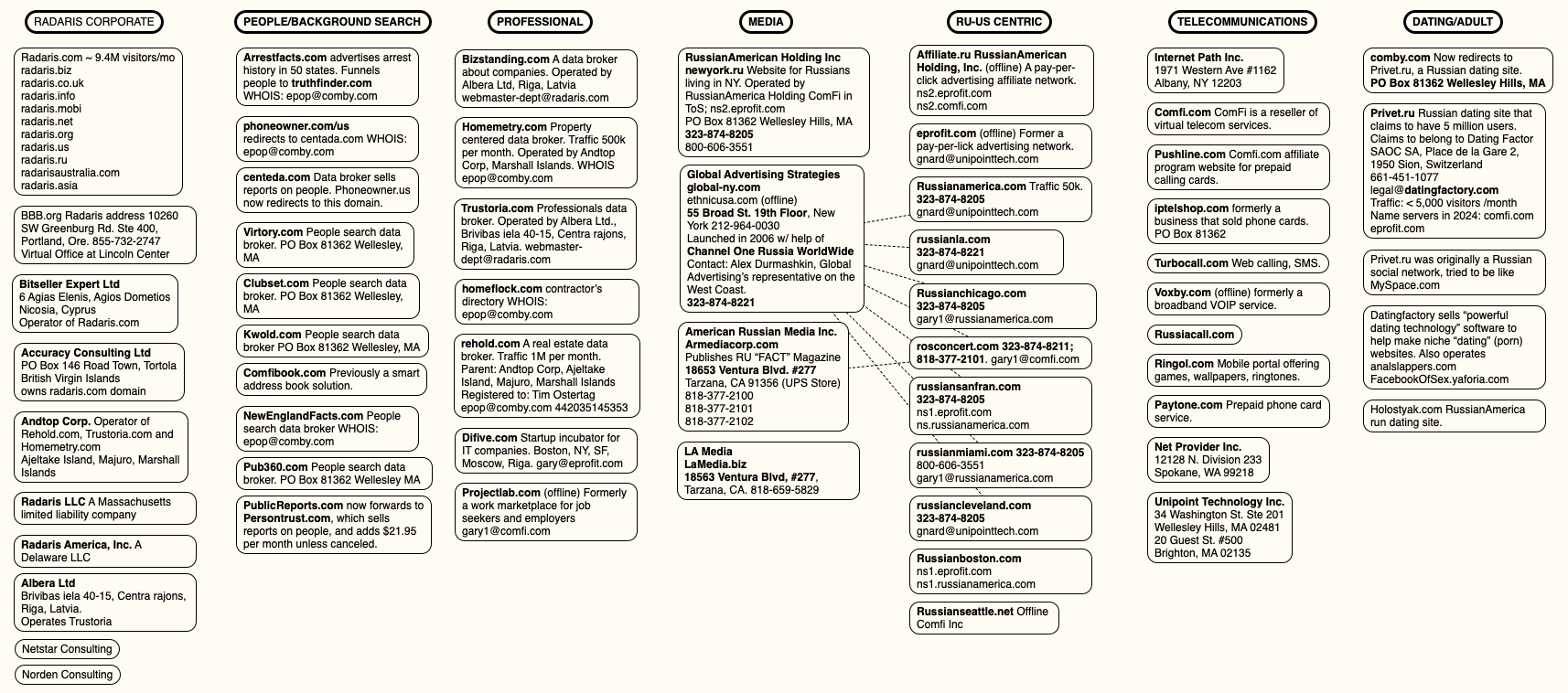
Less than a month after Atlas initiated its action, investigative reporter Brian Krebs published a deep-dive investigation into Radaris’s ownership structure. The report revealed that despite marketing itself as an enterprise technology corporation, Radaris was operated by two Russian-born brothers living in Massachusetts: Igor (Gary) Lubarsky and Dmitry (Dan) Lubarsky. In addition to data broker operations, the brothers managed a network of Russian-language dating portals and affiliate marketing networks.
Attorneys representing the Lubarskys threatened defamation litigation, asserting that the reporting was inaccurate and claiming the true owners of Radaris were Ukrainian citizens residing in Ukraine. Subsequent reporting dismantled this defense, proving the Lubarskys had fabricated a executive persona named "Gary Norden". Gurvits later conceded to media outlets that the "Gary Norden" identity was a pseudonym created by his clients, despite the name having appeared in corporate press releases seeking investor capital.
+-------------------------------------------------------------------------------+
|                       RADARIS CORPORATE SHELL NETWORKS                        |
+-------------------------------------------------------------------------------+
| Reported Shell Entities      | • Radaris America, Inc.                        |
|                              | • Bitseller Expert Limited (Cyprus)            |
|                              | • Andtop Company (Marshall Islands)            |
|                              | • Digital Orbit Corp                           |
|                              | • Core Solutions Group Inc                     |
|                              | • Lucky Solutions Inc                          |
|                              | • Virtura Corp                                 |
|                              | • Veripages Inc.                               |
|                              | • Nuform Solutions Inc.                        |
|                              | • Growth Data Advisors Inc.                    |
|                              | • Property Experts, Inc                        |
+------------------------------+------------------------------------------------+
| Administrative Mail Domains  | difive.com, centerex.com, scienteco.com,       |
|                              | eprofit.com, realmo.com, pub360.com            |
+-------------------------------------------------------------------------------+
June 2025 – August 2026: Expanded Litigation and Asset Seizure
After Radaris defense counsel appeared at the last moment to argue that Atlas had served the wrong corporate entities, Atlas refiled an expanded lawsuit in June 2025. The updated action cited dozens of Radaris-affiliated subsidiaries and shell operations.
In response, Radaris deployed what litigators described as an "island-hopping" defense: continuously altering site privacy policies and registering new management companies across jurisdictions including the Seychelles, the British Virgin Islands, and the Marshall Islands. When Radaris modified its terms of service to assert management by a new Marshall Islands firm, Atlas investigators discovered that the named entity had not yet been legally formed at the time of the claim.
By August 26, 2026, the presiding New Jersey judge concluded that the defendants had repeatedly failed to defend against the substantive legal claims despite ample notice. Concluding that Radaris was engaging in bad-faith delay tactics, the court issued a default judgment ordering the immediate transfer of radaris.com and 13 associated broker domains to Atlas Data Privacy Corp.
Supporting Context & Metrics: Unmasking the Financials and Infrastructure
Throughout the litigation, Atlas obtained over 10,000 internal emails, financial records, and operational logs through formal discovery. This evidentiary record provided an unprecedented look into the inner workings, domain networks, and revenue streams of an offshore data broker operation.
       +--------------------------------------------------------+
       |             ESTIMATED MONTHLY REVENUE (USD)            |
       +--------------------------------------------------------+
       | Veripages.com          | $$$$$$$$$$$$$$$$$$$$  $45,000 |
       | Radaris.com Direct     | $$$$$$$$$$$$$$$$$$$   $42,000 |
       | Onerep Partnership     | $$$$$$$$$$$           $25,000 |
       +--------------------------------------------------------+
Unified Technical and Financial Infrastructure
The discovery production shattered the defense’s claim that Radaris was a decentralized group of independent international entities. The documentation established that:
- Centralized Administrative Control: The network of entities—including Radaris America Inc., Bitseller Expert Ltd., Digital Orbit Corp., Core Solutions Group Inc., Veripages Inc., and Growth Data Advisors Inc.—were administered by a core group of three to four individuals in the Boston area.
- Shared Technical Core: Administrative communications, system configurations, and backend management for over 25 people-search domains operated through a single primary mail server domain (
difive.com) and its direct successors (centerex.com,scienteco.com,eprofit.com,realmo.com, andpub360.com). - Single Physical Point of Origin: Banking records, cloud hosting contracts, software licenses, payment processing accounts, and registrar profiles showed that all entities shared a single payment infrastructure and operated out of one virtual office location in Massachusetts.
Revenue Breakdown and Unholy Partnerships
Financial ledgers obtained via discovery detailed the monthly monetization of the Radaris network:
- Radaris.com Direct Operations: Generated roughly $42,000 per month through direct search queries and individual background report purchases.
- Veripages.com Monetization: Earned approximately $45,000 per month via a commercial integration with The Lifetime Value Company—a digital marketing enterprise operating consumer background check portals like PeopleLooker, PeopleSmart, NumberGuru, and automobile history service Bumper.
- The Onerep Affiliate Relationship: Generated up to $25,000 per month via a strategic partnership with Onerep, a privacy service that promises consumers it will remove their data from broker sites.
The Onerep integration underscored a broader conflict of interest within the privacy sector: Onerep’s Belarusian founder was previously revealed to have created and operated dozens of people-search portals (including Nuwber), effectively capitalizing on both the exposure of personal data and its subsequent paid removal.
Official Statements and Legal Arguments
The court-ordered seizure of radaris.com has drawn sharp contrasts between plaintiff counsel pursuing privacy enforcement and defense attorneys attempting to overturn the judgment.

Plaintiffs: Ending Attrition as a Defense Strategy
Matt Adkisson, President and CEO of Atlas Data Privacy Corp, described the complex corporate restructuring Radaris used to delay litigation:
"We refer to this period as their island-hopping phase. Privacy policies changed constantly, and new entities kept appearing from places like the Marshall Islands, the British Virgin Islands, and Seychelles. Behind the scenes, it felt like a shell game. Defense lawyers told the court that certain entities merely operated the domains and were the proper parties to sue. But by the time a judgment neared, those entities would be discarded and new entities would appear."
Raj Parikh, a partner at PEM Law who spearheaded the Daniel’s Law litigation for Atlas, noted that Radaris relied on legal exhaustion to survive past challenges:
"In the past, they won by attrition. Plaintiffs’ attorneys tired of the procedural games and just gave up. That strategy worked for a decade… But we were acutely aware of the threat this website posed to law enforcement officers and other public officials in New Jersey, and decided early on to commit whatever time and resources were necessary to remove that threat."
+----------------------------------------------------------------------------------+
|                             KEY LITIGATION PLAYERS                               |
+----------------------------------------------------------------------------------+
| Party                  | Name / Entity              | Role                       |
+------------------------+----------------------------+----------------------------+
| Plaintiffs             | Atlas Data Privacy Corp    | Enforcement entity         |
| Lead Plaintiff Counsel | Raj Parikh (PEM Law)       | Daniel's Law Litigator     |
| Executive Lead         | Matt Adkisson              | President & CEO, Atlas     |
| Defense Counsel        | Val Gurvits                | Boston Law Group           |
| Defense Counsel        | Victor Worms               | Post-judgment Appellate    |
| Subject Matter Expert  | Justin Sherman             | Author, "The Middlemen"    |
+----------------------------------------------------------------------------------+
Defense: Moving to Vacate on Constitutional Grounds
Following the court’s asset transfer order, former defense counsel Val Gurvits stated the case had been transitioned to attorney Victor Worms.
Worms challenged the legal basis of the judgment, arguing that transferring the domain name violated procedural rules because the web address itself is not a legal person:
"We have made a motion to vacate that default judgment on the grounds that it is void since a non-entity has no legal capacity to sue or be sued. We also intend to pursue all appropriate appeals because we believe the transfer of Radaris.com amounts to a forfeiture in violation of various constitutional principles."
Subject Matter Experts: Systemic Deficiencies in U.S. Privacy Frameworks
Privacy scholar Justin Sherman, author of The Middlemen, emphasized that the prevalence of companies like Radaris stems from systemic gaps in federal legislation:
"These days at the federal level, add in the intense amount of lobbying against these laws from social media companies, big tech, cryptocurrency firms, and now AI proponents in the mix who claim that limiting their data scraping is somehow going to collapse the whole U.S. economy under Chinese rule."
Sherman added that public record exemptions in state laws leave millions of citizens exposed:
"The average person can look at Daniel’s Law and have a perfectly normal reaction, which is that everyone should be covered, not just police and judges. But we don’t need more wake-up calls… The lack of comprehensive federal privacy law is not for a lack of knowledge, and anyone claiming otherwise is either not reading the news or kidding themselves."
Future Outlook: Constitutional Battles and the Federal Privacy Void
While the seizure of radaris.com marks a victory for state-level privacy enforcement, Daniel’s Law and similar state statutes face mounting legal challenges that could reach the U.S. Supreme Court.
+-----------------------------------------------------------------------------------+
|                        STATE PRIVACY LAW LEGISLATIVE MATRIX                       |
+-----------------------------------------------------------------------------------+
| Legal Venue / State      | Current Status & Legal Exposure                        |
+--------------------------+--------------------------------------------------------+
| New Jersey (Daniel's Law)| • Enforced against Radaris (14 domains seized)          |
|                          | • 150+ broker suits; 70+ transferred to Federal Court   |
|                          | • Pending First Amendment review in Third Circuit      |
+--------------------------+--------------------------------------------------------+
| West Virginia            | • State version struck down as facially                |
|                          |   unconstitutional under First Amendment (Aug 2025)   |
+--------------------------+--------------------------------------------------------+
| ~14 Other States         | • Enacted or considering statutes modeled on NJ law;   |
|                          |   vulnerable to preemptive constitutional appeals      |
+--------------------------+--------------------------------------------------------+
| Federal Level            | • No comprehensive consumer privacy framework          |
|                          | • Public/government records remain unprotected         |
+--------------------------+--------------------------------------------------------+
First Amendment Challenges and the Third Circuit
The enforcement strategy deployed by Atlas has prompted aggressive counter-litigation from the commercial data industry. Of the roughly 150 data broker entities sued under Daniel’s Law in New Jersey, over 70 succeeded in removing their cases to federal court. These defendants argue that state-level bans on publishing publicly available records violate the First Amendment.
The constitutional issue is currently under review by the U.S. Court of Appeals for the Third Circuit. The legal uncertainty intensified in August 2025, when a federal district court struck down West Virginia’s version of Daniel’s Law, finding the statute facially unconstitutional under the First Amendment. Legal analysts expect the Third Circuit’s eventual ruling on New Jersey’s law to be appealed directly to the U.S. Supreme Court.
The Federal Regulatory Void and Data Aggregation Risks
The battle over Daniel’s Law highlights a key structural limitation in U.S. data protection: most state privacy laws explicitly exempt records categorized as public or government documents. Data brokers harvest details from:
- Local property and tax filings
- Voter registration databases
- Marriage, divorce, and death registries
- Motor vehicle records and driver license databases
- Criminal background records and court dockets
Without a comprehensive federal privacy framework regulating consumer data brokers, personal information remains vulnerable to aggregation and downstream leaks.
The consequences of unverified, centralized data collection were underscored by a major breach at IDScan.net. The security failure exposed the driver’s license records of over 153 million Americans, which were subsequently compiled into an online identity theft service on the dark web. The incident highlighted the risks created when commercial platforms scrape, process, and retain government-issued identification data without federal privacy guardrails.
For now, the domain seizure of radaris.com stands as an extraordinary precedent: proving that when state laws carry real financial and operational consequences, even evasive network operators can be held accountable. However, as defense attorneys move to vacate the default judgment and data industry groups challenge state privacy laws in federal court, the ultimate impact of Daniel’s Law remains tied to broader constitutional battles over digital privacy in America.