By Diego Argüello
Published September 1, 2026
Executive Overview
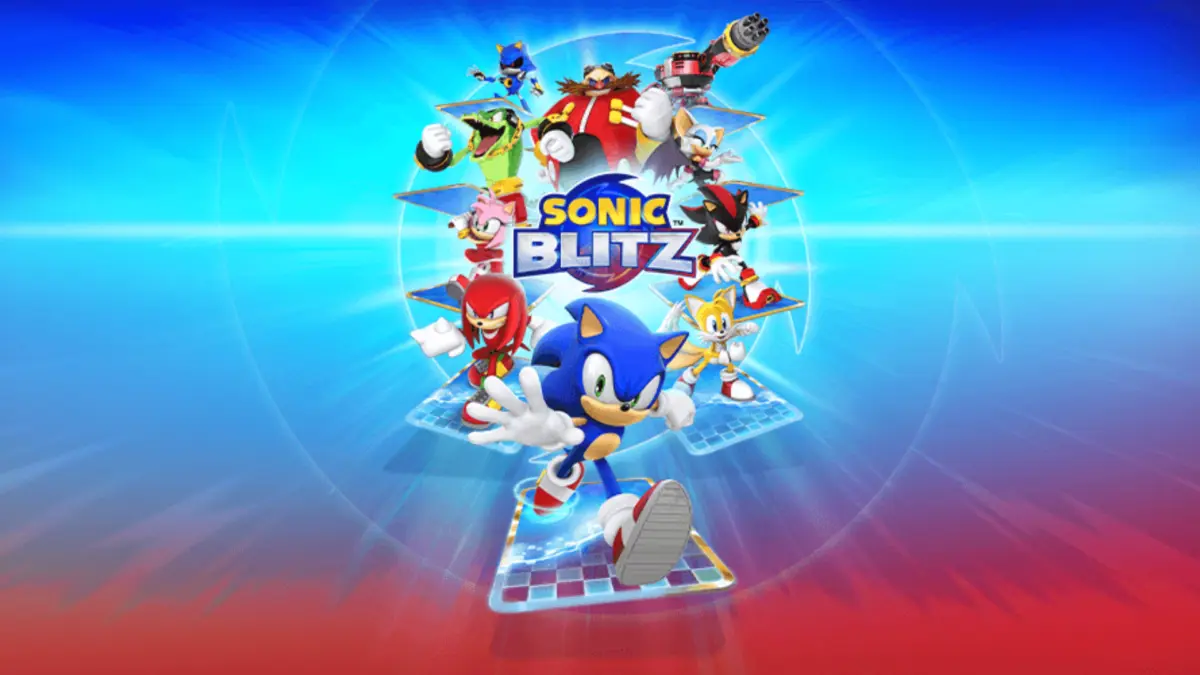
In a sweeping move that further underscores the persistent volatility and high-stakes nature of the contemporary video game industry, Sega-owned mobile titan Rovio has officially announced the closure of its Copenhagen development studio. The shutdown comes in the wake of the cancellation of Sonic Blitz, an ambitious hybrid runner and card-collection mobile title that failed to meet internal commercial metrics.
While the exact final tally of redundancies is still being finalized amid an ongoing corporate transition process, approximately 20 developers assigned directly to the Sonic Blitz project have been impacted by the Denmark-wide operational wind-down. This development marks yet another difficult chapter for Rovio—best known globally as the creator of the cultural phenomenon Angry Birds—since its high-profile acquisition by Sega in August 2023.
Industry analysts point to this closure as symptomatic of broader macroeconomic headwinds, tighter investor tolerance for underperforming live-service titles, and the distinct challenges of marrying storied console intellectual properties (IP) with volatile, retention-driven mobile ecosystems. As Rovio and Sega navigate these turbulent waters, questions loom regarding the long-term viability of aggressive mobile expansion strategies for traditional Japanese publishing giants.
Detailed Chronology: The Fall of Sonic Blitz and the Copenhagen Studio
The trajectory that led to the shuttering of Rovio Copenhagen is a cautionary tale of shifting project scopes, player retention hurdles, and the unforgiving economics of modern mobile game development.
The Rise and Fall of Sonic Blitz
Conceived as an innovative fusion of two distinct mobile genres—the fast-paced mechanics of endless runners and the tactical depth of card-collection games—Sonic Blitz was designed to leverage Sega’s marquee Sonic the Hedgehog IP. The title aimed to capture a broad demographic by combining accessible movement with strategic deck-building elements.
However, during soft-launch and telemetry testing phases, the game encountered a fatal roadblock: player retention. According to Sega West COO and Rovio CEO Alex Pelletier-Normand, the title failed to cultivate the long-term engagement loops essential for modern free-to-play ecosystems. In the hyper-competitive mobile marketplace, initial downloads are no longer enough; developers must secure sustained, day-30, and day-90 player retention to justify ongoing server costs and live-ops updates. Sonic Blitz simply could not bridge that gap.
The Closure Announcement
Last week, a Rovio spokesperson confirmed the inevitable to industry trade publication Mobilegamer.biz. The company issued a sobering corporate statement: "Following a redundancy process, Rovio will discontinue all its operations in Denmark."
Because the legal and human resources consultation processes mandated by Danish labor laws are still underway, Rovio has refrained from releasing a final, precise headcount for the layoffs. Nevertheless, confirmation that roughly 20 developers formed the core of the Sonic Blitz team highlights the immediate human cost of the studio’s termination.
In an effort to mitigate the blow to the local talent pool, Rovio has emphasized its commitment to a humane exit strategy. "For team members who we cannot allocate to a new project within Rovio, we will provide a comprehensive transition package, including dedicated outplacement services and wellbeing support to assist them in securing their next career opportunities," the company stated.
Reflecting on the emotional and professional weight of the decision, Rovio acknowledged that the move was "extremely difficult." Management noted the heavy toll it takes on the workforce, explicitly contextualizing the decision within the framework of "the ongoing challenges" plaguing the broader interactive entertainment sector.
Supporting Context & Metrics: Sega, Rovio, and a History of Contraction
To understand the full gravity of the Copenhagen closure, one must examine the timeline of corporate restructuring that has defined Rovio’s existence under Sega’s corporate umbrella.
The Sega-Rovio Acquisition
In mid-August 2023, Sega Sammy Holdings finalized a staggering €706 million ($776 million) acquisition of Rovio Entertainment Oyj. The strategic rationale was clear: Sega sought to bolster its mobile gaming capabilities, leveraging Rovio’s industry-leading live-ops expertise, proprietary game engine technologies, and the enduring global footprint of the Angry Birds brand to scale its own formidable roster of legacy franchises.
Yet, the post-merger integration has proven far more complex than anticipated. What was envisioned as a symbiotic powerhouse has instead been plagued by swift, successive contractions.
.png?disable=upscale&width=1200&height=630&fit=crop)
A Pattern of Restructuring and Closures
The closure of Rovio Copenhagen is not an isolated incident; rather, it represents the latest node in a sustained pattern of downsizing:
- December 2023 (Studio Lumi Closure): Just four months after the Sega acquisition was finalized, Rovio shuttered its Montreal-based subsidiary, Studio Lumi, signaling early friction in the post-merger operational strategy.
- April 2024 (Moomin Game Goes Offline): Rovio pulled the plug on its atmospheric mobile game based on the beloved Moomin IP, illustrating a growing corporate appetite for cutting underperforming experimental projects.
- October 2024 (Global Reorganization Layoffs): Rovio laid off 36 employees as part of an internal restructuring initiative explicitly aimed at "tightening relations" with its Japanese parent company and rationalizing development pipelines.
- Early 2026 (Sega’s Public Admissions): Earlier this year, Sega publicly lamented its failure to maximize financial returns from its collaboration with Rovio, admitting that mobilizing classic console properties for the smartphone market involves unprecedented friction.
Speaking candidly to Mobilegamer.biz, Alex Pelletier-Normand reflected on these ongoing struggles:
"I still am convinced that there is a way to reach more players on mobile with Sonic, it turns out that it’s much more complicated than I think both Sega and Rovio thought. We’re still very proud of the game, very proud of what the team achieved, but it didn’t work."
Official Statements and Industry Impact
The corporate candor displayed by Rovio and Sega leadership in the wake of the Sonic Blitz cancellation offers a rare, transparent look into the stark realities of modern mobile game publishing.
The Retention Paradigm
In the mobile sector, developers frequently grapple with the "retention wall." Unlike traditional console and PC markets—where a game is purchased once and judged primarily on its upfront content delivery—free-to-play mobile games rely on continuous engagement over months or years to monetize through microtransactions, ad integrations, and battle passes.
When a hybrid genre like Sonic Blitz (combining runner mechanics with card collection) fails to hook players past the initial novelty phase, publishers face a grim economic calculus. Pouring additional millions into a live-service pivot carries a high risk of compounding losses. By cutting ties early, Sega and Rovio have opted for fiscal discipline, albeit at the devastating expense of human capital in Denmark.
The Broader Layoff Crisis
The closure of Rovio Copenhagen arrives during an unprecedented contraction phase for the global games industry. Since late 2022, tens of thousands of developers across AAA, indie, and mobile sectors have lost their jobs due to over-hiring during the pandemic boom, shifting investor priorities toward profitability over growth, and rising interest rates.
Rovio’s inclusion of dedicated outplacement and wellbeing support in its redundancy packages reflects an industry standard of damage control, but it does little to alleviate the systemic precarity felt by developers across Europe and North America.
Future Outlook: What Next for Sega and Rovio on Mobile?
As the dust settles on the Copenhagen studio closure, industry observers are left to ponder the future trajectory of Sega’s mobile strategy.
Can Sonic Find a Mobile Foothold?
Despite the high-profile failure of Sonic Blitz and the realization that adapting the Blue Hedgehog to mobile is "much more complicated" than initially modeled, executive leadership remains bullish on the long-term potential of mobile platforms. Sonic is arguably one of the most recognizable IPs in gaming history, possessing cross-generational appeal that naturally lends itself to handheld screens.
However, future attempts are likely to diverge sharply from niche genre experiments. Analysts suggest that Sega and Rovio may pivot toward safer, more direct adaptations of proven gameplay loops or focus heavily on strengthening the core live-ops engine of Angry Birds and its cinematic spin-offs rather than chasing complex hybrid genres.
Strategic Realignment
Going forward, Rovio’s integration into Sega is expected to become even more centralized. The decentralization that allowed regional studios like the one in Copenhagen relative autonomy is rapidly giving way to tighter, more risk-averse oversight from corporate headquarters in Tokyo and Espoo.
For the remaining workforce at Rovio, the mandate is clear: deliver high-retention, high-margin projects that align seamlessly with Sega’s overarching financial targets. For the broader industry, the demise of Sonic Blitz and Rovio Copenhagen serves as a stark reminder that even the most iconic intellectual properties are entirely immune to the unforgiving economics of the modern mobile marketplace.