Executive Overview
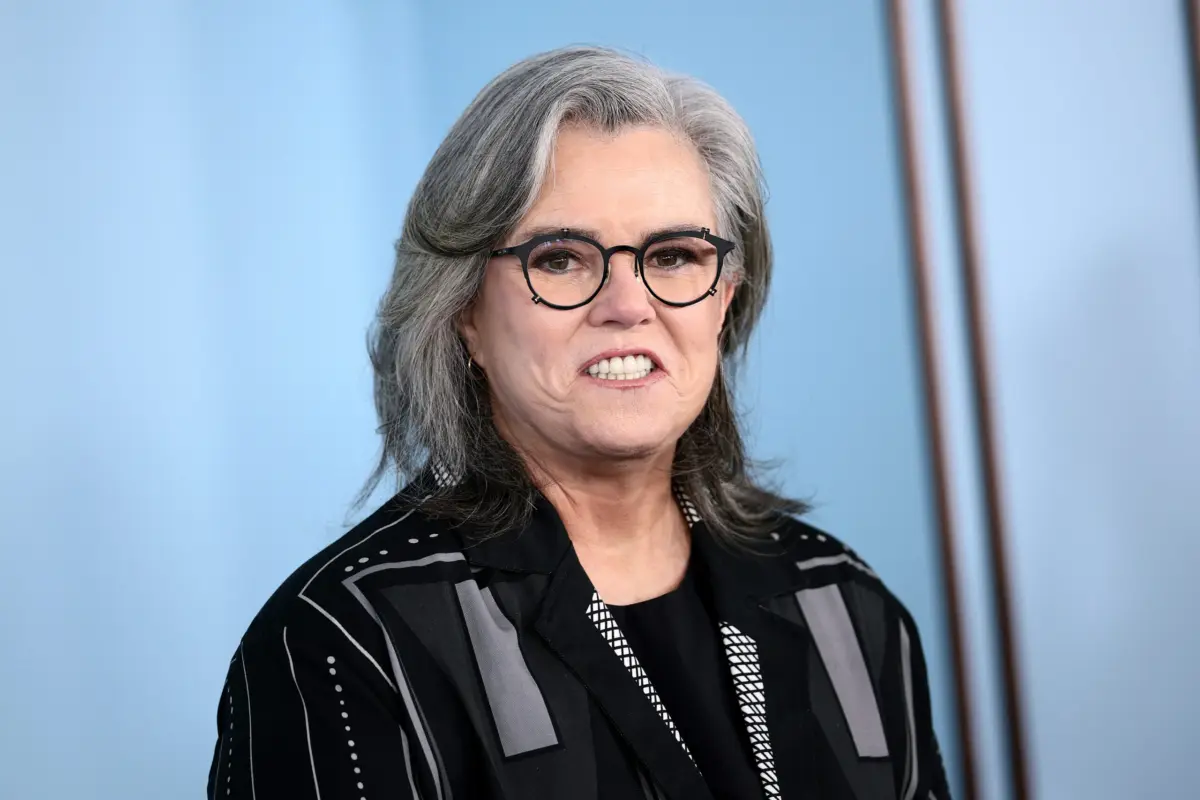
In an era defined by high-profile reckonings and lingering systemic accountability gaps, prominent entertainer and activist Rosie O’Donnell has once again leveraged her considerable public platform to champion the marginalized and demand institutional justice. In a moving, emotionally charged video shared widely across social media, O’Donnell united with survivors of Jeffrey Epstein’s notorious sexual abuse and sex trafficking ring. Together, the group delivered a defiant, synchronized rendition of Helen Reddy’s iconic feminist anthem, "I Am Woman."
The campaign serves as both a poignant act of solidarity and a scathing indictment of ongoing systemic failures within the American legal and political establishments. Dressed in symbolic white attire, the women stood shoulder-to-shoulder, raising their fists in defiance while delivering the song’s timeless lyrics. The video transcends traditional digital activism, incorporating childhood photographs of the survivors to emphasize the long-term, intergenerational devastation wrought by predatory behavior, before concluding with the stark, unambiguous demands: "Support Survivors" and "The Epstein Files."
This powerful digital demonstration arrives at a tumultuous cultural and political crossroads. O’Donnell, who recently spent two years residing abroad in Ireland, has returned to the American public sphere with renewed vigor. Her activism on behalf of Epstein’s victims is intrinsically tied to her broader critique of governmental accountability, political corruption, and the suppression of free expression. By pairing her support for abuse survivors with sharp political commentary—including recent high-profile guest-hosting stints on Jimmy Kimmel Live and staunch defenses of First Amendment rights for late-night comedians—O’Donnell has firmly re-established herself as a vocal, unyielding counterweight to institutional power.
Detailed Chronology: From Digital Protest to Public Advocacy
The Genesis of the Collaboration
The genesis of O’Donnell’s viral video lies in profound frustration with recent developments regarding the unsealed documentation surrounding the late convicted sex offender Jeffrey Epstein. Following statements from legal authorities indicating that no additional men would face criminal charges stemming from the extensive Epstein files—despite what advocates describe as mountains of corroborating evidence—O’Donnell felt compelled to act.
Reaching out directly to several women who survived Epstein’s abuse network, O’Donnell proposed a collaborative artistic statement. She drew upon a formative memory from her own youth, recalling how Helen Reddy’s 1971 feminist milestone taught her, at just ten years old, the vital importance of utilizing one’s voice against oppression.
"After the corrupt AG… stated no men would be charged in the Epstein files — despite mountains of evidence — I called some Epstein survivors [and] asked them to sing with me a powerful Helen Reddy song that taught me at 10 years old to use my voice," O’Donnell shared in her official social media caption.
The Production of the Video
The resulting video, hosted on Instagram, is striking in its minimalist yet profound aesthetic choices. The participants dressed entirely in white—a historic color of suffrage, purity, and resilience—symbolizing a united front against systemic corruption.
As the group sang Reddy’s immortal refrain ("I am woman, hear me roar / In numbers too big to ignore"), the visual tone shifted from collective strength to intimate vulnerability. In the final moments of the presentation, O’Donnell incorporated archival photographs of the survivors as young children. This visual juxtaposition served as a devastating reminder of the innocence stolen from these women decades prior, while simultaneously honoring the fierce resilience that enabled them to reclaim their narratives. The video fades to black with two distinct calls to action: "Support Survivors" followed by "The Epstein Files."
O’Donnell’s Direct Address to the Survivors
In the unedited portions of the recorded interaction, O’Donnell offered unfiltered, raw empathy to the women—sentiment that sharply contrasted with the perceived indifference of the broader American justice system.
"I know it’s been very hard for you and with very little support," O’Donnell told the survivors on camera. "And I’m sorry that our country is so fucked up that this is what you have to live through, because you are all heroes. And you’re going to change how the world deals with child sex abuse."
Supporting Context & Metrics: The Ongoing Battle for Epstein Accountability
The Shadow of the Epstein Files
Years after Jeffrey Epstein’s death inside a federal jail cell in August 2019, the societal fallout from his decades-long international sex trafficking ring continues to reverberate. Court battles, journalistic investigations, and successive document unsealings have exposed a vast network of enablers, associates, and high-profile figures who operated within Epstein’s orbit.
Despite these revelations, public frustration has mounted steadily over the apparent scarcity of subsequent criminal indictments. Advocacy groups, legal scholars, and survivors have frequently expressed outrage that institutional accountability has disproportionately stalled at the level of low-level facilitators or civil settlements, leaving numerous powerful individuals shielded from criminal prosecution. O’Donnell’s reference to a "corrupt AG" and the decision by officials to forego additional charges highlights a widespread public sentiment that the full truth of the Epstein files remains obscured by political expedience and institutional self-preservation.
The Intersection of Entertainment and Political Dissent
O’Donnell’s recent activism cannot be viewed in a vacuum; it is part of a broader re-engagement with American media and political discourse. Her August guest-hosting stint on ABC’s Jimmy Kimmel Live brought her distinctive brand of unfiltered socio-political commentary back to late-night television.
During her monologue, O’Donnell blended humor with pointed critiques of the conservative political landscape, famously joking about her self-imposed exile to Ireland:
"I’ve been living in Ireland for the past two years because of ‘Mango Mussolini,’" she quipped to studio audiences. "I read that Project 2025 and said, ‘Gotta get myself out of here!’ And I decided to go to Ireland where people are driven to drink regardless of who’s running their country."
This return to the television forefront coincided with escalating tensions between political figures and late-night television hosts. Earlier in the year, Jimmy Kimmel became the target of an aggressive administration-backed pressure campaign aimed at securing his termination from ABC/Disney following controversial comedic remarks regarding First Lady Melania Trump.
Stepping into the fray, O’Donnell emerged as a fierce defender of her peers, publicly championing the role of satirists and entertainers as vital guardians of democratic discourse. In interviews following her Kimmel appearance, she expanded her defense to include other media figures facing institutional pressure, emphasizing that the foundational principles of free speech enshrined by the American Founding Fathers must be aggressively defended against political retaliation.
Official Statements and Public Reactions
The convergence of celebrity advocacy, survivor testimony, and political critique has elicited a wide range of responses across the cultural landscape.
- Rosie O’Donnell (on Survivor Advocacy): Emphasizing the collective strength of the women, O’Donnell’s public statements focus on reframing survivors not as victims of circumstance, but as systemic reformers. Her messaging asserts that institutional reluctance to prosecute abusers forces victims to take the mantle of public education and justice reform into their own hands.
- Media and Entertainment Analysts: Industry observers have noted that O’Donnell’s return to late-night television and her aggressive use of social media platforms demonstrate a deliberate strategy: utilizing high-visibility entertainment slots to redirect public attention toward overlooked social crises, such as human trafficking and the mishandling of high-profile judicial investigations.
- Advocacy Groups: While formal statements from institutional survivor networks continue to evaluate the legal ramifications of the unsealed Epstein documents, grassroots trauma-support organizations have praised high-profile figures like O’Donnell for utilizing their reach to dismantle the stigma traditionally associated with sexual abuse survival.
Future Outlook: The Road Ahead for Survivors and Media Activism
As public pressure surrounding the full disclosure of the Epstein files refuses to dissipate, the cultural impact of actions like O’Donnell’s video is likely to endure. The alliance between prominent cultural figures and trauma survivors points toward a shifting paradigm in how advocacy is conducted in the digital age.
Moving forward, several key trajectories are expected to define this movement:
- Increased Scrutiny on Legal Transparency: Public demands for unredacted documentation and renewed grand jury investigations into Epstein’s associates will likely intensify, fueled by grassroots campaigns and digital solidarity efforts.
- The Role of Celebrity Activism: As political polarization impacts the media landscape—evidenced by ongoing friction between late-night hosts and political administrations—entertainers are increasingly utilizing their platforms to merge artistic expression with political dissent.
- Empowerment Through Community: By centering the voices, faces, and collective artistry of survivors, future advocacy models are shifting away from passive victimhood narratives toward active, empowered leadership by those directly impacted by systemic abuse.
Ultimately, Rosie O’Donnell’s tribute serves as a potent reminder that art, memory, and collective voice remain formidable tools in the ongoing fight for institutional accountability and human dignity.