Executive Overview
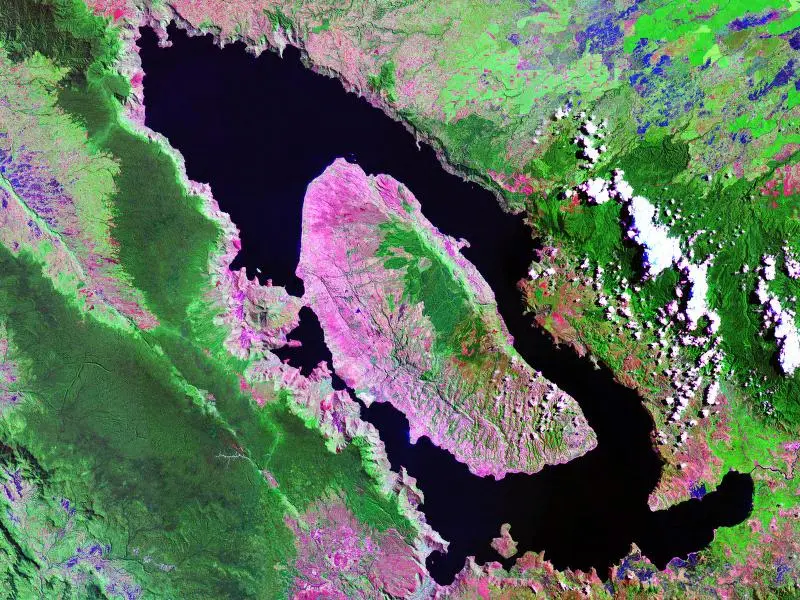
Roughly 74,000 years ago, a catastrophic geological event unfolded in what is now Sumatra, Indonesia. The Mount Toba super-eruption—the largest volcanic cataclysm on Earth in the last 2.6 million years—expelled thousands of cubic kilometers of magma into the atmosphere in a mere two weeks. To put this colossal output into perspective, it released roughly a thousand times more material than Mount Pinatubo’s infamous 1991 eruption.
For decades, paleoclimatologists, anthropologists, and evolutionary biologists have debated the aftermath of this planetary upheaval. Many popular theories, underpinned by genetic bottleneck hypotheses, posited that Toba triggered a devastating "volcanic winter." This putative deep freeze was thought to have choked off global food supplies, plunged planetary temperatures by several degrees, and pushed early human populations to the brink of total extinction.
However, a groundbreaking study published in Science Advances by an international team of researchers turns this apocalyptic narrative on its head. Led by Dr. Jinheum Park, a geoscientist at Johannes Gutenberg University in Mainz, Germany, the research team analyzed ultra-high-resolution sediment cores extracted from Lake Chala on the Kenya-Tanzania border.
Their findings suggest that the environmental consequences of the Toba super-eruption were surprisingly muted and remarkably short-lived. Rather than plunging the planet into a multi-year, civilization-ending ice age, the atmospheric veil of sulfur dioxide likely induced a regional cooling of a mere half a degree Celsius, with the primary disruptions subsiding in less than two years. Far from nearly wiping out humanity, Toba appears to have delivered a meteorological shock well within the normal envelope of Pleistocene climate variability—one that our early ancestors weathered with resilience.
Detailed Chronology: Unpacking the Toba Catastrophe
To understand how scientists arrived at this paradigm-shifting conclusion, one must first look at the methodological roadblocks that have historically hampered volcanic research.
The Limits of Ancient Mud Calendars
When massive volcanoes erupt, they inject gargantuan plumes of sulfur dioxide gas high into the stratosphere. There, chemical reactions transform the gas into a dense haze of microscopic sulfate aerosols that act like a planetary sunshade, scattering incoming solar radiation back into space. Standard geological intuition dictates that larger eruptions eject more sulfur dioxide, which in turn should trigger more severe global cooling.
Yet, atmospheric physics establishes a threshold for this feedback loop. As sulfate aerosols grow larger, they become heavier and settle out of the stratosphere much faster. This accelerated gravitational settling blunts their long-term efficacy as solar reflectors.
For years, computer climate models yielded wildly contradictory simulations of the Toba event. Depending on the variables punched into the equations, Toba appeared as either an extinction-level catastrophe or a minor atmospheric nuisance.
To resolve the debate, scientists turned to empirical data preserved in nature’s archives: volcanic ash layers trapped in seafloor mud and lake sediment cores. Unfortunately, standard underwater sediment cores function poorly when trying to date abrupt, violent anomalies. As sediment accumulates at the bottom of the deep ocean or large lakes, bioturbation and slow deposition rates blur the timeline.
"It’s really difficult to find any sedimentary archive which registers the regional climate at such high resolution," explains Park. Slicing a traditional ocean-floor mud core into thin layers still yields material mixed across decades. Because a volcanic winter typically lasts only one to three years, tracking its signature in standard mud was "like timing a sprint with a calendar."
Lake Chala: The Geological Stopwatch
The breakthrough occurred when Park and his colleagues shifted their focus to Lake Chala, a small, steep-walled crater lake nestled on the forested eastern flank of Mount Kilimanjaro. Fed by subterranean groundwater from the mountain’s slopes, Lake Chala possesses unique limnological properties. Its deep basin (reaching roughly 90 meters) never fully mixes down to the bottom during most of the year. Consequently, the lakebed is starved of oxygen and immune to bottom currents, creating a near-perfect, high-resolution environmental archive.
Sediments in Lake Chala accumulate as varves—distinct annual couplets. Each couplet consists of two contrasting layers:
- A light-colored lamina rich in the silica skeletons of microscopic algae called diatoms.
- A dark-colored lamina composed of fine-grained soils and wind-blown dust.
These annual varves operate precisely like tree rings. From October through April, the water column remains stably stratified, allowing dark organic and terrestrial materials to drift downward. Then, during the cool, dry, and windy months from June to September, strong seasonal winds churn the upper 50 meters of the water column.
This deep mixing drags nutrient-rich waters from the depths up to the sunlit surface. Diatoms feast on these upwelling nutrients, triggering massive seasonal algal blooms. When these diatoms die, their silica shells sink to the lakebed, forming a pale, light-colored layer. In unusually cool and dry years, the mixing season runs longer, producing thicker diatom layers.
Supporting Context & Metrics: Reading the Microscopic Record
Hunting for the fingerprints of the Toba eruption within Lake Chala’s varves required forensic precision. Toba’s ash was completely invisible to the naked eye; the particles were too sparse and small to form a traditional visible white band. Instead, the team discovered the ash by dissolving away the surrounding mud and counting microscopic glass shards—shattered remnants of molten magma atomized into ultra-fine dust during the eruption.
Tracing the Micro-Shards
Under X-ray fluorescence and high-powered microscopy, the Toba ash appeared as an abrupt, razor-thin spike in glass shards that vanished as quickly as they appeared.
"There is a sharp increase and a sharp peak, so we could rule out any significant influence by redeposition," Park notes. "We were quite sure that it was from direct ash fall."
In the sediment core, this ash layer manifested as a sliver just 0.3 millimeters thick—thinner than a single sheet of paper. To reconstruct the climate before, during, and after the event, Park’s team analyzed a 450-year window of mud bracketing this ash sliver, examining chemical scans, isotopic signatures, and diatom counts at two-to-three-year intervals.
Decoding the Post-Toba Stress Response
For the 260 years preceding the ash fall, Lake Chala’s varves revealed a stable, calm ecosystem operating under warm, wet climatic conditions. Immediately following the ash deposition, however, the researchers found something extraordinary: two thin green films, each only a few hundredths of a millimeter thick, sandwiched inside and directly above the ash layer.
Lacking intact organic remains, the team deduced that these green layers were not merely decomposing algae, but rather specialized stress-secretion products. When diatoms are starved of sunlight—such as when a super-eruption dims the sky—they secrete organic compounds as a physiological defense mechanism.
The subsequent dry season produced an unusually thick, pale layer measuring 1.2 millimeters across, driven by deep, prolonged water mixing induced by a chilled lake surface. Yet, remarkably, by the third year following the eruption, Lake Chala’s sedimentation patterns returned entirely to baseline. The cataclysmic event that supposedly nearly eradicated humanity had a physical expression lasting a maximum of 18 months.
Quantifying the Temperature Drop
To move beyond qualitative observations and calculate exact climatic metrics, the research team tracked two specific elemental ratios within the mud cores:

- Silicon-to-aluminum ratios: Quantified the annual volume of diatom blooms.
- Manganese-to-iron ratios: Tracked the penetration of oxygen driven into the depths by annual wind mixing.
Climate models suggested that if East Africa had experienced a catastrophic 2°C to 3°C cooling, Lake Chala’s seasonal mixing cycle would have broken down entirely. Excessive cooling would have driven the mixing layer so deep that massive, nutrient-depleting algal blooms would have occurred, followed by years of absolute sterility, resulting in thick, irregular sedimentary banding.
Instead, the post-Toba varves maintained their regular, orderly couplets. By comparing the magnitude of the post-Toba elemental shifts against baseline fluctuations recorded during the last ice age, Park’s team calculated that the regional cooling across equatorial East Africa peaked at roughly 0.5 degrees Celsius.
Pinpointing the Seasonal Timing
Furthermore, the precise placement of the ash within the annual varves solved a longstanding chronological mystery. Because pale diatom layers form between June and September (southern winter) and dark layers form between October and April (southern summer), the ash’s location inside a dark lamina points decisively to January or February.
This indicates the eruption occurred during the southern hemisphere’s summer and the northern hemisphere’s winter. Previous assumptions, based on asymmetric ash distribution across Asia, had incorrectly pointed toward the opposite season.
Future Outlook: Beyond Toba
While Lake Chala provides an unprecedented high-resolution window into equatorial climate dynamics during the Late Pleistocene, scientists acknowledge certain geographical limitations.
"It records the regional climate signals in eastern Africa, but it doesn’t show the impact on the whole globe," Park cautions. "There should be more studies using a similar approach, at more sites where the Toba ash is found."
The research team aims to apply this high-resolution varve-analysis methodology to other major volcanic super-eruptions preserved in sedimentary records worldwide. Targets of interest include:
- The Los Chocoyos eruption in Guatemala.
- The Oruanui eruption in New Zealand, which occurred approximately 26,000 years ago.
While these events did not match the sheer volumetric scale of Toba, they represent massive planetary disturbances whose true climatic footprints remain poorly constrained by traditional low-resolution dating techniques.
Ultimately, the new findings alter our understanding of human resilience. Across the 450-year window analyzed at Lake Chala, eastern equatorial Africa was already transitioning from a warm, wet interglacial regime into a cooler, drier glacial phase, mirroring natural cooling trends recorded in Greenland ice cores. Against this broader climatic backdrop, the Toba super-eruption was little more than a transient meteorological blip.
Our ancient ancestors did not survive a global volcanic winter because none occurred on a scale capable of breaking human adaptability. Instead, they endured a mild, 18-month disruption—proving that early humanity was far tougher, and our planet’s climate system far more resilient, than modern mythmakers ever imagined.