








Executive Overview
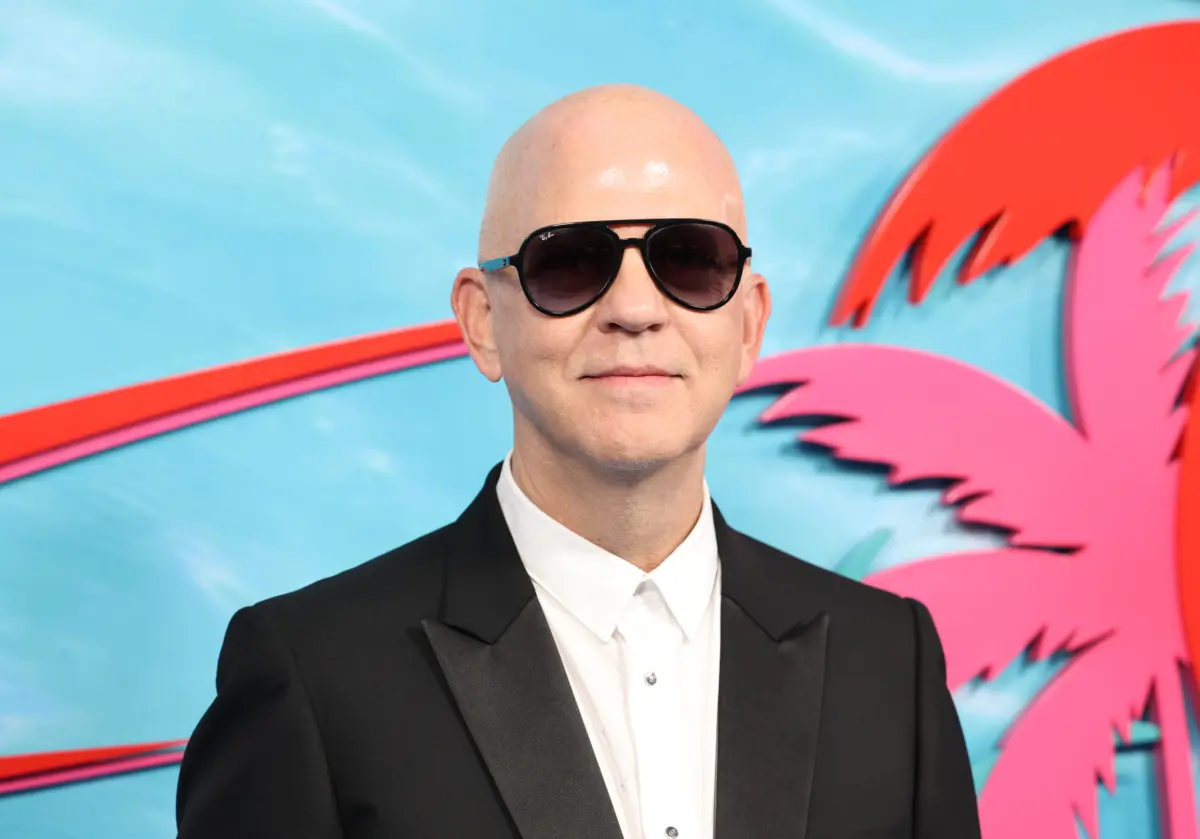
As the entertainment industry continues to navigate a labyrinth of economic shifts, shifting audience demographics, and sweeping corporate consolidation, powerhouse showrunner Ryan Murphy is taking a firm, unyielding stand for the geographic soul of American filmmaking. At the New York premiere of FX’s highly anticipated adaptation of Bret Easton Ellis’s thriller novel, The Shards, Murphy delivered a passionate defense of Los Angeles as the irreplaceable epicenter of television and film production.
While much of Hollywood has capitulated to the siren song of runaway production—fleeing California for the more aggressively subsidized tax havens of Canada, Georgia, and overseas markets—Murphy drew a hard line in the sand. He explicitly demanded that The Shards be shot locally, bypassing cheaper alternatives and refusing to compromise on the show’s authentic Los Angeles aesthetic.
In a wide-ranging, candid interview, Murphy pulled back the curtain on his creative and logistical decisions. Beyond addressing the economic realities of shooting in Southern California, Murphy discussed his deliberate approach to portraying sexuality for a Gen Z audience, the rigorous casting process that discovered breakout star Homer Gere, and his pointed critique of local government leadership regarding the ongoing crisis of empty soundstages. As Hollywood braces for seismic corporate changes—exemplified by the pending Paramount-Warner Bros. antitrust trial—Murphy’s stance serves as both a challenge and a blueprint for how powerful creators can leverage their influence to protect local industry infrastructure and preserve the livelihoods of below-the-line crews.
Detailed Chronology: From Page to Screen and the Battle for L.A.
The journey of The Shards to the screen has been as meticulous as it has been intentional. Based on Bret Easton Ellis’s celebrated, hallucinatory 1980s-set thriller, the project required a specific atmospheric texture that Murphy believed could only be captured by the dusty light, sprawling suburbs, and storied historic corridors of Los Angeles itself.
Despite mounting pressures from financial partners to cut costs by shipping production north to Canada—a playbook that has become standard operating procedure for modern television—Murphy stood firm. When he approached his studio partners with the ultimatum that The Shards had to film on location in Los Angeles, he anticipated pushback. Instead, according to the showrunner, his collaborators rolled up their sleeves to make the economics work, proving that where there is creative will, a logistical way can usually be found.
This philosophy is not an isolated incident for Murphy. The prolific creator has mandated that his next two consecutive projects also shoot strictly within Los Angeles county limits. For Murphy, who began working in Hollywood in 1995, walking past historic Southern California soundstages that now sit like ghost towns is more than just an economic tragedy—it is a haunting reminder of an industry losing its institutional memory. By refusing to outsource the physical labor of filmmaking, Murphy is attempting to reverse a tide that has left generations of local crew members struggling to find consistent work in their home city.
Supporting Context & Metrics: The Crisis of L.A. Production and Evolving Audiences
Murphy’s hardline stance arrives at a precarious time for the Southern California production ecosystem. Hollywood has long served as the historic epicenter of American film and television production, but it has spent the last several years aggressively bleeding jobs as studios chase competitive international and domestic tax incentives.
Despite recent legislative pushes by state and municipal officials attempting to patch up California’s film tax credit framework, the bleeding has not stopped. According to data from FilmLA, Los Angeles production volume dropped an additional 3.1% in the second quarter of 2026 alone. Soundstages that once hummed with round-the-clock activity now sit dark, leaving thousands of lighting technicians, camera operators, set designers, and production assistants without local employment.
Compounding these infrastructural challenges are rapidly shifting audience behaviors, particularly regarding sensitive content on screen. Recent studies, including a widely discussed UCLA analysis from a few years ago, revealed that nearly half of Gen Z viewers actively prefer or expect less sexual content in their film and television diet. When asked about this generational shift and industry critiques—such as Olivia Wilde’s assertions that past depictions of sex simply lacked realism—Murphy offered a nuanced perspective rooted in his decades-long television career.
Recalling his work on the groundbreaking FX series Nip/Tuck, which he directed the pilot for and guided through its run, Murphy noted that he never viewed the series as gratuitous, despite its provocative reputation. When crafting The Shards, Murphy applied this same hyper-consciousness. Rather than leaning on graphic sexual content to capture viewer attention, the series zeroes in on complex romantic triangles, high school dynamics, first-time experiences, first kisses, and devastating breakups. Drawing comparisons to recent viral hits like Heated Rivalry, Murphy emphasized that contemporary audiences—especially younger demographics—connect not with explicit imagery, but with character investment, emotional stakes, and authentic relationship dynamics.
The creative rigor extended off the screen and into the casting process. To populate the world of The Shards, Murphy and his casting team spent months auditioning close to 500 hopefuls. Among them was Homer Gere, who recently captured audience attention with a breakout role in HBO’s Euphoria. Despite Gere’s burgeoning association with Sam Levinson’s hit series, Murphy admitted he cast the young actor entirely on merit after an incredible audition process. Long before discovering Gere’s connection to Euphoria—a show Murphy admires deeply as a fan—the newcomer had already earned his role through months of rigorous, blind casting evaluations, subsequently proving his raw talent during production.
Official Statements and Industry Critique
While Murphy’s creative choices on The Shards highlight his storytelling ambitions, his off-screen commentary underscores a deep-seated frustration with political leadership in Los Angeles. During his interview with Variety, the showrunner did not mince words when assessing the current economic landscape and the administrative efforts being made to keep Hollywood working at home.
"The next tranche of work is bringing filming back to Los Angeles. It’s ridiculous. It’s a travesty," Murphy stated bluntly. Directing his criticism toward city leadership, he added, "I think the mayor [Karen Bass] could do a much better job than she’s done, for one."
Murphy argues that shifting the paradigm is fundamentally a shared responsibility between creators and elected officials. While he believes individual showrunners must exhibit the spine and economic creativity necessary to justify local budgets, the heavy lifting ultimately falls on government policy.
Calling out the systemic hurdles, Murphy revealed that he has taken his concerns directly to the top, holding discussions with California Governor Gavin Newsom, whom he counts as a friend. According to Murphy, Newsom is well aware of the crisis and agrees with the sentiment, but systemic change requires sweeping legislative action.
"I don’t think that’s the obstacle. It’s always the tax credits," Murphy explained, pointing to the disparity between California’s incentive packages and those offered by competing global jurisdictions. "The tax credit in L.A. should be better. It should be made more interesting and inviting to the studios. That starts with the government. I’ve spoken to the governor about this… He agrees. I haven’t spoken to Mayor Bass about this. I’d love to, but I think start there. Do that. That’s what matters."
Future Outlook: Consolidation, Creator Agency, and the Road Ahead
As the entertainment landscape braces for arguably the biggest corporate shake-up of the decade—the impending Paramount-Warner Bros. antitrust trial scheduled for March 2027—creators and executives alike are questioning the long-term viability of artistic independence amid extreme corporate consolidation.
When asked if creators can continue to thrive under the weight of these mega-mergers, Murphy offered a pragmatic, historical view. "Well, I think they will always continue to thrive, right? There have been many of those [mergers] in our history," he observed.
However, Murphy’s optimism for the broader corporate ecosystem is tempered by a fierce protectiveness over human capital. For him, the true casualty of consolidation and runaway production is not corporate profit margins, but the everyday workforce—the actors, writers, and below-the-line crews who deserve to sleep in their own beds at night, eat meals with their families, and practice their crafts in the city where the industry was born.
As The Shards makes its debut, it stands as more than just a prestige television adaptation or a nostalgic, 1980s-soaked love letter to Los Angeles. It serves as a real-world test case for auteur leverage. By proving that high-profile television can be successfully mounted within Los Angeles county lines through sheer creative will and collaborative problem-solving, Murphy has thrown down the gauntlet for his peers. Whether the rest of Hollywood—and the local politicians tasked with keeping them there—will follow his lead remains the defining question for the future of the entertainment capital of the world.