Executive Overview
The streaming wars have entered a fierce battle for user attention that extends far beyond traditional video consumption. In a definitive move to capture daily digital engagement, NBCUniversal has officially integrated “Public Eye”—an AI-generated, serialized detective mobile game—directly into the Peacock streaming application. Developed by Wolf Games, a studio backed by legendary television producer Dick Wolf, the new title represents a significant technological leap in how media conglomerates attempt to merge passive viewing with active, interactive entertainment.
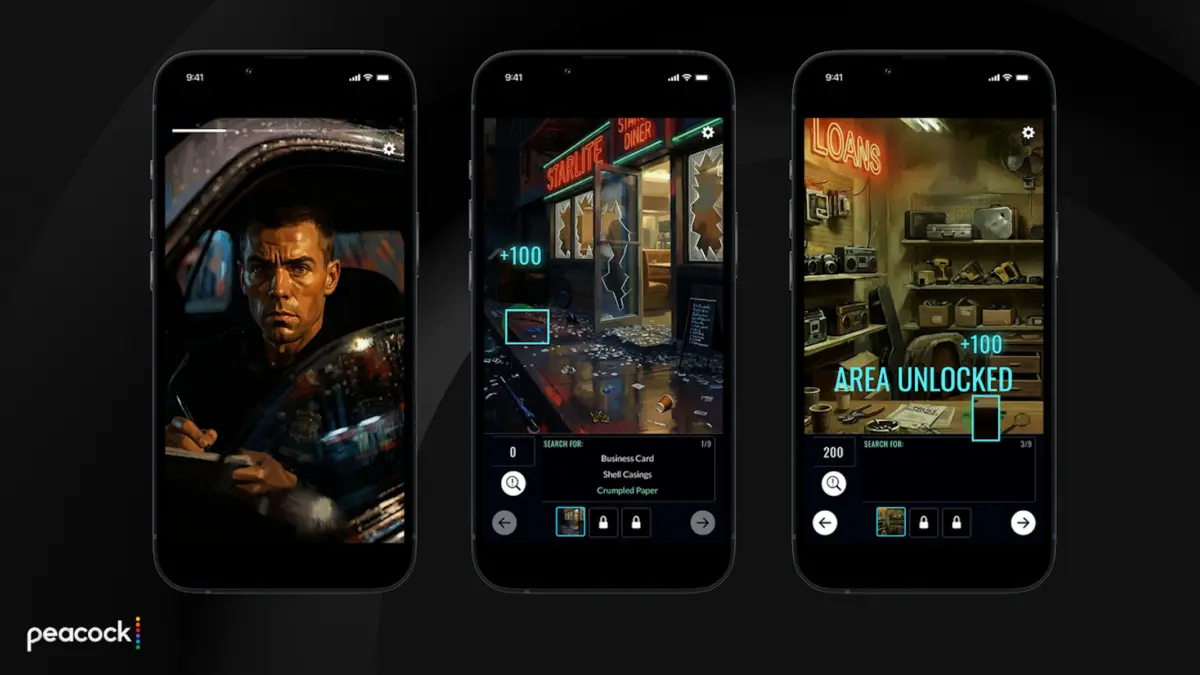
First teased in October during the initial formation of a strategic partnership between NBCUniversal and Wolf Games, “Public Eye” drops players into the gritty, neon-lit underbelly of Caldera City. Users assume the role of Officer Logan Dine, a patrol cop operating under the dangerous radar as he secretly investigates the murder of his own uncle. Blending episodic narrative delivery with puzzle-driven mechanics, the game challenges players to scour animated, AI-rendered crime scenes for hidden clues, ultimately unearthing a sprawling conspiracy that poisons the entire police department.
This launch is far more than a simple casual gaming gimmick; it marks a calculated escalation in NBCUniversal’s bid to transform Peacock from a standard video-on-demand (VOD) platform into an all-encompassing, interactive entertainment ecosystem. By leveraging generative artificial intelligence to streamline visual asset creation, Wolf Games has delivered a cinematic, highly responsive storytelling medium that runs natively inside a video streaming app.
As streaming platforms face mounting churn rates and plateauing subscriber growth, the strategy of keeping users inside the app via snackable, gamified content is yielding undeniable results. According to internal data provided by NBCUniversal, roughly 40% of Peacock’s mobile user base actively engaged with in-app games last June, proving that audiences are hungry for hybrid digital experiences. With “Public Eye” joining a growing roster of interactive titles—including its procedural sibling, “Law & Order: Clue Hunter”—NBCUniversal is charting a bold course for the future of entertainment, sitting squarely at the intersection of microdramas, generative AI, and gamified television.
Detailed Chronology: From Concept to Peacock Integration
The journey of “Public Eye” from a conceptual pitch to a fully realized application feature highlights the rapid evolution of artificial intelligence in commercial entertainment development.
October: The Birth of the NBCUniversal-Wolf Games Partnership
The foundational stone for this release was laid last October, when Wolf Games formally announced a groundbreaking partnership with NBCUniversal. Founded by industry innovators Andrew Adashek, Noah Rosenberg, and Elliot Wolf (son of television icon Dick Wolf), Wolf Games was established with a singular mission: to bridge the gap between high-stakes television drama and mobile-first, interactive gaming.
Recognizing the immense potential of generative AI to accelerate production cycles and lower the cost of asset generation, the studio sought a major distribution partner with a massive, pre-existing digital footprint. NBCUniversal, eager to find innovative ways to increase user session lengths on Peacock, emerged as the ideal collaborator. The initial announcement promised a suite of titles that would harness AI to deliver rapid-fire narrative experiences tailored specifically for mobile-first streaming audiences.
Winter to Spring: Development and AI Integration
In the months following the partnership announcement, Wolf Games utilized advanced generative AI pipelines to construct the visual and narrative framework of Caldera City. Unlike traditional video game development—which can take years of painstaking manual modeling, texture painting, and script branching—the studio leveraged AI to rapidly iterate on environmental art, character designs, and dynamic scene generation.
This technological approach allowed the development team to focus heavily on the narrative core: crafting a serialized, high-stakes detective thriller that mimics the pacing of prestige cable television while maintaining the instant gratification of a mobile puzzle game. Every episode was designed to drop users immediately into the action, utilizing AI-assisted visual synthesis to ensure that animated crime scenes remained rich, atmospheric, and visually arresting without requiring massive rendering farms or multi-year development timelines.
The Summer Surge: In-App Deployment and Public Launch
By mid-year, internal testing on Peacock yielded staggering engagement figures. Data from June indicated that approximately 40% of Peacock’s mobile users were interacting with the platform’s burgeoning games section. Bolstered by the early success of “Law & Order: Clue Hunter”—where players were found to average more than six minutes per day actively solving in-app mysteries—NBCUniversal cleared the path for the official rollout of “Public Eye.”
With the app update now live, Peacock subscribers can seamlessly transition from streaming their favorite television series to diving headfirst into Officer Logan Dine’s clandestine investigation. The game’s episodic distribution model ensures that users have a compelling reason to open the Peacock app on a daily basis, effectively turning a weekly or bi-weekly streaming destination into an everyday digital habit.
Supporting Context & Metrics: The Economics of In-App Gaming
To fully understand the strategic weight of “Public Eye,” one must examine the shifting economics of the modern streaming landscape. Traditional subscription video-on-demand (SVOD) models are increasingly constrained by subscriber saturation. Acquisition costs are skyrocketing, and churn rates remain a persistent threat to profitability. Consequently, platform operators are shifting their primary Key Performance Indicators (KPIs) from pure subscriber counts to total user engagement and daily active use (DAU).
The Power of Microdramas and Gamified Storytelling
Media consumption habits, particularly among younger demographic cohorts, have shifted definitively toward bite-sized, highly immersive content formats often referred to as "microdramas." These narratives rely on rapid pacing, immediate emotional stakes, and interactive elements that allow the consumer to feel like an active participant rather than a passive viewer.
“Public Eye” capitalizes directly on this cultural shift. By packaging a serialized detective procedural into a mobile game format, Wolf Games has engineered a product that fits perfectly into the modern consumer’s fractured attention economy. Users can boot up the game during a morning commute, spend five minutes hunting for digital clues in a corrupted police precinct, and advance the narrative arc of Caldera City before even stepping foot in an office.
Hard Data: Peacock’s Mobile Engagement Metrics
NBCUniversal’s bet on gaming is not merely speculative; it is grounded in hard, quantitative success metrics gathered from existing Peacock properties:
- The 40% Benchmark: During June metrics tracking, an impressive 40% of total Peacock mobile users actively engaged with the platform’s embedded gaming offerings. This proves that mobile streaming audiences are not solely focused on video playback; they actively welcome interactive diversions.
- The "Law & Order: Clue Hunter" Precedent: Serving as the immediate predecessor to “Public Eye,” “Law & Order: Clue Hunter” demonstrated extraordinary stickiness. Early analytics reveal that engaged players spend an average of more than six minutes per day inside the game. In digital media terms, six minutes of continuous, active engagement within a streaming app is an eternity—significantly boosting overall platform stickiness and ad-inventory value.
- Diversified Portfolio Integration: Alongside the Wolf Games titles, Peacock has successfully integrated casual game mainstays such as “Jeopardy! TODAY” and “Wheel of Fortune TODAY.” However, narrative-driven titles like “Public Eye” and “Clue Hunter” represent a higher tier of engagement, pulling users into deep, serialized fictional universes rather than isolated trivia sessions.
Official Statements: Industry Leaders Vision for the Future
The convergence of television IP, mobile gaming, and generative artificial intelligence has elicited strong commentary from the executives driving the initiative.
John Jelley, NBCUniversal Media Group’s Senior Vice President of Product UX and Design, emphasized the strategic importance of bridging the gap between viewing and doing:
“‘Public Eye’ sits right at the intersection of trends users are excited about: microdramas and interactive storytelling. This new experience invites fans to step into the story rather than simply watch it unfold. Through our work with Wolf Games, we’re exploring how Peacock can bring together video, gameplay, and storytelling in a single destination, creating more opportunities for audiences to engage with the worlds they love throughout the day.”
Jelley’s remarks underscore NBCUniversal’s broader ambition: to capture the entirety of a consumer’s daily media diet. By offering interactive extensions of classic crime procedurals alongside original AI-crafted detective mysteries, Peacock is transforming from a passive utility into an active digital ecosystem.
Echoing this sentiment, Elliot Wolf, co-founder of Wolf Games and son of television visionary Dick Wolf, highlighted the engineering and design philosophy behind the
“‘Public Eye’ was built to be incredibly easy to step into. Within seconds you’re spotting clues, meeting characters, and feeling a high-stakes story come together under your fingers. It’s a new world of crime and betrayal that keeps you on the edge of your seat and coming back episode after episode. Immersive and cinematic, but as easy to pick up as your morning puzzle.”
Wolf’s emphasis on accessibility points to a crucial design pillar of modern AI-driven entertainment: removing the steep learning curves traditionally associated with narrative video games. By pairing intuitive "hidden object" and puzzle mechanics with cinematic production values, Wolf Games has ensured that the barrier to entry is virtually non-existent for Peacock’s mainstream subscriber base.
Future Outlook: The Intersection of AI, Streaming, and Interactive Media
The launch of “Public Eye” on Peacock serves as a bellwether for the entertainment industry at large. As generative artificial intelligence matures, media companies are no longer viewing AI as a mere cost-cutting utility for background tasks; they are recognizing it as a core engine for creative production and audience retention.
The Scalability of AI-Generated Narratives
The integration of AI tools in developing “Public Eye” points toward a future where serialized gaming content can be produced at speeds that mirror traditional television production schedules. If Wolf Games can continuously push out new episodes of Caldera City’s overarching police conspiracy without suffering the multi-year production bottlenecks typical of AAA video games, it could establish a revolutionary blueprint for episodic, interactive transmedia storytelling.
Expanding the Peacock Ecosystem
Looking ahead, industry analysts expect NBCUniversal to double down on this hybrid model. If 40% mobile engagement rates can be achieved with a relatively nascent gaming lineup, the financial incentive to expand the catalog is immense. Future iterations may feature deeper cross-promotional tie-ins, allowing viewers watching traditional NBC crime dramas to instantly jump into companion mobile investigations featuring familiar narrative tropes, localized character models, and AI-driven branching storylines.
Furthermore, as monetization models evolve within streaming apps—ranging from subscription tier perks to gamified advertising formats—interactive titles like “Public Eye” provide brands with novel ways to connect with consumers. Rather than sitting through a traditional commercial break, engaged users spending upwards of six to ten minutes a day solving mysteries within a branded or platform-native ecosystem offer media buyers an unprecedented level of attention.
Conclusion
With the debut of “Public Eye,” Peacock has firmly established itself as a laboratory for the future of digital entertainment. By successfully fusing Dick Wolf’s legendary mastery of crime procedurals with cutting-edge generative AI and mobile puzzle mechanics, NBCUniversal and Wolf Games have crafted a compelling glimpse into tomorrow’s media landscape. As audiences increasingly demand to be participants rather than mere spectators, the streaming app of the future will not just be a library of moving images—it will be a living, breathing world waiting to be solved.