Executive Overview
As the retail calendar shifts toward the high-stakes final quarter of the year, ecommerce content marketers face a landscape defined by both unprecedented digital noise and critical consumer demand for authenticity. October 2026 presents a rich tapestry of cultural milestones, seasonal transitions, and technological shifts that brands can leverage to cut through the clutter. At its core, successful content marketing relies on the principle of reciprocity: brands must provide genuine utility, education, or entertainment to their audiences before ever asking for attention, trust, or capital.
Rather than relying solely on automated generation tools that risk blending into the algorithmic background, forward-thinking merchants are looking for nuanced ways to connect with shoppers. This month offers five distinct, actionable content avenues—ranging from literary centennials and user-generated holiday campaigns to expert challenges against artificial intelligence, archival deep-dives, and agile newsjacking. By implementing these strategies, ecommerce businesses can build deeper customer loyalty, enhance brand differentiation, and drive sustainable conversions as the holiday shopping season accelerates.

Detailed Chronology: Key October Content Milestones and Opportunities
To execute a successful content calendar, marketers must map their campaigns against fixed cultural events and shifting consumer behaviors. The timeline of October 2026 unfolds across several key thematic pillars:
- Early October: The Autumnal Pivot and AI-vs.-Expert Audits
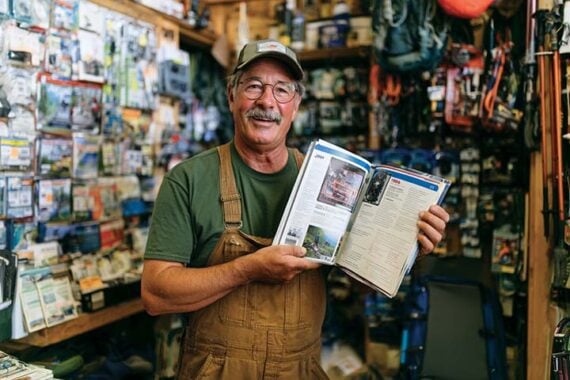
As temperatures drop and consumers begin winterizing their homes, servicing vehicles, and unpacking cold-weather apparel, the first half of the month is ideal for practical, problem-solving content. This is the optimal window to launch "AI versus Expert" tutorials, contrasting automated advice with human craftsmanship. - Mid-October: Archival Month and Literary Celebrations
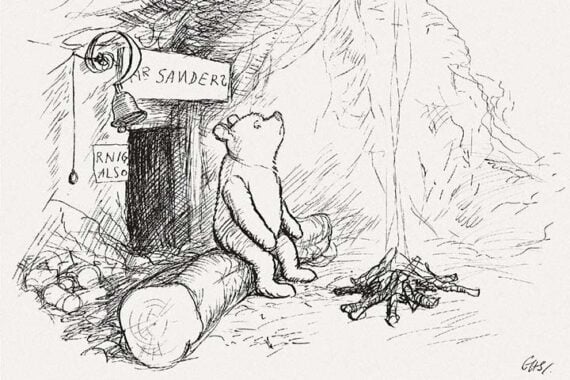
October is officially recognized as American Archives Month, offering a structured opportunity for brands to showcase their heritage, old product catalogs, and historical evolution. Simultaneously, October 14 marks a major cultural landmark: the exact centennial of the publication of A.A. Milne’s Winnie-the-Pooh in the US and Britain, opening doors for lifestyle, literary, and whimsical retail campaigns. - Late October: The Halloween UGC Surge
As Halloween approaches—a massive economic driver in the United States worth upward of $13 billion—content shifts toward high-engagement user-generated content (UGC). Brands should harness customer photos, reviews, and social submissions to demonstrate real-world product utility, contrasting human experiences against cheap, synthetic AI outputs. - All Month Long: Agile Newsjacking
Throughout the month, content marketing teams must maintain a real-time posture. Monitoring breaking news, viral commentary from public figures, and cultural trends allows brands to swiftly tie current events back to their product catalogs, much like niche apparel brands reacting to high-profile statements on artificial intelligence and science fiction.
Supporting Context & Metrics: The Modern Content Landscape
The strategic imperative for these five content ideas is anchored in shifting consumer metrics and technological realities. Modern ecommerce cannot be sustained by volume alone; it requires measurable trust.
The Economic Power of Seasonal Events
Consumer spending behaviors in October set the tone for the remainder of Q4. Halloween alone commands a staggering economic footprint exceeding $13 billion in the United States. While candy and costumes capture the lion’s share of this expenditure, decorations, themed entertainment, and the rapidly growing pet costume segment represent vital secondary markets. For merchants, these segments provide a natural runway for interactive campaigns that invite shoppers to become active participants rather than passive buyers.
The Rise of Synthetic Fatigue and the UGC Premium
Generative artificial intelligence has democratized content creation, making polished text and synthetic imagery cheap and abundant. However, this proliferation has created a counter-trend: consumer fatigue and skepticism toward unverified digital media. Shoppers increasingly demand proof that real humans use, value, and enjoy a product.

Major social and discovery platforms have codified this shift:
- Pinterest actively labels AI-generated images and empowers users to filter them out of specific feeds.
- TikTok and Meta have implemented strict transparency protocols to identify and label AI-generated media and manipulated content.
In this environment, user-generated content acts as an indispensable trust signal. Customer-submitted photographs, video reviews, and social proof provide the authenticity that algorithmic marketing simply cannot replicate.

Official Industry Perspectives and Institutional Insights
Industry leaders, archival institutions, and platform executives increasingly emphasize the necessity of human authenticity, historical preservation, and transparency in digital spaces.
The Value of Institutional Memory
Through initiatives like American Archives Month, organizations such as the U.S. National Archives highlight the critical importance of preserving institutional history. For commercial enterprises, this preservation extends beyond corporate compliance—it serves as a powerful marketing asset. Re-examining decades-old packaging, retired product lines, and vintage advertisements allows brands to tell a compelling story of resilience, quality, and evolution. In an era dominated by transient digital trends, physical or digitized archives offer a grounding sense of permanence.
Transparency in the Age of AI
As artificial intelligence reshapes search engines, social media algorithms, and content generation, technology platforms are pushing for radical transparency. Meta, TikTok, and Pinterest have all rolled out systemic labeling updates to ensure users can differentiate between human artistry and synthetic generation. For ecommerce content marketers, this structural shift validates a hybrid approach: utilizing AI for preliminary research or ideation, but anchoring final execution in verifiable human expertise and customer-driven proof.
Future Outlook: The Evolution of Ecommerce Content Marketing
Looking beyond October 2026, the intersection of commerce and content will continue to be defined by agility, hyper-personalization, and radical authenticity.

The successful merchant of the future will not merely publish articles to satisfy search engine algorithms; they will curate communities where brand storytelling intersects with real-world consumer experiences. Whether celebrating a century-old literary bear like Winnie-the-Pooh, staging head-to-head performance tests between advanced AI models and seasoned trade experts, or reacting in real time to breaking cultural news, the winning formula remains unchanged.
Reciprocity will continue to rule: give your audience something genuinely informative, entertaining, or useful first, and the attention, trust, and business will naturally follow. By embracing these five strategic pillars this October, ecommerce brands can lay a resilient foundation for a profitable, high-engagement Q4.