Executive Overview
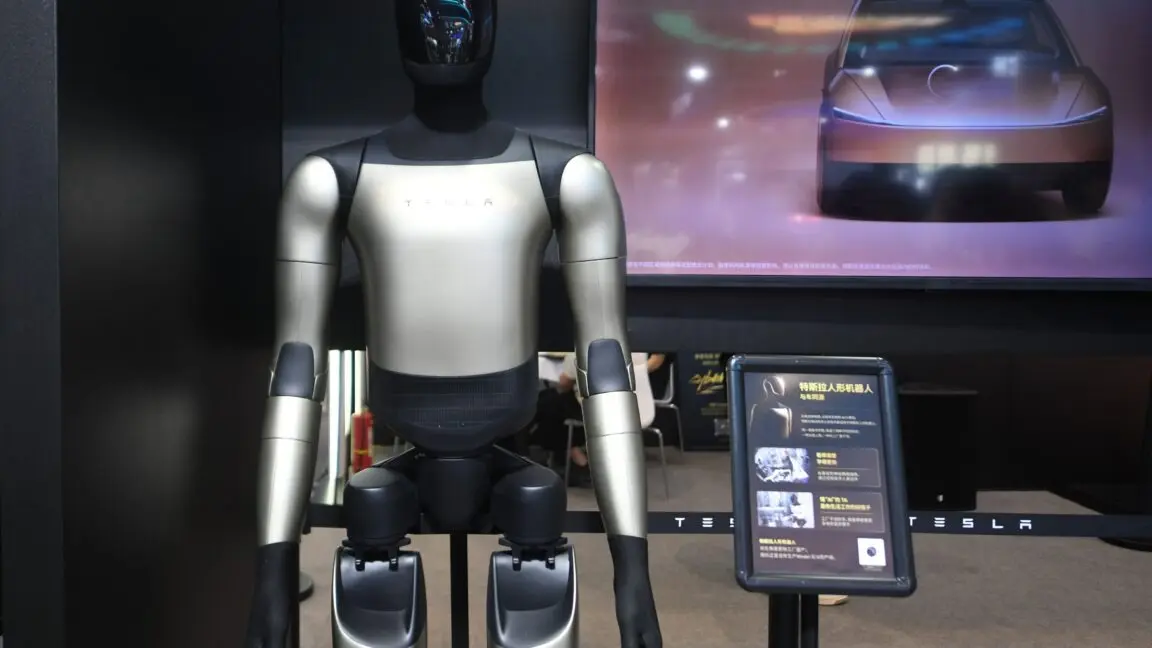
The race to commercialize humanoid robotics has long been dominated by grand visions of versatile, autonomous machines seamlessly integrating into human workspaces. Among the high-profile contenders, Tesla and its Optimus humanoid robot project have captured the public imagination, promising a future where automated labor alleviates workforce shortages and transforms industrial manufacturing. However, recent investigative reports and industry insights peel back the glossy veneer of promotional unveils, revealing a reality fraught with intensive manual labor, hardware failures, artificial intelligence (AI) limitations, and delicate supply chain dynamics.
Tesla’s journey with the Optimus robot highlights the immense friction between the theoretical capabilities of general-purpose AI and the grueling, highly specialized demands of hardware engineering. Newly produced Optimus units frequently emerge from the manufacturing line requiring immediate, hands-on remediation due to imperfect and manually intensive production processes. Furthermore, foundational hardware components—such as the touch sensors integrated into the robot’s hands—have proved insufficiently reliable, forcing the company to pivot toward modular design choices, including a replaceable, glove-like sensor layer.
Beyond hardware friction, the software powering these machines faces structural bottlenecks. Despite sweeping advancements in machine learning, Tesla’s robotic AI capabilities remain insufficient for true general-purpose operations. Rather than acting as autonomous agents capable of dynamically adapting to unforeseen environments, current Optimus iterations depend heavily on rigid, custom-coded programming to execute specific tasks within heavily controlled settings.
To overcome these cognitive hurdles, Tesla has leaned heavily on imitation learning, triggering a massive operational push for human training data. This pursuit led to internal friction when factory workers were tasked with wearing motion-capture suits to record physical movements, fueling anxieties over workplace displacement. Consequently, Tesla shifted this responsibility to dedicated data-collection hubs staffed by specialized teams.
At the same time, the broader macro-environment presents compounding challenges. Tesla—alongside numerous Silicon Valley startups and legacy manufacturers—maintains a heavy reliance on Chinese suppliers for vital robotic components, even as geopolitical headwinds, domestic regulatory crackdowns, and foreign hardware bans tighten the screws on the United States robotics supply chain. Facing fierce global competition from Asian automakers, dedicated robotics pioneers, and heavily capitalized industrial giants like Toyota and Hyundai, Tesla stands at a critical crossroads. The ultimate viability of Optimus, and indeed the broader humanoid robotics industry, will depend less on futuristic marketing campaigns and more on resolving foundational questions of durability, cost-effectiveness, safety, and scalable deployment.
Detailed Chronology: From Concept to Factory Floor
The evolution of Tesla’s humanoid robotics initiative reads as a high-stakes sprint against both technological limitations and intense public scrutiny. Understanding the current state of the Optimus project requires examining the chronological milestones and operational pivots that have shaped its development.
The Initial Unveiling and Prototype Phase
When Tesla first introduced the concept of its humanoid robot, it was presented as a natural extension of the company’s automotive automation technology. Leveraging Tesla’s existing expertise in computer vision, battery management, and neural networks, the project promised a multipurpose assistant capable of performing mundane or hazardous physical labor. Initial iterations showcased on stage relied heavily on tethered prototypes or remote-assisted demonstrations, leaving industry experts skeptical about the true state of the robot’s onboard autonomy and hardware resilience.
Transitioning to Factory Realities
As the project transitioned from conceptual stagecraft to practical engineering, the engineering teams encountered the harsh realities of physical manufacturing. The construction of the humanoid chassis proved to be remarkably imperfect and labor-intensive. Units rolling off early production sequences frequently exhibited structural or electrical anomalies that demanded immediate, manual intervention before they could be deemed operational.
A prime vulnerability identified during early testing was the robot’s tactile feedback system. The initial touch sensors embedded within the hands of the Optimus units proved excessively fragile and unreliable under standard operational stresses. Recognizing that replacing an entire robotic hand due to localized sensor failure would be commercially and logistically untenable, Tesla engineers engineered a modular workaround: a glove-like layer of tactile sensors that can be detached and replaced independently, minimizing maintenance overhead.
The AI Bottleneck and Controlled Environments
Despite Tesla’s immense prowess in autonomous driving software through its Full Self-Driving (FSD) stack, transitioning those algorithms into bipedal humanoid form factors has proved exceptionally difficult. Industry analysts and insider accounts indicate that Optimus’s current AI capabilities fall short of general-purpose utility.
Rather than walking into a room, analyzing an unfamiliar object, and determining how to interact with it—a hallmark of true general intelligence—Optimus units currently require meticulous programming. Every movement sequence and task execution must be carefully scripted for specific, highly controlled environments. This operational constraint mirrors the broader struggles of the robotics sector, where creating generalized spatial reasoning and dexterous manipulation remains an elusive holy grail.
The Evolution of Data Collection and Workforce Friction
To bridge the gap between static programming and dynamic learning, robotics companies must acquire vast quantities of high-quality training data. Imitation learning—where a robot learns by observing and replicating human actions—has become the standard methodology for teaching machines manual dexterity.
To feed this algorithmic appetite, Tesla initially deployed a program within its factories in Texas and California, requiring human workers to wear specialized suits embedded with motion-capture sensors. These suits recorded the workers’ physical movements, gaits, and hand gestures while performing factory tasks, translating human labor directly into machine-learning datasets.
However, this initiative quickly ran into internal morale issues. As reported by industry insiders, factory employees expressed deep unease and frustration upon realizing they were actively training the very machines designed to eventually replace them. The psychological friction of contributing to one’s potential obsolescence created a tense internal environment. In response to these complaints and the risk of workforce alienation, Tesla pivoted its strategy. The company quietly phased out the mandatory factory-floor recording sessions, shifting the heavy lifting of data collection to dedicated, specialized teams stationed inside newly established "training hubs."
Supporting Context & Metrics: Supply Chains, Geopolitics, and Global Competition
While Tesla grapples with internal engineering and workforce hurdles, the external landscape of robotics manufacturing is undergoing seismic shifts characterized by intense international competition and regulatory intervention.
The China Supply Chain Dependency
A recurring vulnerability across the United States robotics industry is its deep-seated reliance on Chinese manufacturing ecosystems for specialized components. High-precision actuators, lightweight structural materials, advanced sensors, and specialized motor controllers are frequently sourced from suppliers in Shenzhen and other key Chinese tech hubs.
This dynamic has persisted despite aggressive policy maneuvers by Washington to decouple domestic supply chains from foreign adversaries. Previous investigative reports highlighted how Silicon Valley robotics startups routinely bypass logistical friction by packing essential robotic parts into their luggage when traveling from manufacturing hubs in China back to the United States.
The geopolitical stakes escalated significantly when the Federal Communications Commission (FCC) enacted sweeping regulatory measures banning the deployment of new foreign-made robots—including humanoid units, four-legged robot dogs, and commercial robotic vacuum cleaners—within sensitive American infrastructure networks. These regulatory barriers place companies reliant on cross-border supply chains in a precarious position, forcing a difficult balancing act between cost-efficiency and regulatory compliance.
Stiff Global Competition
Tesla is far from alone in its pursuit of bipedal automation. The global marketplace for humanoid robots is saturated with heavily capitalized competitors spanning Asia, Europe, and North America.
- Automotive Giants: Legacy automakers are rapidly pivoting toward robotic integration. Toyota has announced multi-billion-dollar investments aimed at upgrading its manufacturing facilities with advanced industrial robots, incorporating humanoid form factors where appropriate. Meanwhile, Hyundai is executing a massive deployment strategy, planning to integrate up to 25,000 Atlas humanoid robots—developed by its United States-based subsidiary, Boston Dynamics—across its manufacturing ecosystem over the coming years.
- Specialized Robotics Pioneers: Dedicated robotics firms are applying hyper-focused engineering to undercut traditional manufacturing costs and accelerate deployment schedules. Companies like Unitree Robotics have captured headlines with aggressive cost-cutting strategies, producing remarkably inexpensive humanoid platforms that challenge the economic viability of higher-cost competitors.
- Commercial Warehousing: In the commercial deployment sphere, Oregon-based Agility Robotics has pushed past the experimental phase. Agility’s humanoid robots began active deployment inside an Atlanta-area warehouse managed by GXO Logistics as early as 2024, setting a tangible benchmark for supply-chain integration.
Despite these aggressive deployment timelines, industry analysts emphasize that the overarching business case for humanoid robots remains unproven. Sustained, cost-effective deployments require more than impressive marketing demonstrations; they demand empirical proof that bipedal machines can operate continuously, economically, and safely alongside human coworkers in dynamic, unpredictable environments. Recent engineering innovations—such as Agility’s implementation of automated safety behaviors, like stopping and squatting to avoid harming human colleagues—underscore the immense safety considerations that still govern real-world integration.
Official Statements and Industry Insights
The complexities of the humanoid robotics sector have elicited varied responses from corporate leadership, labor advocates, and industry analysts. While executive messaging consistently emphasizes a future of harmonious human-robot collaboration, independent investigations paint a more nuanced portrait of operational challenges.
Industry observers note that Tesla’s iterative approach—characterized by rapid prototyping, public reveals, and subsequent architectural revisions—is a hallmark of the company’s broader product development philosophy. However, robotics experts caution that physical hardware does not iterate with the same frictionless velocity as software.
"Building a software patch is fundamentally different from redesigning a multi-axis robotic hand or re-architecting a fragile tactile sensor array," notes an independent robotics researcher who requested anonymity. "The physical world imposes unforgiving constraints of friction, wear, and thermodynamics that algorithms alone cannot simply code away."
Regarding the labor dynamics of data collection, workforce analysts have pointed out the acute irony—and peril—of relying on human labor to train automated replacements. The friction experienced within Tesla’s Texas and California facilities highlights an emerging socioeconomic challenge: managing workforce anxiety during transitional technological paradigms. By shifting data collection duties away from production-line workers and into isolated training hubs, Tesla has temporarily diffused internal dissent, yet the underlying tension between human labor and automated substitution remains a central narrative of the modern industrial landscape.
Furthermore, supply chain experts have voiced concern over the friction between federal regulatory crackdowns and the commercial realities of hardware manufacturing. While policy frameworks like FCC bans seek to foster domestic technological independence, the near-term absence of a mature domestic supply chain for specialized robotic actuators and micro-sensors leaves American manufacturers heavily exposed to international market dynamics.
Future Outlook: The Road Ahead for Humanoid Robotics
As the humanoid robotics industry navigates the latter half of the decade, the trajectory of projects like Tesla’s Optimus will serve as a crucial bellwether for the viability of general-purpose automation.
Overcoming Technical and Cognitive Plateaus
For Optimus and competing platforms to transition from controlled laboratory experiments and scripted demonstrations to true commercial utility, two primary bottlenecks must be cleared:
- Material Durability and Modular Design: Manufacturing processes must mature to reduce reliance on intensive manual adjustments. Innovations such as Tesla’s replaceable sensor gloves point toward a necessary industry-wide shift toward modular, easily serviceable hardware that can withstand the rigors of industrial deployment without requiring total unit replacement.
- Generalized Spatial AI: The leap from rigid, environment-specific programming to autonomous spatial reasoning will require breakthroughs in foundational AI models. Training robots to interpret chaotic, unstructured human environments through imitation learning and synthetic simulation will dictate whether humanoids become ubiquitous industrial tools or remain costly niche novelties.
Economic Viability and Workplace Integration
Beyond technical prowess, the ultimate success of humanoid robotics hinges on economic fundamentals. The capital expenditure required to purchase, maintain, and integrate bipedal robots must be decisively offset by demonstrable productivity gains. Companies like Hyundai and Agility Robotics are putting skin in the game with large-scale deployment plans, but the long-term return on investment across diverse sectors—from automotive assembly to logistics warehousing—remains to be empirically verified over multi-year operational lifecycles.
Ultimately, the integration of humanoid robots into human society will require a delicate reconciliation between technological ambition and social responsibility. As regulatory frameworks tighten around foreign hardware supply chains and labor markets grapple with the specter of automation, the winners of the global robotics race will not simply be those who build the most agile machines, but those who successfully navigate the complex interplay of hardware resilience, cognitive autonomy, regulatory compliance, and human workforce dynamics.