
Executive Overview
In the modern digital economy, the ability to write words that move people to action is arguably the most valuable high-income skill a professional can acquire. Having generated over seven figures online primarily through written marketing channels—such as blog posts, social media, and email newsletters—the foundational secret to scalable customer acquisition is not complex technology or boundless ad spend; it is elite copywriting.
Copywriting is frequently misunderstood as an artistic endeavor tethered to eloquent phrasing and literary flair. In practice, the opposite is true. Exceptional copywriters are intensely clear, ruthlessly concise, and fundamentally focused on converting readers into paying customers. By prioritizing revenue generation over mere stylistic elegance, writers can position themselves as indispensable commercial assets. This report breaks down the definitive principles, tactical frameworks, and psychological drivers required to transform ordinary content into a predictable revenue-generating ecosystem.

Detailed Chronology: The Evolution of a Copywriter’s Mindset
The journey from a struggling freelance writer to a seven-figure agency owner and community partner is rarely linear. It requires a systematic evolution away from creative vanity and toward objective-driven commercial writing.
Phase 1: Shifting from Craft to Conversion
Early in a writer’s career, the primary objective is often self-expression. Beginners obsess over vocabulary, sentence flow, and stylistic beauty. However, the commercial reality of the marketplace dictates a different metric: return on investment (ROI). A great copywriter understands that words are simply a vehicle for empathy, trust, and persuasion. When a writer stops asking, "Is this sentence beautiful?" and starts asking, "Does this sentence clearly articulate value and overcome hesitation?" their career trajectory shifts permanently.
Phase 2: Building Operational Systems
As volume increases, the risk of writer’s block and erratic quality grows. The transition from amateur to professional requires establishing a rigid, repeatable writing process. By breaking down content creation into distinct phases—such as audience research, pain-point mapping, outlining, drafting, and tightening—writers eliminate friction. A structured process ensures that every piece of copy consistently hits the psychological triggers required to capture attention, build authority, and deliver a clear call to action (CTA).
Phase 3: Transitioning from Service Provider to Product Owner
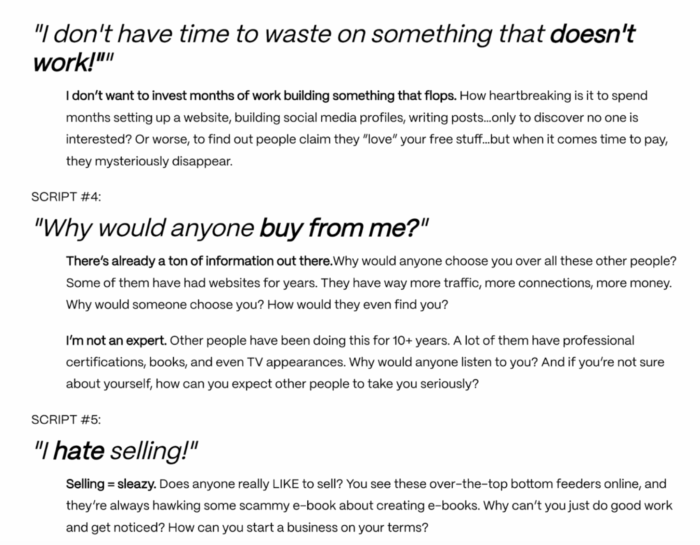
The ultimate evolution in a copywriter’s lifecycle is applying these persuasion frameworks to one’s own ventures. Whether launching an affiliate marketing site, building a SaaS tool, or scaling a digital community, writing copy for personal products bridges the gap between theory and execution. It teaches the vital difference between generating empty "visitors" and capturing genuine "purchase intent."
Supporting Context & Metrics: The 10 Commandments of High-Converting Copy
To achieve mastery in the craft of persuasion, practitioners must internalize ten foundational rules that govern human behavior and digital conversion.
1. Talk to Customers (Deep Empathy Research)
The cornerstone of effective copywriting is profound customer understanding. Your copy must capture attention, build trust, introduce a viable solution, dismantle objections, and convert the reader. To achieve this, you must meticulously map your prospect’s reality.

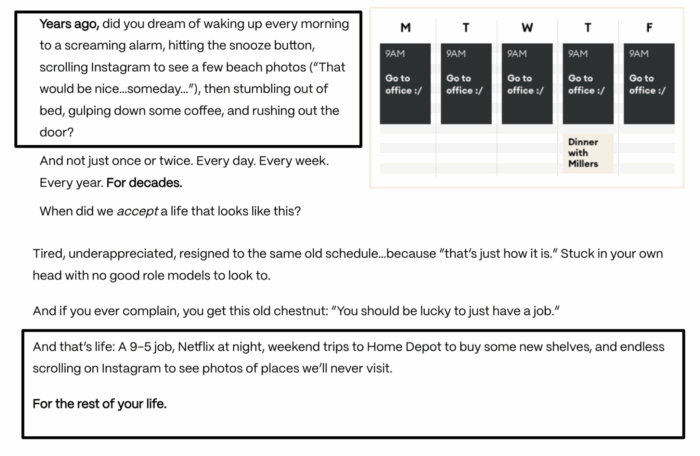
Consider how elite marketers construct landing pages. Instead of relying on vague hooks like "learn how to make more money," they mirror the exact psychological friction points of their ideal audience—such as the monotony of a 9-to-5 job, evening television loops, weekend errands, and endless social media scrolling. By reflecting the exact pain of a prospect’s reality, you prove that your solution was custom-built for them.
Tactical Research Methods:

- Sales Call Transcripts: If direct customer interviews are impossible, download sales call recordings, upload transcripts into an AI tool like ChatGPT, and extract recurring pain points and objections.
- Online Communities & Reddit: Dive into niche subreddits and Facebook groups where your target audience congregates. Analyze their language, tone, and frustrations to inform your messaging.
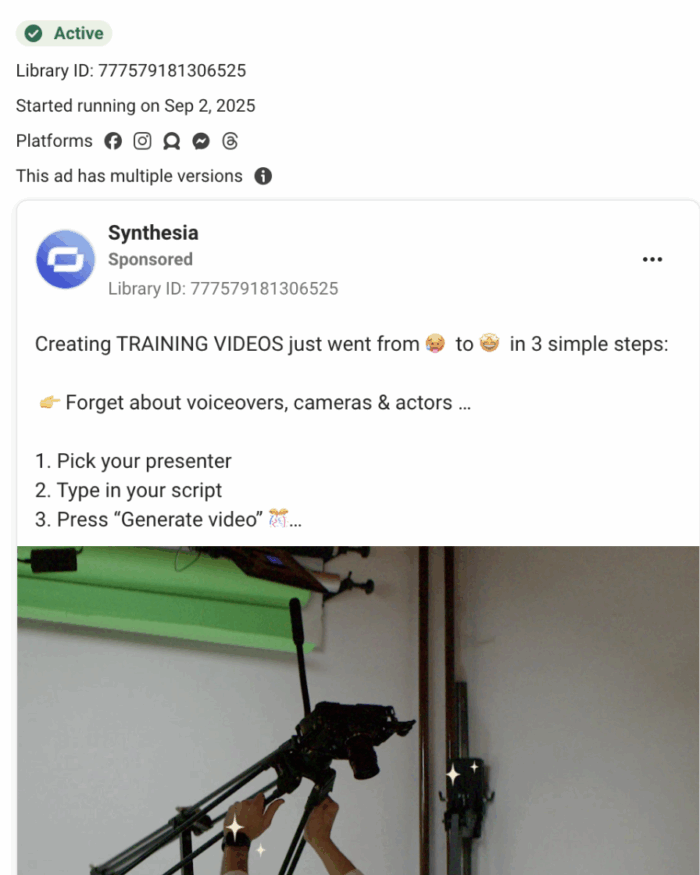
- Competitor Ad Libraries: Utilize LinkedIn and Facebook ad libraries to identify long-running advertisements. Ads that run continuously generally feature validated, high-converting pain points.
2. Learn From Your Competitors
Do not start from scratch. Industry leaders have already invested vast sums testing angles, hooks, and offers. By analyzing competitor ad libraries, you can identify which messaging sustains longevity. Look for clues: if an ad has been active for weeks or months, the underlying pain point it addresses is likely resonating deeply with the market. Use these insights to refine your own email sequences, landing pages, and blog content.
3. Build and Maintain a Swipe File
Great copywriters are inveterate collectors. Maintain a digital swipe file cataloging compelling headlines, high-converting sales pages, and thumb-stopping ad copy. Additionally, leverage curated repositories like SwipeFile.com to study examples handpicked by veteran direct-response copywriters. Analyzing master-level copy accelerates your internal pattern recognition far faster than trial and error alone.

4. Establish a Rigorous Writing Process
A reliable writing process eliminates the dread of the blank page. For long-form content like blog posts, a streamlined workflow might look like this:
- Outline & Research: Gather relevant data points, competitor insights, and expert quotes.
- Drafting: Write freely without self-censorship, focusing entirely on flow and argument structure.
- Editing & Polishing: Tighten sentences, remove redundant phrasing, and ensure every section drives toward a definitive conclusion.
5. Practice Writing Through Real-World Execution
Writing improves exclusively through volume and deliberate practice. However, the most productive way to practice is by writing for your own commercial projects. Whether building a personal brand on LinkedIn, launching an SEO-driven affiliate site, or marketing a micro-SaaS product, creating demand for your own ventures teaches you how to tie words directly to revenue. This experience not only increases your market value as a copywriter but provides undeniable case studies when pitching prospective clients.

6. Embrace AI for the Right Use Cases
Artificial Intelligence should never replace human empathy or creative ideation, but it serves as an extraordinary operational partner. Leverage AI strategically across specific workflows:
- Pain Point Research: Prompt AI to brainstorm common frustrations associated with specific niches to jog your memory.
- Sentence Phrasing: Paste convoluted passages into LLMs with prompts like "Can you rewrite this passage with more clarity?" to discover fresh sentence structures.
- Expert Sourcing: Use AI to locate public discussions, quotes, or case studies from industry leaders to substantiate your arguments.
7. Master One Platform
Every digital ecosystem possesses unique algorithmic behaviors and audience expectations. Thought leadership thrives on LinkedIn, whereas actionable, long-form tutorials dominate search engine-optimized blogs. By mastering the specific nuances of a single platform—such as understanding Google’s core ranking factors or LinkedIn’s engagement mechanics—you dramatically increase the ROI of your copy, enabling you to command higher rates.
8. Measure the ROI of Your Work
Subjective feedback from peers is often noisy and contradictory. True professional validation comes from hard data. Track the commercial impact of your writing across different mediums:
- Social Media: Look beyond vanity metrics (likes) and evaluate qualitative engagement. Are high-level decision-makers and ideal buyers commenting on the posts? Are conversion forms tracking social traffic accurately?
- Blog Content: Implement conversion tracking in Google Analytics to measure whether informational traffic translates into qualified leads or product sales.
- Sales Funnels: Review conversion rates and revenue metrics directly with clients to prove the financial lift provided by your copy.
9. Join a Community and Seek Constructive Feedback
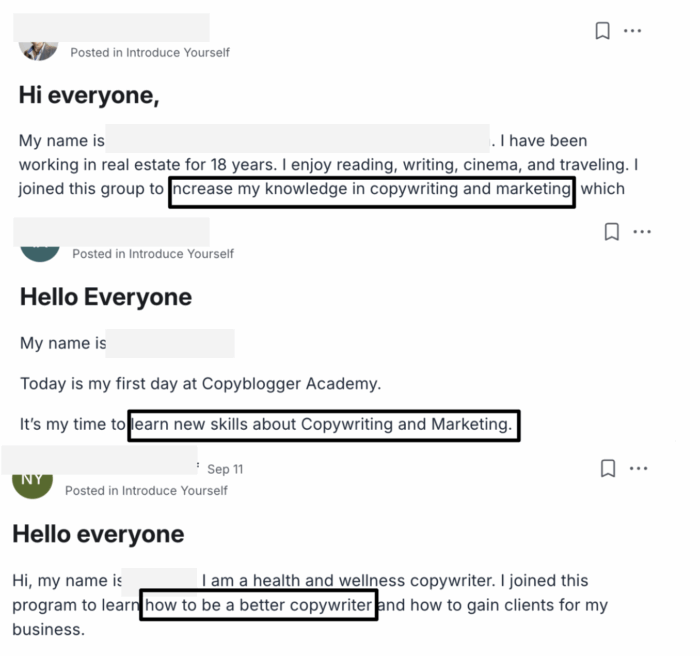
Operating in isolation limits growth. Joining a specialized community of practitioners allows you to learn from the mistakes and successes of others. When soliciting feedback, weigh input carefully, prioritizing insights from proven, high-earning copywriters over fellow beginners. Surrounding yourself with experienced mentors provides the structural support and accountability necessary to scale a freelance business or agency.

10. Be Impatient With Action and Patient With Results
To quote renowned investor Naval Ravikant, you must be "impatient with action and patient with results." Push yourself to write, test, and iterate aggressively every single day, yet maintain the psychological endurance required to sustain execution over months and years before expecting monumental returns. Consistency compounds silently until it explodes into visible success.
Official Statements & Industry Insights
Industry veterans consistently emphasize that copywriting is fundamentally an exercise in listening rather than talking. As noted by leading digital marketing practitioners:

"Great copywriters don’t invent clever ideas out of thin air; they act as mirrors for the market. They listen to the silent frustrations of the customer and feed those exact frustrations back to them in a structured, digestible format that offers a clear path forward."
Furthermore, experts highlight that the shift toward data-driven content creation has permanently altered client expectations:
"Clients no longer pay for word counts or poetic flair. They pay for pipeline growth, customer acquisition, and measurable return on ad spend. If you cannot tie your copy to revenue, you are treated as a commodity. If you can prove ROI, you are a partner."
Future Outlook
The proliferation of automated content tools has created a paradoxical market environment. On one hand, the internet is flooded with generic, AI-generated text that lacks genuine insight, emotional resonance, and empirical grounding. On the other hand, this exact phenomenon has made authentic, high-converting copywriting more valuable than ever.

Looking ahead, the market will increasingly bifurcate. Generic content writers and commodity creators will see their margins compress toward zero. Conversely, specialized copywriters who master customer psychology, platform mechanics, data analytics, and direct-response frameworks will experience unprecedented demand.
For aspiring digital entrepreneurs and modern copywriters, the path forward is clear: master the fundamentals of human motivation, anchor your writing in rigorous market research, tie your output directly to commercial revenue, and commit to the long-term compounding of skill. Those who execute this blueprint will not only secure their financial future but command the attention of the modern digital economy.