For the first time in more than three decades, NASA’s roadmap for exploring the Martian surface contains a striking void: there are no firm, funded plans to send new landers or rovers to the Red Planet. Following the closure of the ambitious and financially strained Mars Sample Return (MSR) program and the aging out of long-standing robotic assets, the agency faces an acute budgetary and structural inflection point.
With planetary science budgets tightening and the U.S. space policy heavily tilted toward establishing a sustained human presence on the Moon, traditional multi-billion-dollar robotic surface missions have temporarily stalled. Yet, rather than spelling the end of Martian surface exploration, this vacuum has catalyzed a radical paradigm shift.
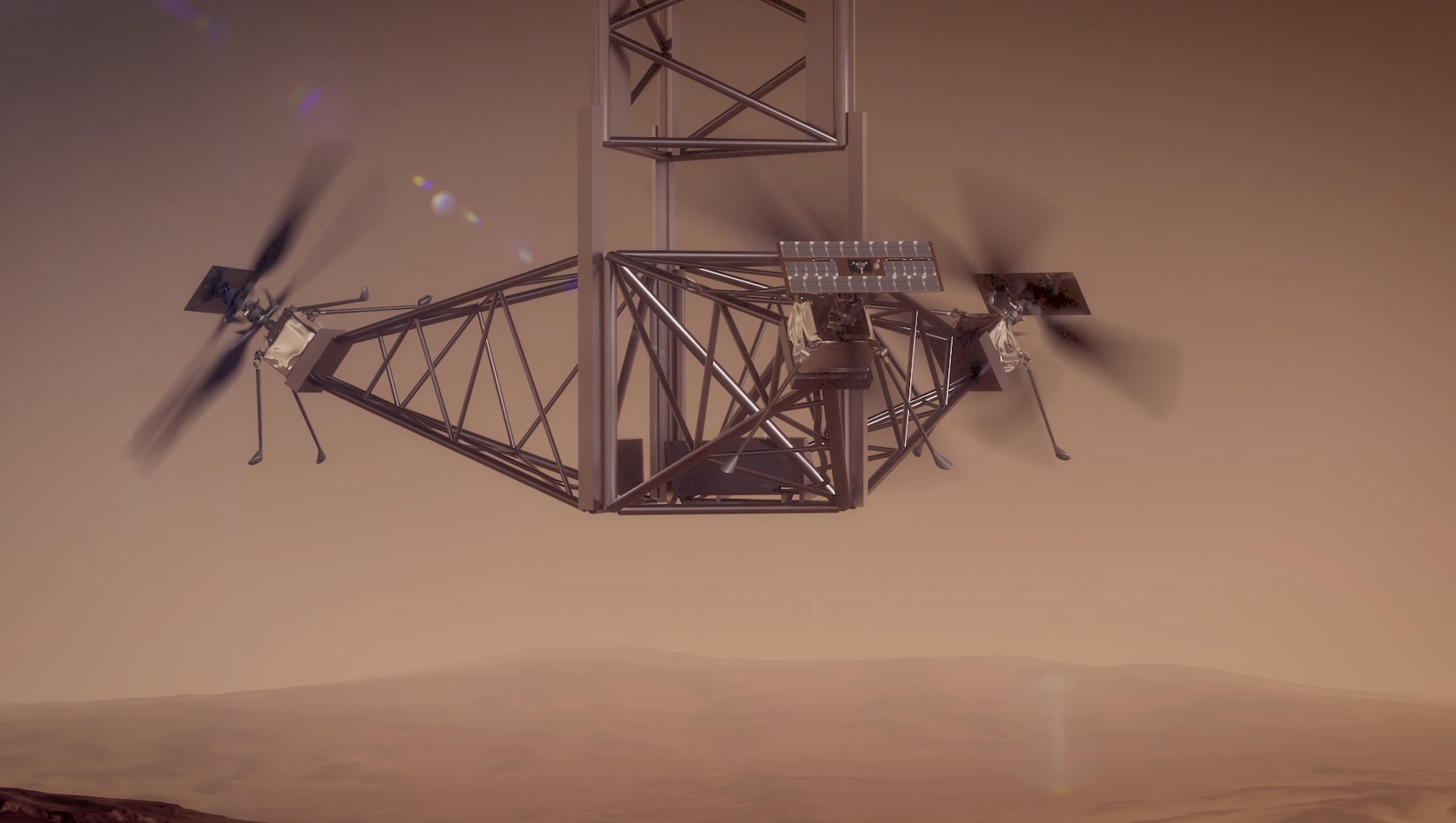
NASA’s near-term planetary strategy is pivoting upward, embracing aerial drones as a primary, cost-effective mode of exploration. Spearheading this new era is the SkyFall mission—a fleet of three advanced autonomous helicopters slated to launch as soon as late 2028. Rather than hitching a conventional ride on the belly of a dedicated rover or lander, SkyFall’s rotorcraft will travel to Mars alongside the Space Reactor-1 (SR-1) "Freedom" mission, a $2.1 billion initiative designed to test nuclear electric propulsion in deep space.
By jettisoning traditional lander platforms and utilizing an innovative entry-capsule deployment maneuver, SkyFall promises to democratize Martian exploration, unlocking new geographical regions—such as the polar ice caps—at a fraction of historical costs.
Detailed Chronology: The Evolution of Martian Aerial Reconnaissance
From Inception to Ingenuity
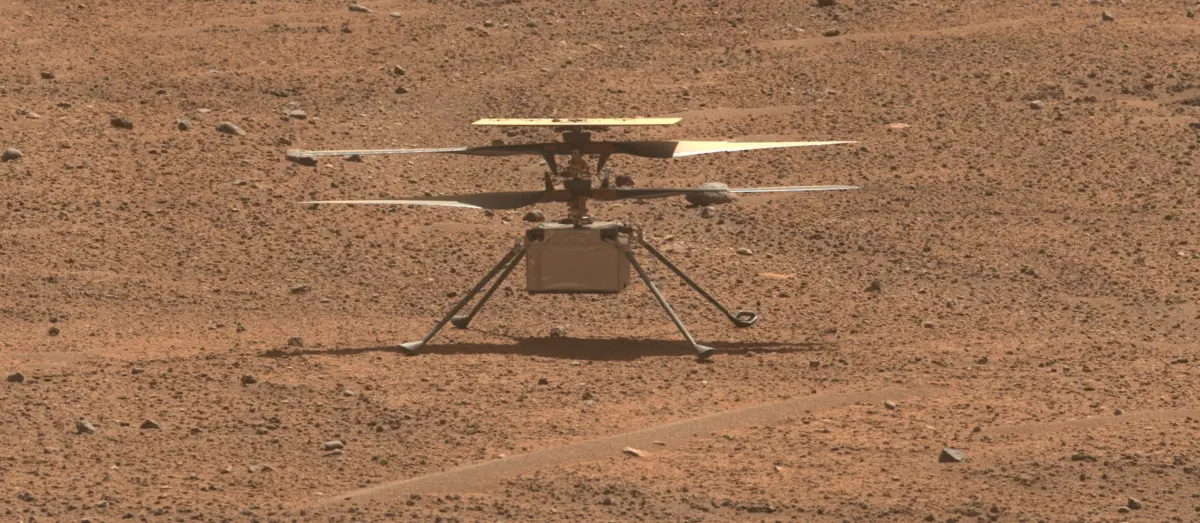
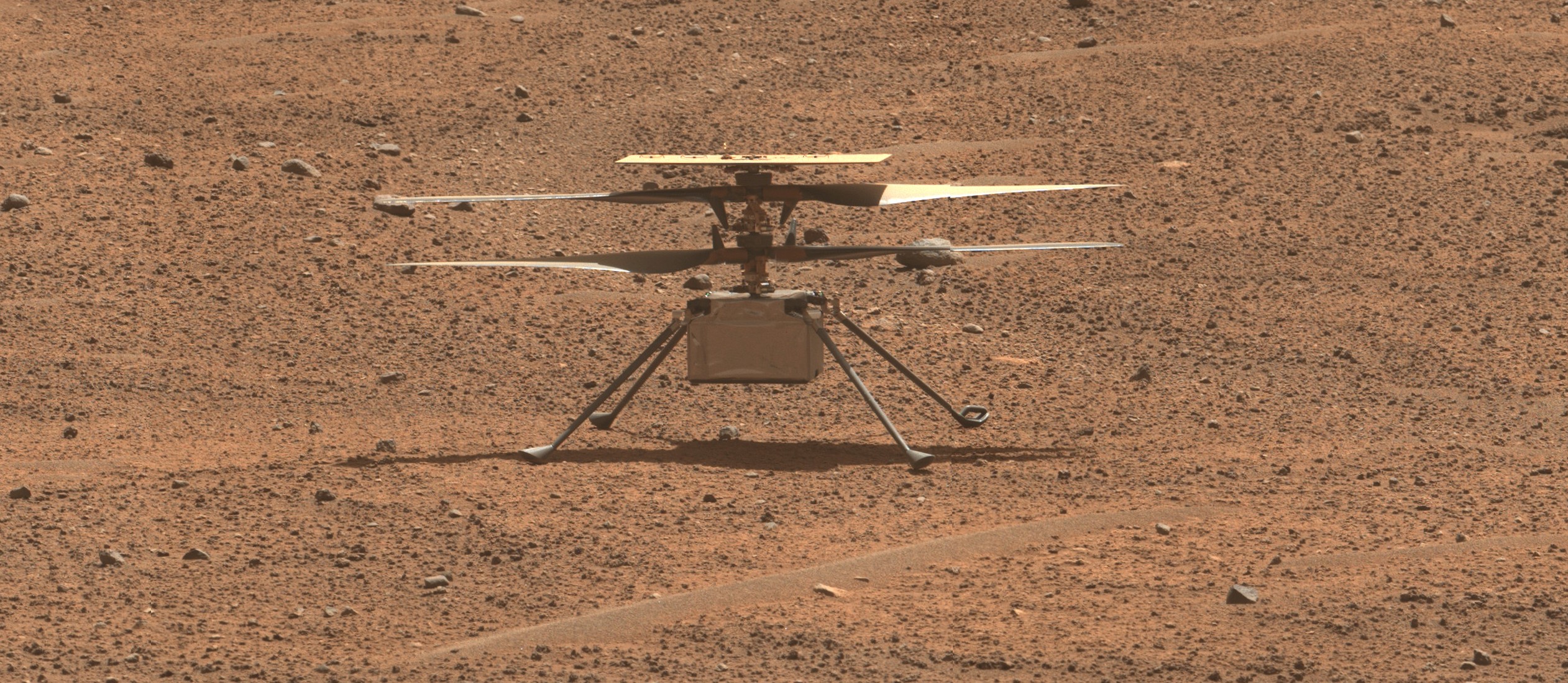
To understand the significance of the SkyFall mission, one must look back to the historic milestones achieved by its predecessor. In February 2021, NASA’s Perseverance rover touched down in Jezero Crater, carrying a humble technology demonstrator beneath its belly: a 1.8-kilogram (4-pound) helicopter named Ingenuity.
Originally slated for a conservative baseline of just five test flights to prove that powered, controlled flight was possible in the ultra-thin Martian atmosphere (which boasts just 1 percent of Earth’s sea-level air density), Ingenuity completely shattered expectations.
Over the course of its extended mission, Ingenuity completed 72 successful flights, dramatically outperforming its engineering specifications before suffering a hard, rotor-damaging crash landing in early 2024. Ingenuity proved beyond a shadow of a doubt that aerial mobility was not only viable on another world but essential for scouting terrain, assessing hazards, and expanding the operational horizons of planetary science.
The Birth of SkyFall
However, Ingenuity’s operational footprint was inherently constrained. It carried no sophisticated scientific payloads beyond two basic navigation cameras, and its range and data transmission capabilities were shackled to the proximity of the Perseverance rover base station, which acted as its primary communication relay.
As NASA’s broader Mars architecture shifted away from sample-return architectures and heavy rovers, aerospace engineers faced a stark reality: there were no upcoming surface vehicles scheduled to launch for the foreseeable future.
Faced with this strategic bottleneck, advanced research and development teams at AeroVironment—the defense and aerospace contractor that co-designed Ingenuity alongside NASA’s Jet Propulsion Laboratory (JPL)—began exploring alternative pathways to the Red Planet.
Collaborating closely with JPL, AeroVironment conceptualized a groundbreaking delivery mechanism. Instead of waiting for another multi-billion-dollar rover to hitch a ride with, engineers devised a method where multiple helicopters could be integrated directly into a standalone deep-space transfer vehicle.
This vision coalesced in mid-2026, when NASA leadership officially endorsed the SkyFall mission. Tied to the launch of the SR-1 Freedom mission in late 2028, the project transitioned rapidly from an exploratory concept into an active, funded development program.
Supporting Context & Metrics: Engineering for Supersonic Flight and Scalability
Developing a multi-helicopter fleet capable of operating independently on Mars requires overcoming formidable engineering hurdles, particularly regarding mass, power, and aerodynamics.
Scaling Up: Specifications and Improvements
The SkyFall rotorcraft represent a clear evolutionary step up from Ingenuity:
Mass: Each SkyFall helicopter will weigh approximately 2.5 kilograms (5.5 pounds), up from Ingenuity’s 1.8 kg. This extra mass accommodates a more robust structural framework and integrated science payloads.
Payload Capacity: Unlike Ingenuity, which lacked dedicated scientific instruments, every SkyFall unit will carry an advanced sensor suite, including high-resolution atmospheric cameras and a ground-penetrating radar designed to search for shallow subsurface ice.
Communication Architecture: SkyFall helicopters will no longer rely on a local rover base station. Instead, they will independently transmit and receive data directly via overhead Mars relay orbiters, vastly increasing their operational range.
Fleet Production: AeroVironment is building three active flight units plus one flight-ready spare, marking the transition of Mars helicopters from one-off technological curiosities to a repeatable, standardized product line.
Mastering Supersonic Rotor Tips
Because the Martian atmosphere is extremely thin, generating aerodynamic lift requires rotor blades to spin at extraordinary rotational speeds. Because SkyFall vehicles are heavier than Ingenuity and carry denser payloads, their redesigned rotor blades must spin even faster.
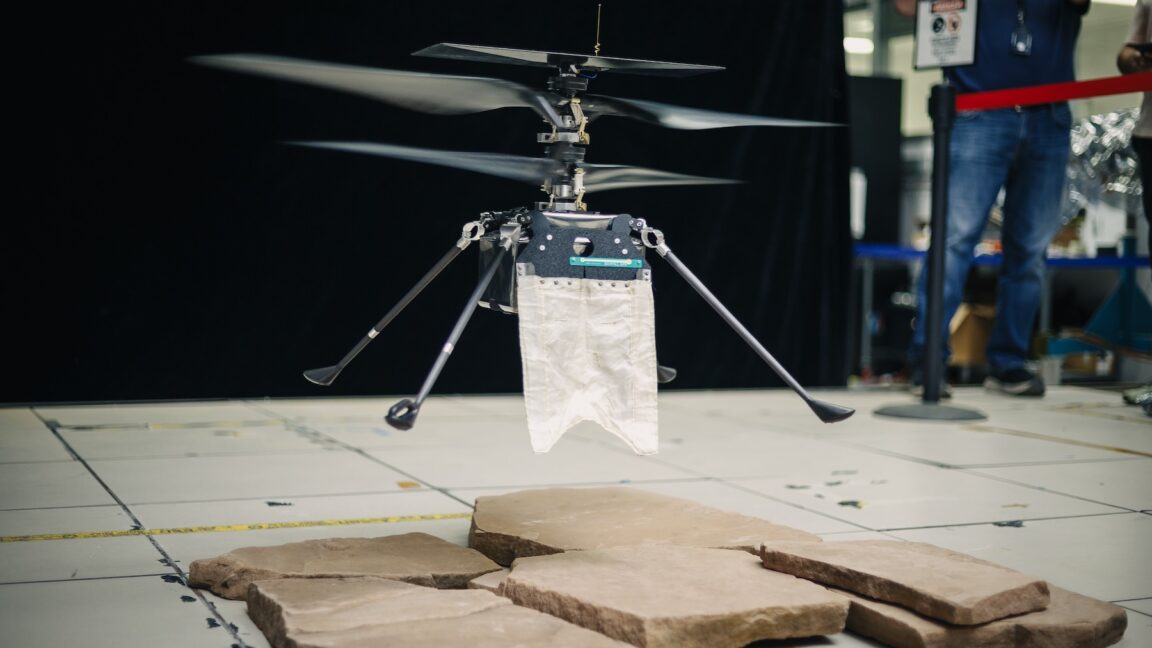
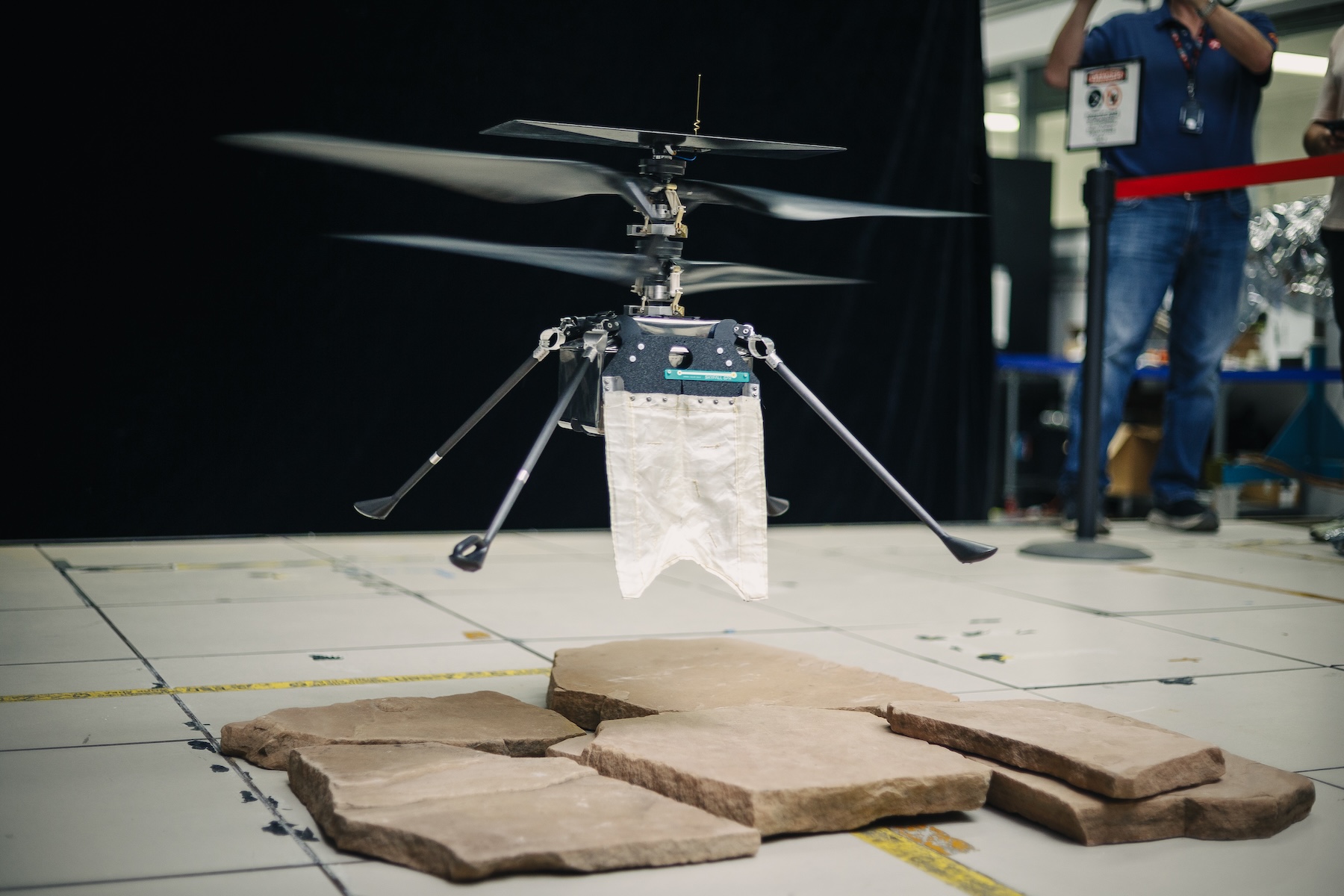
Historically, engineers worried that spinning rotor tips past the speed of sound ($Mach 1$) in the Martian atmosphere would cause destructive shockwaves, potentially shattering the blades. However, a major breakthrough occurred earlier this year when JPL and AeroVironment engineers placed full-scale, SkyFall-sized rotor blades into a specialized Mars simulation test chamber.
During rigorous testing, engineers successfully spun the rotor tips to a peak speed of $Mach 1.08$ without sustaining structural damage. This monumental milestone confirmed that the vehicles can operate safely at maximum aerodynamic efficiency, granting the mission team immense confidence in executing the daring "SkyFall maneuver."
Official Statements and Industry Insights
The pivot toward commercial partnerships and agile, low-cost space exploration has been heavily championed under the current administration, aligning with a broader philosophical shift across the aerospace sector.
Will Pomerantz, Head of Space Ventures at AeroVironment, highlighted the strategic imperative driving the company’s collaboration with NASA:
"We were looking at NASA’s launch plans, trying to find out when we might be able to stick out our thumb and hitch another ride in the belly of a rover or a lander… And it became clear, especially as the Mars Sample Return plans changed, that there wasn’t likely to be anything headed to the surface of Mars any time soon, and we didn’t want to necessarily have to wait."
Describing the operational novelty of the deployment mechanism, Pomerantz elaborated on the mechanics of the approach:
"We do think that this is achievable. We think we can have a mission where you have helicopters that get thrown overboard—that come out of an entry capsule, as that is initially coming in through the Martian atmosphere, and don’t require a lander platform or a rover platform to get themselves to the surface… It sort of opens up new operational modes and new launch windows, frankly, to do surface exploration of Mars at a new price point."
Reflecting on the accelerated development timeline and the cultural shift within advanced aerospace manufacturing, Pomerantz noted:
"We have been hard at work now for a couple of months. We are once again on time and on budget, those magical words that I have not gotten to say that many times previously in my aerospace career, but I’ve gotten to say about every single Mars helicopter project that we’ve done here at AV."
Jeff Rodrian, head of AeroVironment’s MacCready Works advanced research division, emphasized the long-term vision of the program:
"Mars helicopters can be built as a repeatable product line, not a one-off delivery."
Future Outlook: Commercial Partnerships and the Next Era of Planetary Access
The Commercialization of Mars Exploration
The launch of the SkyFall mission alongside the SR-1 Freedom nuclear-electric propulsion testbed signals a wider, irreversible trend within NASA: the embrace of commercial-off-the-shelf methodologies and public-private partnerships for deep space missions.
Following the structural challenges and multi-billion-dollar overruns of traditional in-house architecture (exemplified by the now-canceled MSR sample retrieval effort), NASA’s future on the Red Planet is increasingly mirroring its lunar strategy.
The Mars Telecommunications Network: Slated for a major contractor award later this year, this upcoming communications relay network will modernize data flow between Earth and surface assets like Curiosity and Perseverance, while laying the groundwork for future commercial explorers.
Commercial Orbiters: Recent collaborative milestones—such as NASA’s partnership with Relativity Space to develop commercial cargo-carrying orbiters for the Ames Research Center—demonstrate that private industry is rapidly absorbing the logistical burden of interplanetary transport.
Expanding Horizons: Beyond Rovers
As NASA evaluates potential landing sites for the SkyFall fleet, the focus has shifted toward high-latitude regions and permanent polar ice caps, driven by the enduring exploration maxim: follow the water. Ground-penetrating radar deployed via autonomous drones can map subsurface glaciations far more rapidly and across far more treacherous terrain than any tracked rover could manage.
Looking ahead, aerospace strategists envision a future where autonomous drones are standard secondary payloads on virtually every spacecraft heading toward Mars—whether destined for orbit or the surface.
By bypassing the need for heavy, expensive landing platforms, aerial robotics have permanently transformed the economics of planetary science. If the SkyFall mission succeeds in late 2028, it will not merely validate a clever deployment maneuver; it will inaugurate an era where exploring other worlds is fast, frequent, scalable, and fundamentally airborne.