Executive Overview
In a high-stakes legal clash that could reshape the regulatory future of speculative finance and online wagering in the United States, a Washington state judge has issued a sweeping preliminary injunction against the prominent prediction market platform Kalshi. The ruling marks a major milestone in an escalating jurisdictional war between state regulators and federally overseen financial platforms.
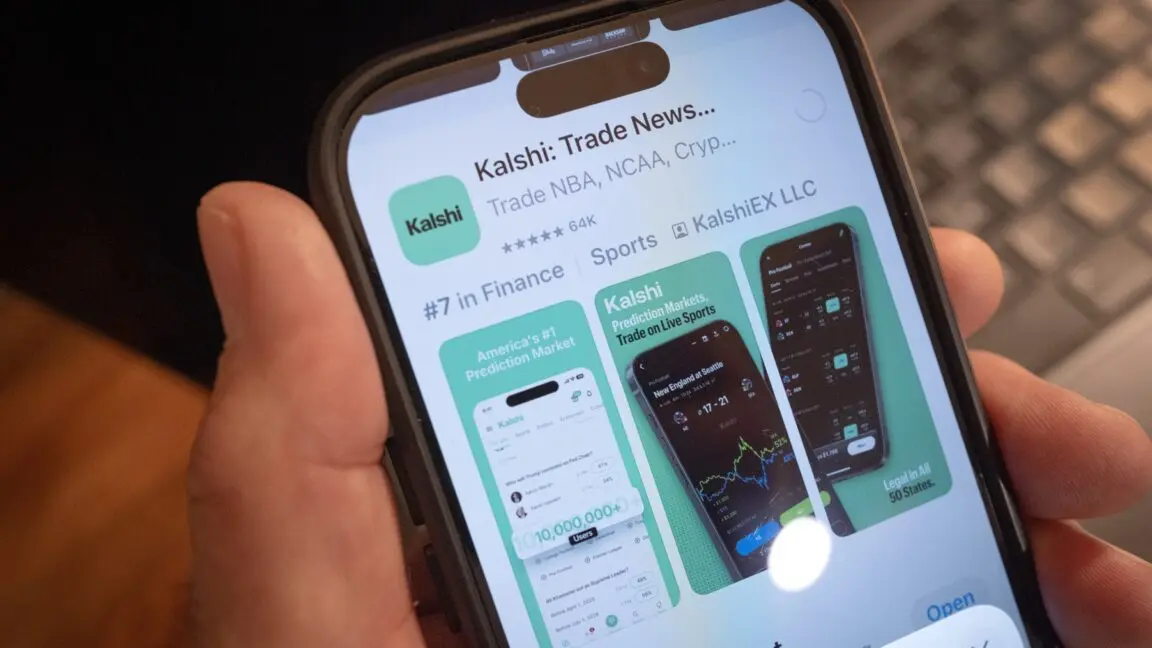
At the center of the dispute is Kalshi’s operational model, which allows users to trade contracts based on real-world events, ranging from traditional financial indicators and political elections to pop culture phenomenons, athletic competitions, and geopolitical developments. While Kalshi has aggressively marketed itself as a federally regulated financial exchange, state authorities—led by Washington—increasingly view the platform as an unregulated, predatory online casino operating outside the bounds of local consumer protection and gambling statutes.
The preliminary injunction, handed down by Washington jurist McHale, found that the state is exceedingly likely to succeed on the merits of its underlying claims. Specifically, the court determined that Kalshi’s offerings violate foundational state laws governing illegal gambling and deceptive trade practices. The decision effectively blocks Kalshi from offering a broad swath of its popular prediction contracts within Washington’s borders.
This ruling is far from an isolated local dispute. It sits at the bleeding edge of a much larger national conflict involving state attorneys general, federal regulatory agencies—most notably the U.S. Commodity Futures Trading Commission (CFTC)—and the booming fintech sector. Kalshi continues to mount a vigorous defense rooted in federal preemption, arguing that because it is overseen by the CFTC, state-level gambling and consumer protection laws do not apply to its marketplace. As similar battles play out in state and federal courtrooms across the country, the ultimate resolution of the Kalshi saga will likely establish a watershed precedent for how digital prediction markets, event-based contracts, and decentralized financial instruments are governed in the 21st century.
Detailed Chronology of the Washington Legal Battle
The legal confrontation between the state of Washington and Kalshi did not materialize overnight; rather, it is the culmination of months of rising tensions as prediction markets expanded their footprints far beyond traditional financial hedging and into the mainstream consumer consciousness.
The Rise of Event Contracts and State Scrutiny
In recent years, Kalshi gained significant traction by democratizing access to event-based contracts. Consumers could log onto the platform and take financial positions on everything from congressional control and local weather patterns to entertainment awards and obscure pop-culture trivia. However, as the platform’s user base scaled rapidly, state-level regulators began taking a closer look at the mechanics of these offerings.
State regulators in Washington—spearheaded by state leadership, including Brown—began investigating whether Kalshi’s consumer-facing platform bore a striking, legally actionable resemblance to traditional sportsbooks and online casinos. Unlike institutional hedging tools used by corporations to manage risk, Kalshi’s consumer-facing app was heavily advertised to retail users looking to wager on binary outcomes.
Filing the Lawsuit and Requesting Injunctions
Recognizing what they perceived as a systemic evasion of state gaming controls, Washington authorities initiated legal action against Kalshi. To halt what the state characterized as ongoing consumer harm and illegal activity pending a full trial, Washington moved for a preliminary injunction.
Under established legal standards, securing a preliminary injunction requires the plaintiff to demonstrate several critical factors, chief among them being a strong likelihood of success on the merits of the case. Washington’s legal team argued that Kalshi’s operations violated state laws explicitly designed to curb unlicensed gambling and protect consumers from deceptive marketing practices.
The Court Weighs In: The McHale Ruling
In the pivotal ruling, the court sided firmly with the state on the preliminary injunction standard. McHale meticulously dismantled Kalshi’s characterization of its platform, highlighting the sheer breadth of wagering options available to the public.
McHale noted in the judicial opinion:
“Kalshi operates an online betting platform that it advertises as a ‘prediction market’ and that allows consumers to bet on thousands of topics ranging from sports, political elections, entertainment, popular culture, and whether public figures will utter specific words or phrases (mentions).”
The court did not merely categorize these activities as unconventional financial transactions; it classified them directly as gambling under Washington law. Furthermore, McHale determined that the platform’s promotional strategies crossed legal lines, writing that “Kalshi’s provision, marketing, and advertising of illegal gambling activities constitute unfair and/or deceptive acts or practices in trade or commerce.”
By granting the preliminary injunction, the court effectively clipped Kalshi’s wings in the Pacific Northwest, establishing an immediate barrier to its commercial expansion in the state while the broader litigation grinds forward.
Supporting Context & Metrics: The Anatomy of Prediction Markets
To understand the gravity of the Washington ruling, one must examine the meteoric rise of prediction markets and the inherent regulatory gray areas they occupy.
What is a Prediction Market?
At its theoretical core, a prediction market is an exchange where participants buy and sell contracts whose payoffs are tied to the outcomes of future uncertain events. Proponents argue that these markets serve a valuable economic function: by harnessing the collective intelligence of crowds and aligning financial incentives with accurate forecasting, prediction markets can often generate more reliable probability assessments than polls, expert panels, or traditional media outlets.
Kalshi positioned itself as the premier regulated venue for these types of contracts, securing designation as a Designated Contract Market (DCM) regulated by the CFTC. This federal oversight is the cornerstone of Kalshi’s entire legal strategy.
The Expansion into Controversial Verticals
As Kalshi sought to capture a wider audience, the scope of its contracts expanded aggressively. While initial offerings focused on macroeconomic indicators, the platform quickly branched out into high-engagement, emotionally charged, and culturally volatile topics.
As highlighted by state officials, Kalshi’s catalog expanded to include wagers on:
- Sports: Predicting the outcomes of professional and collegiate athletic events, placing the platform in direct competition with traditional, heavily regulated sports betting apps.
- Elections: Offering contracts on local, national, and international political races, which historically faced stringent federal and state regulatory hurdles.
- Geopolitics and Natural Disasters: Facilitating trades tied to severe weather events, global conflicts, and specific military developments, such as events related to the Iran War.
- Micro-Events and Pop Culture: Enabling bets on entertainment industry awards, viral internet moments, and even whether prominent public figures would utter specific words or phrases during public appearances.
The Scale of the Regulatory Vacuum
The friction between Kalshi and state regulators highlights a massive structural challenge in modern financial regulation: the collision between federal financial oversight and state-level police powers.
While the CFTC possesses broad authority over commodity futures and swaps, state governments traditionally retain exclusive or concurrent jurisdiction over matters of public health, safety, consumer protection, and the regulation of gambling within their borders. When a federally registered exchange deploys an app to retail consumers offering binary wagers on sports and pop culture, it enters territory that state attorneys general have guarded zealously for decades.
Official Statements and Stakeholder Reactions
The legal victory in Washington drew immediate, triumphant reactions from state officials, while drawing swift, defiant pushback from corporate representatives at Kalshi and broader libertarian and fintech circles.
Washington State Leadership Celebrates
State leaders lauded the court’s decision as a vital consumer protection victory against corporate overreach and unregulated gambling expansion. Brown released an enthusiastic statement following the ruling:
“Kalshi has gotten rich promoting wagers on sports, elections, natural disasters, events related to the Iran War, and more. Under this order, Kalshi is banned from offering wagers on most of those topics in Washington.”
For state prosecutors, the injunction validates the argument that tech startups cannot simply bypass local laws by adopting innovative nomenclature. By labeling a wager a "prediction contract" or "event derivative," companies cannot exempt themselves from state statutes designed to prevent gambling addiction, protect vulnerable consumers, and ensure fair commercial practices.
Kalshi’s Defense: The Federal Preemption Argument
On the other side of the courtroom, Kalshi remains resolute in its refusal to bow to state-level restrictions. The company’s legal strategy hinges on the doctrine of federal preemption—the principle that federal law supersedes state law when the two conflict or when Congress has demonstrated an intent to occupy an entire regulatory field.
In Kalshi’s view, because the CFTC granted it status as a regulated exchange, state regulators have no constitutional authority to dictate what contracts it can or cannot list, nor how it markets those contracts to consumers.
A Kalshi spokesperson addressed the ruling in a definitive statement provided to the media:
“Kalshi is regulated by the CFTC, which has exclusive jurisdiction over our exchange. We respectfully disagree with the court’s decision and are considering all legal options.”
This stance mirrors a broader pattern observed across the current political landscape. The Trump administration and various federal bodies have historically supported robust federal regulatory frameworks over a patchwork of state-level restrictions, occasionally entering litigation against states attempting to independently regulate federally licensed financial and digital asset platforms.
Future Outlook: The National Ripple Effect
The Washington preliminary injunction against Kalshi is much more than a localized legal dispute; it is a bellwether case that will reverberate through financial regulatory circles nationwide. As this battle—and similar multi-jurisdictional conflicts—wends its way through state and federal courts, several key trajectories are beginning to emerge.
1. Proliferation of State-Level Enforcement Actions
Following Washington’s success, attorneys general in other states are likely to take a harder look at prediction market platforms operating within their borders. States with strict anti-gambling constitutions or robust consumer protection statutes may feel emboldened to file their own injunctions against Kalshi and its competitors. If multiple states successfully restrict prediction markets, platforms will face a fractured, high-cost compliance nightmare that could fundamentally undermine their business models.
2. A Showdown in Federal Court
Ultimately, the tension between state gambling laws and CFTC-regulated prediction markets cannot be permanently resolved at the state trial court level. The conflict is destined for higher federal appellate courts, and potentially the Supreme Court of the United States. The core legal question—whether federal commodities law implicitly preempts state authority over consumer-facing event contracts—demands a definitive national ruling. Until the federal judiciary or Congress steps in to clarify the jurisdictional boundaries, prediction markets will continue to operate in a volatile legal purgatory.
3. The Congressional Remedy
As judicial battles mount, industry advocates and state regulators alike may look to Capitol Hill for legislative clarity. Congress holds the constitutional power to explicitly define the jurisdictional reach of the CFTC regarding event contracts. Lawmakers could choose to amend the Commodity Exchange Act to explicitly preempt state gambling laws, or conversely, carve out specific exemptions that empower states to ban or heavily regulate consumer-facing prediction markets.
4. Implications for Innovation and Consumer Protection
The ultimate outcome of the Kalshi litigation will send a powerful signal to the fintech and decentralized finance ecosystems. If federal preemption wins the day, prediction markets could experience an explosive wave of mainstream adoption, free from the fragmented interference of state regulators. However, if states retain the power to ban these platforms under local gambling and consumer protection laws, the growth of retail event-based trading could be severely stunted, forcing platforms to either retreat to institutional-only clients or exit the U.S. market altogether.
As the legal teams prepare for the next phase of litigation in Washington and beyond, all eyes remain fixed on Kalshi’s next move. Whether through an aggressive appeal or a strategic pivot in its product offerings, Kalshi’s fight for survival in the Pacific Northwest has set the stage for the definitive regulatory showdown of the digital financial era.