Executive Overview
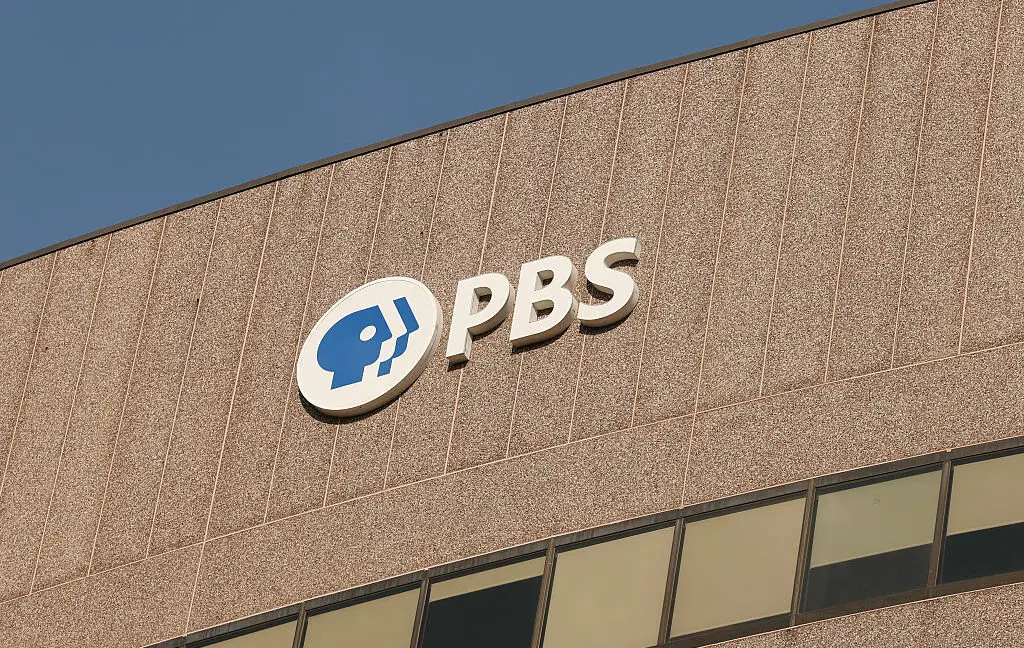
In an era defined by the digital preservation of culture, the fate of half a century’s worth of public broadcasting history hangs in a precarious legal and logistical balance. Nine PBS, a staple of public media in St. Louis, finds itself embroiled in an extraordinary custody battle over 50 terabytes of priceless station archives. The digital assets—comprising decades of regional television history, community documentaries, and broadcast milestones—are currently trapped inside a physical data center operated by storage giant Iron Mountain.
However, Iron Mountain does not actually possess the data; rather, it houses the physical servers belonging to a third-party vendor, On-Site Storage (OSS), with which Nine PBS’s operational relationship has drastically deteriorated.
The conflict escalated into the St. Louis Circuit Court, where Nine PBS secured a default judgment against OSS after the vendor allegedly cut off all communication channels. The court firmly established that the public media station holds the "immediate right to possess the data," ordering OSS to return the materials or facilitate their transfer to a new vendor. Yet, this judicial victory has run into a formidable corporate and architectural brick wall. Iron Mountain has steadfastly refused to hand over or grant access to the data. The data center operator cites rigid data privacy protocols, the absence of a direct contractual relationship with Nine PBS, and the risk of compromising the confidentiality of other clients sharing the physical infrastructure.
This standoff exposes a vulnerable underbelly in modern digital archiving: the friction between cloud and physical colocation logistics, third-party vendor dependencies, and the legal ambiguities surrounding data ownership versus physical hardware control. As Nine PBS fights to rescue its cultural legacy from digital purgatory, the case serves as a cautionary tale for institutions relying on complex, multi-tiered data storage supply chains.
Detailed Chronology of a Data Custody Crisis
The Breakdown of Communication and the Vanishing Vendor
The roots of the current crisis trace back to operational shifts that left Nine PBS scrambling to secure its digital backbone. For years, public broadcasting stations have digitized their expansive analog libraries—dating back to the early days of regional educational television—to ensure long-term accessibility. For Nine PBS, this meant entrusting roughly 50 terabytes of historical media to a vendor identified in court documents as On-Site Storage (OSS).
However, the working relationship between the broadcaster and OSS deteriorated significantly. According to court filings, Nine PBS eventually hit a wall of total silence, finding itself entirely unable to communicate with OSS representatives regarding the retrieval, management, or migration of the station’s digital archives. With crucial historical assets locked away and no responsive counterpart at OSS to negotiate a handover, Nine PBS exhausted its administrative remedies and turned to the judicial system for relief.
Legal Action and the St. Louis Circuit Court Default Judgment
Faced with what it perceived as an unlawful withholding of its institutional heritage, Nine PBS filed a lawsuit in the St. Louis Circuit Court. Because OSS failed to respond or mount a defense against the allegations, the court issued a default judgment in favor of the public media station.
The judicial findings were clear-cut:
- The court affirmed that Nine PBS possesses the "immediate right to possess the data" currently residing within the disputed servers.
- The default judgment mandated that OSS must immediately return the 50 terabytes of data to Nine PBS.
- Alternatively, OSS was ordered to actively facilitate the seamless transfer of the archives to a new, authorized storage vendor designated by the station.
On paper, the default judgment appeared to offer a straightforward roadmap for recovery. In practice, however, the legal order hit a logistical dead end because OSS—the direct defendant—was no longer accessible, and the actual custodian of the physical building held no direct legal obligation to comply with Nine PBS’s demands.
Escalation: The March 13 Letter and Iron Mountain’s Stonewall
Realizing that the physical infrastructure housing its archives was managed by Iron Mountain—a globally recognized information management and data storage company—Nine PBS attempted to bypass the absent vendor.
On March 13, legal representatives for Nine PBS reportedly dispatched a formal letter to Iron Mountain. In an effort to expedite the release of the archives and minimize friction, the station explicitly stated in the correspondence that it would “pay any reasonable costs associated with” accessing and extracting the data from the facility.
Despite the station’s offer to cover extraction expenses, Iron Mountain flatly refused to comply. The data storage provider maintained that it could not legally or operationally fulfill the request, setting the stage for a prolonged institutional standoff.
Supporting Context & Metrics: The Anatomy of a Colocation Impasse
Understanding the Colocation Model
To comprehend why Iron Mountain cannot simply hand over 50 terabytes of data to Nine PBS, one must examine the operational model of modern data centers and colocation facilities. Iron Mountain operates as a physical infrastructure provider. In this capacity, the company rents out secured physical space, uninterruptible power supplies, network connectivity, advanced HVAC environmental controls, and physical security measures inside its fortified data centers.
Under this business model, clients such as OSS lease physical floor space or rack units to house their own proprietary servers and hardware infrastructure. Crucially, the data center operator maintains a strict "hands-off" policy regarding the actual data stored on those client-owned machines.
The Metrics of the Dispute
- 50 Terabytes: The sheer volume of data at the center of the lawsuit. To put this in perspective, 50 terabytes equates to roughly 50,000 gigabytes—enough capacity to store approximately 10,000 hours of high-definition broadcast video or millions of digitized historical documents, photographs, and audio reels.
- The Single Point of Failure: This case highlights a classic multi-tenant vulnerability. While Nine PBS owns the intellectual property and historical value of the data, OSS owned the physical servers storing it, and Iron Mountain owned the building containing the servers. When the middle link in the chain (OSS) vanishes, the top link (Nine PBS) cannot reach the bottom link (Iron Mountain) without breaching contractual and security firewalls.
Legal and Operational Hurdles
Iron Mountain’s defensive posture is rooted in industry-standard risk management protocols:
- Contractual Privity: Iron Mountain has a binding service level agreement (SLA) with OSS, not with Nine PBS. Altering or granting access to hardware based on a third party’s demands—even a public broadcasting station armed with a default judgment against a different entity—would violate the core terms of its contract with its direct client.
- Data Privacy and Confidentiality: Multi-tenant facilities house data belonging to numerous distinct corporate and institutional entities. If Iron Mountain personnel were to unilaterally breach a client’s server racks or grant unauthorized third-party access without explicit, court-ordered mandates directed specifically at Iron Mountain, it could expose confidential data belonging to other OSS clients, triggering catastrophic liability and destroying industry trust.
- The Requirement of Specific Jurisdictional Orders: As corporate spokespeople pointed out, unlocking or tampering with third-party hardware without an explicit, targeted court order naming the facility operator opens the floodgates to operational anarchy. In the eyes of data center operators, a judgment against OSS does not automatically confer legal jurisdiction or operational instructions upon Iron Mountain.
Official Statements & Institutional Perspectives
The public-facing commentary from the primary stakeholders underscores the philosophical and legal chasm separating the broadcaster from the infrastructure provider.
Nine PBS: Preserving Regional Heritage
In the wake of the court’s decision, Nine PBS has sought to reassure the public that it is fighting tirelessly to reclaim its institutional memory. Leah Freeman, Vice President and Chief Communications Officer for Nine PBS, released an official statement emphasizing the cultural significance of the trapped archives:
"We appreciate the Court’s thoughtful decision establishing a path forward to access and recover our archival materials, which the Court confirmed that Nine PBS rightfully owns. These archives represent an important part of our region’s history, and we look forward to ensuring their preservation and protection through the Court-approved process."
Despite these optimistic remarks, inquiries directed to Nine PBS regarding whether the station maintained secondary off-site backups of the 50 terabytes—or what specific security and redundancy protocols leadership plans to implement to prevent a recurrence of this crisis—went unanswered prior to publication. This silence fuels ongoing speculation within the tech community that the station may lack a redundant copy of the archives, raising the stakes of the physical data recovery effort significantly.
Iron Mountain: Upholding Infrastructure Boundaries
Iron Mountain’s corporate communications team offered a precise, technically grounded defense of its actions, drawing a sharp distinction between real estate/utilities and digital content management:
"Our customers rent space for their servers and other hardware. These are the client’s assets. We don’t have access to the data on the hardware/servers because they belong to our customers."
Expanding on the legal and security implications of stepping outside its designated role, the company’s spokesperson warned that granting Nine PBS’s request would create an unacceptable precedent:
"If we granted unauthorized access to third-party hardware without a court order naming us, we would be violating basic data privacy protocols, breaching our contract with OSS, and potentially exposing confidential data belonging to other clients of OSS."
This statement illuminates the Catch-22 facing Nine PBS: while a court has ruled that the station owns the data, the entity physically capable of unlocking the servers refuses to act without explicit judicial instruction directed at its own legal liability.
Future Outlook: Precedents, Resolutions, and Industry Implications
As this legal and logistical drama unfolds in St. Louis, industry analysts are watching closely to see how the courts and the involved parties will untangle the knot. Several potential trajectories loom on the horizon:
1. Expanding the Scope of Litigation
To break the deadlock, Nine PBS may be forced to return to the St. Louis Circuit Court to amend its filings or seek a separate, specific order directed squarely at Iron Mountain. By formally enjoining the data center operator into the legal proceedings and providing undeniable proof of ownership, the station can strip away Iron Mountain’s liability concerns, compelling the facility to permit bonded technicians or digital forensics experts to extract the 50 terabytes under court supervision.
2. A Coordinated Handover Protocol
Assuming a broader court order is secured, the most likely technical resolution involves a controlled extraction process. Iron Mountain could allow an independent, court-appointed IT vendor to enter the facility, access the specific server racks assigned to OSS, extract the 50 terabytes of Nine PBS archives, and securely transfer them to the station’s new storage provider—all while maintaining the strict chain-of-custody and confidentiality protocols required to protect neighboring tenants.
3. Broader Lessons for Public Media and Digital Archiving
Beyond the immediate fate of the St. Louis broadcasts, this case serves as a watershed moment for non-profit cultural institutions, museums, and public broadcasters managing large-scale digital assets. Key takeaways for the industry moving forward include:
- The Danger of Single Points of Failure: Institutions must rigorously audit their vendor ecosystems, ensuring that they maintain direct administrative access, cryptographic keys, or independent physical redundancy for all critical digital archives.
- Redundancy Over Reliance: Relying entirely on a single third-party vendor—without local backups or multi-cloud redundancy—leaves historical assets vulnerable to corporate bankruptcy, vendor ghosting, and colocation disputes.
- Clear Contractual Lineage: Cultural archives must demand transparent supply-chain mapping from digital service providers, ensuring that if a sub-contractor or physical colocation facility is utilized, the institution retains clear, pre-negotiated rights of direct access in emergency scenarios.
For now, 50 terabytes of St. Louis history sit dormant on spinning hard drives inside an Iron Mountain data center rack—guarded by corporate policy, locked behind a vanished vendor’s account, and awaited anxiously by the community whose stories they tell. How this impasse is resolved will likely forge a critical legal precedent for digital asset custody in an increasingly interconnected and outsourced world.