Executive Overview
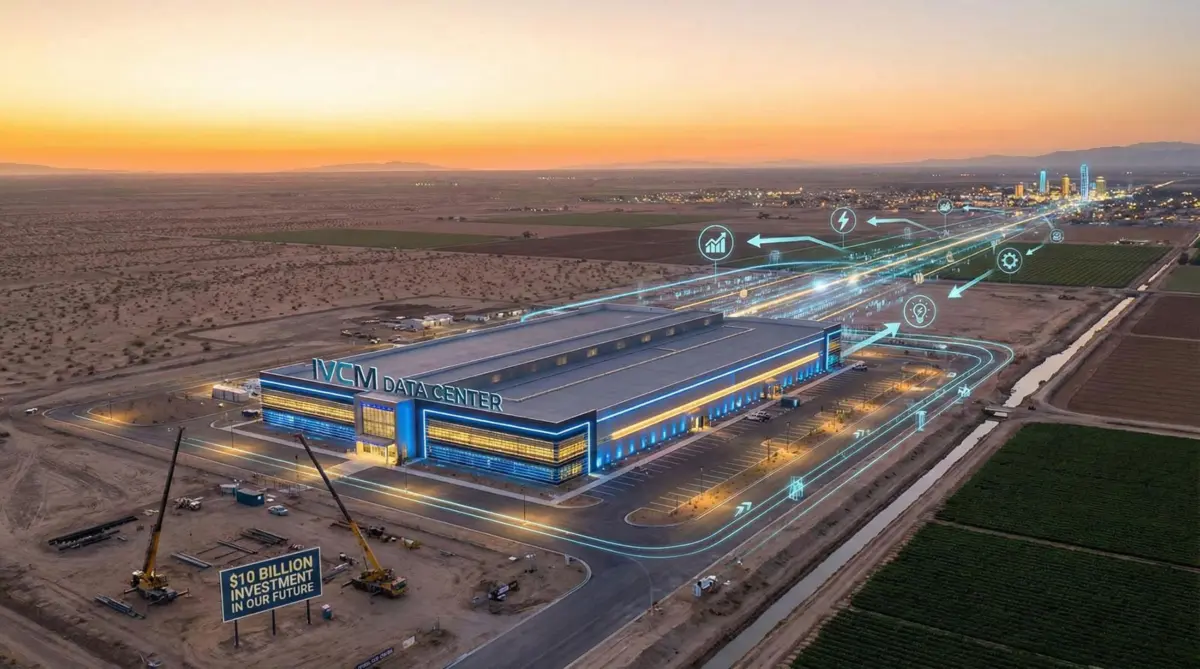
In a landmark legal development that could reshape the deployment trajectory of massive digital infrastructure across the American Southwest, a California Superior Court judge has tentatively ruled that Imperial County must set aside its key approvals for a planned 330-megawatt (MW) hyperscale data center. The project, proposed by Imperial Valley Computer Manufacturing, LLC (IVCM), spans roughly 950,000 square feet on a 75-acre parcel southeast of Aten Road and Clark Road in Imperial County.
In his tentative decision, Imperial County Superior Court Judge L. Brooks Anderholt found that the County improperly treated the project’s initial permits as "ministerial" actions. Furthermore, the court determined that the local government wrongly relied on a stale, generalized 2017 environmental review that failed to contemplate the sweeping scale, intense power requirements, and complex industrial infrastructure of the modern data center now on the drawing board.
If adopted as the court’s final ruling, Imperial County will be legally mandated to prepare a comprehensive Environmental Impact Report (EIR) under the stringent mandates of the California Environmental Quality Act (CEQA). This review must be completed and certified before any grading, construction permits, or physical development can proceed.
Legal experts, municipal officials, and infrastructure analysts suggest the ruling serves as a vital cautionary tale for local governments and developers alike. As the artificial intelligence (AI) boom and cloud computing demands accelerate the race for power-dense data centers, municipalities can no longer rely on piecemeal, fast-tracked permitting strategies that isolate individual project components. Instead, regulators must evaluate these massive installations as integrated, coupled infrastructure systems whose cumulative environmental consequences demand full public disclosure and rigorous mitigation.
Detailed Chronology & Legal Proceedings
The Genesis of the Dispute
The roots of the legal battle trace back to 2017, when Imperial County adopted sweeping amendments to its zoning code. These legislative updates were designed to establish data centers as officially permitted uses within specific industrial zones throughout the county. To streamline this process, the County adopted a negative declaration—a determination under CEQA stating that the zoning amendments would not have a significant, adverse effect on the environment.
Fast forward to the proposal submitted by Imperial Valley Computer Manufacturing, LLC. IVCM sought to construct a sprawling, nearly one-million-square-foot facility supported by a massive energy footprint. Rather than processing the development through a unified, discretionary environmental review that captured the totality of the physical plant, Imperial County treated various elements of the application process as ministerial—meaning they were administrative, routine approvals that did not warrant discretionary CEQA review.
The City of Imperial, deeply concerned about the project’s proximity to residential communities and its strain on local resources, challenged the County’s approach. Represented by attorney Alene Taber, the City filed a lawsuit arguing that the County’s approval scheme unlawfully bypassed environmental laws by slicing an integrated industrial project into isolated, bite-sized components.
The Court’s Tentative Findings
Judge Anderholt rejected the County’s assertion that the 2017 zoning amendment permitted the data center as an absolute matter of right and that the subsequent approvals were purely mechanical. In his written opinion, the judge underscored that the diverse elements of the proposal—ranging from grading and lot mergers to road vacations and electrical systems—are inextricably linked.
"The grading, lot merger, road vacation, electrical facilities, water systems, and related infrastructure serve one cohesive construction and operation of the data center," Judge Anderholt wrote.
The court pointed out that the grading approval was far from mechanical because the County retained the discretionary authority to impose conditions addressing drainage, roadways, traffic mitigation, soil conditions, and public safety requirements. Additional discretionary actions identified in the record included a lot merger and the proposed vacation of Leimgruber Road.
Crucially, the judge found that the 2017 negative declaration did not separately analyze the heavy industrial infrastructure uniquely associated with the IVCM project. Features such as an 862-megawatt-hour (MWh) battery energy storage system (BESS), a dedicated 330 MW substation, large-scale natural gas generation facilities, high-capacity transmission interconnections, and extensive water treatment plants were entirely absent from the 2017 environmental review.
Consequently, the tentative decision mandates that the County identify the entire project as a single, unified undertaking and conduct a full-scale CEQA environmental review before allowing any physical development to advance.
Supporting Context & Metrics: Anatomy of a Hyperscale Project
To understand why the court insisted on a comprehensive EIR, one must examine the staggering scale and technological complexity of the IVCM data center. Far from being a quiet server farm, the proposed facility represents a heavy industrial footprint comparable to a small power plant and a chemical processing facility rolled into one.
Infrastructure Breakdown
- Building Footprint: Approximately 950,000 square feet of data center space situated on a 75-acre site southeast of Aten Road and Clark Road.
- Electrical Load: A continuous 330 MW power demand, rivaling the electricity consumption of a mid-sized city.
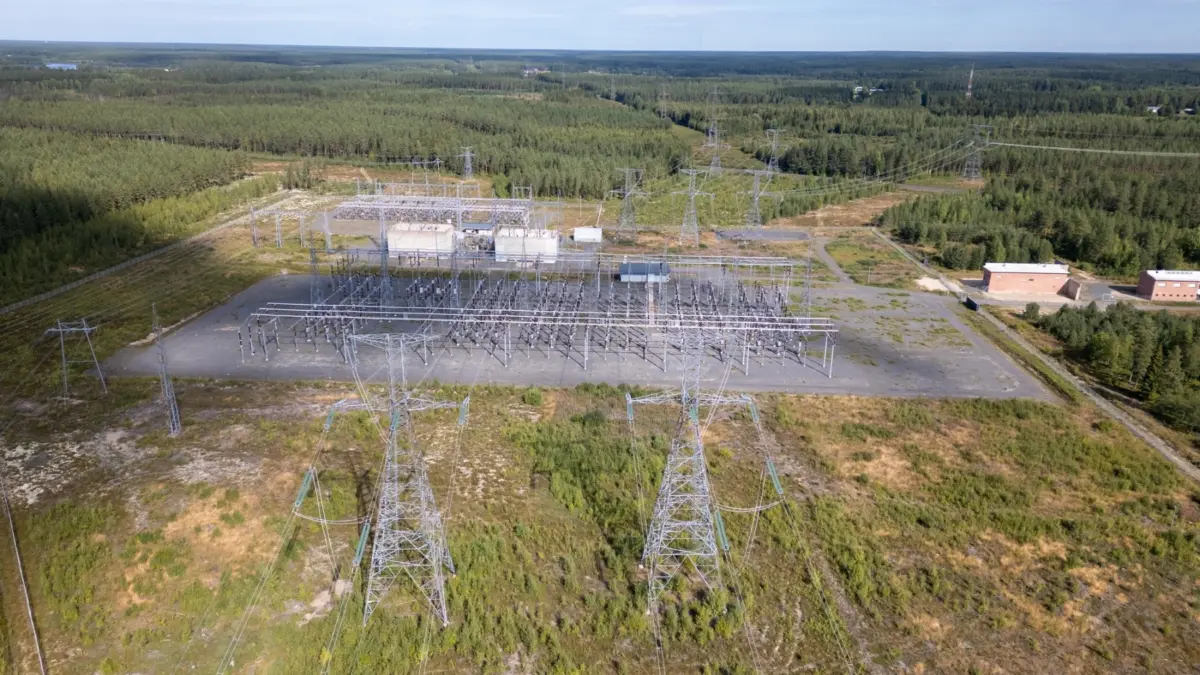
- Substation: A dedicated on-site 330 MW electrical substation requiring complex high-capacity transmission interconnections with the Imperial Irrigation District (IID).
- Energy Storage: An 862 MWh Battery Energy Storage System (BESS), designed to maintain operational resilience during grid instability.
- Emergency Generation: A 330 MW emergency backup generation facility comprising 132 individual natural gas-powered generators.
- Water & Cooling Infrastructure: Advanced cooling and water treatment facilities supported by four 500,000-gallon water storage tanks and a sprawling six-acre retention basin.
The "Whole Project" Concept and Cumulative Impacts
During court proceedings, Alene Taber emphasized that the sheer magnitude of the project makes piecemeal approvals legally indefensible.
"The data center project is enormous," Taber stated. "A serial, piecemeal approval process disguises the total impact of the overall project. The impacts cannot be meaningfully assessed and disclosed to the public without considering the cumulative impacts caused by all of the data center components together."
The court found substantial evidence supporting a "fair argument" that the project may cause significant environmental impacts across a broad spectrum of categories:
- Energy Supply & Electrical Infrastructure: Strain on local grid capacity, reliability concerns, and upstream transmission requirements.
- Water Supply & Wastewater: Substantial daily water demands for cooling, discharge dynamics, and local aquifer implications.
- Air Quality & Greenhouse Gases: Emissions stemming from continuous construction, the operation of 132 natural gas generators, and indirect grid emissions.
- Hazardous Materials & Fire Safety: Risks associated with large-scale battery installations and chemical water treatments.
- Traffic & Public Services: Increased heavy vehicle traffic during construction and ongoing operational logistics.
- Land Use & Heat Island Effects: Potential microclimate alterations, such as localized urban heat island effects driven by massive mechanical cooling towers and HVAC systems.
- Noise Pollution: Persistent, low-frequency and high-decibel noise generated by hundreds of cooling fans, towers, HVAC units, and backup generators affecting nearby communities.
The Systems-Engineering Perspective
Weighing in on the broader engineering implications of the ruling, Neil Osnato, an infrastructure analyst and CEO of Persistence Analytics, argued that modern permitting must evolve to reflect how physical infrastructure actually operates.
"A data center is not a power load plus a battery plus a generator. It is one coupled infrastructure obligation," Osnato explained.
He noted that the IVCM project’s design—combining massive computing loads, local substations, battery arrays, and heavy on-site generation—is engineered around a single reliability and operational objective. Because these assets interact dynamically during normal operations, grid constraints, and emergency outages, their environmental consequences cannot be understood by viewing each component in isolation.
"Permitting strategy should follow the physical system," Osnato added. He advocates for environmental reviews that rigorously model dependencies among utility supply, fuel delivery, battery charging cycles, thermal dynamics, and outage restoration behaviors.
Official Statements and Stakeholder Reactions
The tentative ruling has elicited strong responses from municipal leaders, legal representatives, and community stakeholders who view the decision as a vital win for transparent governance and environmental protection.
The City of Imperial Speaks Out
For the City of Imperial, the decision to challenge the County’s approval process was driven by an obligation to protect local residents living in the immediate vicinity of the proposed industrial complex.
City Manager Dennis Morita expressed profound satisfaction with the judicial outcome in written comments:
"The City is elated with the court’s tentative decision. As a tentative decision, there is a process to navigate, but the City is hopeful the tentative decision will become final."
Morita highlighted that the ruling vindicates the City’s position that hyperscale developments cannot bypass foundational environmental scrutiny. However, he also cautioned against overblowing the legal novelty of the ruling, framing it instead as a straightforward application of established law to an unprecedented industrial scale.
"The tentative decision, as written, does not create novel concepts of environmental protection, but applies existing law to a hyperscale data center project," Morita noted. "A project of that sort comes with much in the way of potential benefits, but must be properly analyzed to determine and mitigate environmental impacts."
Legal Insights on Public Participation
Alene Taber emphasized that the court’s stance preserves the core tenets of CEQA, ensuring that local communities are not left in the dark when massive industrial undertakings land on their doorsteps.
"Massive hyperscale data centers cannot bypass CEQA and public review by employing a fast-tracked piecemeal approval process," Taber said. "They must undergo a comprehensive environmental review that considers alternative locations, buffer zones, and all potential impacts as part of a transparent decision-making process."
Future Outlook: Implications for California and the Hyperscale Industry
While the tentative ruling does not outright reject the data center, nor does it dictate whether Imperial County must ultimately approve or deny the project once an EIR is completed, it establishes a formidable procedural roadblock.
Next Steps in the Litigation
Under California court procedures, once a tentative decision is issued, the opposing parties typically enter a brief window—often 20 days following service of notice—to meet and confer. During this phase, counsel reviews the specifics of the ruling to draft a proposed writ of mandate and final judgment for the court’s formal adoption, barring successful challenges or modifications.
Broader Industry Ripple Effects
The implications of Judge Anderholt’s decision extend far beyond the borders of Imperial County. As artificial intelligence models, cloud computing farms, and high-performance computing clusters push energy demands to unprecedented heights, developers across California and the broader Western United States are scrambling to secure power capacity and land.
Historically, some developers and local jurisdictions have attempted to fast-track digital infrastructure projects by leveraging existing zoning codes, categorizing expansions as minor, or separating on-site power generation and storage components from the core data center application. This ruling signals a definitive judicial intolerance for such strategies.
Moving forward, data center developers must anticipate longer pre-development timelines, increased costs for environmental baseline studies, and rigorous public scrutiny regarding:
- Water Scarcity: Particularly in arid regions like Imperial County, where water allocations are already heavily contested among agricultural, municipal, and ecological stakeholders.
- Fossil Fuel Reliance: The environmental trade-offs of pairing multi-megawatt data centers with extensive fossil-fuel backup generation (such as 132 natural gas turbines) to guarantee uptime in grid-constrained areas.
- Battery Safety: Comprehensive risk assessments addressing thermal runaway, off-gassing, and fire suppression protocols for massive BESS installations located near population centers.
Ultimately, the Imperial County ruling serves as a bellwether for the digital infrastructure sector. As the physical demands of AI and cloud computing increasingly intersect with local resource limits, transparency, comprehensive environmental reporting, and "whole project" analysis are no longer optional best practices—they are legal prerequisites for survival in the American regulatory landscape.