Executive Overview
In the high-stakes theater of Business-to-Business (B2B) enterprise sales, founders and revenue leaders often fixate on the initial conquest: landing the whale, securing the massive logo, and proving product-market fit against established legacy players. Yet, beneath the celebratory champagne pops and press releases lies a quiet, highly stressful operational reality that can steadily bleed a company dry: Champion Change.
As SaaS veteran and SaaStr founder Jason Lemkin recently highlighted, the dynamics of enterprise accounts are deceptively asymmetrical. Startups and scale-ups may believe that their hard-earned enterprise customers—entrenched, monolithic, and historically permanent—provide a stable foundation for years to come. The reality is far more fragile. While your startup remains constant, your internal champions—the risk-takers who brought you in, shepherded your software through procurement, and baked your workflows into their daily operations—inevitably move on.
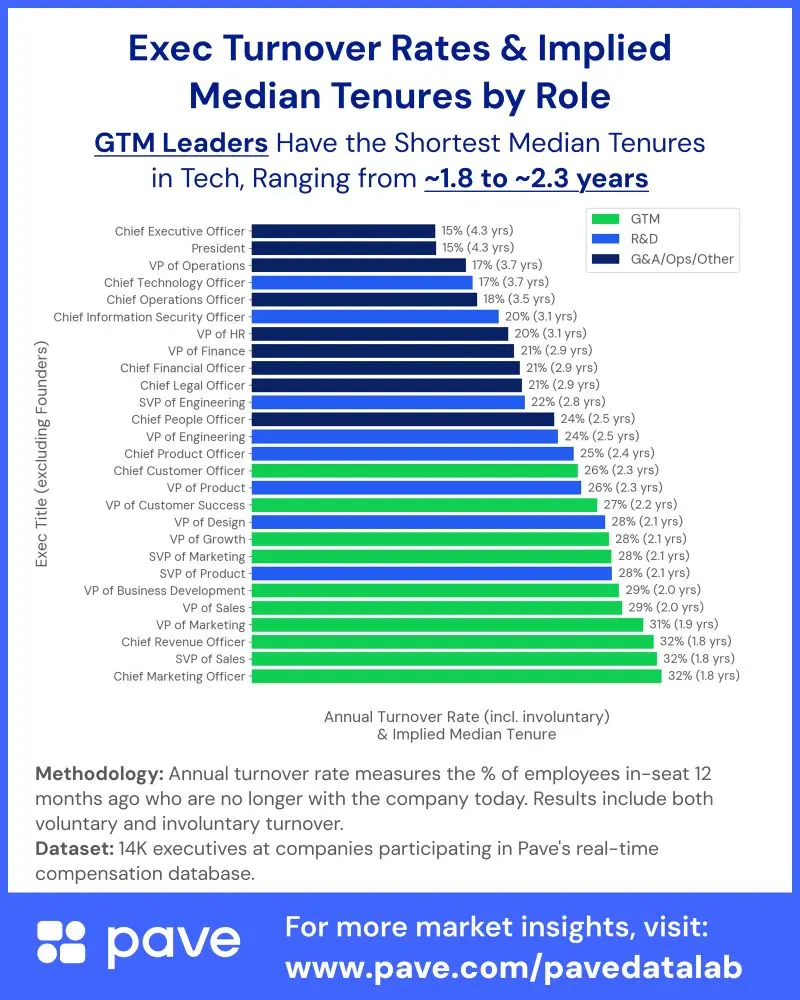
Data shows that the average tenure of an enterprise executive hovers around 24 months, with specific Ideal Customer Profiles (ICPs) like Chief Marketing Officers (CMOs) cycling through their roles even faster. For a B2B company managing a portfolio of just 10 to 20 key enterprise accounts, this statistical inevitability means that a top-tier champion is lost every few months.
Worse still, the departure of a champion is not merely a personnel transition; it is a critical vulnerability point. Incoming executives often bring a playbook of preferred legacy vendors, historical alliances, and a psychological drive to "make their mark" by shaking up existing tool stacks. In a competitive landscape, an incoming Director, VP, or CIO may replace your solution simply because they prefer a vendor from their previous gig—rendering high Net Promoter Scores (NPS) and customized workflows entirely defenseless.
This article explores the mechanics of champion churn, analyzing the structural threats it poses to recurring revenue models, reviewing executive turnover data, evaluating defensive strategies, and outlining what revenue leaders must do when survival demands swallowing their pride and throwing out the rulebook.
Detailed Chronology: The Lifecycle and Death of an Enterprise Deal
To understand why champion churn is so disruptive, one must trace the lifecycle of a typical B2B enterprise sale and the subsequent decay of institutional memory within the client organization.
Phase 1: The Honeymoon and Integration (Months 1–6)
The journey begins with an uphill battle. A nimble startup pitches an enterprise buyer. The buyer—let us call her Sarah, VP of Operations—recognizes a glaring efficiency gap in her department. Sarah risks her political capital to champion the startup’s software. She fights procurement, navigates legal compliance, and pushes the implementation across the finish line.
During the first six months, the software delivers value. End-users are ecstatic. The NPS is through the roof. The startup’s customer success team feels secure, assuming that undeniable ROI guarantees lifetime retention.
Phase 2: The Institutionalization Illusion (Months 7–18)
As the relationship matures, the software becomes integrated into daily business processes. The startup assumes the product has achieved "sticky" status. Dashboards are reviewed, quarterly business reviews (QBRs) are praised, and account expansions are discussed. However, a silent shift occurs: while end-users love the tool, the executive suite begins to view the software as background infrastructure rather than a strategic differentiator.
Phase 3: The Departure and The Vulnerability Window (Months 19–24)
Statistically, this is the danger zone. Sarah receives an enticing offer from a venture-backed competitor or a larger enterprise seeking a turnaround artist. She gives her two weeks’ notice.
In the chaotic transition window, the startup often commits its first fatal error: failing to map out relationships beyond the primary champion. When Sarah leaves, the institutional memory of why your product was chosen leaves with her.
Phase 4: The Incoming Heir and the "Rip-and-Replace" Risk
Enter David, the newly appointed VP of Operations. David does not owe your startup anything. In fact, in his previous role at a Fortune 500 company, he successfully implemented a competing software platform. He understands that new executives are under immense pressure to drive visible change within their first 100 days.
Replacing or auditing existing software vendors is a low-effort, high-visibility way for David to signal action to his superiors. It does not matter that your NPS is 85. It does not matter that your team spent six months tailoring APIs to Sarah’s precise specifications. David wants his ecosystem, his people, and his vendors. Suddenly, your enterprise account is fighting for its life—forced to re-pitch a customer you thought you had won forever.
Supporting Context & Metrics: The Anatomy of Executive Turnover
The friction of champion churn is deeply rooted in modern executive labor dynamics. Corporate loyalty has plummeted, and executive tenure has compressed across virtually every major C-suite and senior leadership category.

+-------------------------------------------------------------+
|               AVERAGE TENURE BY EXECUTIVE ROLE              |
+----------------------+--------------------------------------+
| Role                 | Average Tenure                       |
+----------------------+--------------------------------------+
| Chief Marketing Officer (CMO) | ~18 to 22 months            |
| Chief Revenue Officer (CRO)   | ~18 to 24 months            |
| VP of Engineering / CTO       | ~24 to 30 months            |
| VP of Sales / Operations      | ~24 months                  |
+----------------------+--------------------------------------+
The Data Behind the Disruption
Recent datasets tracking thousands of executives across mid-market and enterprise organizations reveal sobering statistics:
- The CMO Volatility: The Chief Marketing Officer holds one of the most precarious seats in the modern corporation, with average tenures frequently dipping below 20 months. When a new CMO steps in, agency relationships, martech stacks, and data analytics platforms are routinely subjected to wholesale replacement within their first quarter.
- The CRO Cycle: Chief Revenue Officers face relentless pressure to hit quarterly targets. A single missed year often results in termination or mutual separation, dragging down every underlying sales enablement, CRM, and forecasting tool associated with their tenure.
- The Compounding Effect: If a B2B SaaS company services an enterprise client base of 20 accounts, and each account features an average executive lifespan of 24 months, the math is unforgiving. Statistically, the company faces a major stakeholder departure roughly every 30 to 45 days. This turns customer success from a passive retention function into an active, perpetual campaign of political defense.
Official Statements and Industry Insights
The hidden tax of B2B enterprise sales has increasingly become a focal point for venture capitalists and operators who have witnessed promising startups crater not from bad products, but from churned internal relationships.
Reflecting on this reality on social media, SaaStr founder Jason Lemkin laid out the unvarnished truth for early-stage and growth founders:
"You think your Big Co Customers are old & established, and you are new & tiny. Yes it’s true. But as the years go by, you’ll still be there, and your champions at the BigCos will move on. You have to re-sell Big Customers every 2 years or so."
This sentiment strikes at the heart of the "Founder’s Delusion"—the comforting belief that once enterprise procurement is cleared, the revenue stream is secured in perpetuity. Experienced revenue leaders echo this warning, emphasizing that enterprise software sales are never truly finished; they are merely renewed in cycles.
Industry advisors note that startups often over-index on product features while under-indexing on political mapping within customer accounts. When a champion departs, companies that rely solely on product excellence discover too late that enterprise software purchasing decisions are fundamentally human and political, not purely utilitarian.
Future Outlook: Strategic Playbook for Surviving Champion Churn
Because champion churn is an immutable law of enterprise business, B2B organizations must evolve their go-to-market and customer success motions to mitigate the threat. Waiting passively for a renewal date is a recipe for catastrophic revenue erosion.
To future-proof your enterprise accounts against the inevitable departure of key stakeholders, revenue leaders must execute a multi-layered defensive strategy:
1. Multi-Thread From Day One
Never allow your relationship with an enterprise client to run through a single point of failure. From the initial pilot phase onward, customer success teams must establish lateral and vertical relationships across the client organization.
- Build rapport with end-users who rely on the tool daily.
- Cultivate visibility with financial approvers and procurement managers.
- Secure introductory meetings with the champion’s direct superior (e.g., the SVP or C-level executive) under the guise of an "Executive Business Review" to ensure leadership is aware of the concrete ROI being generated.
2. Spot the Early Warning Signs of Turnover
Executive departures are rarely entirely spontaneous. Pay attention to subtle behavioral shifts:
- A sudden drop in engagement or unresponsiveness from your primary champion.
- Canceled QBRs or repeated rescheduling of check-in calls.
- Whispers from end-users regarding internal restructurings, budget freezes, or incoming leadership changes.
Proactive outreach before the champion announces their departure allows you to cement your value proposition into broader organizational goals.
3. Deploy the "Emergency Executive Response"
When a champion announces their departure, treat it as a code-red crisis. Do not wait for the new hire to call you.
- Get on a plane: Fly to the client’s headquarters immediately. Face-to-face contact conveys high-touch commitment that emails and Zoom calls can never replicate.
- Swallow your pride: Be prepared to bend internal commercial rules. If the incoming stakeholder demands pricing concessions, custom contract terms, or pilot extensions to evaluate your tool alongside a legacy favorite, seriously consider accommodating them.
- Lick your wounds and protect the logo: Losing margin on a contract is infinitely preferable to losing the entire account, taking a hit to your net retention rate (NRR), and watching a referenceable enterprise logo vanish from your case studies.
4. Build an Offboarding Continuity Plan
Work with departing champions before they leave to secure their endorsement. Ask them to write an internal memo or introduce you to their successor, highlighting the operational wins your software delivered during their tenure. While an incoming executive may still want to bring in their preferred tools, having the outgoing champion formally brief them on your platform’s indispensability provides a powerful defensive shield.
Conclusion
The romanticized view of B2B SaaS—where a startup builds a superior product, sells it to a large enterprise, and collects compounding subscription revenue forever—is a dangerous myth. In reality, enterprise retention is an ongoing battle against organizational entropy and executive turnover.
Champion change is stressful, unpredictable, and fundamentally disruptive. Yet, companies that acknowledge this reality early will survive and thrive. By multi-threading relationships, monitoring executive stability, and aggressively defending accounts the moment a transition occurs, B2B leaders can transform a perennial vulnerability into a masterclass in enterprise account endurance. After all, in the enterprise arena, staying power is not just about having the best software; it is about outliving the turnover.