Executive Overview
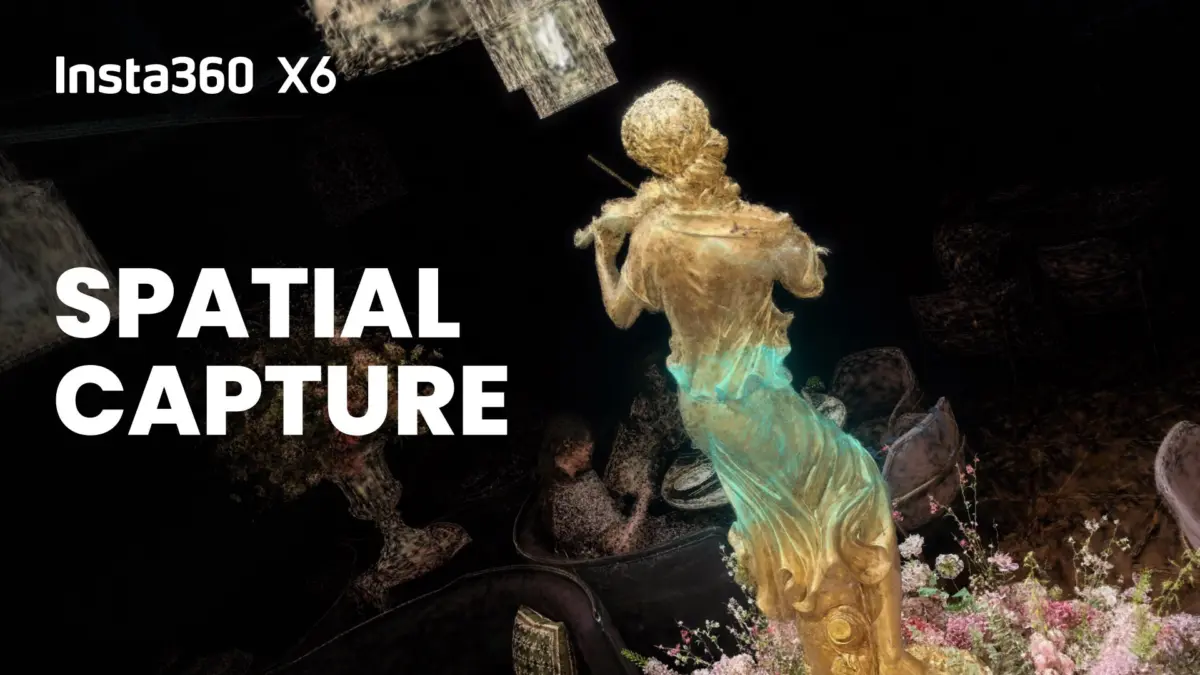
The landscape of digital media is undergoing a profound paradigm shift, transitioning from flat, two-dimensional screens to immersive, spatially aware environments. At the forefront of this evolution is Insta360, which recently unveiled a groundbreaking feature termed Spatial Capture for its upcoming Insta360 X6 camera. Announced during the grand opening of the company’s first North American flagship retail store in Times Square, New York City, Spatial Capture represents a major technological leap. It allows users to effortlessly transform standard 360-degree video footage into fully interactive, explorable 3D scenes using 3D Gaussian Splatting (3DGS).
For years, creating high-fidelity 3D models of real-world spaces was the exclusive domain of VFX professionals, industrial surveyors, and dedicated photogrammetry specialists. It required expensive, multi-camera rigs, precise trajectory planning, and hours of manual post-processing in complex software suites. Insta360’s Spatial Capture seeks to completely democratize this pipeline. By leveraging the inherently complete spherical coverage of a 360-degree camera, the system captures entire environments in a single walkthrough. The company’s automated cloud pipeline then processes the data, rendering complex spatial scenes accessible to everyday consumers, content creators, and small businesses alike.
With an initial rollout scheduled for September 28, 2026 in the United States, the feature will not only launch on the flagship Insta360 X6 but will also offer backward and cross-device compatibility with the Insta360 X5 and X4 Air. This strategic release signals Insta360’s ambition to move beyond action sports and casual vlogging, positioning its hardware as the primary capture engines for the rapidly growing spatial computing ecosystem.
Detailed Chronology: From Times Square to the Cloud
The public introduction of Spatial Capture was meticulously timed to coincide with a major physical retail milestone for Insta360. Over a high-profile weekend, the brand opened its inaugural North American flagship store at 1515 Broadway in Times Square, New York City. This highly traff
icked location serves as a physical interactive playground where consumers can test the company’s latest hardware and experience Spatial Capture firsthand.
[Camera Capture] (Up to 2-Min 360° Video)
       │
       ▼
[Insta360 Mobile App] (Trim & Select "Generate")
       │
       ▼
[Cloud Processing] (1-2 Hours Auto-Reconstruction via 3DGS)
       │
       ▼
[Interactive 3D Scene] (Explore via Gyro/Touch, Export Video, or Share Link)
The operational workflow designed by Insta360 simplifies what was once a highly technical pipeline:
- The Capture Phase: The user records a continuous 360-degree video of an environment using the Insta360 X6, X5, or X4 Air. The software supports continuous recordings of up to two minutes. If a recording runs longer, users can easily trim the file within the native mobile app.
- The Ingestion Phase: Within the Insta360 mobile application, the user navigates to the dedicated "Spatial Capture" interface, selects the trimmed 360-degree clip, and taps "Generate."
- The Processing Phase: The video file is uploaded to Insta360’s proprietary cloud infrastructure. Over the course of one to two hours, cloud servers run advanced 3D Gaussian Splatting algorithms to reconstruct the depth, geometry, and view-dependent lighting of the captured space. Users can close the app during this phase; a push notification alerts them once the asset is ready.
- The Exploration and Export Phase: Once compiled, the interactive 3D scene can be explored directly on mobile devices or computers using touch inputs, a virtual joystick, or the device’s built-in gyroscope. Users can customize virtual camera paths, apply cinematic effects, export the final path as a standard video file, or generate a shareable web link that allows anyone to explore the space interactively through a web browser.
Supporting Context & Metrics: The Mechanics of 3D Gaussian Splatting
To understand the disruptive potential of Spatial Capture, it is necessary to examine the underlying technology: 3D Gaussian Splatting (3DGS).
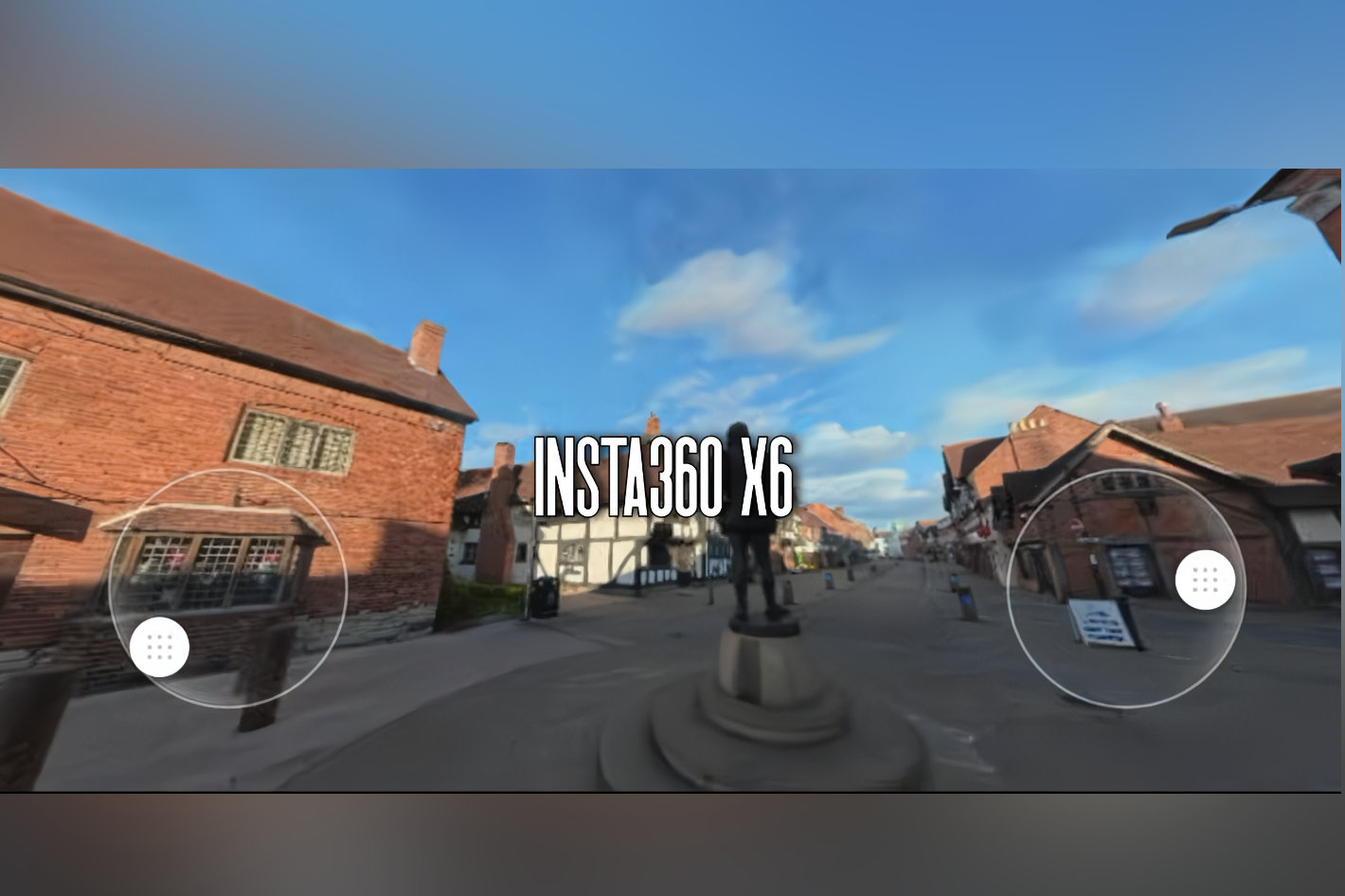
Understanding 3D Gaussian Splatting vs. Traditional Methods
Introduced to the computer graphics community in 2023, 3D Gaussian Splatting has rapidly superseded older volumetric capture technologies like Neural Radiance Fields (NeRFs) and traditional photogrammetry for real-time rendering.
- Traditional Photogrammetry: This method relies on matching features across hundreds of high-resolution images to generate a dense point cloud, which is then converted into a polygonal mesh and wrapped in a texture map. While highly detailed, photogrammetry struggles with reflective surfaces, fine structures (like hair or foliage), and transparent objects. It also requires substantial manual cleanup to look natural.
- Neural Radiance Fields (NeRFs): NeRFs use continuous neural network representations to approximate the geometry and color of a scene. While they excel at rendering complex lighting and reflections, they are computationally heavy, requiring high-end GPUs to render scenes at acceptable frame rates.
- 3D Gaussian Splatting (3DGS): 3DGS bypasses the need for polygons or continuous neural network queries. Instead, it represents scenes using millions of semi-transparent, anisotropic 3D ellipsoids (referred to as "Gaussians"). Each Gaussian contains parameters for position, scale, rotation, color, and opacity. Because rendering these Gaussians relies on highly efficient tile-based rasterization (similar to drawing traditional triangles in video games), consumer-grade mobile phones and standalone VR headsets can render these complex scenes at 60+ frames per second.
| Metric / Feature | Traditional Photogrammetry | Neural Radiance Fields (NeRFs) | 3D Gaussian Splatting (3DGS) |
|---|---|---|---|
| Primary Data Representation | Polygonal Meshes & Textures | Continuous Neural Network | Millions of 3D Ellipsoids (Gaussians) |
| Rendering Speed | Fast (on optimized game engines) | Extremely Slow (computationally heavy) | Ultra-Fast (real-time on mobile & VR) |
| Handling of Reflections/Glass | Poor | Excellent | Excellent |
| Processing Time | High (Hours to Days) | High (Hours) | Low to Medium (Minutes to Hours) |
| User Skill Requirement | High (Requires specialized shooting) | Medium | Low (with Insta360’s automation) |
The 360-Degree Advantage
The most critical bottleneck in traditional 3DGS capture is the capture process itself. To get a clean splat, a user typically has to walk slowly through a room, snapping hundreds of overlapping photos from every conceivable angle, height, and orientation. Any missed spot results in unsightly "holes" or blurred, low-resolution regions in the final model.
By utilizing a dual-lens 360-degree camera like the Insta360 X6, this physical limitation is virtually eliminated. Because the camera captures an uninterrupted spherical field of view ($360^circ times 180^circ$) at all times, a user simply needs to walk through a room once. The camera automatically records every angle simultaneously. This comprehensive spatial coverage ensures that the cloud-based 3DGS algorithms have an optimal dataset, vastly reducing the occurrence of occlusion artifacts and missing geometry.
Quotas and Accessibility
Insta360 is lowering the barrier to entry by offering a generous free tier. Upon launch, users can generate up to four 3DGS scenes per month free of charge. This strategy allows casual users to experiment with spatial archiving without upfront subscription fees, while professional creators can scale their usage as needed.
Official Statements and Industry Perspectives
The executive leadership at Insta360 views Spatial Capture as a key milestone in making spatial computing accessible to the public. In an official statement, Max Richter, Vice President of Marketing and Co-Founder of Insta360, emphasized the company’s commitment to user-friendly innovation:
"Spatial creation should not be limited to people with specialized equipment or expertise. By combining the ability of a 360 camera to capture everything around it with a simpler 3DGS workflow, X6 makes it easier for anyone to capture not just a moment, but an entire place they can explore again."
This vision of democratization is shared by prominent figures in the immersive filmmaking community. Award-winning filmmaker and immersive technology advocate Hugh Hou has been a key voice highlighting the real-world performance of Spatial Capture. On his digital platforms, Hou has demonstrated how the Insta360 X6’s Spatial Capture workflow bridges the gap between consumer hardware and high-end headsets like the Apple Vision Pro.
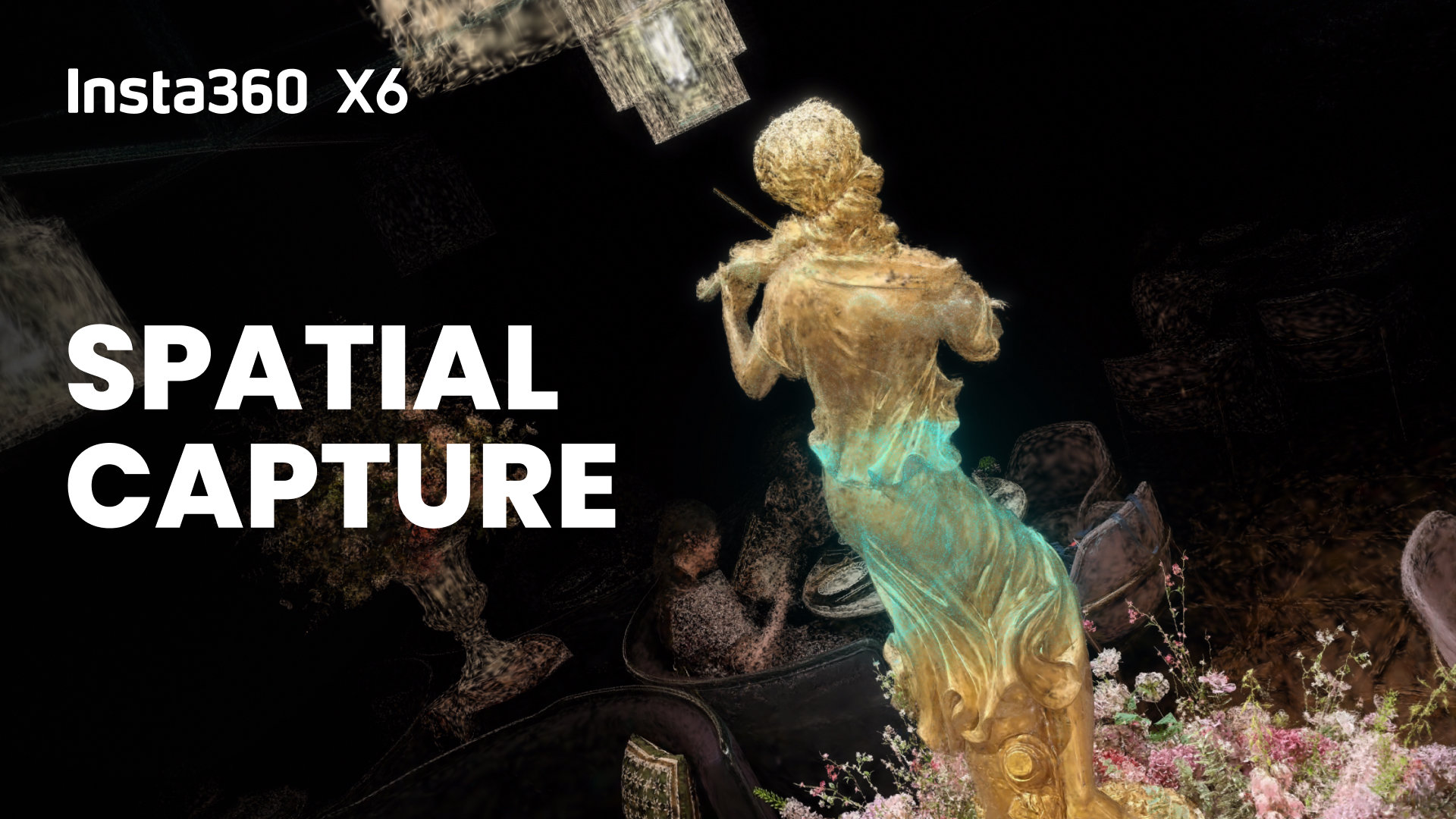
In his analyses, Hou has explored the differences between running free, local Gaussian Splatting pipelines (which require technical expertise and expensive local GPUs) versus utilizing Insta360’s streamlined cloud processing. His findings highlight that while local processing offers advanced users more granular control, Insta360’s cloud-based solution delivers highly optimized, low-latency splats that are instantly ready for consumption, effectively removing the technical friction that has kept 3DGS out of the mainstream.
Future Outlook: The Convergence of Capture and Display
The release of Spatial Capture on September 28, 2026, marks the beginning of a broader convergence between accessible spatial capture hardware and advanced spatial displays.
[Physical World] ──(Insta360 X6/X5/X4 Air)──> [Cloud 3DGS Processing] ──> [Spatial Headsets / Web / Mobile]The Apple Vision Pro and Meta Quest Ecosystems
As spatial computing headsets like the Apple Vision Pro, Meta Quest 3, and future AR glasses become more mainstream, the demand for high-fidelity, personalized 3D content will skyrocket. Standard stereoscopic (3D) photos and videos offer depth, but they restrict the viewer to a fixed, single perspective. Spatial Capture via 3DGS, however, provides six degrees of freedom (6DoF). This allows a user wearing a headset to physically walk around inside their captured memory, viewing objects from different heights, angles, and distances as if they were actually standing in the room again.
Diverse Use Cases Across Industries
While personal memory preservation (such as archiving a childhood home, a wedding venue, or a memorable travel destination) is a major draw for consumers, the commercial applications for small businesses and independent creators are equally disruptive:
- Real Estate and Architecture: Independent real estate agents can capture highly detailed, interactive virtual tours of properties in minutes, bypassing expensive specialized scanning services.
- Art and Culture: Galleries, independent artists, and museums can quickly digitize temporary exhibitions, physical studios, and pop-up installations, preserving them forever in interactive online archives.
- E-Commerce and Retail: Local shop owners can generate interactive 3D models of their storefronts or curated product displays, embedding them directly into their websites to offer an immersive shopping experience.
- Entertainment and Gaming: Indie game developers and VFX artists can use the X6 to capture real-world locations as high-fidelity reference assets or background plates, significantly accelerating their development pipelines.
By combining the physical hardware presence of their new Times Square flagship store with this powerful cloud-based software, Insta360 is doing more than just selling cameras. They are building an accessible entry point into the spatial web, ensuring that as display technology advances, the tools to capture the world in three dimensions are already in the hands of millions.