By Chris Kerr, Senior Editor, News, GameDeveloper.com
September 10, 2026
Executive Overview
A high-profile employment tribunal commenced this morning at the Glasgow Tribunal Centre, marking the official beginning of a legal showdown that could fundamentally reshape labor rights and union organizing within the global video game industry.
The case centers on the mass dismissal of 34 workers from Rockstar Games—the powerhouse studio behind the upcoming, record-shattering Grand Theft Auto VI—who were terminated in November 2025. The Independent Workers’ Union of Great Britain (IWGB) has branded the firings as one of the "most blatant and ruthless acts of union busting in the history of the games industry."
The legal battle pits a cohort of former developers, QA testers, and support staff against Take-Two Interactive subsidiary Rockstar Games. The ousted employees maintain they were systematically targeted and fired in retaliation for organizing and attempting to form a trade union. Conversely, Rockstar maintains that the terminations were lawful and strictly motivated by gross misconduct regarding the alleged breach of strict corporate confidentiality agreements.
With the tribunal slated to run for up to five weeks—concluding on October 16, 2026—the proceedings carry immense cultural and financial weight. The final verdict will arrive just weeks ahead of the highly anticipated November 19, 2026 launch of Grand Theft Auto VI, transforming an internal labor dispute into a global media storm with profound implications for AAA game development studios worldwide.
Detailed Chronology: From Workplace Organizing to the Glasgow Tribunal
The friction between Rockstar Games and its workforce did not happen in a vacuum. To understand the gravity of the ongoing proceedings at the Glasgow Tribunal Centre, it is necessary to trace the timeline of events that brought these parties to the courtroom.
Late 2024 to Mid-2025: The Seeds of Organization
As development on Grand Theft Auto VI entered its critical, high-pressure final phases, whispers of discontent regarding working conditions, mandatory return-to-office mandates, and compensation grew louder across various communication channels. Informal discussions among trusted colleagues evolved into structured conversations regarding collective bargaining. Workers in the UK and Canada began coordinating with the IWGB to establish formal representation, hoping to secure better protections and job security during the turbulent final stretch of AAA development.
November 2025: The Mass Firings
The situation reached a boiling point in November 2025 when Rockstar executed a sudden and sweeping purge of personnel. In total, 34 workers were jettisoned from the company. This group included 31 members of the IWGB union based in the UK, alongside three international employees located in Canada who had actively participated in cross-border solidarity and union-building efforts.
Rockstar justified the swift dismissals by claiming that the affected individuals had used a private Discord channel to share confidential company data, thereby violating non-disclosure agreements (NDAs) and corporate policy. The IWGB countered instantly, arguing that the company weaponized routine chat logs as a pretext to eradicate union leadership and intimidate remaining staff members.
December 2025 to August 2026: Pre-Trial Maneuvers
Following their termination, the affected workers faced months of uncertainty. Supported by the IWGB, the group filed claims for unfair dismissal, demanding either full reinstatement to their previous positions or substantial financial compensation. Throughout late 2025 and the first half of 2026, legal teams from both sides engaged in rigorous pre-trial disclosures, depositions, and procedural hearings to establish the boundaries of the upcoming tribunal.
September 10, 2026: Day One of the Tribunal
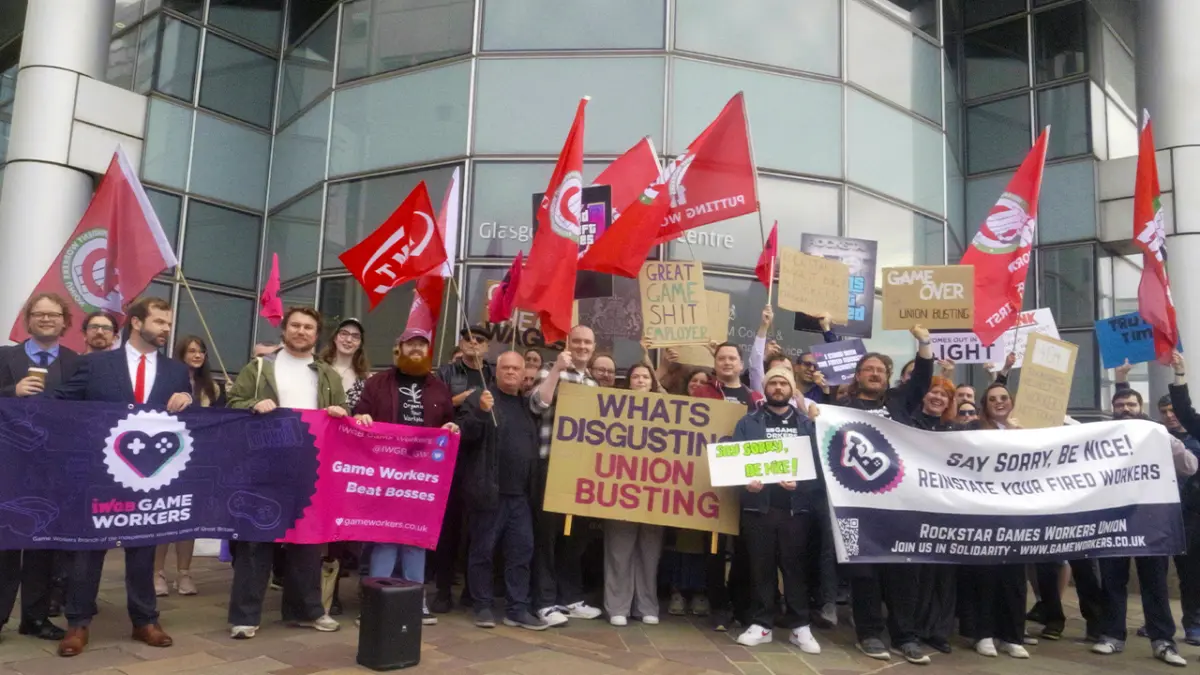
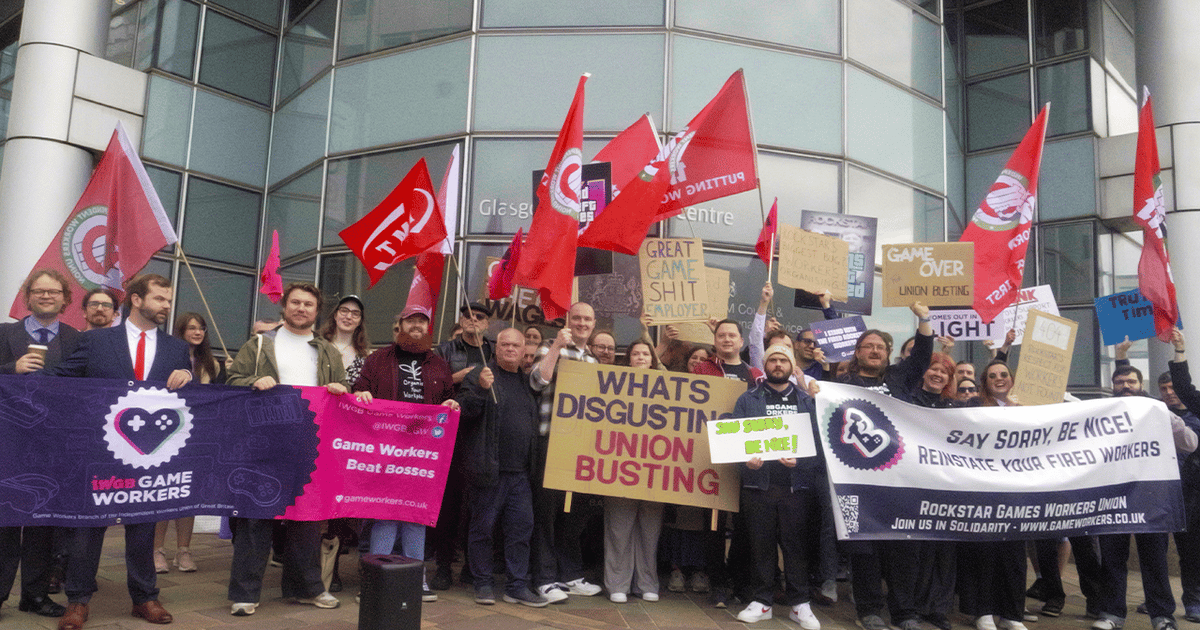
The legal battle officially commenced this morning outside the Glasgow Tribunal Centre, where a vocal rally of former Rockstar employees, trade unionists, and industry supporters gathered to display solidarity. The proceedings are expected to feature extensive testimony from both former staff members and Rockstar executives regarding the exact nature of the Discord communications and the decision-making process behind the mass firings. The tribunal is scheduled to deliberate through October 16, 2026.
Supporting Context & Metrics: The State of Labor in the Games Industry
The confrontation between Rockstar and the IWGB is not an isolated incident; rather, it represents a watershed moment in a broader, global movement toward unionization within the interactive entertainment sector.
The Rise of Game Industry Labor Movements
For decades, the video game industry operated under a hyper-competitive, often precarious work culture characterized by widespread crunch, sudden studio closures, and a lack of collective bargaining power. However, the post-pandemic era has witnessed a dramatic paradigm shift.
Developers across the globe have increasingly recognized that passion for crafting games should not come at the expense of fair wages, reasonable hours, and baseline job security. Major milestones have punctuated this movement. Notably, just months prior to the Rockstar tribunal, union workers at Activision Blizzard successfully ratified a historic collective bargaining agreement covering roughly 1,900 employees, proving that large-scale unionization is entirely viable within major publisher ecosystems.
The Stakes for Grand Theft Auto VI
The timing of the tribunal places an unprecedented spotlight on Take-Two Interactive and Rockstar Games. Grand Theft Auto VI is widely projected to be the most lucrative entertainment launch in human history, potentially generating billions of dollars within its opening weekend alone.
By colliding directly with the final marketing push and release window of GTA VI, the tribunal ensures that mainstream media outlets, financial analysts, and consumers will keep a close eye on the ethical practices behind the curtain of blockbuster game development. The ousted employees are not merely seeking personal vindication; they are leveraging the monumental profile of the game to ensure that corporate entities cannot quietly sweep labor disputes under the rug.
Official Statements and Perspectives
As the legal proceedings unfold, representatives from both sides have doubled down on their respective positions, framing the case as a battle for the fundamental future of workplace rights.
The Workers’ Perspective
Speaking outside the tribunal on opening morning, Jason Lewis, a former Rockstar employee and IWGB union member, reflected on the emotional toll and historical significance of the trial:
"For almost a year, the truth about what happened to us has been buried by Rockstar and surrounded by speculation. Now we finally get the chance to put it on the record. None of us imagined that talking to each other about our working conditions would turn our lives upside down and catapult us into the centre of a global media storm," Lewis stated.
"We have fought tooth and nail to get to this point, not just to be able to win justice for ourselves, but to draw a line in the sand for any employer that thinks it can attack workers for unionising. It has been an emotional journey and it is not over yet, but we can now see the finish line, and justice at last feels within reach."
IWGB President Alex Marshall echoed these sentiments, emphasizing that the implications of the Glasgow tribunal extend far beyond the interactive entertainment sector:
"This fight is about more than one studio, one workplace or one sector. At a time when we are seeing ground ceded to the right all around us, it is more important than ever that we rally to defend this most fundamental of our rights—the right to organize—against those who would erode it," Marshall declared.
"That is why this hearing matters for every worker across the UK, whether their job is in entertainment, education or anywhere else. It is a moment to send a clear message to each of them: you have the right to join a union, that right is protected by law, and employers cannot punish you for exercising it."
Rockstar Games’ Defense
In contrast, Rockstar Games maintains that the dismissals were standard operational measures taken to protect intellectual property and trade secrets. In an official statement provided to Game Developer, a company spokesperson asserted:
"Rockstar Games’ position has been clear and consistent throughout. Individuals across the UK and Canada were dismissed for gross misconduct following the sharing of confidential company information, not because of alleged trade union membership or activity. We reject the claims and will defend them vigorously before the tribunal."
Legal experts note that the crux of the case will hinge on whether Rockstar can definitively prove that the terminated workers leaked proprietary material that compromised business interests, or if the employer utilized minor infractions or out-of-context chat messages as a pretext to neutralize union momentum.
Future Outlook: What the Verdict Means for the Industry
As testimony continues in Glasgow, corporate boards and labor organizers alike are holding their breath. The outcome of this tribunal will establish a vital legal precedent across multiple jurisdictions.
- If the Tribunal Rules in Favor of the Workers: A victory for the former Rockstar employees would deliver a crushing blow to anti-union strategies within the tech and entertainment sectors. It would establish clear legal boundaries penalizing companies that disguise union-busting maneuvers as disciplinary actions for confidentiality breaches. Furthermore, it could trigger a wave of renewed unionization efforts across other major AAA studios in the UK, Europe, and North America.
- If the Tribunal Rules in Favor of Rockstar: Conversely, a win for Rockstar Games would provide corporate legal teams with a robust defense framework. It would validate the strict enforcement of internal communication policies regarding sensitive projects, potentially complicating future grassroots union organizing efforts inside secretive development environments.
Regardless of the final verdict expected in mid-October, the events in Glasgow have forever altered the internal landscape of Rockstar Games. The push for collective bargaining has proven that even within the most secretive and culturally influential studios on the planet, workers are increasingly willing to stand together, demand accountability, and test the limits of labor law in the public eye.