Executive Overview
The United States Department of Health and Human Services (HHS) has officially confirmed that ordering portals for COVID-19 vaccines are operational once again, bringing an abrupt—though thoroughly unexplained—halt to a mysterious administrative disruption that left public health providers scrambling earlier this week. In a carefully worded response to inquiries from Ars Technica on Thursday, federal health officials acknowledged that the ordering backlog had been cleared and distribution pathways were reopened. However, the department maintained a strict silence regarding the fundamental catalysts behind the stoppage, declining to clarify what triggered the operational freeze or detailing the specific mechanics of its eventual resolution.
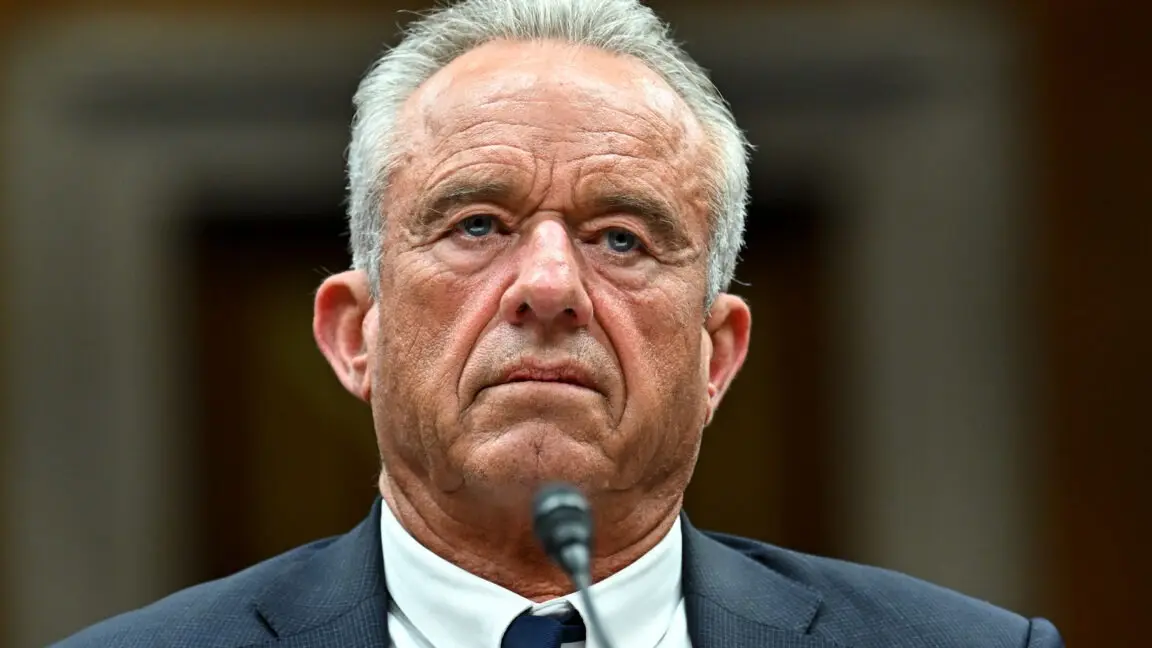
This sudden administrative gridlock did not occur in a vacuum. It unfolded against a backdrop of intense, highly polarized federal oversight led by Health Secretary Robert F. Kennedy Jr., a figure whose long-standing skepticism of immunization programs has profoundly reshaped the landscape of American public health administration. For years, Kennedy has positioned himself as a vocal opponent of COVID-19 countermeasures, frequently questioning their safety, efficacy, and necessity in public forums. Since assuming leadership of the nation’s premier health agency, his ideological stance has translated into tangible policy shifts, regulatory bottlenecks, and legal battles that continue to reverberate across medical institutions, state health departments, and local provider networks.
The latest disruption underscores a deeply fragmented and increasingly contentious federal vaccination strategy. As healthcare providers prepare for the 2026–2027 respiratory illness season, they find themselves navigating a labyrinth of conflicting directives, court-ordered injunctions, and stark divergences between federal guidance and the consensus recommendations of premier medical associations. While the reopening of vaccine ordering portals provides immediate relief to clinics and pharmacies attempting to stock their shelves, the episode highlights the fragility of the nation’s public health infrastructure under an administration deeply at odds with conventional medical science.
Detailed Chronology of Events
The unfolding administrative crisis surrounding COVID-19 vaccine distribution represents the latest chapter in a turbulent series of regulatory maneuvers, federal court interventions, and policy reversals that have defined the Department of Health and Human Services over the past year.
The Escalation of Federal Skepticism
The groundwork for the current operational friction was laid long before the recent ordering delays made headlines. For years, Health Secretary Robert F. Kennedy Jr. built a prominent platform on criticizing federal immunization policies. He repeatedly characterized the broad rollout of COVID-19 vaccines using extreme rhetoric, publicly labeling them the “deadliest vaccines ever made”—a claim repeatedly debunked by comprehensive safety monitoring systems operated by the Centers for Disease Control and Prevention (CDC) and the Food and Drug Administration (FDA).
Upon taking the helm at HHS, Kennedy’s rhetoric quickly materialized into administrative action. He formally petitioned the FDA to withdraw its authorizations and bar future approvals for the shots, attempting to dismantle the regulatory framework that allowed the vaccines to reach the public. When those regulatory petitions failed to yield immediate withdrawals, Kennedy executed a sweeping, unilateral maneuver last year: he revoked the CDC’s universal recommendations for COVID-19 vaccines, stripping the immunizations of the broad federal backing that had historically driven uptake across all adult and pediatric demographics.
Judicial Intervention and the Legal Standoff
The unilateral revocation of universal recommendations did not go unchallenged. Alarmed by the abrupt dismantling of foundational public health guidelines, medical advocacy groups, state officials, and public health coalitions mobilized against the HHS leadership.
In March, a federal judge stepped into the fray, issuing a decisive injunction that halted the sweeping changes Kennedy and his political allies had implemented regarding CDC vaccine recommendations. The court order effectively froze the agency’s policy apparatus, restoring a fragile status quo. By legal mandate, the CDC’s official posture on COVID-19 vaccination was pushed back to where it stood in July 2025.
Under those reinstated July 2025 guidelines, the reach of federal vaccine recommendations was significantly narrowed. The shots remained officially recommended only for specific, vulnerable pediatric populations: children aged six months to 17 years who are moderately to severely immunocompromised. For healthy children within that same age bracket, the guidelines shifted away from a universal recommendation, advising instead that immunization be pursued through "shared clinical decision-making"—a regulatory term requiring families to actively consult with a physician or pharmacist before receiving the shot.
The Recent Distribution Freeze and Reopening
Against this backdrop of ongoing legal uncertainty, healthcare providers reported sudden, unexplained roadblocks in accessing and ordering COVID-19 vaccine supplies earlier this week. The silence from federal health authorities regarding the inventory freeze heightened anxieties among clinicians who rely on predictable supply chains to prepare for seasonal vaccination campaigns.
On Thursday, HHS broke its silence just enough to confirm that the ordering systems were back online. In a brief statement to reporters, the department verified that ordering for COVID-19 vaccines is now open, allowing clinics, hospitals, and pharmacies to resume stocking doses. However, the agency steadfastly refused to address the core questions posed by journalists: what caused the distribution delay in the first place, and what specific steps were taken to resolve it. This lack of transparency has fueled widespread speculation among public health experts that the disruption was either an intentional bureaucratic slowdown designed to disincentivize distribution or a consequence of structural mismanagement within the newly restructured agency.
Supporting Context & Metrics: Regulatory and Medical Divergence
The confusion surrounding vaccine ordering highlights a profound and potentially dangerous schism between federal public health agencies and the broader medical community. As the nation enters the 2026–2027 respiratory illness season, healthcare providers are caught in the crossfire of contradictory guidance.
The Current Federal Posture
The newly approved CDC clinical guidance reflects the constraints imposed by the ongoing litigation. An explicit update added to the agency’s portal yesterday states:
"Because of legal uncertainties and inquiries, the CDC states the recommendations for COVID-19 vaccination from the July 2025 immunization schedule remain in effect for the 2026-2027 respiratory illness season."
This defensive posture locks federal guidance into a narrow framework that severely restricts active promotion or broad recommendation of the vaccines for healthy children and adolescents. By tying its hands to the July 2025 compromise forced by the federal court, the CDC has been rendered largely passive in its approach to population-level protection against COVID-19, contrasting sharply with its active promotion of other routine childhood immunizations.
The Medical Consensus Gap
While the CDC’s hands remain tied by administrative hostility and legal mandates, leading medical organizations have refused to lower their standards of care. Major professional bodies—including the American Medical Association (AMA), the American Academy of Pediatrics (AAP), and the American College of Obstetricians and Gynecologists (ACOG)—have issued their own independent respiratory virus immunization recommendations for the current fall season.
These expert medical groups paint a far more urgent picture of viral risk and advocate for broader preventive care. According to guidance published by the AMA and pediatric coalitions:
- Infants: All infants aged 6 months to 23 months should be vaccinated against COVID-19 to protect against severe lower respiratory tract disease, hospitalization, and long-term complications.
- Children and Adolescents: Children aged 2 to 18 years should be vaccinated if they fall into higher-risk categories, or simply if they and their families desire the added layer of protection provided by the updated formulations.
The chasm between these two sets of recommendations creates a challenging environment for primary care physicians. Clinicians must actively counsel parents on evidence-based medical standards while operating under federal guidelines that range from indifferent to restrictive.
Official Statements and Institutional Responses
The opaque handling of the vaccine ordering freeze and the broader ideological shift at HHS have drawn sharp rebukes from public health defenders, ethics watchdogs, and professional medical societies.
When pressed for clarification regarding the administrative delay, HHS officials maintained a defensive posture. In their Thursday communication with media outlets, representatives for the department offered no technical explanations for the system outage, nor did they provide assurances that similar distribution hiccups would not recur as the respiratory illness season intensifies. The curt confirmation that ordering is "now open" stood in stark contrast to the detailed, proactive communication strategies historically employed by the agency during public health campaigns.
Public health advocates and former federal officials have been quick to condemn the lack of transparency. In statements issued across various policy forums, critics argue that weaponizing administrative inertia or supply chain logistics to suppress vaccine uptake represents a dereliction of the department’s core mission to protect American health.
Meanwhile, professional medical associations have doubled down on their commitment to science-backed immunization schedules. In recent press briefings, leadership from major medical societies emphasized that clinical guidance must be driven by epidemiological data and peer-reviewed safety profiles rather than political ideologies. They have urged parents and patients to disregard federal bureaucratic messaging and consult directly with their trusted physicians regarding the necessity of staying up to date on their COVID-19 booster shots and primary series.
Future Outlook: Navigating the 2026–2027 Respiratory Season
As the United States pushes deeper into the 2026–2027 respiratory illness season, the outlook for public health administration remains precarious. The events of this week serve as an alarming bellwether for what providers and patients can expect in the months ahead: a federal health apparatus increasingly at war with its own institutional purpose, characterized by erratic administrative hurdles, opaque decision-making, and deep-seated political skepticism toward proven medical interventions.
Supply Chain Vulnerabilities and Provider Burnout
For the clinics, hospitals, and local health departments tasked with administering vaccines on the ground, the sudden ordering freeze—even if temporarily resolved—signals ongoing vulnerability in federal distribution networks. Healthcare administrators are now forced to contingency-plan for potential future disruptions, questioning whether administrative bottlenecks will materialize as winter approaches and demand for respiratory vaccines peaks.
This environment of uncertainty contributes significantly to provider burnout. Pediatricians and family practice physicians, already burdened by administrative overhead and complex insurance landscapes, now find themselves forced to actively decipher whether federal ordering portals are functioning normally or if another unannounced slowdown is underway.
The Erosion of Public Trust
Perhaps the most damaging long-term consequence of the ongoing friction at HHS is the steady erosion of public trust in federal health institutions. For decades, agencies like the CDC and the FDA served as gold-standard authorities for epidemiological guidance, trusted implicitly by both patients and clinicians. Under the current leadership—marked by active attempts to restrict access, promote scientifically discredited claims, and undermine universal recommendations—that foundational trust has been severely compromised.
When federal health agencies issue guidance influenced by legal battles and political ideology rather than pure clinical data, patients are left adrift. The divergence between CDC recommendations and the consensus of the American Medical Association forces individuals to choose whose authority to trust: political appointees steering the federal apparatus or independent medical scientists on the front lines of patient care.
Conclusion
The reopening of the COVID-19 vaccine ordering portals offers a welcome, if temporary, sigh of relief for providers attempting to protect their communities this season. However, the unexplained delay that preceded it is a symptom of a much deeper institutional malaise. Until federal health leadership aligns its administrative actions with the overwhelming consensus of the global medical community, the nation’s public health infrastructure will remain perilously vulnerable to political interference, leaving clinicians and patients to navigate an increasingly hazardous healthcare landscape alone.