Executive Overview
For the better part of the last decade, modern society has been locked in a state of collective hand-wringing over the perceived destruction of the human attention span. Critics, psychologists, and educators alike have pointed an accusing finger at algorithms, smartphone addiction, and the hypnotic allure of "doomscrolling"—the compulsive habit of consuming endless negative news feeds. Conventional wisdom dictates that if humanity ever hopes to read a serious book, master a complex subject, or pass a difficult academic examination, we must first break our digital addictions, put down our phones, and return to the quiet, linear discipline of traditional text.
Palo Alto-based startup ScrollEd is betting heavily that society has got it entirely backward.
Instead of fighting the gravity of vertical feeds and short-form media—habits that are particularly entrenched among Generation Z—ScrollEd is leaning directly into them. Founded by Stanford artificial intelligence student Utsav Gupta and University of Pennsylvania computer science student Rebecca Neff, the startup is tackling one of the most persistent ironies of the modern era: students who can effortlessly consume hours of fast-paced video content find it agonizingly difficult to sit through a single chapter of a dry academic textbook.
ScrollEd’s core thesis is deceptively simple: if students refuse to open a textbook, the textbook must open itself up to them.
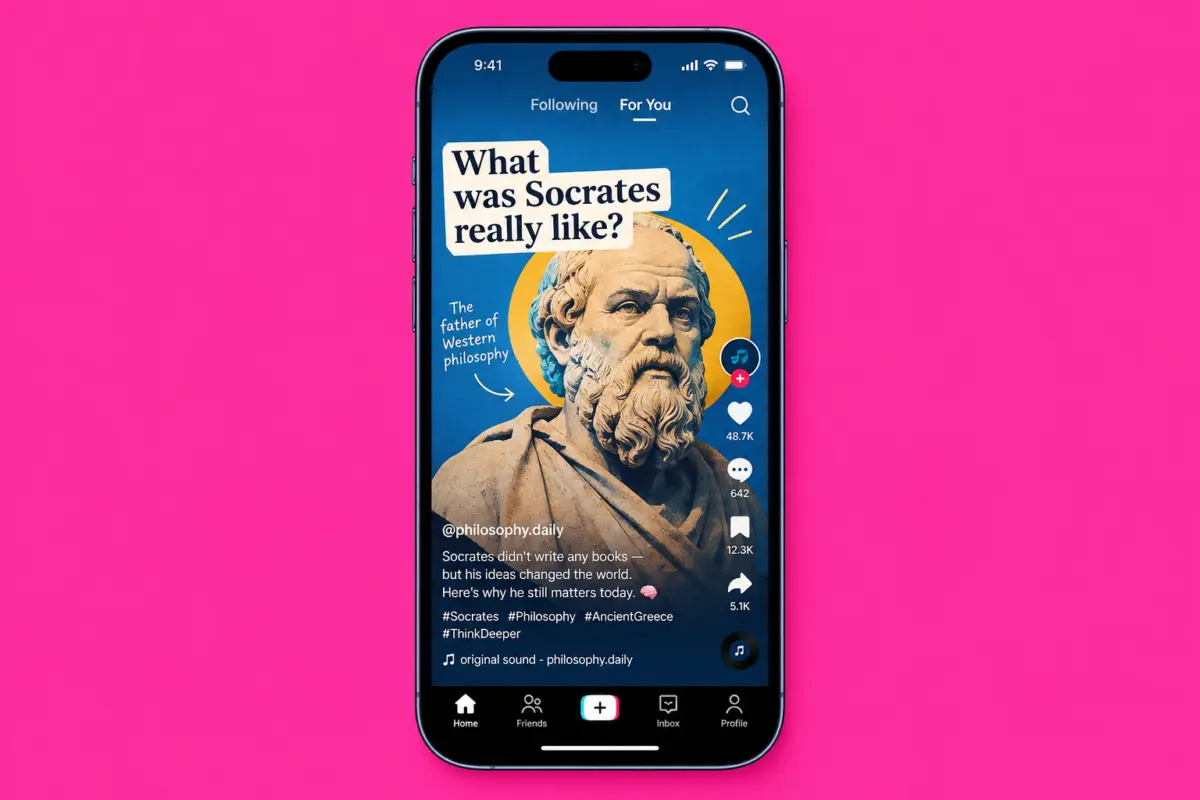
The startup has engineered an innovative application that ingests dense, text-heavy source material—ranging from academic PDFs and complex corporate manuals to classic literature—and automatically transforms it into an interactive, vertical-scrolling feed reminiscent of TikTok or Instagram Reels. As users swipe through the application, dense subject matter is dynamically unpacked via a multimedia blend of AI-generated video, immersive audio, digestible text, and gamified quizzes.
As ScrollEd prepares to showcase its platform at the prestigious TechCrunch Disrupt Startup Battlefield 200 competition, the young company sits at the bleeding edge of educational technology (EdTech) and behavioral psychology. By reimagining the user interface of learning, ScrollEd is attempting to solve a profound cultural dilemma: Can the addictive mechanics of social media be ethically repurposed to foster genuine intellectual curiosity?
Detailed Chronology: From Late-Night Doomscrolling to the Birth of ScrollEd
The Genesis: Exhaustion and Epiphany
The origins of ScrollEd trace back to a familiar modern ritual: late-night exhaustion. Earlier this year, co-founders and married couple Utsav Gupta and Rebecca Neff found themselves doing what millions of young adults do every evening—lying in bed, mindlessly scrolling through social media feeds, and experiencing a distinct sense of emptiness and dissatisfaction afterward.
However, unlike most consumers who merely complain about the psychological toll of doomscrolling, Gupta and Neff approached the phenomenon through the lens of builders and scholars. Immersed in rigorous academic environments—Gupta studying AI and human purpose at Stanford University, and Neff studying computer science at the University of Pennsylvania—they observed a striking disconnect between how young people consume information in their personal lives and how they are expected to consume it in professional or educational settings.
The traditional mediums of education—thick textbooks, monolithic PDF documents, and lengthy lectures—were increasingly incompatible with the cognitive habits of a generation raised on vertical, short-form video feeds. Rather than viewing this shift as a moral failing or an unmitigated tragedy of declining attention spans, the founders identified it as a massive user-experience (UX) failure.
Building the MVP
Motivated by this realization, the duo began bootstrapping ScrollEd in early 2024. Their goal was not to build another distraction machine, but to harness the dopamine-driven engagement loops of modern social media and channel them toward constructive ends.
Working late nights alongside their university coursework, Gupta and Neff developed a proprietary ingestion engine. They built a system capable of parsing complex, unstructured documents and breaking them down into modular, bite-sized educational nuggets. Utilizing advanced artificial intelligence models, the platform translates static prose into dynamic multi-sensory experiences.
The Product Mechanics: How ScrollEd Works
The user experience of ScrollEd is designed to feel instantly familiar to anyone who has ever used a modern social application, yet it is fundamentally structured to promote cognitive retention:
- The Vertical Feed: When a user uploads a text file, textbook, or study guide, ScrollEd converts the content into a continuous, vertically scrolling stream.
- Multimedia Translation: As the user scrolls, information is presented dynamically through AI-generated videos, crisp audio narrations, concise text summaries, and interactive knowledge checks.
- The Two-Axis Navigation Paradigm: This is where ScrollEd departs from traditional social media algorithms.
- Swiping Up: Just like moving to the next video on TikTok, swiping vertically surfaces a completely new topic or sequential chapter from the source material.
- Swiping Sideways: If a user encounters a concept they find fascinating or confusing, swiping sideways allows them to dive deeper into the current topic. The application generates supplementary explanations, alternative analogies, or deeper historical contexts without breaking the flow of the session.
- The Gamified Conclusion: At the end of every thematic module, users are greeted with interactive quizzes designed to reinforce active recall—a proven cognitive technique for long-term memory retention.
By structuring navigation around two axes—vertical progression for breadth and horizontal swiping for depth—ScrollEd solves a critical flaw in traditional short-form video platforms. As Gupta noted in interviews, standard social media videos often spark a fleeting sense of curiosity, but satisfying that curiosity usually requires leaving the app entirely, breaking user engagement. ScrollEd keeps the user immersed, making deep exploration as effortless as swiping to the next video.
Supporting Context & Metrics: The EdTech Landscape and Gen-Z Media Consumption
To understand the long-term viability of ScrollEd, one must examine the broader cultural and technological currents driving its creation.
The Generation Z Media Shift
The foundational premise of ScrollEd is anchored in hard demographic realities. Generation Z—individuals born roughly between 1997 and 2012—has abandoned traditional linear media consumption at an unprecedented rate. According to numerous digital media studies, younger demographics increasingly rely on vertical-feed platforms not just for entertainment, but as search engines, news sources, and social connection hubs.
When speaking with 18-year-olds during their early research phases, Gupta and Neff found that the preference for short-form, vertical video is nearly absolute. For educational institutions, this shift has created an acute crisis. Educators are fighting a losing battle against platforms engineered by some of the brightest behavioral psychologists in the world, whose sole metric of success is maximizing "time on device" through intermittent variable rewards.
The Educational Productivity Paradox
Traditional EdTech platforms have largely failed to bridge this gap. Most digital textbooks are simply digitized PDFs—glorified electronic paper that lacks interactivity, dynamism, or emotional resonance. Learning management systems (LMS) are often clunky, administrative tools designed for institutional tracking rather than engaging student experiences.
Consequently, students resort to frantic, last-minute cramming, passive reading, or relying on generative AI tools to summarize texts without genuinely internalizing the underlying concepts.
ScrollEd’s Strategic Positioning
ScrollEd enters the market at an intersection of three booming sectors:
- Generative AI Integration: Leveraging LLMs and multimedia generation tools to transform static data into interactive content at scale.
- Micro-learning: Capitalizing on the cognitive benefits of breaking complex subjects down into small, digestible chunks (spaced repetition and micro-lessons).
- Behavioral Redirection: Rather than preaching digital abstinence, ScrollEd embraces harm-reduction principles by offering "better things to scroll on."
By positioning itself as an alternative to mindless consumption rather than a replacement for structured schooling, the startup avoids the puritanical trap of anti-technology crusades, recognizing instead that technology must be redesigned to serve human cognitive health.
Official Statements and Strategic Vision
ScrollEd’s leadership team has been remarkably candid about the philosophical underpinnings and ethical boundaries of their platform. In communications with tech journalists and industry observers, co-founder Utsav Gupta has emphasized that building a product inspired by social media does not mean adopting the predatory engagement tactics of Silicon Valley giants.
"The younger generation is increasingly going short form, vertical feed only (especially the 18-year-olds we’ve spoken to!), and this poses challenges for any kind of media that requires depth," Gupta explained in an email interview. "We want to meet them where they are… We just have to be deliberate about how we use it and choose not to maximize engagement on the platform."
This distinction is crucial. Traditional social media algorithms are optimized to maximize ad impressions and retain user attention at all costs, frequently promoting outrage, anxiety, or superficial content. ScrollEd, by contrast, is bound by educational outcomes. Its underlying metric of success is not how many hours a user spends mindlessly scrolling, but how effectively the user comprehends and retains the underlying source material.
"A short video can make you curious; following that curiosity can mean searching for another explanation or leaving the app," Gupta continued. "We wanted going deeper to be as easy as moving to the next video."
This philosophy informs the company’s ultimate brand ambition: building a social network that is genuinely "better for you." While the phrase sounds like marketing hyperbole in an industry plagued by corporate greenwashing, ScrollEd’s dual-axis mechanic (vertical breadth, horizontal depth) structurally alters the incentive system of the feed format.
Future Outlook: Commercial Strategy, Institutional Pilots, and the Road Ahead
As ScrollEd steps onto the national stage at TechCrunch Disrupt in downtown San Francisco (scheduled for October 13-15), the startup is officially launching its consumer-facing business model alongside its enterprise ambitions.
Business Model and Monetization
ScrollEd is executing a classic freemium SaaS (Software-as-a-Service) playbook tailored for the modern digital economy:
- Consumer Tier: A free consumer feed that allows individual users to upload personal study materials, explore public libraries of AI-transformed educational feeds, and experience the platform at no cost.
- ScrollEd Pro: A paid subscription tier for power users, offering advanced customization, unlimited AI processing hours, and deeper analytical tracking for self-directed learners.
- Institutional Licenses: The core revenue engine. Educational institutions, universities, and corporate training departments purchase annual enterprise licenses to deliver mandatory reading materials, compliance training, or textbook curricula through the ScrollEd platform.
In exchange for institutional licensing fees, ScrollEd provides comprehensive backend analytics. Educators and corporate trainers receive granular reports detailing student engagement metrics, lesson progress, weak spots in comprehension, and conceptual bottlenecks across cohorts.
The Near-Term Roadmap
Over the coming months, Gupta, Neff, and their expanding team will focus heavily on three core execution pillars:
- Consumer Launch & Community Building: Driving user acquisition at TechCrunch Disrupt and refining the consumer-facing app based on early adopter telemetry.
- Content Ingestion & Source-Checking Accuracy: Enhancing the AI pipeline’s reliability. Because educational content must be factually airtight, ScrollEd is investing heavily in source-checking workflows to eliminate AI hallucinations and ensure faithful representation of textbooks.
- Institutional Pilots: Rolling out controlled pilot programs with high schools, universities, and enterprise human resources departments to test scalability and data reporting integrity.
Long-Term Technological Ambitions
Looking further down the horizon, ScrollEd is laying the infrastructural groundwork for personalized, adaptive learning at scale. The startup is developing assessment capabilities that will allow the platform to dynamically evaluate individual learners in real time.
If a student consistently struggles with a specific physics principle or corporate compliance protocol detected during quiz sessions, the ScrollEd algorithm will automatically adjust upcoming feed items, generating bespoke explanatory modules tailored precisely to that learner’s cognitive gaps.
Conclusion: Can a Scroll Save Our Minds?
For decades, society has treated digital feeds as the mortal enemy of deep thought. We have built digital detox retreats, written manifestos on the death of the book, and chided younger generations for their shortening attention spans while offering them little more than digitized PDFs as an alternative.
ScrollEd offers a radical, pragmatic alternative. By acknowledging that the medium of the vertical feed has fundamentally rewired how human beings process visual and textual data, the startup refuses to fight human nature. Instead, it weaponizes the best elements of modern user interface design in the service of enlightenment.
If Gupta and Neff succeed, the future of education won’t look like a dusty library or a sterile lecture hall. It might just look like a scroll—one that finally teaches us something worth knowing.