Executive Overview
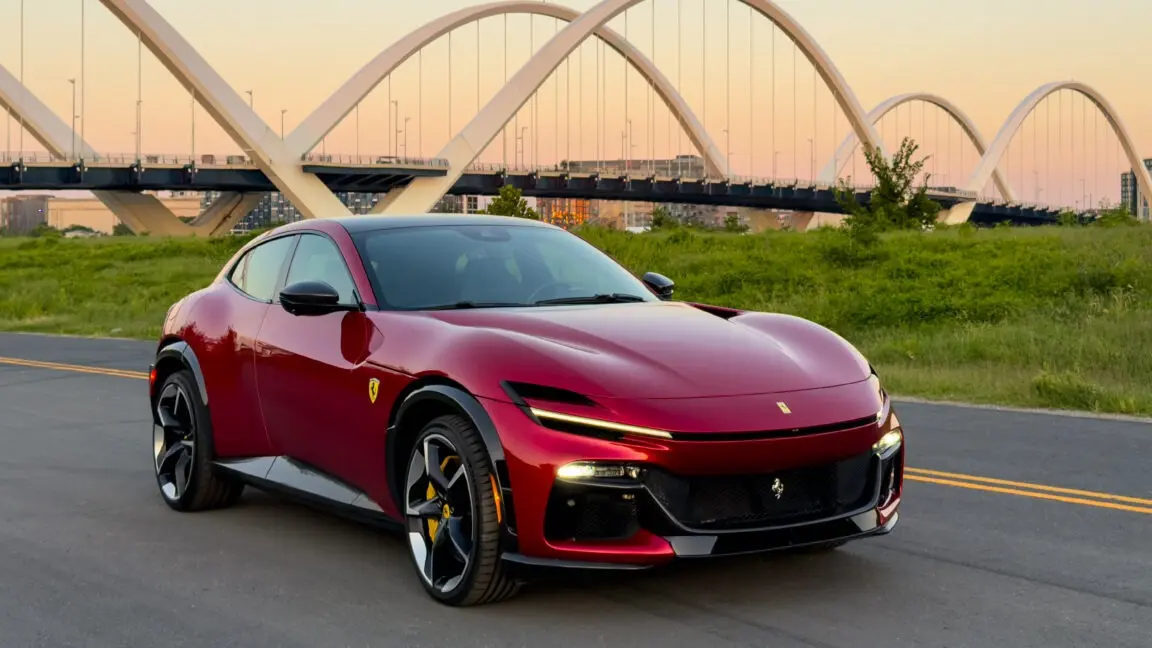
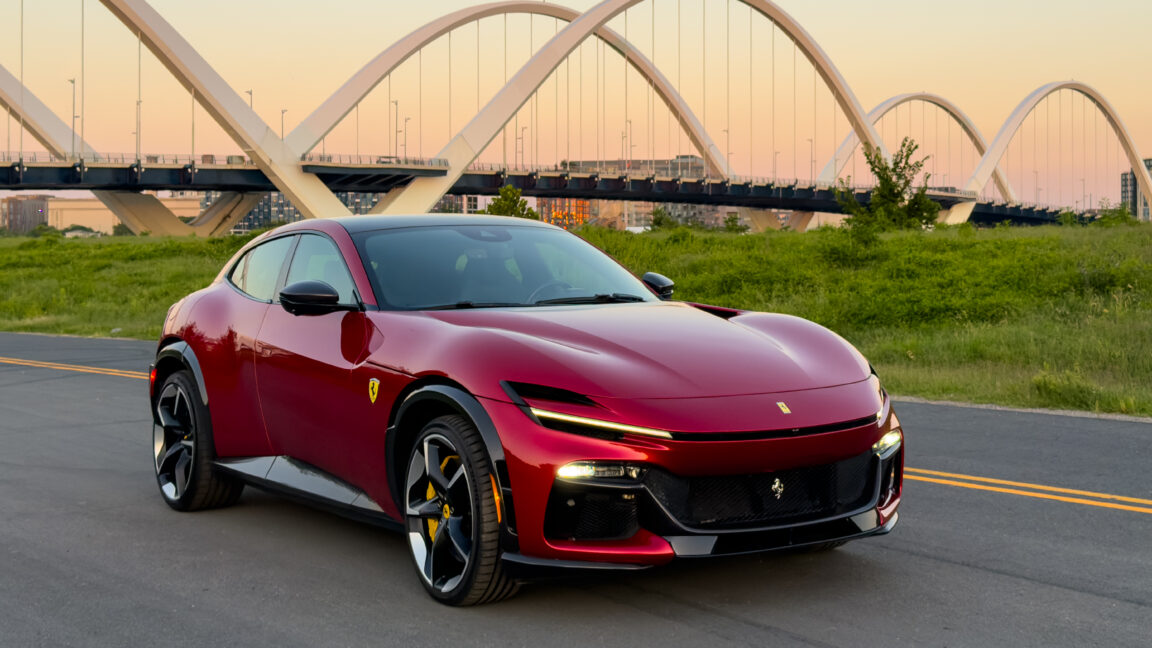
For decades, the mere suggestion of a Ferrari-badged sport utility vehicle was enough to trigger purists, draw fierce skepticism from automotive historians, and prompt solemn head-shaking across Maranello’s storied boardroom tables. Yet, the automotive landscape has shifted fundamentally, driven by consumer appetites, global market realities, and the irresistible profit margins of the ultra-luxury high-riding segment. Enter the Ferrari Purosangue—a vehicle that the Italian marque adamantly refuses to call an SUV, preferring instead to frame it as a novel breed of four-door, four-seater sports car.
Priced at a staggering base of $393,350—though quickly swelling to a breathtaking $576,544 once subjected to the seductive temptations of Ferrari’s Atelier and Tailor Made personalization programs—the Purosangue occupies a rarefied atmosphere far beyond traditional super-SUVs like the Aston Martin DBX and Lamborghini Urus. Beneath its sweeping, aggressively sculpted sheet metal lies a visceral, naturally aspirated V12 engine, a dying breed in an era dominated by forced induction and electrification.
This review explores the duality of the Purosangue: a machine capable of carrying four adults in supreme, heavily bolstered comfort while generating enough lateral G-force to test the structural integrity of its occupants’ seatbelts. Yet, brilliance in engineering rarely arrives without compromise. While the exterior dazzles under the August sun in deep Rosso Portofino paint, and the steering wheel thankfully relies on physical, tactile buttons rather than the frustrating capacitive touch surfaces found in models like the 296 GTB, the cabin’s human-machine interface (HMI) presents notable ergonomic hurdles. From pop-out climate dials that demand microscopic precision on the move to heavily polarized passenger screens, the Purosangue proves that blending hypercar performance with daily-drivable utility remains an extraordinarily complex balancing act.
Detailed Chronology: From Concept Controversy to Asphalt Reality
To truly understand how the Purosangue came to fruition, one must trace the timeline of Ferrari’s desperate—and ultimately successful—evasion of homogenization.
The Genesis of Resistance
When Sergio Marchionne first hinted at a Ferrari utility vehicle years ago, the enthusiast community reacted with predictable hostility. The prevailing sentiment was that Maranello’s sacred lineage—forged on the high-speed straights of Le Mans and the twisting asphalt of the Targa Florio—would be irrevocably tarnished by an upright, family-friendly hauler. However, as competitors siphoned off billions of dollars in high-net-worth client spending with vehicles like the Bentley Bentayga and Lamborghini Urus, Ferrari’s financial planners recognized that stubborn adherence to tradition was a luxury the company could no longer afford.
Engineering the Exception
The mandate given to Ferrari’s engineering teams was clear: if they were going to build a high-riding vehicle, it had to drive like a genuine Ferrari. That meant abandoning the shared platform architectures common among mainstream automotive conglomerates. Instead, the Purosangue was built upon its own bespoke, lightweight aluminum spaceframe.
The powertrain selection further defied convention. Rather than dropping in a twin-turbocharged V8 or an electrified hybrid layout straight out of the box, Ferrari engineers chose to anchor the Purosangue with a magnificent, high-revving V12. This engine layout dictated the car’s proportions—long hood, cab-rearward stance, and an aggressive road presence that looks significantly more dynamic in the metal than any traditional SUV.
Real-World Testing and Iteration
Over the past year, iterative testing across varied European terrains—from the chaotic, cobbled streets of Rome during the sweltering summer months to high-speed alpine passes—has revealed the vehicle’s true character. Whether finished in a striking, metallic yellow-green or the lustrous, sun-catching Rosso Portofino red of our primary test vehicle, the Purosangue has transitioned from a controversial corporate gamble into an undeniable design triumph. It turns heads with the authority of a mid-engine hypercar, yet offers the practical convenience of rear doors and a trunk capable of swallowing weekend luggage.
Supporting Context & Metrics: Performance, Ergonomics, and Economics
The true measure of the Purosangue cannot be captured by badge prestige alone; it demands a granular examination of its cabin technology, fuel economy, and financial footprint.
The Cockpit Interface: A Mixed Ergonomic Bag
One of the most frequent criticisms lobbied against modern luxury and performance cars is the complete eradication of physical controls in favor of glossy, fingerprint-attracting touchscreens. Thankfully, Ferrari took a step back from the brink of total digitization when designing the Purosangue’s multifunction steering wheel.
Unlike the near-unusable capacitive touch surfaces experienced in the Ferrari 296 GTB, the Purosangue utilizes actual, physical buttons for the majority of its primary controls. This tactile feedback is a revelation on the move, allowing the driver to manage functions like Apple CarPlay without ever taking their eyes off the road. When active, CarPlay integrates directly into the main instrument display positioned immediately in front of the driver, effectively taking over the digital dash and shifting the tachometer to a supportive role.
However, modern automotive design rarely achieves total ergonomic harmony. While the steering wheel delights, the climate and seat controls introduce unnecessary friction. Adjusting the cabin temperature, fan speed, ventilation, or massage functions requires interacting with a rotating controller that pops mechanically out of the dashboard. Users must swipe or tap its miniature touchscreen display to navigate menus and select settings for each individual seat.
While straightforward enough when parked safely at a standstill, this interface becomes an exercise in frustration if attempted while driving. The targets your finger must aim for are simply too small to reliably strike when the vehicle is traversing uneven road surfaces. To compound matters, a second, identical dial is positioned between the rear seats, granting rear passengers the same diminutive touchscreen functionality.
Passenger Isolation and Entertainment
In keeping with modern supercar interior philosophies, the Purosangue completely omits a central infotainment screen. Instead, the driver manages navigation and media via the instrument binnacle, while the front-seat passenger is treated to a dedicated, full-width auxiliary display.
Interestingly, this passenger screen is heavily polarized or optically filtered to prevent driver distraction. During extended test drives, it proved nearly impossible for the driver to catch even a peripheral glimpse of what their passenger was interacting with. While passengers enjoy unfettered access to native media applications, they are curiously locked out of projecting Apple CarPlay onto their dedicated display—a minor software limitation that may frustrate tech-forward co-pilots.
The Numbers Game: Specs and Consumption
Performance and utility always exact a toll at the pump. Powered by its glorious V12 engine, the Purosangue returns a combined fuel economy of roughly 12 mpg (19.6 L/100 km). For daily commuting, this abysmal efficiency makes it a challenging proposition—a role far better suited to a battery-electric alternative like the conceptual Ferrari Luce.
Yet, for those fortunate enough to afford it, the Purosangue serves as an astonishingly versatile masterclass in sharing V12 performance with a broader audience. Equipped with the appropriate winter tires, its sophisticated all-wheel-drive system and dynamic suspension management transform it into a devastatingly effective cold-weather machine.
| Metric / Feature | Specification |
|---|---|
| Base Price (MSRP) | $393,350 |
| As-Tested Price | $576,544 |
| Powertrain | Naturally Aspirated V12 |
| Fuel Economy (Combined) | 12 mpg (19.6 L/100 km) |
| Seating Capacity | 4 Adults (Individual bucket seats) |
| Key Rivals | Aston Martin DBX, Lamborghini Urus SE |
| Infotainment Strategy | Driver-centric instrument cluster, polarized passenger display, no central screen |
Official Statements and Brand Philosophy
Maranello’s leadership has consistently defended the positioning of the Purosangue, walking a tightrope between expanding into profitable new market segments and maintaining the ultra-exclusive aura that underpins the Ferrari brand.
When discussing production caps and pricing strategies, Ferrari executives have repeatedly emphasized that exclusivity is non-negotiable. Unlike mass-market luxury competitors who chase volume milestones year after year, Ferrari deliberately limits the Purosangue’s production volume to ensure it remains a rare sight on public roads. Company representatives noted during early press briefings that the vehicle is designed to be "100 percent Ferrari," fusing sports car weight distribution—achieved via a transaxle layout—with the ground clearance required for variable road conditions.
Furthermore, regarding the choice of a naturally aspirated V12 over turbocharged or fully electrified setups for this specific flagship model, Maranello’s engineering directorate stressed that the emotional resonance, linear power delivery, and acoustic signature of the V12 remain irreplaceable touchstones of the brand’s identity. The engine is viewed not merely as a mechanical propulsion device, but as the beating heart of the Ferrari experience, ensuring that even a four-door, high-riding vehicle delivers the spine-tingling theater expected of the Prancing Horse.
Future Outlook: Where the Purosangue Fits in Ferrari’s Horizon
As the global automotive industry races headlong toward an electrified future, the Ferrari Purosangue occupies a fascinating, perhaps penultimate, chapter in internal combustion history. It proves that mechanical passion can still be packaged in formats previously dismissed as mundane family haulers.
Looking ahead, the lessons learned from the Purosangue—ranging from spaceframe architecture management to rear-seat packaging and dynamic active suspension systems—will undoubtedly influence Maranello’s upcoming portfolio, including their highly anticipated battery-electric vehicles. However, the sheer existence of a V12-powered, high-riding Ferrari serves as a potent reminder that the brand is willing to bend its own rules, provided the financial incentives align with uncompromised driving dynamics.
For the elite cadre of buyers capable of absorbing a $576,544 sticker price, the Purosangue is more than just a luxury utility vehicle; it is an indulgence in acoustic and dynamic excess. Despite minor ergonomic missteps with its pop-out climate controls and polarizing passenger screens, it delivers an emotional resonance that its competitors simply cannot match. It bridges the gap between the track and the school run, ensuring that even when life demands practicality, a driver never has to sacrifice the soul of a supercar.