By Chris Kerr
Senior Editor, News, GameDeveloper.com
August 6, 2026
Executive Overview
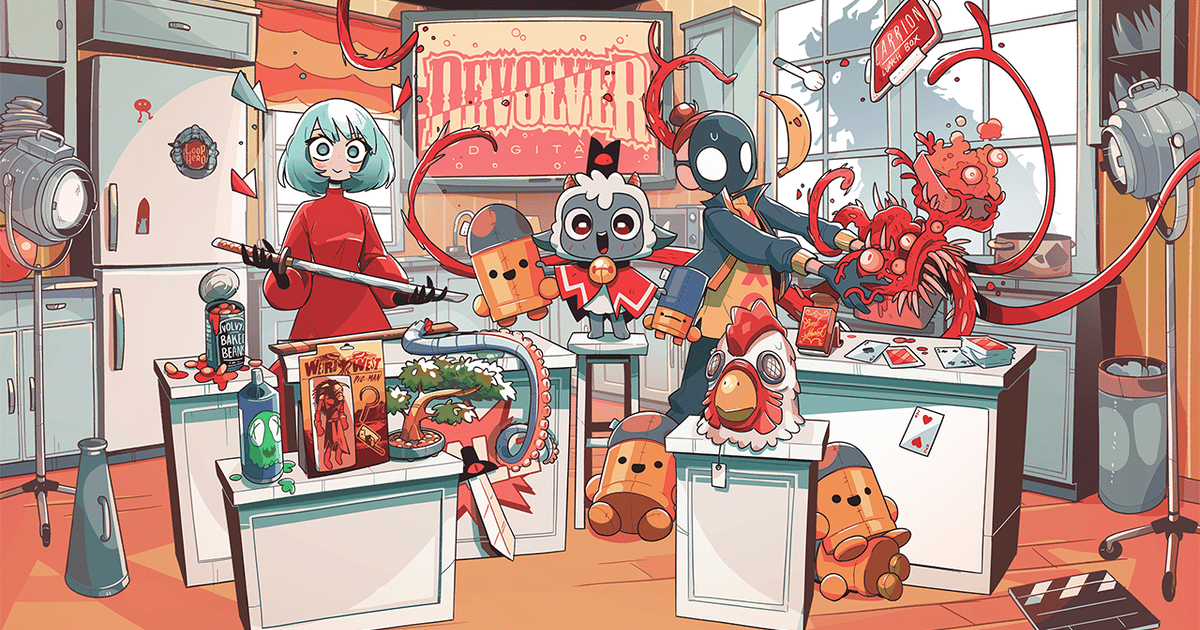
In a dramatic about-face that underscores the fundamental friction between Wall Street expectations and the volatile realities of indie game development, Devolver Digital has announced its intention to delist from the Alternative Investment Market (AIM) of the London Stock Exchange. The publisher behind cultural phenomena like Hotline Miami, Baby Steps, and Poinpy is seeking to return to private ownership after a turbulent five-year stint on the public market.
If approved by shareholders, Devolver’s final day of trading on the AIM will be September 16, 2026. The move aims to dismantle what leadership describes as a crippling "valuation disconnect"—a chasm between the company’s actual operational performance and its cratered stock price. To sweeten the pill for investors, the board has proposed a return of capital of up to $5 million in cash to qualifying shareholders and depositary interest holders.
By taking the company private, Devolver hopes to sidestep the grueling demands of semi-annual public reporting, eliminate roughly $1.6 million in annual administrative and regulatory costs, and insulate its long-term catalog revenue from the short-sighted whims of public stock markets.
Detailed Chronology: From a Blistering IPO to Private Reclamation
To understand the weight of Devolver’s current pivot, one must look back at its meteoric public debut in late 2021. Propelled by a stellar reputation for curating critically acclaimed independent titles and a distinct, irreverent brand identity, Devolver Digital went public on the AIM at a soaring valuation of $939.8 million. At the time, the IPO was heralded as a watershed moment for independent game publishing, signaling that indie-focused models could scale successfully within traditional institutional finance frameworks.
However, the macroeconomic and gaming-specific landscapes shifted dramatically in the years that followed. The post-pandemic correction, rising interest rates, widespread industry layoffs, and platform rationalization battered the games sector as a whole. Devolver was not immune; the publisher navigated a series of operational headwinds, including several financial impairments on underperforming titles within an increasingly hyper-competitive market.
Despite these hurdles, the company’s internal operational metrics steadily clawed upward. Devolver’s board of directors noted that the company achieved six consecutive halves of substantive operational improvements leading up to the end of 2025. Revenues, gross margins, and Adjusted EBITDA all posted positive gains year-over-year. A trading update published in June 2026 even highlighted staggering year-on-year revenue growth of over 60 percent.
Yet, these operational triumphs failed to translate to market confidence. By August 2026, Devolver’s market valuation had plummeted to approximately $46 million—representing a staggering 91.35 percent drop from its 2021 IPO peak. The closing share price of £0.16 on August 5, 2026, sat over 25 percent lower than the price immediately following the release of the company’s 2024 annual results. Facing this stark realization, the board concluded that public trading was no longer a viable mechanism for value creation.
Supporting Context & Metrics: The "Valuation Disconnect"
At the heart of Devolver’s decision to leave the public market is a structural mismatch between how video games make money and how public stock markets evaluate risk and reward.
In its note to investors, the company articulated a core frustration: the public stock market failed to reward the publisher for its consistent operational improvements because public equities thrive on predictable, sequential, linear growth. Video game publishing, by contrast, is notoriously non-linear. Development timelines are prone to shifting, individual title performance can vary wildly, and financial returns often rely heavily on long-tail catalog sales rather than immediate, quarter-by-quarter spikes.
+-------------------------------------------------------------------------+
|                      DEVOLVER DIGITAL FINANCIAL SNAPSHOT                |
+-------------------------------------------------------------------------+
| IPO Valuation (2021)                 | $939.8 million                   |
+-------------------------------------------------------------------------+
| Current Valuation (August 2026)      | ~$46 million                     |
+-------------------------------------------------------------------------+
| Share Price Decline                  | 91.35% drop                      |
+-------------------------------------------------------------------------+
| Proposed Capital Return to Investors | Up to $5 million                 |
+-------------------------------------------------------------------------+
| Projected Annual Cost Savings        | $1.6 million                     |
+-------------------------------------------------------------------------+
As the data illustrates, the company’s fundamental value has been heavily divorced from its share price. Devolver pointed out that public market pressures frequently forced the leadership team to prioritize short-term market expectations over the long-term health and creative potential of its development pipeline.
Furthermore, maintaining a public listing on the London Stock Exchange incurs substantial overhead. By delisting, Devolver expects to immediately eliminate roughly $1.6 million in annual compliance, advisory, and administrative costs. The board intends to redirect these savings directly into fueling future revenue, supporting development studios, and driving sustainable growth.
Official Statements and Rationale
In communication directed to stakeholders, Devolver’s leadership pulled few punches regarding the state of the broader games industry and the toxicity of public market volatility for indie publishers.
"The global video games industry has undergone a period of significant disruption and volatility, characterized by widespread layoffs for studios and publishers, platform rationalization and substantial impairments across the industry," the company stated.
"Devolver has during this time navigated a number of operational and market headwinds, including several impairments of underperforming titles amid an increasingly competitive and unpredictable market environment. As a publicly-quoted company, Devolver has faced the ongoing challenge of delivering growth in line with market expectations despite those difficult sector conditions, resulting in a valuation disconnect that does not take account of the lifetime and long-tail revenue delivery inherent in the video games business."
Addressing the core incompatibility between indie publishing and public accountability, the board elaborated:
"Development timelines can be unpredictable, and, as a result, financial performance can vary significantly between reporting periods and may not follow a linear progression. Consequently, the Company has at times faced increased pressure to deliver short-term market expectations that do not necessarily reflect the underlying long-term value creation potential of its portfolio and development pipeline."
To soften the blow for current public shareholders who may not wish to hold unlisted private equity, the company structured a proposed return of capital of up to $5 million in cash, ensuring that qualifying shareholders and depositary interest holders receive a direct liquidity event as part of the transition.
Future Outlook: What Next for Devolver Digital?
As the September 16, 2026 delisting deadline approaches, industry analysts are watching closely to see what lessons can be learned from Devolver’s public market experiment. The narrative of a high-profile independent publisher retreating from public markets serves as a cautionary tale for other mid-sized creative enterprises tempted by the allure of public capital.
For Devolver Digital, returning to private ownership does not mean the company is shrinking its ambitions. Instead, shedding the suffocating oversight of semi-annual reporting will allow the publisher to return to its core competencies: taking creative risks on eccentric, boundary-pushing indie titles, nurturing long-term relationships with independent developers, and playing the long game on catalog sales without the sword of quarterly earnings reports hanging over its head.
While the loss of 90% of its public market valuation will sting the legacy books, the company’s operational health—underscored by 60% year-on-year revenue growth in mid-2026—suggests that beneath the financial market metrics, the publisher’s creative engine remains robust. Free from the constraints of Wall Street and London Stock Exchange expectations, Devolver Digital is positioning itself to weather the ongoing storms of the games industry on its own terms.