In the high-stakes arena of venture-backed startups, executive hiring is often treated as the ultimate silver bullet. Founders and venture capitalists frequently operate under the assumption that securing a seasoned Vice President or Chief Experience Officer (CXO) from a larger, more established enterprise will automatically inject operational excellence, scale revenue, and build enduring market dominance. However, the graveyard of startup failures is littered with the remnants of high-profile executive "train wrecks."
While much has been written about the hazards of hiring the wrong Vice President of Sales or Chief Revenue Officer (CRO)—such as mismatched deal sizes, incorrect corporate stages, or a skill set that stretches too far—a far more insidious and frequent catalyst for executive termination remains largely underexamined: priority dis-alignment.
According to observations drawn from working with and investing in dozens of successful startups, priority dis-alignment serves as the number-two mistake in executive hiring and arguably the number-one reason VPs lose their jobs within their first year. This disconnect manifests most acutely in marketing leadership roles. Because the marketing function encompasses a heterogeneous mix of responsibilities—ranging from demand generation and field marketing to corporate communications, content creation, and product marketing—the perceptual gap between a CEO’s expectations and a newly hired VP’s execution plan can quickly widen into an insurmountable chasm.
This article provides an authoritative, in-depth analysis of why executive alignment fails, how founders and incoming leaders can bridge the strategic divide, and the tactical steps required to survive and thrive during the precarious onboarding window.
Detailed Chronology: The Anatomy of an Executive Disconnect
To understand how executive relationships deteriorate so rapidly, one must examine the typical lifecycle of a startup’s leadership transition, moving from early-stage founding grit to the integration of professional management.
Phase 1: The Founder-Led Genesis (MRR $0 to $20k+)
In the formative stages of any successful startup, the Chief Executive Officer wears every hat imaginable. Long before a dedicated functional head is brought on board, the CEO has acted as the de facto VP of Sales, Marketing, Product, Customer Success, and occasionally Engineering.
By the time the enterprise achieves even a modest milestone—such as scaling Monthly Recurring Revenue (MRR) by $10,000 to $20,000—the CEO has personally validated early market assumptions. They have run the initial ad campaigns, closed the first skeptical buyers, handled customer support tickets, and navigated product feature requests. Consequently, founders develop deeply ingrained, empirically tested convictions regarding what works and, more importantly, what flatly does not work within their specific market niche.
Phase 2: The Executive Arrival and the Honeymoon Period
Enter the newly minted Vice President. Often recruited via executive search firms with impressive resumes boasting tenures at industry giants or hyper-growth unicorns, the incoming leader arrives brimming with enthusiasm. They carry with them a "proven playbook"—a set of strategies, vendor relationships, and operational frameworks that drove massive success at their previous organization.
During the initial thirty days, mutual goodwill prevails. The CEO is relieved to delegate heavy operational burdens, and the executive is eager to make a bold impact.
Phase 3: The Strategic Collision
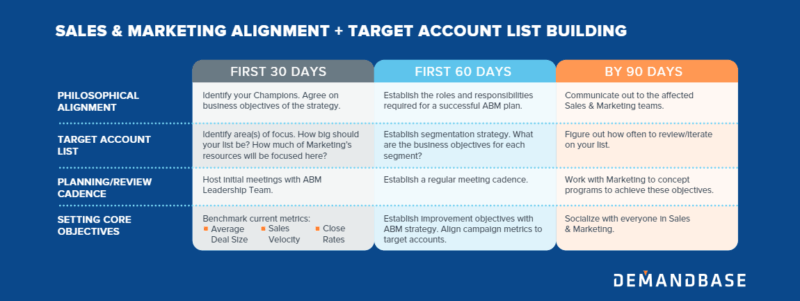
Trouble begins to brew around day sixty. The VP rolls out a comprehensive 30-60-90-day execution plan that features tactics diametrically opposed to the hard-won lessons the CEO learned during the company’s foundational phase.
For instance, the new VP of Marketing might propose allocating a substantial budget toward high-profile industry events or top-of-funnel agency contracts. However, the CEO’s early customer data may have decisively proven that trade shows yield zero qualified pipeline, and that external agencies previously burned through scarce capital with negligible return.
Because the executive’s priorities clash fundamentally with the operational realities discovered by the founder, trust fractures. Personal chemistry cannot compensate for strategic divergence. Within months, mutual frustration peaks, resulting in a swift and costly departure.
Supporting Context & Metrics: Why Marketing Leads the Casualty List
While alignment issues can plague any C-suite or VP-level hire, marketing executives experience the highest attrition rates. To unpack why, one must look closely at the structural nature of modern startup marketing and the metrics governing early-stage viability.
The Heterogeneous Nature of Marketing Responsibilities
Engineering roles are heavily anchored to technical codebases and architectural scalability. Sales roles are tethered to pipeline velocity, win rates, and closed-won revenue. Marketing, however, occupies a nebulous space encompassing multiple distinct disciplines:
- Demand Generation: Paid acquisition, search engine optimization (SEO), and conversion rate optimization.
- Field Marketing: Localized events, sponsorships, and community engagement.
- Corporate Communications: Public relations, analyst relations, and brand management.
- Content Marketing: Thought leadership, whitepapers, and digital collateral.
- Product Marketing: Messaging, positioning, competitive intelligence, and enablement.
Because a single marketing leader cannot possibly be a world-class expert across all five pillars simultaneously, trade-offs must be made. When a CEO expects hyper-focused demand generation to feed an aggressive sales team, but the incoming VP prioritizes long-term brand equity and top-of-funnel content creation, a silent crisis of expectations is born.
The First 100 Customers Rule
Data from early-stage venture investments reveals a striking pattern: by the time a B2B SaaS startup acquires its first 100 customers, certain immutable truths about its go-to-market motion have already established themselves.
- Channel Viability: Paid search channels like Google AdWords may be driving high-intent leads efficiently, while social media campaigns yield only noise.
- Outbound Dynamics: Cold emailing might be generating solid traction, whereas cold calling falls flat due to buyer personas.
- Strategic Partnerships: Certain channel partnerships might have accelerated growth, while others proved to be administrative drains.
When an incoming executive ignores these baseline patterns under the guise of "innovation" or "modernizing the playbook," they violate the unwritten laws of the company’s early market validation. The lesson for leaders is stark: Your job as a new VP is to optimize what is already working and scale it efficiently—not to reinvent the wheel before the vehicle has even found its proper road.
Official Guidelines: Operationalizing Alignment Through Force-Ranking
To eliminate ambiguity and prevent the catastrophic fallout of priority dis-alignment, founders and executive candidates must adopt a rigorous, formalized alignment protocol before ink dries on an employment contract.
The Top 5 Priorities Exercise
The remedy to executive misalignment is remarkably straightforward yet frequently neglected due to overconfidence or rushed onboarding processes. Both the CEO and the incoming VP must collaboratively build, refine, and sign off on a formal operational plan.
As a mandatory summary exercise within the standard 60-day plan, leadership teams must force-rank the Top 5 operational priorities for the specific functional area. There can be no ties, no vague umbrella statements, and no hidden agendas.
+-----------------------------------------------------------------+
                 THE EXECUTIVE ALIGNMENT CHECKLIST
+-----------------------------------------------------------------+
  1. Audit early customer data (Analyze the first 100 buyers).
  2. Identify non-negotiable "dead zones" (What has already failed).
  3. Draft independent 30-60-90 day plans.
  4. Force-rank Top 5 operational priorities.
  5. Mutual e-signature and formal baseline sign-off.
+-----------------------------------------------------------------+
Deconstructing the Force-Ranking Process
- Transparency of Assumptions: The executive must explicitly document why they believe these five priorities are paramount, referencing their past experiences while explicitly reconciling them against the CEO’s early-stage observations.
- CEO Veto and Validation: The CEO must review these priorities with a critical eye. If priority number three involves a marketing channel that the founder knows burned through $50,000 of seed capital with zero conversions, that item must be debated, modified, or discarded before the hire commences full-time duties.
- Formal Sign-Off: Once consensus is reached, both parties should formally endorse the document—effectively creating a binding operational contract.
When this level of crystalline alignment is achieved, the subjective anxiety surrounding performance reviews evaporates. Both the executive and the founder share an identical scorecard, ensuring that success or failure is measured objectively against mutually agreed-upon milestones rather than unexpressed, shifting expectations.
Future Outlook: The Evolution of Executive Search and Onboarding
As the macroeconomic environment continues to demand capital efficiency and accelerated paths to profitability, the margin for error in executive hiring is shrinking rapidly. Venture capitalists and board members are no longer willing to tolerate the traditional six-month grace period followed by an expensive executive termination and search reboot.
The Shift Toward Stage-Appropriate Leadership
Looking ahead, the criteria for evaluating executive talent are shifting away from prestigious pedigree toward operational adaptability. Startups are increasingly prioritizing leaders who demonstrate intellectual humility—those who possess the capacity to listen to early customer feedback, respect founder intuition, and scale existing engines rather than imposing rigid enterprise frameworks onto early-stage organisms.
Technology-Enabled Alignment Frameworks
Furthermore, modern talent management platforms are beginning to integrate strategic alignment modules. These digital workspaces allow leadership teams to track OKRs (Objectives and Key Results) and strategic priorities in real-time, instantly flagging deviations between executive focus and foundational company objectives before they manifest as cultural or operational fractures.
Conclusion
Hiring a Vice President or CXO is one of the most consequential decisions a startup founder will ever make. By moving beyond superficial resume vetting and establishing rigorous, force-ranked priority alignment during the onboarding window, companies can neutralize the number-one driver of executive failure. In the end, greatness in execution is not merely about bringing a brilliant playbook to a new company—it is about ensuring that the playbook is written for the exact terrain upon which the battle is being fought.