Executive Overview
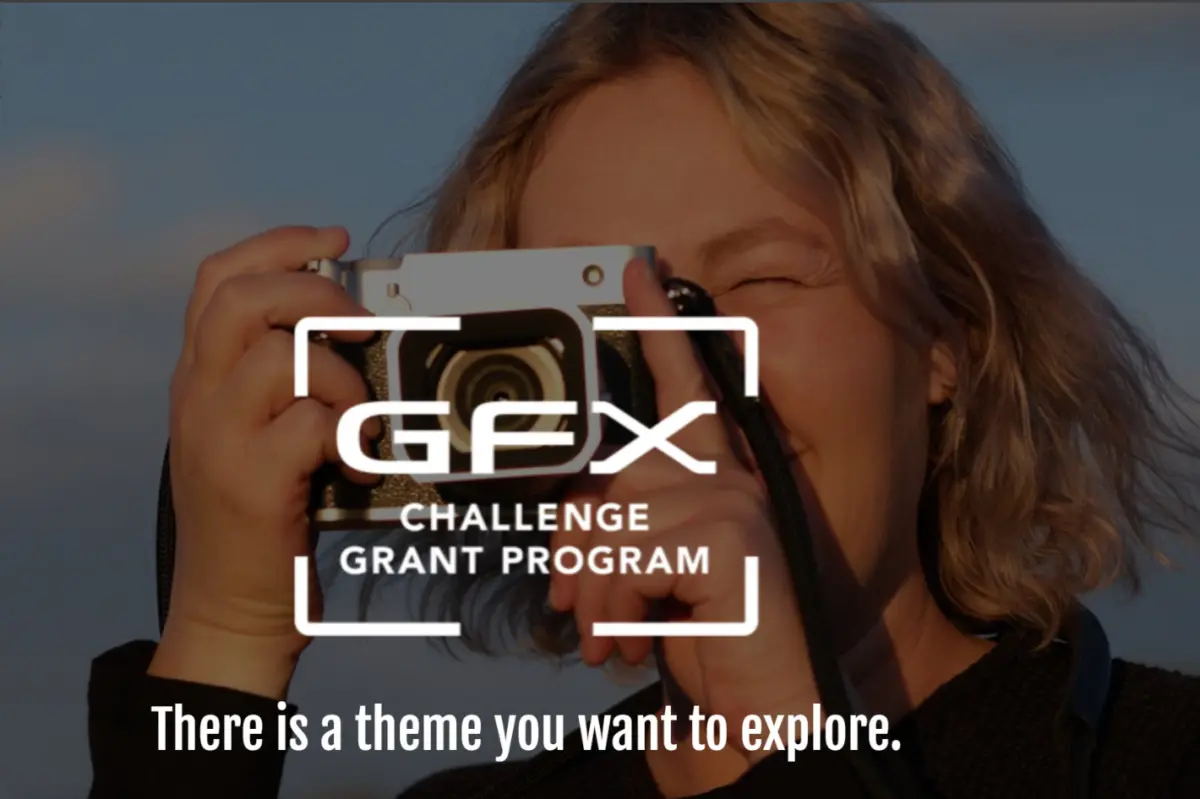
The global imaging landscape is undergoing a profound transformation, driven by rapid technological advancements and an increasingly democratized creative economy. At the forefront of this evolution is Fujifilm’s GFX Challenge Grant Program 2026, which has officially entered its final week for project submissions. Established as a premier launchpad for aspiring and emerging content creators, the program represents a significant corporate commitment to nurturing global talent.
By offering a combination of substantial financial backing and access to some of the world’s most advanced medium-format imaging technology, Fujifilm is actively dismantling the financial and technological barriers that frequently stifle independent artistic vision.
This year’s iteration of the program is particularly noteworthy due to the inclusion of the newly launched, IMAX-certified FUJIFILM GFX ETERNA 55 cinema camera—marking a historic bridge between ultra-high-end theatrical production and independent, grassroots filmmaking. With five Global Grant Awards valued at $10,000 each, and ten Regional Grant Awards valued at $5,000 each, the GFX Challenge Grant Program 2026 stands as a critical barometer for the direction of contemporary photography and cinematography.
As the submission window rapidly closes, creators worldwide are finalizing proposals that span documentary filmmaking, conceptual photography, and socio-cultural visual essays, all vying for a chance to leverage Fujifilm’s legendary color science and large-format optical superiority.
Detailed Chronology
The Genesis and Evolution of the GFX Grant (2021–2025)
To understand the significance of the 2026 cycle, one must examine the program’s historical trajectory. Launched in 2021, the GFX Challenge Grant Program was conceived during a period of profound global disruption. As the creative industries grappled with the economic fallout of the pandemic, independent artists found themselves locked out of traditional funding structures. Fujifilm stepped into this vacuum with a structured grant program designed not merely as a marketing campaign, but as a sustainable incubator for visual storytelling.
In its inaugural years, the program focused primarily on showcasing the capabilities of the GFX medium-format mirrorless system in traditional photographic contexts. Early recipients proved that medium-format sensors—historically confined to high-end commercial studios due to their cost, size, and operational complexity—could be deployed in rugged, run-and-gun documentary environments.
By 2023 and 2024, the program began incorporating hybrid creators who straddled the line between still photography and motion design. This shift mirrored a broader industry trend where clients and audiences demanded multi-disciplinary outputs. Projects funded during this mid-tier era explored themes ranging from ecological degradation in remote archipelagos to intimate portraits of vanishing indigenous customs.
The 2026 Program Timeline and Operational Roadmap
The current 2026 cycle operates on a meticulous, multi-phase timeline designed to filter, select, and ultimately execute fifteen world-class creative projects.
[Proposal Submission] ---> [Multi-Tiered Judging] ---> [Winner Announcement] ---> [Production Phase] ---> [Global Exhibition]
(Closes Jan 2026) (Feb - March 2026) (April 2026) (Through May 2027) (Late 2027 onwards)- The Application Phase (Ending Imminently): Creators from designated global regions submit comprehensive project proposals. These submissions must outline not only the creative concept and thematic relevance of the project but also a detailed execution plan, budget allocation, and a logistical roadmap demonstrating how the GFX system will be utilized.
- The Evaluation and Selection Phase (Spring 2026): A distinguished panel of industry experts, curated by Fujifilm, conducts a multi-tiered review process. Portfolios are scrutinized for artistic merit, feasibility, and the potential of the creator to benefit from the mentorship and equipment.
- The Production Phase (Mid-2026 to May 2027): Once selected, the five Global and ten Regional winners receive their respective cash grants ($10,000 and $5,000) alongside their hardware packages. Over the course of approximately one year, recipients execute their projects with ongoing technical support from Fujifilm’s regional offices.
- The Culmination and Exhibition Phase (May 2027 and Beyond): Completed projects are officially delivered in May 2027. The final works will be hosted on Fujifilm’s global digital hub (
fujifilm-x.com) and showcased in physical gallery exhibitions in major cultural capitals around the world, providing creators with invaluable international exposure.
Supporting Context & Technical Metrics
To appreciate why the GFX Challenge Grant is so highly coveted, one must analyze the specific hardware that Fujifilm is placing in the hands of these creators. The inclusion of the FUJIFILM GFX ETERNA 55 represents a paradigm shift in the history of the grant.
Medium Format vs. Full Frame: The Visual Advantage
For decades, the standard for independent filmmaking and high-end photography has been the 35mm full-frame sensor. While full-frame sensors offer excellent low-light performance and depth-of-field control, they are physically constrained when compared to the GFX system’s medium-format sensor.
| Technical Parameter | Standard 35mm Full-Frame | Fujifilm GFX Medium Format |
|---|---|---|
| Sensor Dimensions | Approx. 36mm x 24mm | Approx. 43.8mm x 32.9mm |
| Surface Area | 864 mm² | 1,441 mm² (approx. 1.7x larger) |
| Dynamic Range | Typically 12–14 stops | Up to 14+ stops with smoother roll-off |
| Color Depth | 10-bit to 12-bit raw | 16-bit RAW (stills) / High-bitrate internal log |
| Tonal Transitions | Standard linear gradation | Ultra-smooth micro-contrast transitions |
The physical size of the GFX sensor allows for larger individual pixels (sensels) at equivalent resolutions. This translates directly to an extraordinary dynamic range, exceptionally low noise floors in low-light environments, and a unique three-dimensional rendering of space—often referred to by cinematographers as the "medium-format look." This aesthetic separates subjects from backgrounds with a natural, gradual fall-off that cannot be replicated by software or smaller sensor formats.
The GFX ETERNA 55: Cinematic Democratization
The standout feature of the 2026 grant program is the debut of the FUJIFILM GFX ETERNA 55 as an available tool for grant recipients. Developed to address the growing demand for large-format cinema, the ETERNA 55 has quickly garnered attention across the industry, recently securing its status as an IMAX-certified digital camera.
[Fujifilm GFX ETERNA 55]
  │
  ├──► Large-Format Cinema Sensor (Optimized for motion)
  ├──► IMAX-Certified Pipeline (High-fidelity image processing)
  ├──► Historic Eterna Film Simulation (Native cinema color science)
  └──► Professional Cine Ergonomics (Integrated cooling, standard PL/G mounts)
For an emerging filmmaker, accessing an IMAX-certified camera system is typically an impossibility due to astronomical rental rates and production insurance costs. By including the ETERNA 55 in the grant’s equipment pool, Fujifilm is effectively leveling the playing field.
Independent documentarians and narrative directors can now capture imagery with the same tonal depth, resolution, and color fidelity as multi-million-dollar Hollywood studio productions. The camera’s integration of Fujifilm’s legendary film simulations—specifically the cinema-optimized Eterna profile—allows creators to achieve a highly polished, organic look directly in-camera, reducing the time and expense required in post-production color grading.
Official Statements & Industry Analysis
Industry analysts view the GFX Challenge Grant Program as a strategic masterstroke by Fujifilm, serving both philanthropic and commercial interests.
Bridging the Economic Divide in the Arts
In an era where funding for the arts is facing systemic cuts worldwide, corporate-sponsored grants have transitioned from luxury opportunities to essential lifelines. Visual journalists and artistic photographers frequently face high capital expenditure barriers. A competitive medium-format kit (comprising a camera body and two high-performance GF lenses) can easily exceed $15,000 in retail value—a cost that is prohibitive for most emerging creators, particularly those residing in developing nations or marginalized communities.
By providing $10,000 in direct funding alongside a complimentary, long-term equipment loan, Fujifilm mitigates the primary points of failure for ambitious creative projects:
- The Gear Bottleneck: Access to top-tier optics and sensors.
- The Operational Bottleneck: Financial capital to cover travel, fixer fees, permit costs, and post-production services.
- The Distribution Bottleneck: A built-in global platform and physical gallery tours to ensure the finished work is seen by industry decision-makers.
Strategic Market Positioning
For Fujifilm, the grant program acts as a highly effective, real-world research and development pipeline. The diverse environments in which these grant recipients operate—ranging from freezing high-altitude mountain ranges to humid tropical rainforests and high-pressure urban environments—serve as the ultimate stress test for GFX hardware.
Furthermore, the imagery produced by these creators serves as authentic, narrative-driven marketing. Instead of traditional studio-shot product demonstrations, Fujifilm can showcase the GFX system’s capabilities through deeply moving, socially conscious storytelling. This builds immense brand loyalty and positions Fujifilm not merely as a hardware manufacturer, but as an active patron of the photographic and cinematic arts.
Future Outlook
As the submission window for the GFX Challenge Grant Program 2026 draws to a close, the focus of the global imaging community will shift to the selection phase. The projects chosen over the coming months will shape the visual discourse of 2027 and beyond.
Anticipated Creative Trends in the 2026 Cohort
Based on the trajectory of previous winners—such as Atsushi Fukushima, whose evocative work under the "Next Horizon" banner highlighted the human condition with stark, beautiful clarity—industry observers expect the 2026 proposals to heavily feature themes of:
- Environmental Resilience: Utilizing the high resolution of the GFX system to document micro-level changes in ecosystems undergoing rapid climatic shifts.
- Cultural Preservation: Capturing vanishing traditions with the archival-grade detail that only medium-format sensors can provide.
- Intimate Narrative Cinema: Leveraging the shallow depth of field and color science of the GFX ETERNA 55 to craft character-driven stories that feel cinematic yet intensely personal.
The Long-Term Impact on the Creative Community
The ultimate legacy of the GFX Challenge Grant Program lies in its ability to launch careers. Winners of previous cycles have gone on to secure representation with major photographic agencies, screen their films at international festivals, and publish monograph books.
By continuing to champion this initiative, Fujifilm is ensuring that the future of visual media remains diverse, technically uncompromising, and deeply meaningful. For the creators currently drafting their final proposals, this week represents more than just a deadline—it is an open door to the next stage of their artistic evolution.
To submit a project proposal before the upcoming deadline, visit the official portal at fujifilm-x.com.