Executive Overview
In an era where technology platforms face unprecedented regulatory scrutiny, geopolitical pressure, and public debate over their domestic value, digital giants are increasingly turning to macroeconomic impact studies to justify their existence. TikTok is no exception. The popular short-form video platform recently published a comprehensive new economic report conducted by PF Global, detailing its sweeping influence on the United States economy, small and medium-sized businesses (SMBs), job creation, and informal consumer education.
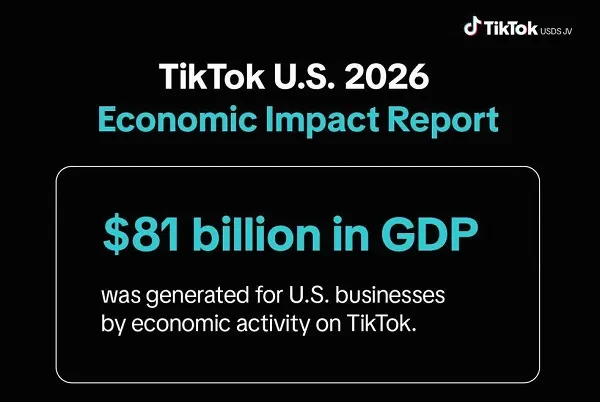
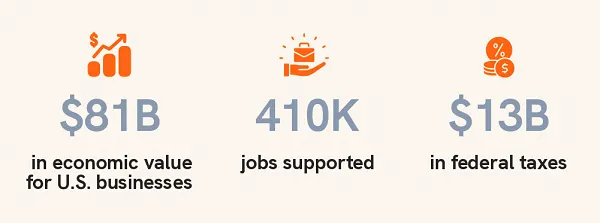
According to the commissioned study, TikTok’s ecosystem was responsible for generating more than $81 billion in economic value for U.S. businesses and supported approximately 410,000 American jobs. Furthermore, the report paints a picture of a platform that has transformed from a mere entertainment app into a critical commercial infrastructure for Main Street enterprises, a training ground for professional skill-building, and a burgeoning marketplace powered by live-stream shopping.
However, a closer examination of the methodology reveals a more nuanced reality. The headline-grabbing figures are largely derived from estimations built upon estimations, utilizing third-party market data and weighted revenue-to-GDP ratios rather than direct, audited contribution accounting. While this does not automatically invalidate the findings, it provides vital perspective on the nature of the data.
Timing is another critical element of this narrative. Released amid years of regulatory threats, legislative battles, and existential concerns regarding the platform’s foreign ownership ties, the report initially read as a defensive strategic campaign designed to stave off a nationwide ban. Yet, with the historic pivot toward a joint venture and the sale of TikTok’s U.S. operations to a consortium of domestic business leaders to comply with American law, the urgent policy justification behind the report has shifted.
Despite the speculative math and changing regulatory landscapes, the study offers an illuminating snapshot of how deeply TikTok has embedded itself into the commercial and cultural fabric of the United States. This report provides a comprehensive analysis of the PF Global findings, unpacking the methodology, evaluating the small business sentiment, assessing the rise of social commerce, and exploring the broader geopolitical and economic ramifications.
Detailed Chronology: From Regulatory Crosshairs to Economic Defense
To understand why TikTok commissioned a multi-million-dollar macroeconomic study in the first place, one must examine the tumultuous timeline that has defined the platform’s American journey over the past half-decade.
The Escalation of Geopolitical Tension
For years, TikTok has navigated a gauntlet of legislative challenges. Beginning in the late 2010s and escalating rapidly through the early 2020s, federal and state lawmakers raised national security concerns regarding the platform’s parent company, ByteDance, and its alleged potential ties to the Chinese government. Critics warned that user data could be accessed or that the algorithm could be manipulated to influence American public opinion. These fears culminated in bipartisan congressional hearings, executive branch memos, and outright bans of the app on government-issued devices across federal agencies and numerous states.
As the political pressure mounted, the existential threat of a nationwide ban loomed large over the company. TikTok management realized that defending the platform solely on the grounds of free expression and cultural relevance was insufficient. To survive in the world’s most lucrative digital advertising market, the company needed to anchor its defense in tangible, hard-nosed economics: jobs, livelihoods, and Main Street survival.
The Genesis of the PF Global Study
Against this high-stakes backdrop, TikTok commissioned PF Global—an independent research and analytics firm—to quantify the platform’s footprint in the United States. The research mandate was broad: capture the economic value generated by businesses utilizing the app, evaluate how SMBs leverage the platform for customer acquisition and growth, measure the integration of creator partnerships, and assess consumer learning opportunities.
The methodology deployed by PF Global involved surveying a massive cross-section of the U.S. economy. The research incorporated responses from 11,123 U.S. adults and more than 5,000 U.S. businesses. Crucially, over half of the business responses came from small and medium-sized enterprises, ensuring that the study captured the pulse of local mom-and-pop shops, independent creators, and regional entrepreneurs rather than just massive multinational conglomerates.
The Shift Toward Compliance
Even as the report was being finalized and prepared for public consumption, the geopolitical chess pieces were moving rapidly. Following intensive negotiations and strict legal mandates passed by Congress, TikTok reached a pivotal turning point: the confirmation of a joint venture and the sale of its U.S. arm to a consortium of domestic business leaders.
This corporate restructuring was engineered to satisfy U.S. statutory requirements, ensuring that data governance, algorithmic security, and operational control remained firmly within American borders. Consequently, the immediate existential threat that birthed the economic impact report has largely subsided. The report now serves less as a frantic lobbying tool and more as a baseline accounting document—a snapshot of an economic engine that is here to stay, operating under a restructured, localized framework.
Supporting Context & Metrics: Unpacking the Numbers
The PF Global report is densely packed with impressive statistics, touching upon GDP contributions, small business reliance, e-commerce momentum, and informal education. To properly evaluate these claims, one must look at both the glowing metrics highlighted by the platform and the underlying mathematical methodology used to generate them.
The $81 Billion Economic Footprint
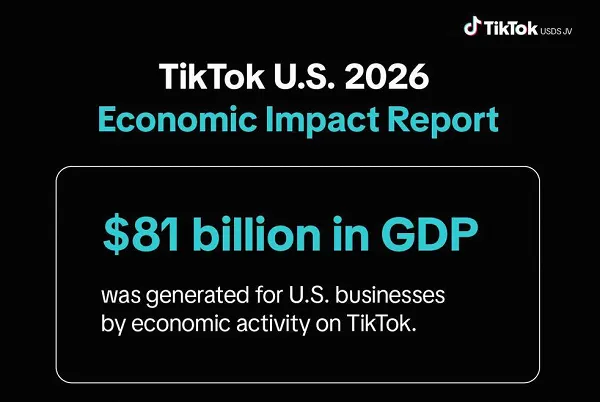
At the center of the report is the eye-catching assertion that TikTok helped generate more than $81 billion in economic value for U.S. businesses, while supporting approximately 410,000 jobs nationwide. For context, this puts the platform’s economic footprint on par with established legacy industries and major technology ecosystems.
However, transparency regarding how this number was calculated is vital. In the technical appendices of the report, PF Global explains that its Gross Domestic Product (GDP) contribution calculations are not derived from direct, bottom-up financial disclosures from every business on the platform. Instead, the figure is estimated based on how much U.S. businesses report spending on TikTok promotional activities, combined with third-party market data and a "revenue-to-GDP ratio weighted across advertiser-facing industries."
In plain terms, the values promoted in the report are estimates derived from estimations. While this methodological approach is standard practice in macroeconomic impact consulting for large tech platforms, it requires a degree of analytical skepticism. It does not mean the figures are fabricated or invalid; rather, they represent a modeled projection of economic activity stimulated by digital advertising and marketing spend, rather than audited tax receipts or direct value-added accounting.
Small Business Reliance and Growth
While the macroeconomic GDP figure relies on complex modeling, the survey data concerning small and medium-sized businesses offers a direct look at user sentiment and commercial dependency. The findings suggest that TikTok has transcended its origins as a dance-and-lip-sync app to become a core pillar of modern digital marketing for small enterprises.
Key findings from the business survey include:

- Essential Tool Status: 69% of surveyed businesses stated that TikTok is an essential tool for their operations.
- Customer Acquisition: 83% of businesses utilizing the platform affirmed that it is important for attracting new customers and supporting long-term business growth.
- Sales Impact: An overwhelming 93% of business respondents agreed that utilizing TikTok helped them directly increase sales by promoting their products and services to targeted audiences.
- Creator Economy Integration: 75% of surveyed businesses reported that they have actively commissioned content creators for paid promotional work, illustrating a symbiotic economic relationship between small brands and independent digital creators.
These metrics highlight how TikTok’s algorithm-driven discovery feed—the "For You" page—has democratized marketing. Unlike traditional search engine optimization or expensive legacy media ad buys, TikTok’s organic distribution model allows hyper-local businesses and niche product creators to achieve national visibility virtually overnight.
The Explosion of Live Commerce
Another major focus of the report is the rapid evolution of social commerce, particularly through TikTok Shop and live-streaming initiatives. In recent years, social commerce has exploded in Asian markets and is rapidly gaining traction in the West.
The report highlights staggering engagement metrics for TikTok Live:
- In 2026, TikTok Shop averaged nearly 595,000 live shopping sessions per month in the United States.
- Live-driven sales experienced explosive growth, surging 92% year-over-year.
This data underscores a fundamental shift in consumer behavior. Shopping is no longer viewed as a purely transactional, search-and-purchase errand; it has become an interactive, entertainment-driven experience where consumers engage in real-time with sellers, ask questions, and make impulse purchases directly within the app ecosystem.
Informal Education and Career Development
Beyond commerce and traditional jobs, the PF Global study evaluated TikTok’s impact on human capital and informal learning. In an era where digital platforms are frequently criticized for shrinking attention spans, the report argues that the app serves as a massive educational resource.
- The study estimated that TikTok supported 3.6 billion hours of informal learning in the United States.
- An estimated 45 million American adults reported that the app played a tangible role in helping them better understand their career options, learn new professional skills, and navigate changing job markets.
From career coaching and financial literacy tips to DIY tutorials and historical deep-dives encapsulated in 60-second clips, millions of users utilize the platform as an accessible, bite-sized micro-learning environment.
Official Statements and Industry Reception
The publication of the PF Global report elicited a flurry of commentary from industry analysts, economic experts, and TikTok corporate leadership.
TikTok’s Official Stance
In rolling out the report, TikTok executives emphasized that the findings validate the company’s ongoing commitment to American economic prosperity. Company spokespeople reiterated that the platform’s primary success metric is the success of its community—ranging from local boutique owners scaling their brick-and-mortar operations to creators earning a livelihood through brand partnerships and live-streaming.
"For millions of Americans, TikTok is not just a place to watch entertaining videos; it is where they build their businesses, find their customers, and learn essential skills," noted a company representative in a statement accompanying the release. "This report demonstrates that when American small businesses thrive on our platform, the entire national economy benefits."
Criticisms and Economic Realism
Conversely, digital economy analysts and market researchers have urged caution when interpreting the data. While acknowledging that TikTok undeniably drives meaningful commerce, industry watchdogs point out the inherent biases in platform-commissioned impact studies.
"When a corporation pays a third-party firm to measure its own economic impact, the resulting narrative is naturally optimized to highlight the positives," noted one independent digital marketing analyst. "The $81 billion figure sounds impressive, but it is a macroeconomic model built on survey declarations and advertising multipliers. It captures gross economic stimulation, but it does not account for potential displacement—meaning dollars spent on TikTok might simply be dollars diverted away from other local businesses or alternative advertising channels."
Nevertheless, even skeptical analysts concede that the qualitative data regarding small business adoption is difficult to dismiss. When nearly 70% of surveyed businesses label a platform "essential," it signals a profound structural shift in how modern commerce operates, regardless of the exact decimal point of the GDP contribution model.
Future Outlook: The Next Chapter for TikTok in America
As the dust settles on years of regulatory battles, structural restructuring, and economic self-justification, TikTok stands at a fascinating crossroads in the United States.
Operating Under New Structural Realities
With the successful transition of its U.S. arm to a domestic consortium of business leaders, the cloud of uncertainty that once hung over the platform has largely parted. The company can now focus its energies squarely on product innovation, creator support, and commercial expansion rather than crisis management and legal defense.
Moving forward, reports like the one authored by PF Global will likely transition from defensive political shields to standard marketing tools used to attract enterprise-level brand advertisers and venture capital partners. By proving that the platform is deeply embedded in the financial health of hundreds of thousands of U.S. small businesses, TikTok has cemented its status as too economically significant to ignore.
The Evolution of Social Commerce and Education
Looking ahead, the trajectories identified in the report—specifically live-stream shopping, creator-led marketing, and micro-learning—are poised to accelerate. As TikTok Shop continues to refine its logistics, payment processing, and seller tools, live-shopping sessions are expected to transition from a novelty into a mainstream retail channel in the U.S., directly challenging traditional e-commerce giants like Amazon and Shopify.
Simultaneously, the integration of educational content will likely prompt traditional educational institutions and corporate recruiters to rethink how they engage with digital natives. If 45 million adults are turning to the app for career guidance and informal learning, educational bodies ignore this digital ecosystem at their own peril.
Conclusion
Ultimately, while the math behind TikTok’s $81 billion economic impact claim may rely on speculative modeling rather than audited balance sheets, the overarching narrative is indisputable. TikTok has evolved from a cultural phenomenon into a critical commercial and educational infrastructure. Whether viewed through the lens of a small boutique owner scaling sales by 93%, a live-stream host driving explosive year-over-year revenue, or an adult learning a new career path, the platform’s footprint on the American landscape is deep, enduring, and fundamentally transformative.