Executive Overview
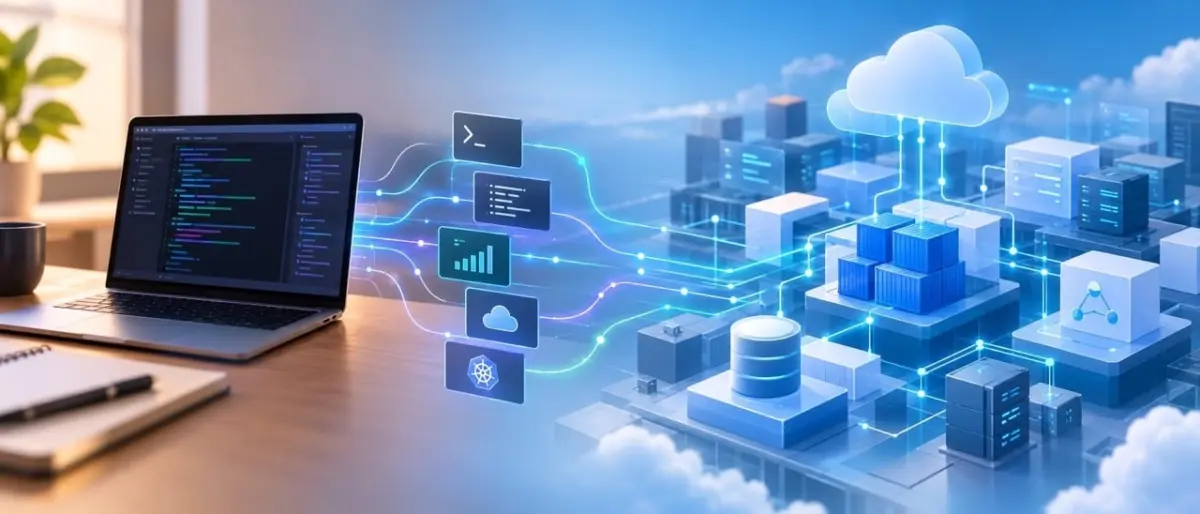
For the modern software engineer, experiencing an AI agent successfully orchestrate a troubleshooting sequence on a local development machine can feel nothing short of a watershed moment. Within minutes, a localized agent can ingest sprawling application logs, execute complex queries against cloud observability platforms, cross-reference infrastructure states, and map a catastrophic deployment failure directly back to an erroneous configuration commit. Under the watchful eye of a human operator, this execution looks like the future of Site Reliability Engineering (SRE).
Yet, industry veterans are increasingly sounding a note of caution: the local environment is an artificial incubator. Moving an artificial intelligence agent from the controlled, forgiving ecosystem of a developer’s laptop into the chaotic, high-stakes crucible of a production environment is not merely an engineering hurdle—it is an architectural chasm.
On a local machine, an agent operates with borrowed privileges, ephemeral context windows, and zero concern for concurrent request management, token expenditure caps, or multi-tenant isolation. It benefits from continuous human intervention, acting as a tireless co-pilot rather than an autonomous system. However, once deployed into the wild, these dependencies vanish. Production systems demand that AI agents operate persistently across asynchronous alerts, maintain unassailable audit trails, respect strict access control boundaries, and manage operational expenditures as rigidly as any other cloud resource.
As enterprise engineering organizations race to embed generative artificial intelligence into their incident response pipelines, a harsh reality is setting in: building a compelling demo is easy, but engineering a production-grade SRE agent requires reimagining reliability, security, and observability from the ground up.
Detailed Chronology: The Evolution of AI in SRE and the Production Bottleneck
To understand why production deployments of SRE agents are proving so difficult, one must examine the rapid trajectory of developer tooling over the past several years and the distinct operational phases through which AI-assisted troubleshooting has evolved.
Phase 1: The Era of Static Playbooks and CLI Assistants
Long before autonomous agents could query logs, site reliability engineering relied heavily on static runbooks, shell scripts, and command-line utilities. When a production incident occurred, on-call engineers manually parsed error codes, executed grep commands, and correlated alerts with dashboards in tools like Datadog, Prometheus, or Grafana.
As Large Language Models (LLMs) emerged, the first wave of AI integration manifested as simple CLI assistants and chat interfaces. Engineers could copy-paste stack traces into a browser window or IDE plugin to receive explanations or syntax suggestions. While helpful, this workflow remained entirely manual. The human remained the sole orchestrator, responsible for gathering data, feeding it to the model, interpreting the response, and executing remediation steps.
Phase 2: The Local Agent Revolution and Tool-Calling APIs
The introduction of function-calling and tool-use capabilities in advanced foundational models marked a monumental shift. Frameworks like LangChain, AutoGen, and various proprietary local agent runtimes allowed developers to tether LLMs directly to local environments.
Suddenly, an engineer could provision an AI agent on their workstation, grant it access to local Kubernetes clusters via kubectl, connect it to cloud provider CLIs, and direct it to investigate a failing pod. The agent could autonomously execute commands, read the output, decide on the next step, and iterate until it identified a root cause. For individual developers, this was a revelation. It drastically compressed investigation times and lowered the barrier to entry for complex diagnostics.
Phase 3: The Production Reality Check
Buoyed by the success of local experimentation, organizations began attempting to operationalize these agents. They tried to wire local agent scripts into webhook receivers, PagerDuty alerts, and CI/CD pipelines.
Almost immediately, architectural friction materialized. In production, an agent could no longer rely on a human to clear roadblocks when it hallucinated a command or hit an API rate limit. Furthermore, unmanaged execution loops began generating massive token bills, while broad permission profiles introduced critical security vulnerabilities. Organizations realized that a tool optimized for a single, supervised interactive session was fundamentally unequipped for the unyielding demands of an enterprise reliability stack.
Supporting Context & Metrics: The Four Pillars of Production Readiness
Transitioning an AI agent from a localized experiment to a dependable production asset requires mastering four critical dimensions: architectural isolation, auditability, financial governance, and rigorous evaluation methodologies.
1. Architectural Isolation: Supervised Sessions vs. Production Systems
Local agent frameworks thrive on human-in-the-loop assistance. When an agent stalls—whether due to ambiguous log outputs, missing environment variables, or a logic loop—the user intervenes immediately, supplying a corrective prompt or supplementary file.
In a production setting, however, incidents rarely respect business hours. An alert may fire at 3:00 AM, triggered by an anomalous traffic spike or a cascading cloud outage. The agent must reside in a dedicated execution environment outside the engineer’s machine. It must be capable of:
- Handling Concurrency: Processing multiple, simultaneous incident tickets without cross-contaminating investigation contexts, state variables, or temporary scratchpads.
- Resiliency and Self-Healing: Surviving underlying infrastructure disruptions, network timeouts, or transient API failures without crashing or leaving systems in an indeterminate state.
- Lifecycle Management: Gracefully spinning up containers or serverless execution pods to handle an alert, performing the diagnostic sweep, securely packaging the findings, and terminating its execution cleanly without leaking sensitive data.
If an agent fails midway through an incident investigation or throws an unhandled exception, it transforms from a diagnostic aid into a secondary operational hazard that the on-call team must now troubleshoot.
2. Auditability: The Imperative of an Investigation Trail
In a local terminal session, data ephemerality is rarely an issue. Once an engineer closes their IDE or clears their terminal history, the prompts, intermediate tool calls, and discarded hypotheses vanish.
This casual attitude toward session history is entirely unacceptable when an agent’s output influences live production infrastructure. During high-pressure incident response, post-mortem analysis, and compliance audits, engineering teams must be able to answer a fundamental question: How did the agent reach this conclusion?
A production-grade AI agent must maintain a comprehensive, immutable audit trail. This record must explicitly link:
- The initial trigger alert from the monitoring system.
- The specific telemetry, logs, and infrastructure states queried by the agent.
- The exact tool calls and parameters executed during the diagnostic run.
- The logical chain of reasoning and discarded hypotheses.
- The final remediation recommendation provided to the human operator.
Without this granular trail, engineering teams are forced to trust a "black box" recommendation. Furthermore, a detailed historical record is the primary mechanism for continuous improvement. By systematically reviewing past agent sessions, platform teams can identify recurring failure modes—such as an agent consistently failing to diagnose database lockups because it lacks access to query execution plans—and systematically bridge those operational gaps.
3. Financial Governance: Token Spend as a Reliability Metric
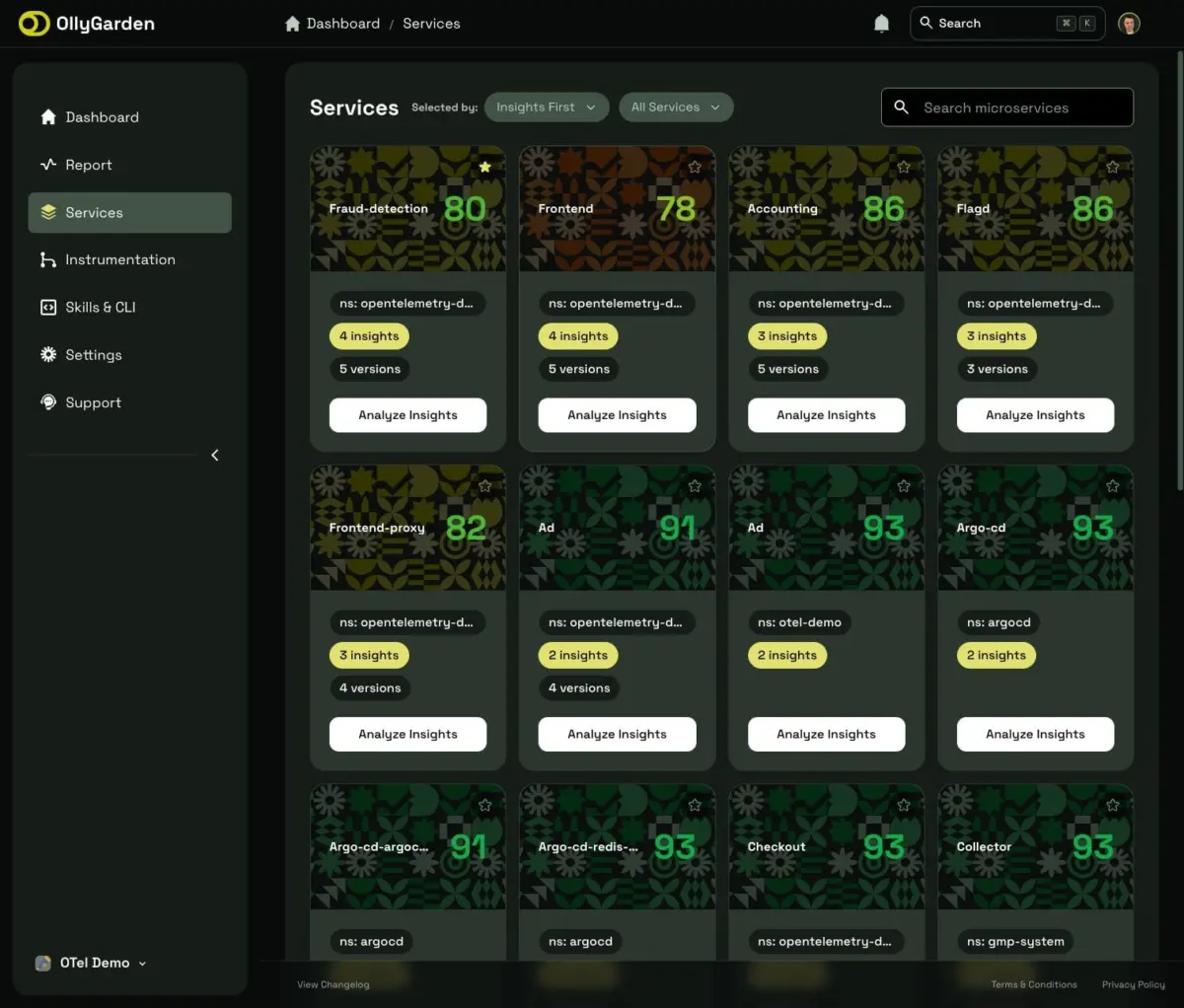
In traditional software engineering, compute and storage costs are modeled using predictable metrics like CPU hours, memory utilization, and gigabytes transferred. In the realm of LLM-powered agents, cost introduces an entirely new vector of operational unpredictability.
General-purpose agent frameworks often incorporate expansive context windows, complex reasoning loops, and verbose output generation that are rarely necessary for targeted SRE workflows. At production scale, an agent that engages in overly chatty self-reflection or unnecessary recursive tool-calling can consume millions of tokens in a matter of minutes. Moreover, token expenditure fluctuates wildly depending on:
- The complexity and verbosity of application error logs.
- The chosen foundational model (e.g., lightweight models vs. frontier reasoning models).
- The frequency of retries and tool-call loops during an investigation.
Consequently, modern engineering organizations must treat cost per session and cost per incident type as core reliability metrics, monitored right alongside latency, mean-time-to-resolution (MTTR), and success rates.
Monitoring token spend also serves as an invaluable early-warning system for aberrant agent behavior. An unexpected spike in token consumption often correlates directly with a runaway prompt loop, a failing API integration, or an exploding context window. Embedding budget alerts, strict usage limits, and automated circuit breakers directly into the production architecture ensures that a misbehaving agent cannot silently drain cloud budgets before an engineer notices a degradation in output quality.
4. Rigorous Evaluation: Why Demo Scenarios Lie
One of the most insidious traps in AI engineering is the "demo effect." A curated prompt, a clean test environment, and a handful of hand-picked troubleshooting scenarios can make an agent appear ready for enterprise deployment.
However, AI models are notoriously sensitive to minor perturbations. A prompt engineering adjustment designed to improve log parsing in one scenario can inadvertently degrade the agent’s ability to interpret network timeouts in another. Similarly, upgrading to a newer, more sophisticated model might yield deeper root-cause analysis while simultaneously introducing latency and cost overheads that render the agent unusable during a high-severity outage.
Validating an SRE agent requires moving far beyond anecdotal success stories. Platform teams must construct comprehensive evaluation suites that mirror the gritty reality of production environments:
- Historical Failures: Replaying obfuscated logs and metrics from past major outages to test whether the agent can independently navigate the same dead ends and surface the correct root cause.
- Edge Cases and Noise: Introducing synthetic noise, contradictory telemetry, and intermittent network failures to test the agent’s resilience and skepticism.
- Ground Truth Benchmarking: Measuring success not merely by whether the agent generates a plausible, well-formatted response, but by whether its recommended remediation aligns with what senior reliability engineers would trust and execute.
Official Insights & Expert Perspectives
To operationalize these concepts, industry leaders emphasize that AI agents must integrate seamlessly into existing human workflows rather than attempting to bypass them.
According to Andrey Pokhilko, an Innovation Researcher in the CTO Office at Komodor—who focuses extensively on AI-driven SRE, Kubernetes operations, and rapid platform prototyping—the transition from local convenience to production reliability requires treating AI systems with the same rigorous governance applied to human operators.
"SRE runs through live alerts, handoffs, policies, and business constraints," Pokhilko observes. "Agents have to work within those workflows, keep a usable record for the next responder, and stay within approved cost and access limits. That is what separates a laptop AI experiment from something cloud engineering teams can rely on in production."
A central pillar of this philosophy is the handling of permissions and authorization. During local experimentation, developers routinely run agents using their personal, highly privileged credentials or broad API keys. This expediency creates profound security vulnerabilities if transferred directly to production.
Pokhilko and other security-conscious engineers advocate for a principle of graduated autonomy:
- Read-Only Foundations: Initial production deployments should restrict agents strictly to read-only investigations. They can query logs, inspect configurations, and analyze metrics, but possess zero capability to modify state.
- Policy-Enforced Escalation: As confidence builds, autonomy can expand incrementally into low-risk remediation tasks (such as restarting a stateless pod or scaling a replica set), always bounded by strict rate limits and automated policy guardrails.
- Explicit Human Approvals: High-impact actions—such as modifying production routing tables, altering database schemas, or rolling back critical deployments—must remain gated behind explicit human sign-off, supported by the agent’s pre-packaged evidence trail.
Future Outlook: The Road to Autonomous Enterprise Reliability
As the tooling surrounding artificial intelligence and site reliability engineering matures, the gap between local experimentation and production reality is slowly narrowing. However, bridging that gap will require a fundamental shift in how platform teams build, fund, and govern automated systems.
In the coming years, we can expect the emergence of purpose-built SRE agent frameworks designed explicitly for distributed, multi-tenant cloud environments. These systems will move away from general-purpose conversational models toward domain-optimized architectures featuring:
- Deterministic Guardrails: Hard-coded execution boundaries that prevent agents from entering infinite loops or executing unauthorized API calls, independent of LLM output.
- Native Cost Attribution: Granular tracking of token spend and compute resources tied directly to individual microservices, incident queues, and engineering teams.
- Standardized Observability for AI: Comprehensive telemetry suites dedicated to monitoring agent health, tool-call success rates, hallucination frequencies, and diagnostic latency.
Ultimately, artificial intelligence will not replace the site reliability engineer; rather, it will redefine the engineer’s role from a manual troubleshooter to an orchestrator and governor of automated systems. By acknowledging that a supervised laptop session is a far cry from a production system, engineering organizations can bypass the pitfalls of premature deployment and build robust, trustworthy AI agents capable of safeguarding the world’s most critical digital infrastructure.