For over two decades, London-headquartered Disguise (formerly d3 Technologies) has served as the silent backbone of the world’s most visually spectacular live experiences. From the massive, multi-screen stage designs of Bad Bunny and the sprawling main stages of Coachella to permanent architectural marvels like Dubai’s Burj Khalifa and the immersive projection-mapped galleries of New York’s Rockefeller Center, Disguise’s hardware and software ecosystem has long been the industry standard for high-end media playback, real-time rendering, and spatial mapping.
However, this elite status historically came with a high barrier to entry. The immense processing power and rock-solid reliability of Disguise’s proprietary media servers—such as the vx and gx product lines—demanded capital expenditures and rental budgets that only top-tier stadium tours, massive corporate keynotes, and deep-pocketed installations could justify. Small to mid-sized productions, including regional theater tours, club DJ sets, mid-scale corporate brand activations, and independent music festivals, were frequently priced out. These productions were forced to rely on lower-tier, less robust media server software, sacrificing the advanced projection-mapping, 3D pre-visualization, and real-time generative content capabilities that define modern visual storytelling.
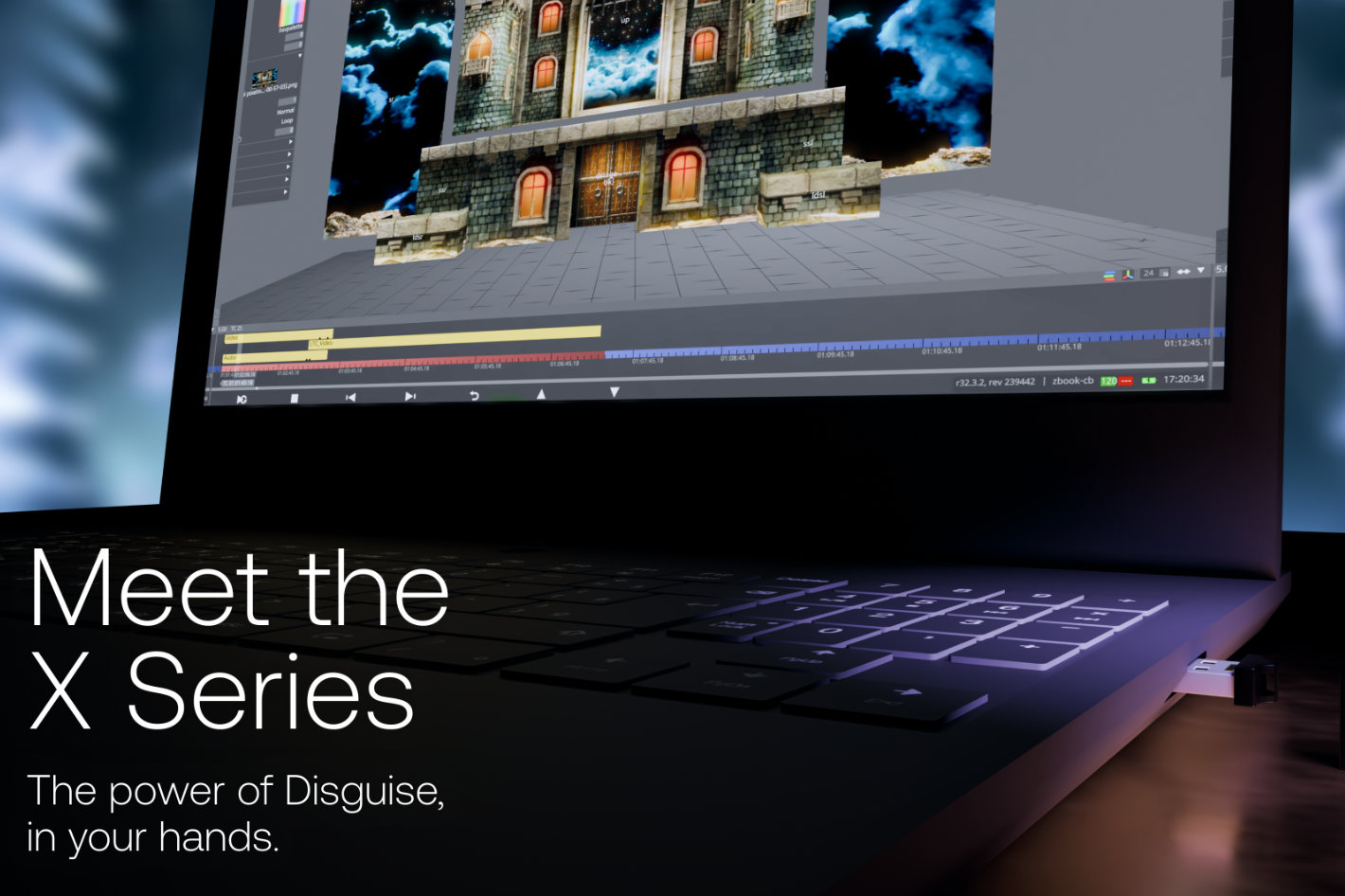
Recognizing this market gap, Disguise has embarked on a calculated democratization strategy. Following the release of the X1 software-licensing tier last year, the company has officially unveiled the X2 and X3, expanding the X Series ecosystem. By offering two and three 4K outputs respectively, and allowing the software to run on user-selected hardware—including high-performance Windows laptops—Disguise is systematically lowering the cost of entry.
This strategic pivot allows production teams to utilize the powerful Disguise Designer software at a highly accessible entry point starting at $600 per month. By decoupling their industry-standard software from proprietary, heavy-iron hardware for smaller shows, Disguise is not only defending its market share against mid-tier competitors but is also establishing a continuous, scalable workflow that spans from local club gigs to international arena spectacles.
Detailed Chronology: The Evolution of Disguise’s Media Ecosystem
To understand the disruptive nature of the X Series expansion, one must examine the chronological trajectory of Disguise’s technology and the market demands that shaped it.
[2000s - 2010s] -----------------> [2023] -----------------------> [Early 2024] -------------> [Late 2024]
Proprietary Hardware Dominance     Launch of X1 (Single 4K)       Beta Testing (X2/X3)       Official Launch & MyDisguise
(vx & gx Series Media Servers)     Targeted at Entry-Level        Tested by Guetta, Garrix   Public release of X2 & X3;
High Capital Expenditure (CapEx)   and Micro-Productions          Seamless Scale to Arenas   SaaS model starts at $600/mo
The Era of Proprietary Hardware Dominance
For much of its history, Disguise operated on an integrated hardware-and-software model. To run Disguise’s advanced Designer software in a live environment, production companies had to purchase or rent dedicated, rack-mounted media servers. While these systems offered unparalleled processing power, redundant power supplies, and specialized video capture cards, they represented a massive logistical and financial footprint.
The Pivot to Flexibility: The Launch of X1 (2023)
As virtual production, real-time rendering (via Unreal Engine and Notch), and spatial mapping became highly sought-after across all levels of entertainment, the demand for a lightweight, portable version of Disguise reached a tipping point. In 2023, Disguise launched the X1.
Designed to run on a single 4K output, the X1 allowed operators to utilize the Disguise workflow on their own hardware, such as a high-end laptop or a compact custom PC build. The X1 was quickly adopted for specialized installations and intimate tours, proving its mettle on Charlie Puth’s European tour, the TennoCon conference, and the highly complex Dunham Massey Christmas light trail installation, which required precise spatial mapping across outdoor natural landscapes.
The Beta Testing and Expansion Phase (Early to Mid-2024)
While the X1 successfully introduced the Disguise ecosystem to smaller budgets, a single 4K output was often insufficient for mid-sized shows that required multi-screen setups, led walls with separate side-screens (IMAG), or complex projection-mapping arrays.
In early 2024, Disguise quietly rolled out the X2 (two 4K outputs) and X3 (three 4K outputs) to select high-profile beta testers and key clients. This allowed the company to stress-test the software under rigorous real-world touring conditions. Electronic music pioneers David Guetta and Martin Garrix, alongside breakout UK drill artist Central Cee, integrated the pre-release X Series software into their touring packages, validating the system’s stability on highly demanding festival main stages and indoor venues.
The Public Launch and the "MyDisguise" Ecosystem (Late 2024)
With successful field testing completed, Disguise has officially launched the X2 and X3 to the global market. Alongside this product expansion, the company introduced MyDisguise, a centralized, cloud-based platform designed to streamline license management, software subscriptions, and user accounts. This launch marks Disguise’s formal transition into a hybrid Software-as-a-Service (SaaS) provider, offering flexible operational expenditure (OpEx) options for an industry historically dominated by heavy capital expenditure (CapEx).
Supporting Context & Metrics: The Technical and Financial Blueprint
The expansion of the X Series addresses two of the most persistent bottlenecks in live event production: logistical overhead and workflow fragmentation.
In traditional live event touring, a production often changes size depending on the market. A band might perform in a 15,000-seat arena in London, fly to New York for a 3,000-seat theater show, and then perform a festival set in South America.
Historically, this scale variance forced video programmers to use different media server platforms for different legs of the tour to save on shipping and rental costs. A programmer might use a top-of-the-line Disguise gx 3 server for the arena tour, but switch to a cheaper, laptop-based competitor for the smaller club dates.
This fragmentation introduced what programmers call the "re-programming tax." Show files had to be rebuilt from scratch, timelines had to be manually transferred, and video codecs had to be re-rendered. This process consumed hundreds of programming hours and introduced significant operational risk.
With the X Series, the show file remains identical. A programmer can design a massive show in the Disguise Designer software, run it on a laptop powered by X2 for a small corporate gig or club show, and then load the exact same show file into a rack of vx or gx media servers for a stadium performance.
[Massive Stadium Show]  --> Uses Disguise gx 3 Media Server (Proprietary Hardware)
       |
       v (Same Show File / No Reprogramming)
[Mid-Sized Theater]     --> Uses Disguise X3 (Three 4K Outputs via Workstation)
       |
       v (Same Show File / No Reprogramming)
[Intimate Club / DJ]    --> Uses Disguise X2 (Two 4K Outputs via Windows Laptop)
The Financial Mathematics of the X Series
For independent rental houses, freelance programmers, and mid-tier production companies, the financial benefits of the X Series are compelling:
Logistical Cost Reductions: Shipping a standard 10U rack of media servers internationally can cost thousands of dollars in freight, custom duties, and ATA Carnet fees. Running an X2 license on a certified Windows laptop allows a video operator to fly with the entire show control system in a backpack.
CapEx to OpEx Shift: Instead of purchasing a media server costing tens of thousands of dollars, production companies can subscribe to the X Series starting at $600 per month. This subscription model allows companies to bill the software license directly to a specific project’s operational budget, improving cash flow and reducing idle inventory during off-peak seasons.
Official Statements & Industry Impact Analysis
The launch of the X2 and X3 has drawn praise from both Disguise’s internal leadership and the field technicians tasked with executing complex shows under tight deadlines.
Raed Al Tikriti, Chief Product and Technology Officer at Disguise, emphasizes that the X Series is designed to unlock creative potential without the burden of prohibitive hardware costs:
"Following the success of X1 last year, X2 and X3 are the next step in making our ecosystem even more accessible. A key goal with the X Series is to give our community access to Disguise at a more accessible price point. By offering both two and three 4K outputs and the flexibility to run on your hardware of choice, including a Windows laptop, we’re enabling users to bring high-end creative possibilities to both small and mid-size shows. It provides the ultimate balance: the full power of Disguise with the portability to stay agile on the road, eliminating the need for costly logistics or time spent reprogramming on other solutions."
For field programmers, the practical advantages of this hardware flexibility are immediate. Alex Loftie, a veteran video programmer and operator who beta-tested the X2 on British rapper Central Cee’s tour, noted how the system preserved creative integrity across different venue tiers:
"Making the move to the X2 from other solutions in the Disguise ecosystem was easy. With two 4K outputs, we were able to maintain full quality and didn’t have to compromise our creative vision on our smaller shows in the U.S. We could easily transition back to Disguise’s GX 3 media servers for the larger arena shows in Europe, and any changes we’d made in the smaller U.S. venues or new songs we’d added could be easily used again without any fuss."
This sentiment is echoed by Vishal Sharma, video programmer at the creative agency All Of It Now, who deployed the X Series on international festival dates for DJ Martin Garrix:
"Working with the X Series has helped speed things up considerably when working on Martin Garrix’s festival shows. We’re not having to reinvent the wheel every time we get to a new stage or venue; we can just use the same show file. It’s saving us a huge amount of time and has removed the need to reprogramme on another solution. We believe the X Series is going to really change the way the industry thinks about video and how it should be operated and executed."
These statements highlight a critical shift in industry expectations. As visual production timelines shrink and festival changeovers are reduced to mere minutes, the value of a unified, highly portable workflow outweighs the legacy prestige of proprietary hardware.
Future Outlook: The "SaaS-ification" of Live Entertainment
The release of the X2, X3, and the MyDisguise platform signals a broader, irreversible trend within the professional AV and live entertainment sectors: the shift toward software-defined architectures and SaaS business models.
+-------------------------------------------------------------------+
|                     FUTURE INDUSTRY TRENDS                        |
+-------------------------------------------------------------------+
|  [SaaS & Cloud Licensing]                                         |
|  - On-demand license activation via MyDisguise platform.          |
|  - Reduction in physical inventory overhead for rental houses.    |
|                                                                   |
|  [Hardware Agnosticism]                                           |
|  - Standard IT hardware/GPUs replacing proprietary silicon.        |
|  - Increased reliance on high-spec, off-the-shelf components.     |
|                                                                   |
|  [Democratized Immersive Tech]                                    |
|  - High-end mapping & XR accessible to regional theaters/schools. |
|  - Lower financial barrier for experimental digital art spaces.   |
+-------------------------------------------------------------------+
1. Hardware Agnosticism and the Power of Off-the-Shelf Silicon
As consumer-grade and enterprise-grade graphics processing units (GPUs) from manufacturers like NVIDIA continue to make massive generational leaps, the necessity for specialized, proprietary media server hardware is decreasing. By optimizing their Designer software to run reliably on standard Windows operating systems and off-the-shelf GPUs, Disguise is positioning itself for a future where hardware is a commodity, and software intelligence is the true differentiator.
2. Scalable Subscriptions and Cloud-Enabled Workflows
The launch of MyDisguise is a clear precursor to a cloud-enabled production ecosystem. In the future, we can expect:
On-Demand Licensing: A rental house can instantly scale its fleet of media servers up or down, buying 4K output licenses for a single weekend to cover a sudden surge in festival bookings, then deactivated them to save costs.
Collaborative Cloud Programming: Designers in London, New York, and Tokyo will be able to collaborate on the same show file in real-time via cloud-synced Designer sessions, pushing updates directly to an X3 laptop running backstage at a venue thousands of miles away.
3. The Proliferation of Immersive Experiences
By lowering the entry price to $600 per month, Disguise is opening the floodgates for smaller creative agencies, local theater groups, and educational institutions to experiment with high-end spatial mapping and mixed reality (XR). This democratization will likely lead to a surge in localized immersive art galleries, interactive museum exhibits, and high-production-value corporate events in tier-2 and tier-3 markets.
Ultimately, the expansion of the X Series is a calculated, defensive-yet-offensive masterstroke by Disguise. By making its industry-standard toolset accessible to smaller productions, Disguise is cultivating a new generation of video programmers who will grow up in the Designer ecosystem. Whether these creators are running a two-output DJ set on an X2 laptop or mapping a 3D projection onto a skyscraper using a fleet of gx servers, they will use the exact same interface—solidifying Disguise’s position at every tier of the global live entertainment market.