Executive Overview
In a landmark legal development underlining the increasing extraterritorial reach of Indian jurisprudence, the Delhi High Court has issued a sweeping, multi-jurisdictional site-blocking and domain-suspension order. Secured by American media giant Home Box Office (HBO) and its associated studios, the injunction targets 30 distinct "rogue website" operations.
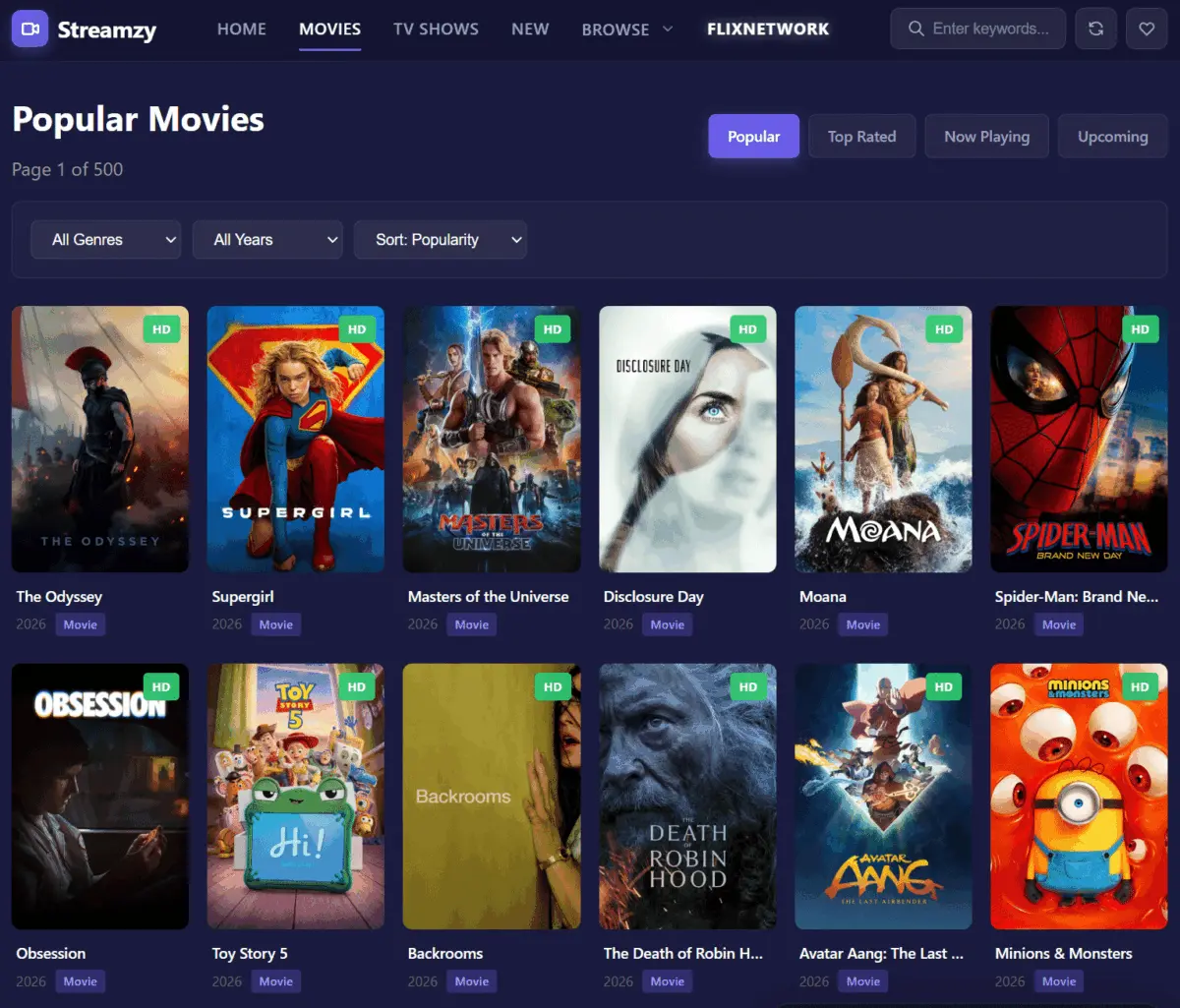
Collectively, the order encompasses more than 130 pirate site domains, striking directly at some of the web’s most prolific illegal streaming hubs—including high-traffic portals such as Streamzy, FMovies, YTS, LordFlix, and MovieRulz.
The ruling is far more than a routine ISP-level censorship directive. By compelling international domain name registrars (DNRs) and registries to place targeted assets on clientHold and serverHold status, the order achieves what few national court actions manage: global domain neutralization within 24 hours of issuance.
Furthermore, the case introduces a significant legal safeguard regarding "dynamic blocking" mechanisms. While siding with rightsholders on the necessity of combating systemic infringement, Justice Anup Jairam Bhambhani explicitly pushed back against granting a "carte blanche" approach, ruling that domain registrars cannot unilaterally adjudicate future mirror sites without judicial oversight and formal evidentiary verification.

Detailed Chronology & Legal Mechanics
The legal framework governing online piracy in India has evolved at a blistering pace over the past several years. Historically, rightsholders relied on static site-blocking orders that forced local Internet Service Providers (ISPs) to prevent subscribers from accessing designated IP addresses or URLs.
However, because these methods were easily circumvented by Virtual Private Networks (VPNs) and alternative mirror domains, the Delhi High Court pioneered the concept of "dynamic and updating blocklists." These evolving orders expand automatically, dragging global intermediaries—such as domain name registries and global registrars—into the enforcement chain.
The HBO Injunction: Target Acquisition
Obtained early this week, the latest HBO-led order follows a familiar yet increasingly devastating template for illicit operators. Justice Anup Jairam Bhambhani reviewed a comprehensive dossier presented by the studios detailing the operations of 30 defendant entities. The court observed that these platforms shared common characteristics:
- Masked registrant details utilizing privacy services.
- A complete absence of traceable, legitimate corporate or contact information.
- An overwhelming preponderance of unlicensed, copyrighted audiovisual content.
Crucially, Justice Bhambhani wrote that the scale of infringement removed the platforms from the category of incidental or user-generated violations:

"This is, therefore, not a case of incidental infringement, but one where the primary purpose of the websites appears to be to facilitate infringement of the plaintiffs’ copyright."
Consequently, the court issued an ad-interim injunction restraining all 30 operations from streaming or distributing the studios’ intellectual property. Simultaneously, it ordered local ISPs and global registrars to immediately suspend the listed domain names.
Swift Global Enforcement and the Evolution of .to
The speed of execution stunned industry observers. Handed down on a Monday, the order achieved tangible global effects within a single day. The primary defendant, streamzy.to, was rapidly placed on both clientHold and serverHold statuses, disabling resolve across the global Domain Name System (DNS).
This swift action highlights a tectonic shift in how country-code top-level domains (ccTLDs) are managed. For years, .to (administered by the Kingdom of Tonga) was widely considered an uncooperative safe haven for digital piracy. However, following previous interventions by the Delhi High Court and a structural transition where Canadian domain company Tucows took over the technical registry backend for .to, enforcement capabilities transformed radically.

Using Extensible Provisioning Protocol (EPP) status codes like clientHold and serverHold, authorities can now systematically strip operational capability from domains registered under Tonga’s jurisdiction. Similar fates befell other .to properties listed in the order, including f-moviesz.to, cinespot.to, cineplay.to, and bollyflix.to. Concurrently, major Western registrars such as Namecheap acted swiftly to suspend platforms under their management, placing dozens of domains on hold by July 28.
Supporting Context, Metrics, & Target Breakdown
The scale of the infrastructure targeted by the Delhi High Court is immense. The final schedule appended to the order details 132 individual domain entries (including subdomains) linked to 30 unique defendant operations. These platforms range from aggregate movie indices to massive peer-to-peer distribution networks.
Anatomy of the Targeted Ecosystem
| Defendant Group | Notable Domains | Primary Registrars Involved |
|---|---|---|
| Defendant #1 | streamzy.to |
Tonic Registry (.to Backend via Tucows) |
| Defendant #2 | mp4moviez.dad, mp4ys.com, mp4pk.com |
NameCheap, Dynadot |
| Defendant #4 | kisskh.cam, kisskh.ch, kisskh.buzz |
NameCheap, Key-Systems GmbH |
| Defendant #7 | f-moviesz.to, fmovie.sx, fmovies.pw |
NameCheap, Key-Systems, Spaceship, Tucows |
| Defendant #9 | yts.lu, yts.si |
Key-Systems GmbH, SafeBrands |
| Defendant #10 | cineb.sx, cineby.vg, cineby.cc |
Key-Systems, Nicenic, Porkbun |
| Defendant #14 | vegamovie.ss, vegamovies.navy |
Afriregister, NETIM, Dynadot, Tucows |
| Defendant #16 | bollyflix.at, new.bollyflix.to |
Dynadot, Tonic Registry, Tucows |
| Defendant #28 | filmyzilla45.com through filmyzilla36.com |
Internet Domain Service BS Corp |
The Traffic Footprint
While some primary anchor domains for massive brands like YTS and KissKH—which collectively draw over 100 million monthly visits—avoided direct inclusion in this specific iteration, the networks affected command staggering user bases. Portal sites like Streamzy have built multi-million-dollar ad-supported empires by aggregating premium cable and streaming network content moments after broadcast. By targeting the DNS and registry layer rather than merely DNS-poisoning via local ISPs, rightsholders ensure that these sites suffer globally, breaking service continuity for international users as well.
Official Stances and the "Carte Blanche" Pushback
A critical nuance of the recent Delhi High Court ruling centers on the limits of administrative enforcement power. During proceedings, major domain registrars Namecheap and Porkbun raised valid operational concerns. While they expressed willingness to comply with specific, court-mandated takedowns, they pushed back vehemently against provisions that would grant rightsholders a blanket mandate to unilaterally force future suspensions.

Safeguarding Intermediaries from Adjudicatory Overreach
Dynamic blocking schedules often require intermediaries to process ongoing lists of newly spawned mirror sites without returning to court for every individual infraction. Namecheap and Porkbun argued that forcing private corporations to evaluate copyright claims and autonomously determine whether a newly surfaced URL is an infringing "rogue website" transforms them into quasi-judicial bodies.
Justice Bhambhani found substantial merit in this argument, explicitly checking the expansion of unmonitored administrative power. The court ruled that:
"Any mechanism that requires an ISP or DNR to satisfy itself, upon its own assessment, that a subsequently identified website is a ‘rogue website’ engaged in infringement of the plaintiffs’ rights, would effectively cast upon such intermediary an adjudicatory responsibility that it is neither equipped nor authorised in law to discharge."
The New Procedural Safeguard
To balance effective anti-piracy enforcement with due process, the court established a formalized, multi-step protocol for handling future mirror domains:

- Affidavit Submission: Rightsholders discovering a new variant must submit an evidentiary affidavit directly to the registrar.
- Technical Verification: The registrar technically verifies whether the domain represents a direct variant or structural mirror of an already adjudicated site.
- Temporary Suspension: If verified, the registrar applies a temporary hold.
- Formal Judicial Filing: Simultaneously, the rightsholder is legally obligated to file formal documentation with the court to formally integrate the new domain into the ongoing suit.
This creates a necessary legal checkpoint, ensuring that private registrars do not act as unregulated censors while still providing rightsholders with a streamlined path to neutralize evasive mirror networks.
Future Outlook: The Endless Game of Whac-A-Mole
Despite the immediate operational victories scored by HBO and its co-plaintiffs, the structural realities of digital piracy dictate that enforcement is an ongoing war of attrition rather than a decisive battle.
Almost immediately following the publication of the court order and subsequent domain suspensions, operators of the targeted networks demonstrated their resilience. Visitors attempting to access streamzy.to were greeted with redirection instructions pointing them directly to newly minted alternatives, such as streamzy.org. Similar migratory patterns were observed across other .to operations, which rapidly swapped their terminated extensions for .org and other resilient TLD registries.
Strategic Takeaways for the Digital Landscape
- Extraterritorial Norms: The willingness of international registries and registrars to honor Indian judicial mandates signals that India is rapidly becoming a primary global battleground for intellectual property enforcement. Orders originating in Delhi now carry genuine cross-border operational weight.
- The Intermediary Balancing Act: Justice Bhambhani’s ruling sets a vital precedent for intermediary liability. By refusing to grant a blank check for automated blocking, the court preserves institutional checks and balances, ensuring that technical infrastructure providers are not forced into arbitrary censorship roles.
- The Technical Arms Race: As domain-level suspensions become more automated and efficient via registry-level cooperation (such as the Tucows/.to integration), pirate operators will increasingly rely on decentralized technologies, IPFS, decentralized DNS (like .crypto or .unstoppable), and uncooperative offshore registrars.
Ultimately, while the Delhi High Court’s injunction successfully blunted the operations of high-profile streaming giants and disrupted millions of dollars in illicit ad revenue, the digital ecosystem’s inherent adaptability ensures that the global game of "whac-a-mole" between rightsholders and pirate networks will continue to evolve.