Executive Overview
In the modern technology landscape, the barrier to entry for innovation has never been lower. Thanks to surging advancements in foundational models, accessible cloud compute, and open-source ecosystems, any developer or early-stage founder can build an impressive, working artificial intelligence prototype over a weekend. A slick interface, an accurate demo dataset, and a clever wrapper are often all it takes to turn heads on social media or secure early pre-seed funding.
However, building a functional prototype is vastly different from manufacturing a reliable product at scale. While a prototype asks a singular, forgiving question—"Can it be done in a controlled environment?"—production introduces a merciless gauntlet of real-world variables. Manufacturing constraints emerge, infrastructure costs balloon, edge-case failures multiply, and autonomous systems are suddenly forced to operate in chaotic, unstructured physical realities.
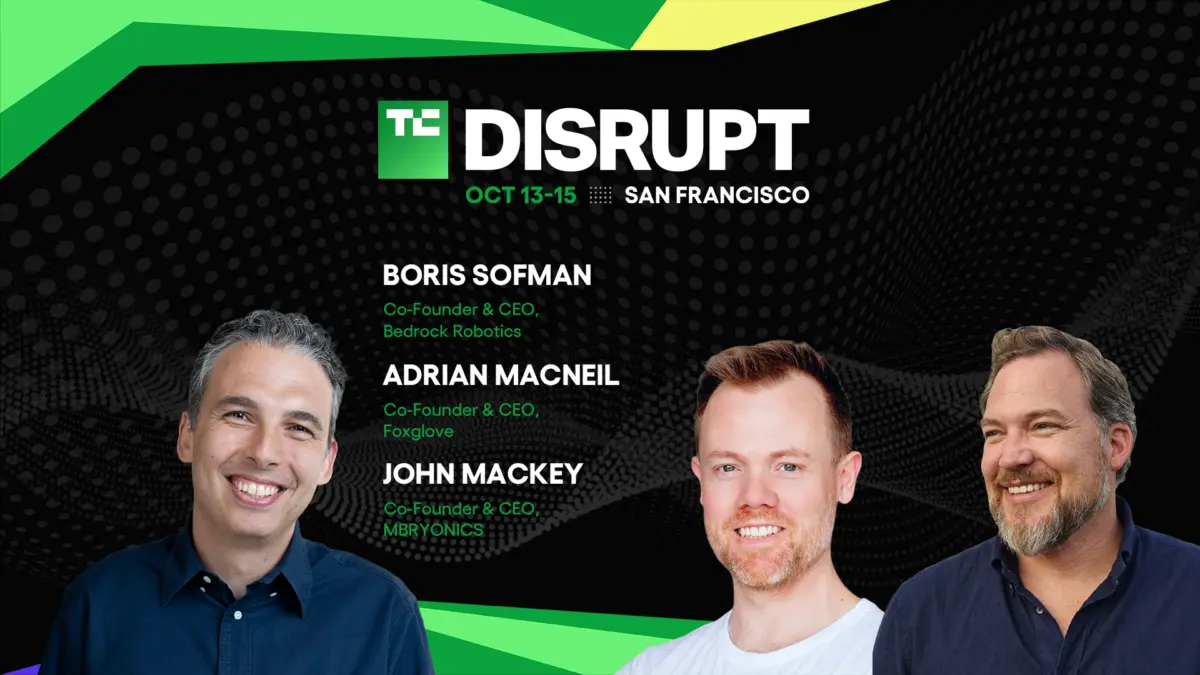
This friction-filled transition is the central theme of a high-stakes panel session titled “From Prototype to Production: Can It Scale in Reality,” slated for the Real World AI Stage at TechCrunch Disrupt 2026. Bringing together heavyweights from space communications, autonomous robotics, and foundational AI infrastructure, the session will dissect the gritty, unglamorous truths of scaling physical and digital intelligence. As TechCrunch Disrupt returns to San Francisco’s Moscone West from October 13–15, drawing over 10,000 founders, investors, and industry operators, this panel serves as an essential compass for anyone looking to bridge the chasm between experimental lab tech and resilient enterprise deployment.
Detailed Chronology: The Evolution from Sandbox Innovation to Hardened Reality
The modern AI boom has fundamentally altered how technology is conceived, but it has not rewritten the laws of physics, engineering, or supply chain economics. To understand why scaling remains such a formidable bottleneck, it is helpful to trace the traditional lifecycle of an advanced technological product as it moves out of the sandbox and into the wild.
Phase 1: The Lab and the Sandbox (The Proof of Concept)
During the earliest phase, constraints are artificially lifted. Developers operate in idealized conditions: clean data pipelines, high-bandwidth connections, unlimited compute access during testing, and zero physical wear-and-tear. If an autonomous navigation model fails or a photonics sensor misreads a signal in a simulated environment, engineers simply tweak the parameters, clear the cache, and run the script again. The primary objective is speed and validation. Success is defined by a polished demo that proves the core algorithmic thesis.
Phase 2: The Pilot and the Controlled Environment
Once a prototype garners backing, the product is subjected to its first controlled pilots. For autonomous systems, this often means geofenced city blocks, closed-course testing facilities, or specialized industrial zones. For software and infrastructure, it means friendly enterprise beta testers.
It is during this phase that the first cracks begin to show. Latency spikes when network connections drop. Hardware components overheat under continuous operational stress. Edge cases—such as unexpected weather patterns, physical obstructions, or anomalous user behavior—occur with alarming frequency. Founders quickly realize that 90% accuracy is relatively easy to achieve, but pushing that reliability metric from 90% to 99.999% requires exponentially more capital, engineering hours, and structural redesign.
Phase 3: The Production and Scaling Crucible
The final, most perilous phase is full-scale production. This is where the digital meets the physical, or where software must scale to support millions of concurrent, mission-critical operations. Manufacturing lines must be established with strict quality control. Supply chain vulnerabilities suddenly threaten business continuity. Regulatory hurdles, safety certifications, and cybersecurity compliance frameworks become mandatory checkboxes rather than afterthoughts.
As the upcoming TechCrunch Disrupt panel highlights, navigating this phase successfully requires a profound shift in mindset: the infrastructure, manufacturing processes, and operational systems become the product just as much as the core AI algorithm itself.
Supporting Context & Metrics: The Reality Check on Hardware and Autonomy
The transition from lab to market is plagued by high casualty rates, particularly in capital-intensive sectors like robotics, aerospace, and physical automation. Industry data consistently underscores the immense gulf between venture capital enthusiasm and operational execution.
- The Capital Intensity Gap: While software-as-a-service (SaaS) startups can often scale with minimal marginal costs, hardware-enabled AI and robotics ventures face massive capital expenditures (CapEx) long before achieving positive unit economics. Tooling costs, precision manufacturing, and supply chain redundancies demand robust financial planning.
- The Autonomous Mileage Threshold: As demonstrated by industry pioneers in autonomous driving—such as Waymo, which famously logged over 100 million fully driverless miles—achieving autonomy at scale requires processing mind-boggling volumes of real-world edge cases. Scaling is not merely a software optimization problem; it is a massive data-ingestion and infrastructure challenge.
- The Infrastructure Bottleneck: According to recent engineering surveys, upwards of 60% of enterprise AI projects face severe deployment delays due to inadequate data infrastructure, monitoring tools, and version-control systems tailored for machine learning models (MLOps). Without foundational tooling like that built by companies such as Foxglove, debugging a fleet of autonomous machines across multiple continents becomes an operational impossibility.
Official Insights: Leaders on the Front Lines
The Real World AI Stage session at Disrupt 2026 features three industry leaders who have stared down these scaling demons and lived to tell the tale. Their respective backgrounds encapsulate the multi-faceted nature of modern technological deployment.

1. John Mackey: Scaling Space-Based Photonics and Manufacturing
For John Mackey, co-founder and CEO of MBRYONICS, moving beyond the prototype meant solving deep manufacturing and photonics challenges for the final frontier. Specializing in space-based optical communications, MBRYONICS is helping build the backbone of next-generation orbital networks.
Mackey’s journey illustrates a vital truth for deep-tech founders: when your product operates in Earth orbit or deep space, you cannot simply deploy an over-the-air software patch to fix a physical manufacturing defect. High-volume manufacturing capability must be co-developed alongside the core technology from day one. Mackey’s insights at Disrupt will focus on the exact pivot points required when a company transitions from building bespoke lab instruments to mass-producing reliable hardware for extreme environments.
2. Boris Sofman: Bridging Autonomy and Daily Reliability
Boris Sofman, co-founder of Bedrock Robotics and former leader of autonomous trucking and core technologies at Waymo, brings a battle-tested perspective on operationalizing autonomy. Having played a pivotal role in pushing driverless vehicles past the monumental 100-million-mile mark, Sofman understands the immense discipline required to transition autonomous tech from structured testing tracks to unpredictable, high-stakes physical environments.
Sofman’s expertise lies in systemic reliability. When autonomous systems are deployed in industries like construction or logistics—where equipment must perform consistently under grueling daily use—safety and consistency are non-negotiable. His session will provide a masterclass in establishing rigorous safety standards and scaling operational infrastructure without sacrificing system integrity.
3. Adrian Macneil: Engineering the Data Foundations for Scale
You cannot scale complex autonomous systems without robust underlying software architecture. Before co-founding Foxglove, Adrian Macneil led infrastructure engineering at Cruise, where he oversaw the development of the sprawling data platforms necessary to support autonomous vehicle fleets at scale.
Macneil’s work highlights a frequently overlooked reality of the AI revolution: the software that observes, debugs, and manages the AI is just as important as the AI model itself. Without sophisticated observability tools and data pipelines, engineering teams are flying blind when their systems encounter anomalies in production. Macneil will break down the foundational systems that allow complex technologies to transition smoothly from experimental toys into mission-critical production engines.
Future Outlook: What Lies Ahead for Real-World AI?
As we look toward the remainder of the decade, the conversation around artificial intelligence is rapidly maturing. The era of pure speculation and valuation based on flashy slide decks is giving way to a more pragmatic, execution-focused era. Investors and enterprise buyers alike are demanding tangible return on investment, proven reliability, and seamless integration with existing industrial workflows.
The lessons shared by Mackey, Sofman, and Macneil at TechCrunch Disrupt 2026 point toward a broader industry trend: the future belongs to companies that master the boring, unsexy aspects of scaling. Supply chain resilience, robust MLOps infrastructure, rigorous manufacturing QA, and fail-safe operational protocols are no longer secondary considerations—they are the ultimate competitive advantage.
For founders, operators, and investors attending Disrupt at Moscone West this October 13–15, understanding these dynamics will be the difference between building a fleeting novelty and establishing an enduring market leader.
Don’t miss the opportunity to learn directly from the pioneers who have successfully navigated the leap from prototype to production. Secure your pass to TechCrunch Disrupt 2026 and save up to $200 before ticket prices increase.