Executive Overview
In a terse and unexpected announcement issued on Sunday, China’s Manned Space program agency confirmed that the highly anticipated Chang’e 7 lunar exploration mission has missed its planned launch window. The ambitious enterprise, designed to explore the rugged and scientifically coveted terrain of the Moon’s South Pole, has been postponed indefinitely following what officials described as a "comprehensive assessment" of mission readiness.
Originally slated to lift off as early as Sunday from the state-of-the-art Wenchang Space Launch Site on the tropical island of Hainan, the multi-component spacecraft will remain grounded. The decision halts, for now, one of the most complex robotic lunar missions attempted by any spacefaring nation to date. The mission architecture comprises an array of sophisticated hardware: a lunar orbiter, a stationary lander, a mobile rover, and an innovative mini-hopper probe engineered to leap across craters and sample permanently shadowed regions.
While official statements from Beijing remained tight-lipped regarding specific technical bottlenecks, global aerospace analysts and meteorological observers have quickly pieced together the likely catalysts behind the stand-down. Primary among these is Typhoon Narra, a lingering tropical disturbance generating sustained winds of roughly 45 miles per hour. The storm continues to churn across the maritime corridor separating Hainan Island from the Chinese mainland, delivering hazardous squalls and unpredictable atmospheric conditions directly over the Wenchang spaceport.
However, beyond immediate meteorological disruptions, space industry analysts are weighing deeper systemic variables. These include the stringent orbital mechanics governing polar lunar trajectories, critical sunlight angles required for solar-powered lunar assets, and the lingering shadow of a recent domestic rocket failure involving shared propulsion systems.
This in-depth investigative report examines the chronology of the delay, analyzes the meteorological and technical factors at play, reviews the official disclosures, and outlines the prospective timeline for the rescheduled lunar voyage.
Detailed Chronology of the Stand-Down
The sequence of events leading up to Sunday’s postponement unfolded with the precision—and subsequent sudden halt—characteristic of high-stakes aerospace operations. Understanding the timeline is crucial to deciphering why the launch was scrubbed at the eleventh hour.
The Buildup to Launch Week
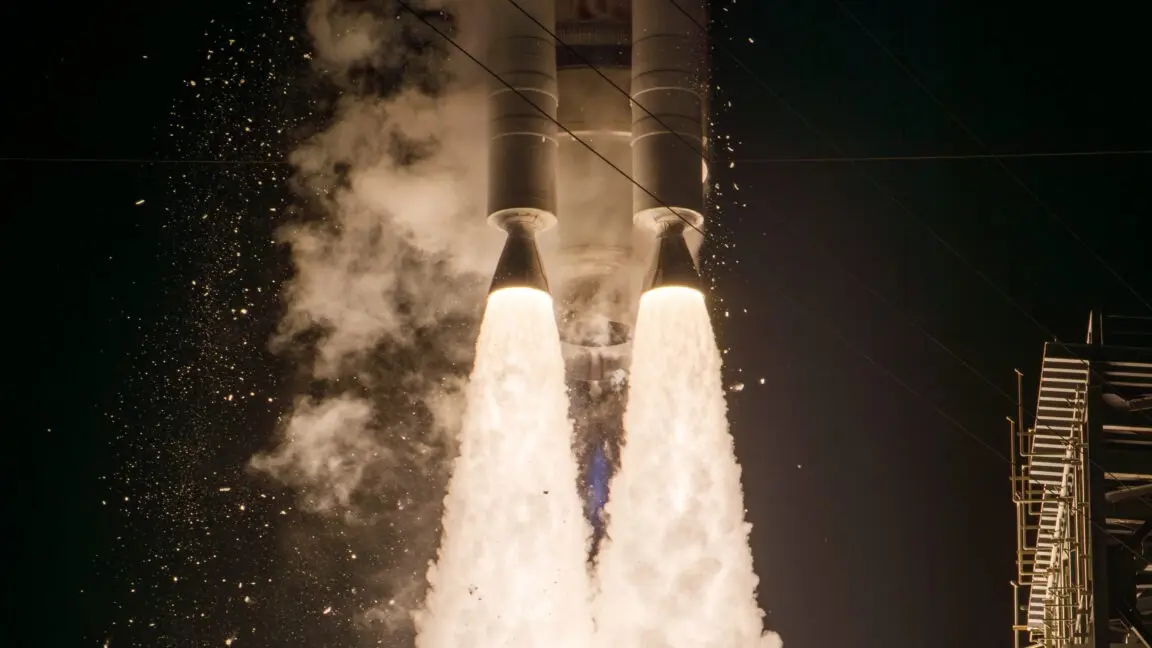
Throughout the preceding weeks, activity at the Wenchang Space Launch Site had reached a fever pitch. Ground crews successfully completed the rollout of the massive Long March 5 heavy-lift rocket, encapsulating the multi-element Chang’e 7 payload within its protective fairings. Final electrical checks, fueling simulations, and range-safety rehearsals appeared to be tracking smoothly toward a weekend liftoff.
International tracking networks and amateur satellite observers monitoring the spaceport noted that the launch vehicle was fully assembled on its pad. The mission was poised to capitalize on a tightly constrained lunar transfer window—a brief daily pocket during which Earth’s rotation and the Moon’s orbital position align to allow efficient injection trajectories toward the lunar South Pole.
The Sunday Announcement
The breakthrough came not with the thunderous roar of a Long March 5 engine ignition, but with a brief, formal bulletin published by China’s space authorities on Sunday. The announcement read, in part:
"In keeping with the principle of proceeding prudently and reliably, and ensuring absolute success, after a comprehensive assessment it has been determined that the Chang’e 7 mission does not meet the conditions for launch and therefore cannot be carried out during the planned launch window this year."
The phrasing—particularly the caveat regarding the "planned launch window this year"—immediately sent ripples through the global aerospace community. In the tightly choreographed world of deep-space exploration, missing a primary launch window often implies a cascading delay of months, if not longer, due to the shifting orbital geometry of the Earth-Moon system.
Immediate Aftermath and Facility Operations
Following the announcement, operations at Wenchang shifted from launch-countdown protocols to safekeeping procedures. The Long March 5 rocket, fueled or undergoing final propellant loading checks, had to be managed according to strict safety protocols designed to endure severe weather and extended dormancy on the pad or within the vertical integration facility. Engineers immediately initiated diagnostic reviews to ensure that the delay—whether forced primarily by weather or secondary technical prudence—did not compromise the sensitive scientific instruments housed within the orbiter, lander, rover, and mini-hopper assemblies.
Supporting Context & Metrics
To fully appreciate the gravity of the Chang’e 7 delay, one must examine the mission profile, the meteorological obstacles, and the broader technical ecosystem supporting China’s lunar exploration roadmap.
The Chang’e 7 Mission Architecture
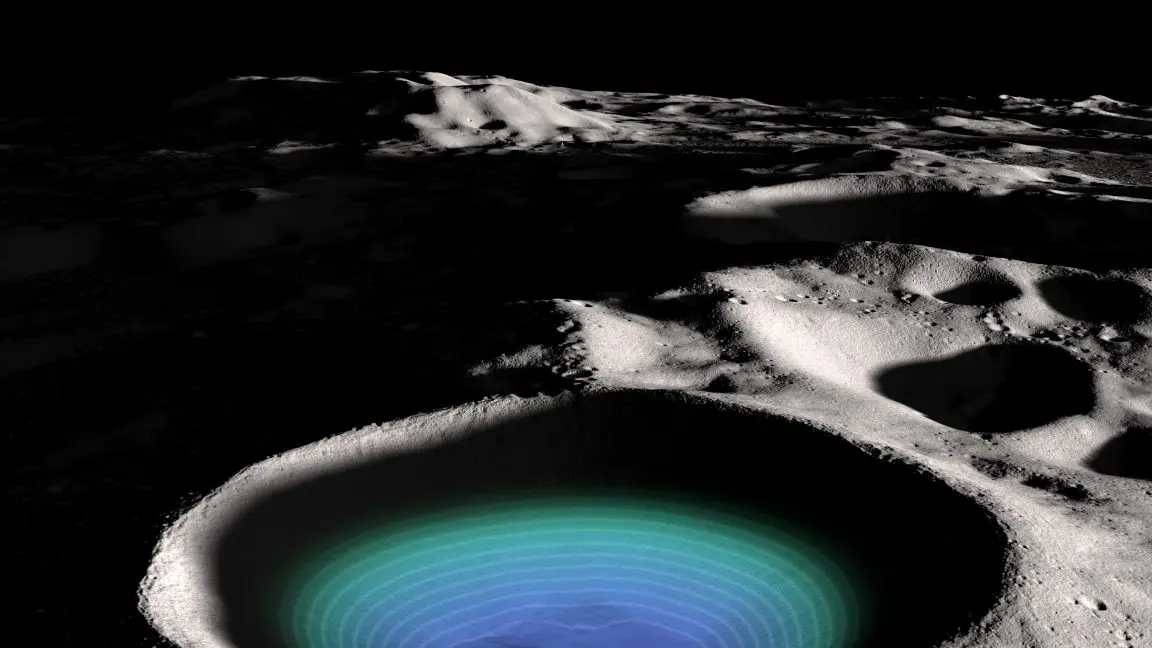
Chang’e 7 is not merely a repeat of its highly successful predecessor, Chang’e 6 (which successfully returned samples from the lunar far side). It is an unprecedented geological and volatile-hunting reconnaissance expedition aimed squarely at the lunar South Pole—a region of intense international interest due to the presence of water ice trapped in permanently shadowed craters.
The mission payload is exceptionally diverse and technologically demanding:
- The Lunar Orbiter: Tasked with mapping surface composition, identifying water ice reserves, and relaying communications from the lunar far side and polar regions.
- The Lander: Engineered to execute a precision touchdown amidst rugged, cratered polar terrain.
- The Rover: Designed to traverse rough obstacles, analyze soil mechanics, and conduct in-situ chemical analysis.
- The Mini-Hopper: A specialized probe capable of launching itself out of craters, descending into permanently shadowed regions where sunlight never reaches, and analyzing volatile compounds before running out of power.
Meteorological Disruption: Typhoon Narra
The immediate physical barrier to Sunday’s launch was Typhoon Narra. Monitored closely by the Joint Typhoon Warning Center (JTWC) and regional meteorological services, Narra developed sustained winds of roughly 45 mph—placing it firmly in the category of a moderate tropical storm.
[Wenchang Space Launch Site (Hainan Island)]
                ^
                |  (Severe Squalls & 45-mph Winds)
                v
       [Typhoon Narra] <---> [Maritime Channel (Hainan / Mainland China)]
                ^
                |  (Stalled Tracking Pattern: 2–3 Day Forecast)
                v
[Impact: Launch Vehicle Structural Limits Exceeded / Range Safety Risk]
The storm’s trajectory trapped it in the waterway separating Hainan Island from the Chinese mainland. Meteorological models indicated that Narra would meander in this corridor for an additional two to three days. Under these conditions, wind shear, torrential rainfall, and electrical storm activity exceed the strict meteorological constraints required to safely launch a heavy-lift rocket like the Long March 5, which relies on precise atmospheric guidance and telemetry tracking during its initial ascent phase.
Technical Vigilance: The Long March 5 and YF-100 Engine Legacy
While weather provides the most obvious explanation for the scrubbed launch, aerospace analysts have also factored in systemic caution regarding launch vehicle reliability.
Two weeks prior to the scheduled Chang’e 7 liftoff, a Long March 7A vehicle suffered a catastrophic in-flight failure during ascent. Investigations into that mishap focused heavily on the performance of the YF-100 liquid rocket engine. Crucially, the massive Long March 5 rocket utilized for Chang’e 7 shares core propulsion lineage and engine architecture (employing YF-100 series derivatives in its booster stages) with its workhorse stablemates.
While Chinese engineers had reportedly cleared the Long March 5 for flight following extensive post-mishap reviews, the psychological and operational threshold for "absolute success" in a flagship lunar mission leaves zero room for margin. If engineers harbored even the slightest residual data anomaly during final pre-launch diagnostics, prudence would dictate an immediate hold—particularly when compounded by worsening typhoon weather.
Official Statements and Industry Reactions
The controlled and formal communication style adopted by China’s Manned Space program reflects the high-stakes political and scientific nature of the nation’s lunar ambitions.
Decoding Official Phrasing
The official statement issued on Sunday utilized classic bureaucratic and technical terminology designed to maintain public confidence while withholding granular engineering details. Key phrases warrant careful parsing:
- "Proceeding prudently and reliably": A direct nod to mission safety protocols. In the wake of recent global and domestic aerospace anomalies, Chinese program managers are signaling to international observers that schedule pressure will not override engineering rigor.
- "Does not meet the conditions for launch": A broad umbrella term that encompasses both environmental constraints (such as Typhoon Narra) and potential internal telemetry flags. By refusing to isolate a single cause, the agency retains flexibility while conducting exhaustive joint reviews.
- "Cannot be carried out during the planned launch window this year": This is the most consequential disclosure in the announcement. It confirms that the delay is not a matter of a 24- or 48-hour scrub, but a structural realignment of the mission timeline.
International and Social Media Discourse
Within the global space community, reactions ranged from disappointment to professional understanding. Planetary scientists who have spent years designing instruments for the Chang’e 7 mini-hopper and rover expressed quiet resignation, noting that planetary exploration is inherently fraught with delay.
Concurrently, Chinese social media platforms—traditionally a hotbed for leaks and insider speculation—lit up with discussions regarding the revised timeline. Unconfirmed reports circulating among space enthusiasts suggest that the intersection of orbital mechanics, polar lighting constraints, and mandatory pre-landing orbital phases means that February or March of the following year represents the next viable window for injection toward the lunar South Pole.
Future Outlook: Rescheduling and the Road to the Lunar South Pole
The postponement of Chang’e 7 forces a recalibration of China’s deep-space roadmap, yet it highlights the long-term, methodical approach Beijing has adopted toward lunar hegemony and scientific discovery.
Orbital Mechanics and the Next Window
Why can a lunar launch not simply be rescheduled for next week or next month? The mechanics of interplanetary flight dictate that launch windows are governed by the relative positions of Earth and the Moon, the tilt of Earth’s rotational axis relative to the lunar orbital plane, and the specific lighting conditions at the landing site.
For a mission targeting the lunar South Pole, solar illumination is critical. Solar-powered assets require predictable sun angles to generate power during descent, landing, and initial surface operations. Furthermore, the Chang’e 7 mission profile requires a 90-day lunar orbit reconnaissance phase prior to the separation and descent of the lander and rover. This extensive mapping period ensures high-resolution hazard detection and safe touchdown in heavily shadowed polar craters.
When these constraints—lighting angles, transfer trajectories, and orbital mapping durations—are fed into astrodynamic models, the next viable window to execute the mission safely aligns with late winter or early spring.
Strategic Implications for China’s Lunar Program
Despite the setback, Chang’e 7 remains a cornerstone of Phase 4 of China’s Lunar Exploration Program, which ultimately paves the way for the International Lunar Research Station (ILRS) and crewed landings later in the decade.
| Mission Phase / Vehicle | Primary Objective | Status / Impact of Current Delay |
|---|---|---|
| Chang’e 6 | Far-side sample return | Successfully completed |
| Chang’e 7 | South Pole volatile search & hopper deployment | Delayed (Missed current window; next window projected for early next year) |
| Chang’e 8 | In-situ resource utilization (ISRU) technology verification | Subsequent schedule under review |
The decision to stand down, while disappointing for mission planners and international partners alike, underscores a mature space program prioritizing mission integrity over arbitrary calendar deadlines. As Typhoon Narra dissipates and engineering teams comb through telemetry data at Wenchang, the global scientific community will watch closely for formal updates regarding the rescheduled 2027 lunar assault on the South Pole.