Executive Overview
As the global broadcast industry gears up for IBC 2026, the demand for pristine, ultra-high-definition (UHD) content has transitioned from a premium differentiator to an absolute baseline expectation. However, live production teams have long grappled with a persistent technical bottleneck: the stark visual disparity between high-end, multi-million-dollar 4K studio environments and the compressed, low-resolution video feeds delivered by remote guests. In an era where remote contribution is a cornerstone of news, sports, and corporate broadcasting, this "resolution gap" routinely compromises the visual cohesion of live programming.
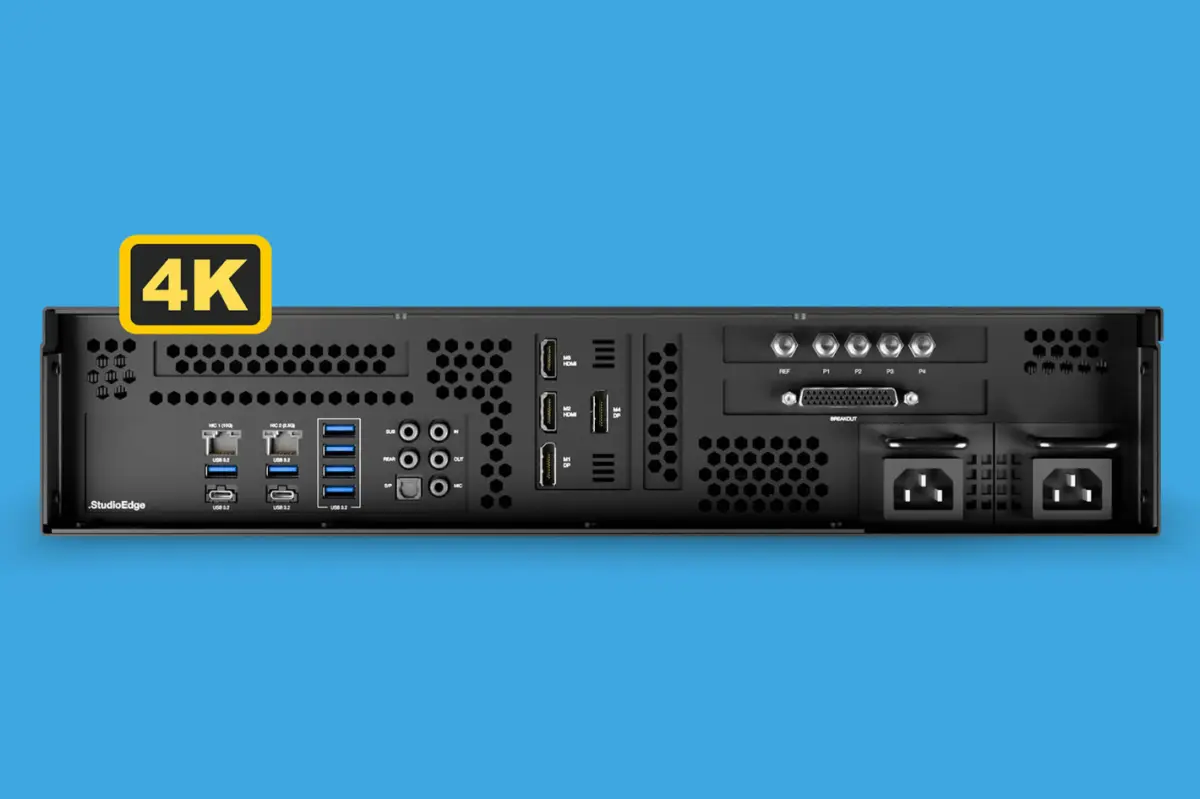
Addressing this critical challenge, QuickLink has announced a major upgrade to its remote production ecosystem. The company will debut StudioEdge-4K—the first dedicated 4K model in its award-winning StudioEdge lineup—alongside native 4K 60fps support for StudioCall. Together, these solutions form a unified, end-to-end 4K workflow designed to ingest, enhance, and output remote guest feeds at broadcast-grade resolutions.
By combining native high-framerate IP contribution with real-time, NVIDIA-powered artificial intelligence (AI) upscaling, QuickLink aims to democratize high-fidelity remote production. This development allows broadcasters to maintain visual consistency across their programming, regardless of whether a remote contributor is using a professional UHD camera or a standard laptop webcam over consumer-grade internet.
Detailed Chronology: The Evolution of Remote Contribution and QuickLink’s 4K Milestone
To understand the technical significance of QuickLink’s latest offering, it is essential to trace the trajectory of remote guest integration over the past decade. The broadcast industry’s relationship with remote contribution has evolved through several distinct phases, culminating in the highly integrated, AI-assisted workflows seen today.
[Pre-2020: Satellite & ISDN] ──> [2020-2022: WebRTC & Consumer Apps] ──> [2023-Present: Edge AI & Native 4K IP]
   - High cost/latency              - Rapid adoption (Zoom/Teams)            - Hybrid workflows
   - Restricted to field reporters  - Low quality, inconsistent frames       - Unified 4K SDI/NDI output
Phase 1: The Era of Dedicated Hardware and Satellite Links (Pre-2020)
Before the widespread adoption of high-speed fiber and WebRTC (Web Real-Time Communication) protocols, bringing a remote guest onto a live broadcast required expensive satellite trucks, dedicated ISDN lines, or proprietary hardware encoders deployed to the field. While these methods guaranteed high quality, they were cost-prohibitive and logistically complex, limiting remote guest appearances to high-profile political figures or field reporters.
Phase 2: The Pandemic and the Democratic "Good Enough" Era (2020–2022)
The COVID-19 pandemic forced an abrupt shift. Broadcasters were compelled to adopt consumer video conferencing tools like Zoom, Skype, and Microsoft Teams to keep programs on the air. While these platforms democratized contribution—allowing anyone with a smartphone or laptop to join a live broadcast—they introduced severe compromises in video quality. Issues such as highly aggressive compression artifacts, variable frame rates, color shifting, and low resolutions (often dipping to 360p under poor network conditions) became commonplace. Audiences tolerated this drop in quality out of necessity, but it was clear that "good enough" was not a viable long-term strategy for premium broadcast networks.
Phase 3: The Quest for Broadcast Integration and Protocol Standardization (2023–2025)
As studios returned to normal operations, the industry sought to bridge the gap between consumer ease-of-use and professional broadcast standards. QuickLink established itself as a pioneer during this period by developing the StudioEdge platform. This system allowed production teams to ingest remote calls from various web protocols and convert them into broadcast-standard SDI and NDI feeds. However, as the production industry increasingly migrated toward native 4K UHD workflows, standard-definition (SD) and high-definition (HD) remote calls continued to stick out, marring otherwise flawless UHD broadcasts.
The Present Milestone: IBC 2026 and the Unified 4K Workflow
The introduction of StudioEdge-4K and 4K 60fps StudioCall represents the culmination of this evolutionary timeline. QuickLink’s new ecosystem addresses both ends of the remote contribution spectrum:
- The High-End Contributor (Native 4K 60fps): For remote contributors equipped with high-quality 4K PTZ cameras, mirrorless cameras, or professional webcams, StudioCall now offers a native 4K 60fps ingest pipeline. This ensures that the original source’s fluid motion and fine details are preserved all the way to the master control room.
- The Standard Contributor (NVIDIA AI Upscaling): For guests connecting via standard webcams on platforms like Microsoft Teams or Zoom, the StudioEdge-4K hardware leverages on-board NVIDIA Tensor Core GPUs to perform real-time AI upscaling. This intelligent process reconstructs lost detail and outputs a clean, synthetic 4K signal that blends seamlessly with native studio cameras.
Supporting Context & Prevailing Industry Metrics
The shift toward 4K remote contribution is driven by broader macroeconomic and technical trends across the media and entertainment landscape.
The Rise of 4K UHD and High Frame Rate (HFR) Programming
According to recent industry market research, global demand for 4K UHD television sets and streaming services continues to grow, with over 70% of new television shipments globally supporting 4K resolution. Major sports broadcasters and live event producers are increasingly committing to native 4K 60fps (or 59.94 fps in NTSC regions) to deliver the smooth, lifelike motion required for fast-moving action.
However, a production is only as strong as its weakest link. A live sports broadcast running in native 4K 60fps suffers a jarring drop in production value when transitioning to a halftime analyst or remote fan call captured at a choppy 720p 30fps. QuickLink’s native 4K 60fps StudioCall support directly mitigates this issue, preserving the temporal and spatial resolution expected by modern audiences.
+-----------------------------------------------------------------------------+
|                        THE RESOLUTION & FRAME RATE GAP                      |
+------------------------------------+----------------------------------------+
| Traditional Remote Feed            | QuickLink Unified 4K Workflow          |
+------------------------------------+----------------------------------------+
| Resolution: 720p / 1080p           | Resolution: Native 4K / AI-Upscaled 4K |
| Frame Rate: 30 fps (variable)      | Frame Rate: 60 fps (constant)          |
| Visuals: Blocky compression, soft  | Visuals: Sharp edges, reconstructed    |
| edges, motion judder               | details, smooth motion                 |
+------------------------------------+----------------------------------------+
The Cost of Visual Disparity and Viewer Retention
In cognitive studies assessing viewer engagement, visual inconsistencies—such as sudden drops in resolution or frame rate—have been shown to increase cognitive load on the viewer. This friction can lead to lower audience retention rates, particularly in highly competitive digital streaming environments. By normalizing all incoming remote feeds to a consistent 4K output, broadcasters can maintain a uniform visual aesthetic, preserving the premium feel of their brand.
Bandwidth vs. Quality: The Classic Broadcast Dilemma
The primary obstacle to native 4K remote contribution has always been bandwidth. A raw, uncompressed 4K 60fps video stream requires roughly 12 Gbps of bandwidth (under 12G-SDI standards). While compressed IP streaming protocols like SRT (Secure Reliable Transport) and WebRTC significantly reduce this requirement, transmitting native 4K over the open internet still demands a stable, high-speed upload connection (typically 15-25 Mbps dedicated).
QuickLink’s dual-pronged approach elegantly solves this dilemma:
- Where bandwidth is plentiful: The system utilizes native 4K 60fps StudioCall.
- Where bandwidth is restricted: The system falls back to a highly compressed HD stream, which is then reconstructed to 4K at the studio edge using local AI computing. This hybrid approach ensures reliability without sacrificing output quality.
Technical Deep-Dive: Under the Hood of StudioEdge-4K
To appreciate the engineering behind StudioEdge-4K, it is necessary to examine the hardware and software pipeline that processes these incoming remote streams.
[Remote Guest]
      │
      ├─► Native 4K 60fps (StudioCall) ──► [StudioEdge-4K Ingest] ──┐
      │                                                             │
      └─► HD / SD Feed (Zoom/Teams) ─────► [NVIDIA AI Upscaling] ───┼─► [4K SDI / NDI Output]
                                                                    │
                                                                    │
                                    [Tally & Control (AnywhereTally)] ──┘
NVIDIA-Powered AI Upscaling
At the heart of the StudioEdge-4K hardware lies an advanced NVIDIA GPU architecture dedicated to running deep learning models in real time. Unlike traditional hardware upscaling techniques—such as bilinear or bicubic interpolation, which simply stretch existing pixels and apply sharpening filters—AI-based super-resolution reconstructs missing data.
The on-board NVIDIA neural network has been trained on millions of high-resolution broadcast images. When it receives a low-resolution, compressed feed from Zoom or Teams, it analyzes the structural elements of the image—such as facial features, text, and clothing textures—and intelligently inserts pixels to match the target 4K resolution. The result is an upscaled image that minimizes common compression artifacts, such as blockiness, mosquito noise, and ringing, delivering a clean, natural-looking output.
Multi-Protocol Output: 4K SDI and NDI Integration
Modern broadcast facilities are often in a state of transition, balancing traditional baseband SDI infrastructure with newer, software-defined IP networks. StudioEdge-4K accommodates both paradigms by offering versatile output options:
- 4K SDI (12G-SDI): Provides a robust, uncompressed physical connection directly into traditional production switchers, routers, and multiviewers, ensuring zero-latency hardware integration.
- NDI (Network Device Interface): Offers a high-bandwidth, low-latency IP-based output that integrates with software switchers, virtual production environments, and cloud-based control rooms. This flexibility makes StudioEdge-4K an adaptable asset for both on-premise master control rooms and decentralized, remote production (REMI) setups.
AnywhereTally Integration
A critical component of any live multi-camera production is tally integration, which lets remote contributors know when their feed is live on-air. StudioEdge-4K seamlessly integrates with QuickLink’s AnywhereTally solution. This integration ensures that when a remote guest’s feed is selected on the main production switcher, a visual tally indicator is instantly transmitted back to the guest’s browser or device, improving communication and preventing on-air timing errors.
Official Statements & Strategic Analysis
The introduction of these 4K capabilities represents a strategic move by QuickLink to solidify its market position among tier-one broadcasters, sports networks, and high-end enterprise production teams.
Richard Rees, CEO of QuickLink, highlighted the operational flexibility that this launch brings to live production environments:
"StudioEdge-4K gives production teams a new level of flexibility in how they bring remote contributors into a professional 4K workflow. With native 4K 60fps support through StudioCall and NVIDIA-powered AI Upscaling for contributors joining from platforms like Zoom and Microsoft Teams, productions can achieve a consistent 4K output without changing how their contributors connect."
Strategic Implications for Broadcasters
Rees’s statement underscores a key operational reality: you cannot control the technical proficiency or hardware of your remote guests. A high-profile political figure, an academic expert, or an eyewitness to a breaking news event cannot be expected to configure complex encoding hardware or possess a high-speed fiber connection.
By offloading the technical heavy lifting to the studio-side StudioEdge-4K hardware, QuickLink removes the technical burden from the remote contributor. This operational philosophy yields several key advantages:
- Reduced Setup Time: Production assistants do not need to spend hours troubleshooting remote camera settings or connection speeds with non-technical guests.
- Platform Agnosticism: Broadcasters can use whatever platform the guest is most comfortable with—be it Zoom, Teams, or WebRTC-based StudioCall—while still delivering a premium, uniform 4K broadcast.
- Capital Expenditure Efficiency: Rather than shipping expensive contribution kits to guests worldwide, broadcasters can invest in a centralized StudioEdge-4K infrastructure that services all incoming calls.
Future Outlook & Industry Impact
As the industry converges on Amsterdam for IBC 2026, the launch of StudioEdge-4K and 4K 60fps StudioCall signals a broader shift toward intelligent, AI-assisted edge processing in live broadcasting.
┌────────────────────────────────────────────────────────────────────────────┐
|                     THE FUTURE OF LIVE PRODUCTION WORKFLOWS                |
├───────────────────────────────────┬────────────────────────────────────────┤
| Trend                             | Broadcast Impact                       |
├───────────────────────────────────┼────────────────────────────────────────┤
| Edge AI Processing                | Real-time video/audio enhancement      |
|                                   | directly at the ingest point.          |
├───────────────────────────────────┼────────────────────────────────────────┤
| Hybrid IP/Baseband Workflows      | Coexistence of 12G-SDI and NDI/ST 2110 |
|                                   | for flexible routing.                  |
├───────────────────────────────────┼────────────────────────────────────────┤
| Cloud-Tethered Hardware           | On-premise processing with remote      |
|                                   | cloud-based management and control.    |
└───────────────────────────────────┴────────────────────────────────────────┘
The Role of Edge AI in Live Production
The use of NVIDIA-powered AI upscaling in StudioEdge-4K is likely a precursor to a wider wave of AI integrations at the ingest level. As neural networks become more specialized and processing hardware grows more powerful, we can anticipate real-time AI solutions addressing other common remote production pain points:
- Real-time Acoustic Echo Cancellation and Voice Isolation: Isolating a guest’s voice from noisy background environments using deep-learning audio models.
- Automated Color Matching: Automatically grading incoming remote feeds to match the color temperature and lighting profile of the host studio.
- AI-driven Eye Contact Correction: Subtly adjusting a guest’s gaze so they appear to be looking directly into the camera rather than at their screen, enhancing the connection with the audience.
The Standard for Remote Sports and Event Coverage
For live sports production, where high frame rates are critical for motion rendering, the adoption of 4K 60fps StudioCall could redefine how remote analysts, sideline reporters, and fan reactions are integrated. As 5G networks become more ubiquitous and reliable, transmitting native 4K 60fps WebRTC streams from mobile devices in the field will become highly practical, reducing the reliance on traditional microwave and satellite links.
Conclusion
By addressing both native high-resolution contribution and the reality of compressed, consumer-grade remote feeds, QuickLink has positioned itself at the intersection of quality and convenience. The launch of StudioEdge-4K and the enhancement of StudioCall represent a forward-looking approach to live production, ensuring that as the industry moves deeper into the 4K era, remote contributors are not left behind in standard definition. At IBC 2026, these tools will demonstrate that high-end production values and remote accessibility can comfortably coexist in a single, unified workflow.