Executive Overview
For over a decade, the right-to-repair movement has locked horns with some of the world’s largest machinery manufacturers. At the center of this modern industrial battleground stands John Deere, the undisputed titan of American agricultural manufacturing. For years, critics, independent mechanics, and farmers alike have accused the company of building a digital monopoly—enforcing strict software locks that prevent anyone other than factory-certified technicians from performing critical diagnostics and repairs on multi-million-dollar farming equipment.
In a bid to rewrite this narrative, John Deere has rolled out its Operations Center Pro Service, a digital diagnostic and repair platform designed to place repair power directly into the hands of equipment owners. Promoted as an "owner-friendly" system compatible with nearly every electronic-enabled machine in the company’s fleet, Pro Service aims to bridge the gap between high-tech autonomy and grassroots maintenance.
However, adoption remains remarkably low compared to the sheer volume of operating farms in the United States, and deep-seated distrust lingers. While corporate demonstrations prove that basic repairs can be accomplished smoothly by a novice using the software, agricultural veterans and right-to-repair advocates argue that the platform only scratches the surface of what is truly needed. As legal settlements, federal antitrust scrutiny, and grassroots advocacy continue to collide, the broader question remains: Is John Deere’s self-repair service a genuine olive branch to farmers, or merely a superficial concession designed to stave off regulatory reform?
Detailed Chronology: A Hands-On Test at Corporate Headquarters
To understand how John Deere envisions the future of equipment maintenance, one must step out of the muddy fields of the Midwest and into the company’s corporate offices in Santa Clara, California.
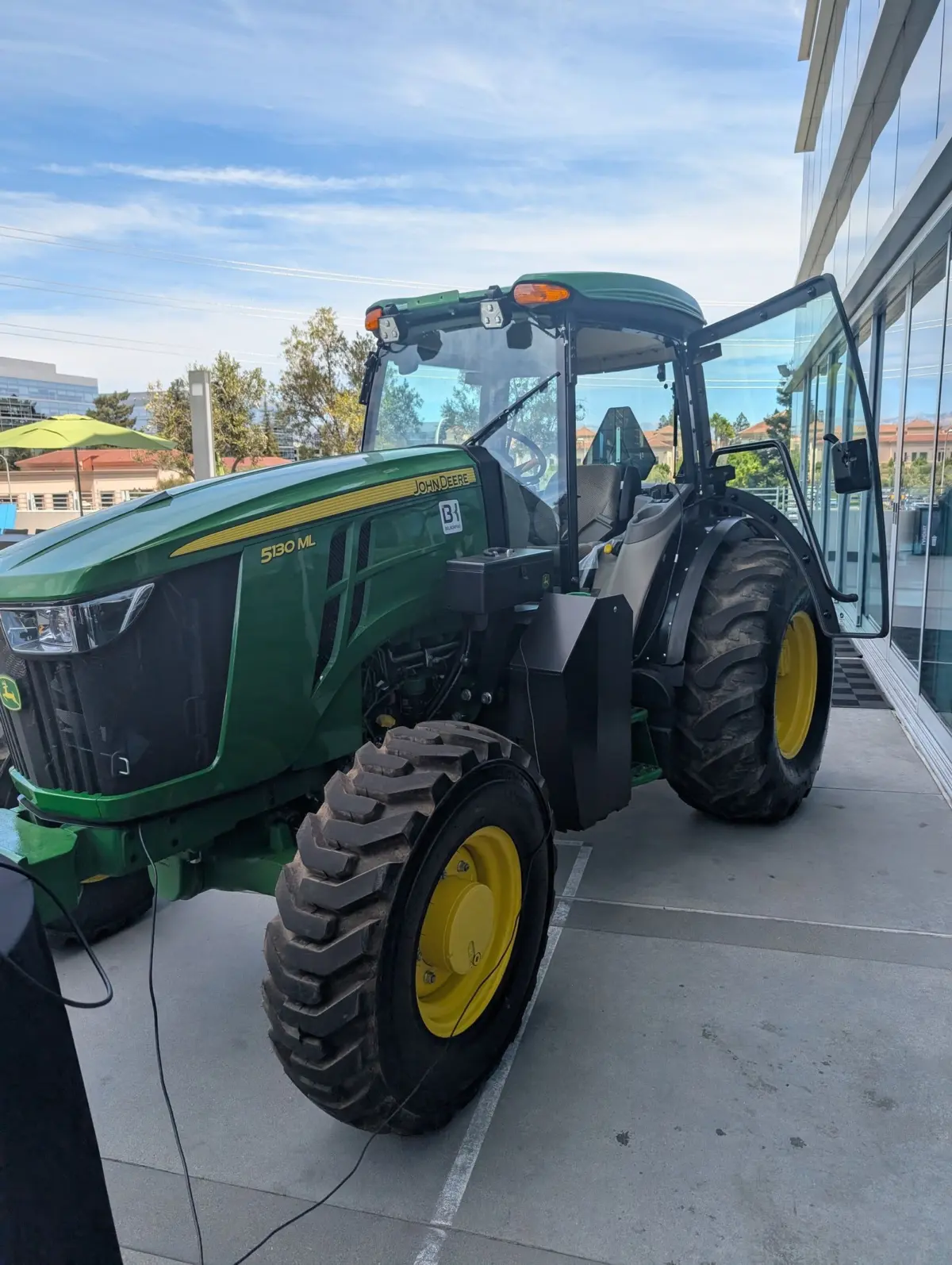
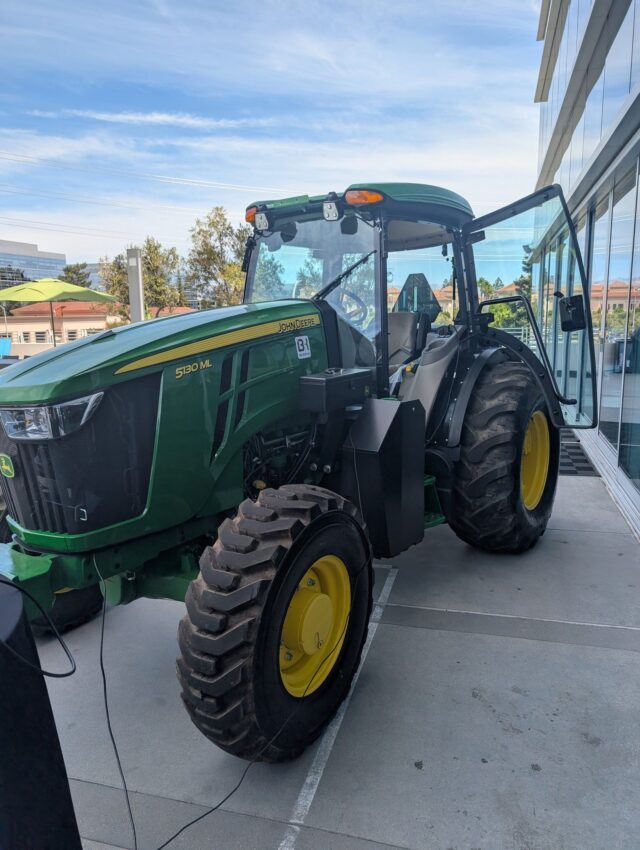
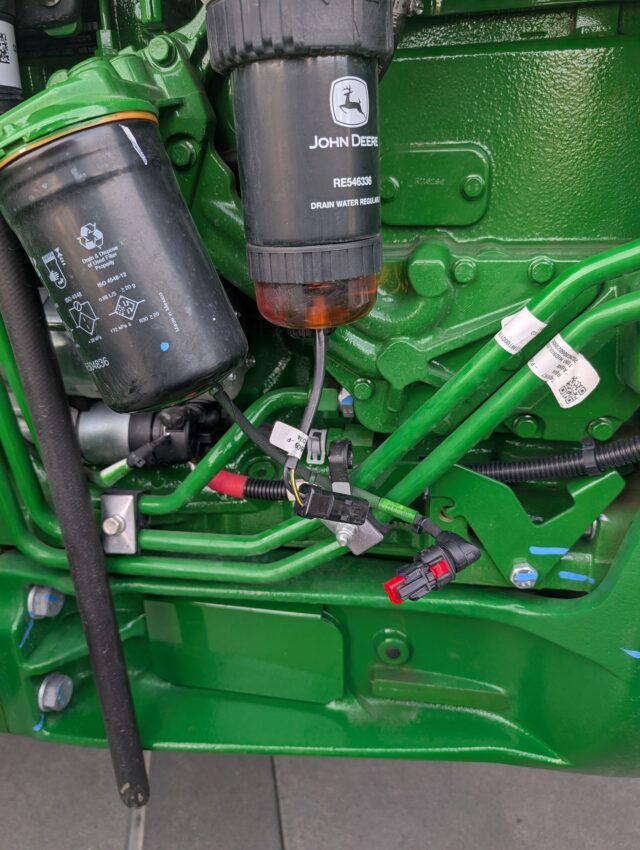
Standing in the sunlight next to a gleaming 5130ML low-profile tractor, a non-mechanic reporter found themselves face-to-face with a simulated crisis: a disconnected water-in-fuel (WiF) sensor. This small yet vital component monitors the integrity of the diesel engine, ensuring that water contamination does not quietly destroy internal systems.
- The Diagnostic Prompt: Connected via a physical cable to a laptop, the tractor immediately broadcast a bright red warning notification across the screen.
- The Software Search: Typing a brief query into John Deere’s Pro Service software instantly populated targeted instructions, pulling exact diagrams and user manual pages matched precisely to the machine’s unique serial number.
- The Physical Fix: Walking over to the tractor, the exact components modeled digitally on the screen were easily located. Two dangling wires waited to be joined. Pushing them together yielded a reassuring mechanical click.
- The Resolution: Returning to the laptop, the red warning flag had vanished. The entire diagnostic and repair cycle took less than three minutes.
Surrounded by John Deere executives—including Jahmy Hindman, senior vice president and chief technology officer who flew in from Illinois after a 30-year tenure with the company—the atmosphere was celebratory. The demonstration proved an undeniable technical truth: when a problem is straightforward, John Deere’s software can guide an untrained operator to a rapid, painless solution.
Yet, this controlled environment stands in stark contrast to the chaotic, high-stakes reality of managing a multi-thousand-acre agricultural operation during harvest season.
Supporting Context & Metrics: The Evolution of Complexity and the Right-to-Repair Movement
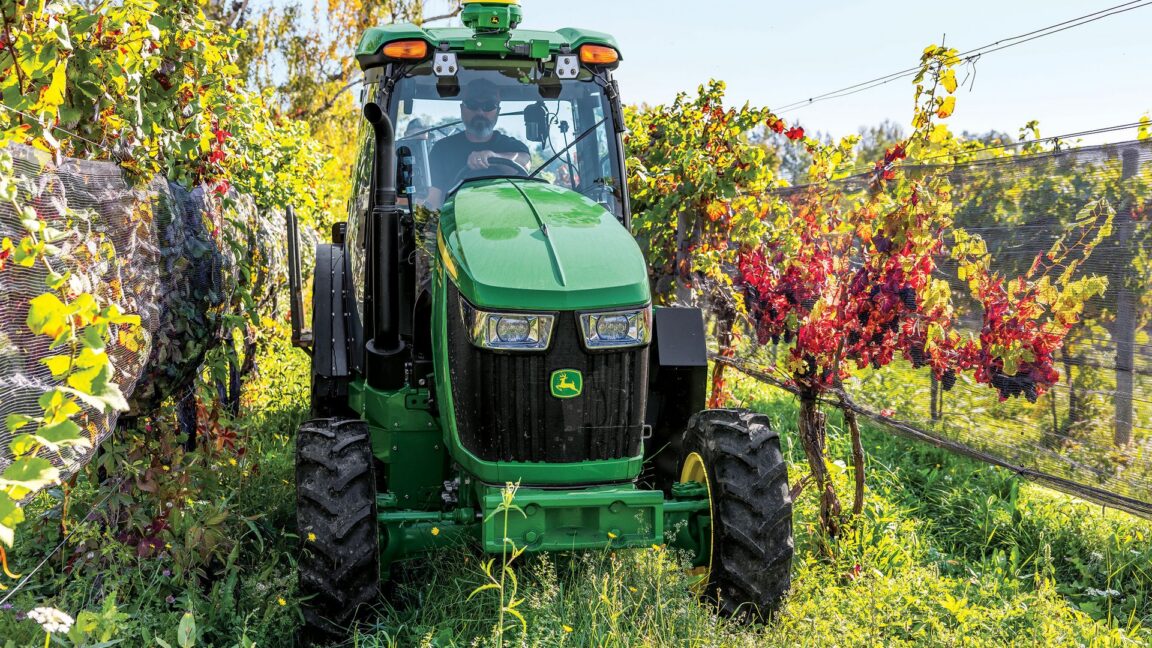
Modern agricultural machinery bears little resemblance to the mechanical workhorses of the mid-20th century. Today’s tractors are mobile supercomputers. Heavily laden with microprocessors, radios, high-precision sensors, and 4G wireless connectivity, machines routinely map fields, parse moisture metrics, and execute autonomous paths without human intervention.
According to John Deere executives, modern tractors can feature upwards of 50 distinct electronic control units (ECUs). While this complexity maximizes efficiency, it introduces unprecedented points of failure.
Over the last ten years, this digital transformation birthed a fierce nationwide backlash. As John Deere integrated software locks to restrict aftermarket parts and unauthorized diagnostic tools, farmers found themselves stranded. A broken sensor could immobilize a million-dollar combine harvester in the middle of a vital harvest window, forcing owners to wait days for a dealership technician—and pay exorbitant service fees.
Legal Pressures and Financial Fallout
The friction between farmers and the manufacturer has culminated in significant legal actions:
- The Class-Action Settlement: In April, John Deere agreed to a landmark $99 million settlement with equipment owners to reimburse them for burdensome historical repair costs.
- FTC Scrutiny: In July, the company settled a separate lawsuit brought by the US Federal Trade Commission, which mandates enhanced product repairability.
While neither settlement included an admission of wrongdoing by John Deere, both represent watershed moments for the right-to-repair movement. However, neither ruling is currently final, pending ultimate judicial review, and critics argue the financial remedies fail to fundamentally alter corporate behavior.
The Economics of Pro Service
Introduced broadly in 2025, John Deere’s Pro Service is structured to scale across different user bases:
- Individual Machines: Pricing starts at an annual subscription fee of $195 per machine.
- Large Operations & Independent Shops: Fleet-wide access starts at $4,995 annually, while agricultural and turf service businesses pay $5,995 per year.
Despite these offerings, adoption metrics reveal a profound gap between availability and utilization. A year after its rollout, John Deere reports approximately 1,000 daily users globally—a drop in the bucket when considering there are roughly 1.8 million farms operating across the United States.
Official Statements: The Corporate Vision vs. Market Reality
John Deere leadership remains steadfast in its defense of the company’s trajectory, maintaining that empowering the customer has always been the core objective.
"It is owner-friendly," says Jahmy Hindman, CTO of John Deere. "I think that’s always been our intent. As the tractor products grow in size, they also grow in the number of controllers that are necessary in order to make it all work. So it can be super complex."
Kelli Sullivan, group product manager of marketing automation and governance, emphasizes that user data autonomy is built into the foundation of Pro Service. According to Sullivan, owners maintain absolute sovereignty over their telemetry and diagnostic data, retaining the freedom to share it with independent entities or keep it entirely private.
The challenge, as corporate leadership frames it, is not a lack of utility, but a lack of awareness.
"We’re just trying to get the word out," Sullivan explains. "We have a suite of tools that are already available in our customers’ hands that allow them to do those things."
Future Outlook: Deep-Seated Skepticism and the Vanguard of Repair Rights
Despite the polished corporate demonstrations, the farming community remains unconvinced. Jared Wilson, a Missouri-based farmer managing 3,000 acres of corn and soybeans, is a named plaintiff in the $99 million class-action lawsuit who has publicly labeled the settlement "fundamentally flawed."
When briefed on the seamless, three-minute WiF sensor repair demonstration, Wilson offered a stark reality check. While simple repairs work well on software platforms, real-world field failures are rarely isolated.
"If you have multiple failures, you have to figure out where to start," Wilson points out. "If you have three different or four different diagnostic codes, where do you start in the tree to figure out what’s wrong?"
Wilson and many of his peers do not use Pro Service. Instead, many in the agricultural community rely on gray-market, cracked versions of diagnostic software out of distrust that major manufacturers will ever willingly surrender deep-level control.
The Problem with Product Improvement Plans (PIPs)
A major point of contention centers around Product Improvement Plans (PIPs). John Deere utilizes PIPs to catalog potential or emerging mechanical issues identified through fleet-wide telemetry. However, these software bulletins are only issued after the company has verified a widespread anomaly. When a farmer encounters a novel, unprecedented technical failure in the field, waiting for corporate verification and a subsequent software patch can mean catastrophic downtime.

"They’re still not giving us access to that next level that we have to have for some of the most difficult problems that we encounter," Wilson notes.
Willie Cade, a board member of the advocacy group Repair.org, offers an even harsher assessment of corporate incentives: "They’re just monopolists that want to make money and as much as they possibly can. Their real customer is not the farmer. Their real customer is Wall Street."
A Broader Societal Stakes Battle
In response to these criticisms, CTO Jahmy Hindman maintains that the company welcomes constructive pressure and believes progress is being made. "We have the best intentions of making sure that we have the ability to give customers the tools that they need to keep their equipment up and running," Hindman asserts. "Are there things that we need to continue to work on? I’m sure that there are. But let’s not forget that we are a long way towards moving the needle to a much better state."
As durable consumer and industrial goods become increasingly software-dependent, the fight over agricultural tractor repair serves as a crucial litmus test. Because agricultural machinery is built to withstand decades of heavy labor, establishing legal and societal precedents here will inevitably dictate the right to repair consumer electronics, medical devices, and automobiles for generations to come.
As Jared Wilson aptly summarizes: "This is an issue that’s concerning agricultural equipment, but it’s really the vanguard of a much bigger and persistent problem that affects every aspect of our society."