Executive Overview
In the history of human spaceflight, few trajectories are as unconventional or as deeply fascinating as that of Toyohiro Akiyama. Long before space tourism became a billionaire’s playground, and decades before private commercial enterprises began routinely launching civilians into orbit, Akiyama crossed the final frontier not as a military test pilot or a government-trained career scientist, but as a broadcast journalist. Funded to the tune of tens of millions of dollars by his employer, the Tokyo Broadcasting System (TBS), Akiyama’s 1990 mission aboard the Soviet spacecraft Soyuz TM-11 made him the first Japanese citizen to travel into space, the first journalist to report live from orbit, and a historic figure in the commercialization of human space exploration.
Yet, Akiyama’s journey is defined as much by what happened after he touched ground as it is by his time floating in the microgravity of the Mir space station. His career stands as a rare bridge connecting the high-stakes geopolitics of the Cold War space race, the birth of modern media spectacle, the quiet introspection of organic farming, and the sobering realities of environmental and nuclear displacement.
This retrospective examines the extraordinary life and legacy of Toyohiro Akiyama: from his early days reporting for the BBC and TBS, through his historic yet culturally complex week in orbit, his eventual disillusionment with the media landscape, his decades spent cultivating mushrooms and organic rice in the shadow of Fukushima, and his final chapter as a university professor and author. Through it all, Akiyama’s life offers a profound commentary on the human relationship with technology, nature, and the relentless march of modernity.
Detailed Chronology: From the BBC to the Mir Space Station
Early Life and Journalistic Foundations
Born on July 22, 1942, in Tokyo, Toyohiro Akiyama grew up in a Japan rapidly rebuilding from the devastation of the Second World War. He pursued higher education at the prestigious International Christian University in Mitaka, Tokyo, where he earned his bachelor’s degree. Demonstrating an early aptitude for global communication and international affairs, Akiyama soon secured a position with the British Broadcasting Corporation (BBC), working for the BBC World Service from 1967 to 1971. This formative international experience laid the groundwork for his transition into foreign news reporting.
Upon returning to Japan, Akiyama joined the Tokyo Broadcasting System (TBS), cementing his reputation as a dedicated and fearless foreign correspondent. His career reached a pinnacle when he was appointed the network’s chief correspondent in Washington, DC, a high-profile post he held for the four years leading up to his historic selection for spaceflight. During his time in the United States, Akiyama covered the intricate dynamics of American politics and foreign policy, little knowing that his next assignment would take him entirely out of the terrestrial sphere.
The TBS-Soviet Venture and the Soyuz TM-11 Mission
In the late 1980s, TBS sought a bold way to commemorate its 40th anniversary. The network struck an unprecedented commercial agreement with Glavkosmos, the Soviet Union’s commercial space agency, to purchase a seat on an upcoming Soyuz mission to the Mir space station. While official cost figures varied in contemporary reports, the investment by TBS was estimated to be between $12 million and $37 million US dollars—a staggering sum at the time, designed to catapult the network’s international profile and captivate domestic television audiences.
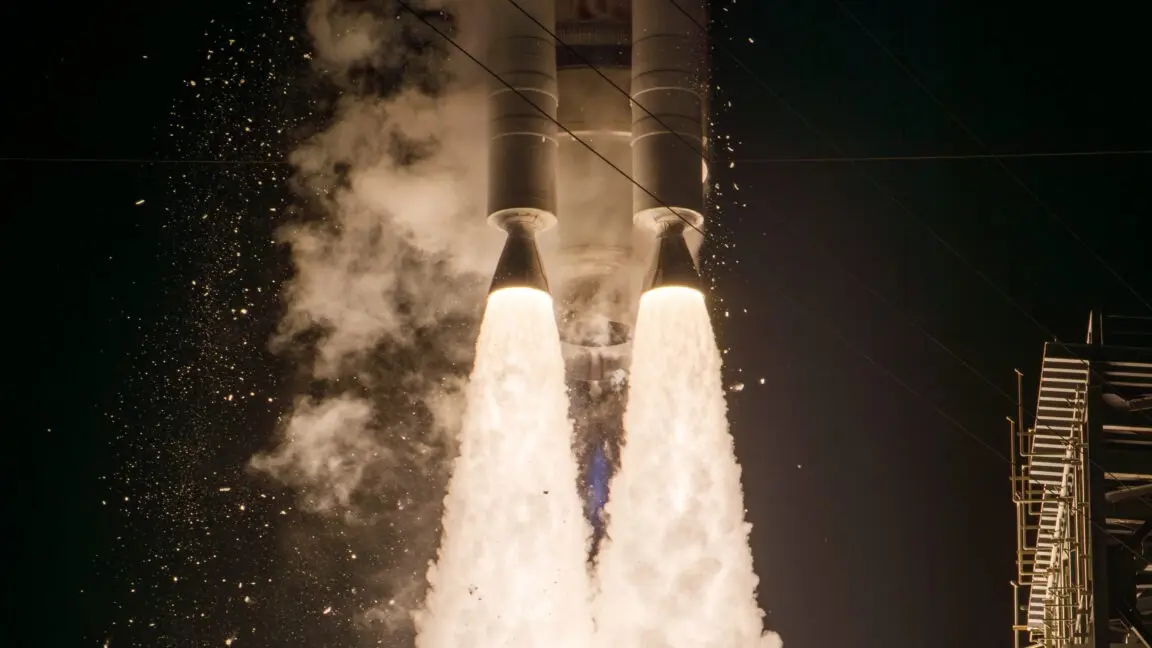
Akiyama was selected alongside fellow journalist Kikuko Yoneyama to undergo rigorous cosmonaut training in Star City, USSR. Following Yoneyama’s medical disqualification due to appendicitis, Akiyama became the prime candidate. On December 2, 1990, alongside Soviet cosmonauts Gennadi Manakov and Gennady Strekalov, Akiyama launched aboard Soyuz TM-11 from the Baikonur Cosmodrome.
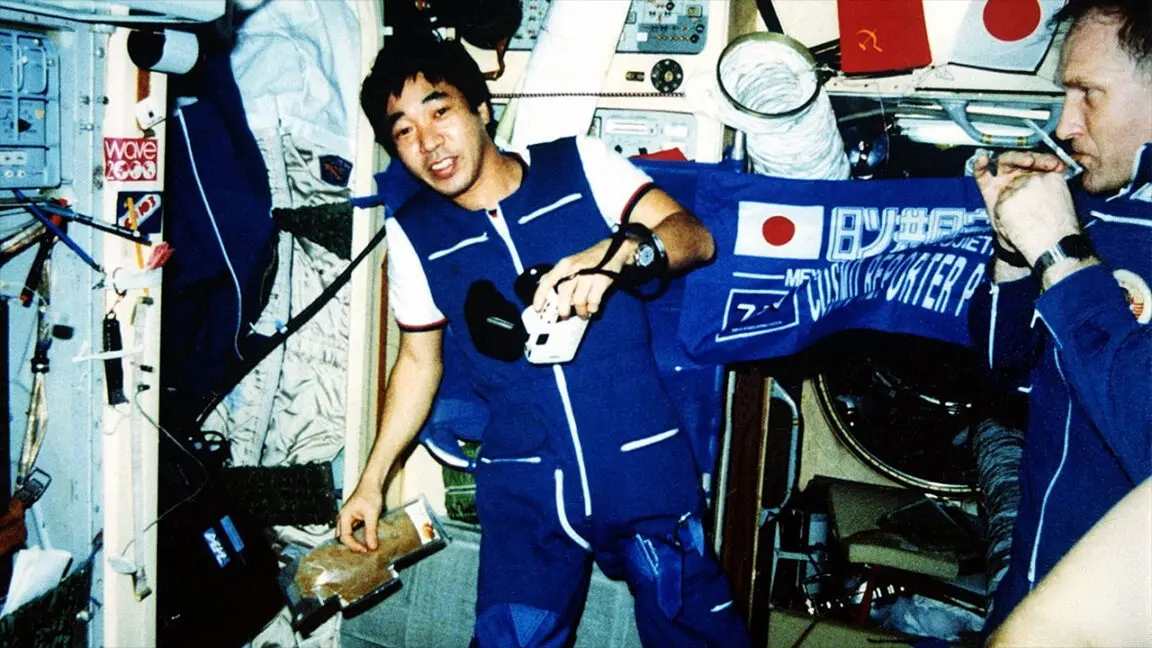
For the Japanese public, the launch was a historic milestone. Millions tuned in daily to watch Akiyama’s broadcasts from orbit, making him the 239th person to orbit Earth and the 246th person to cross the boundary into space (including suborbital fliers), according to the Registry of Space Travelers maintained by the Association of Space Explorers. During his mission, Akiyama logged seven days, 21 hours, and 54 minutes in space, transmitting daily reports back to terrestrial viewers that blended the wonder of cosmic exploration with the professional eye of a seasoned broadcast journalist.
Return to Earth and Post-Flight Disillusionment
Akiyama’s mission concluded on December 10, 1990, when the Soyuz TM-11 descent module touched down safely on the snow-covered steppes of Kazakhstan. While the mission was a technical success, its long-term cultural and corporate impact was complex.
Initially, the Japanese public responded with fervent daily viewership. However, as the week progressed, interest dwindled, and the massive financial investment failed to yield the sustained ratings or international prestige TBS had anticipated.
Akiyama returned to a hero’s welcome and was swiftly promoted to deputy director of TBS’s news division. Yet, the experience of viewing Earth from orbit—combined with a growing distaste for the sensationalism and hyper-commercialization infiltrating modern television news—left Akiyama deeply reflective. In 1995, exactly five years after his return from space, he made the radical decision to resign from TBS. He partnered with fellow documentary filmmakers to produce a project investigating the ecological disaster of the Ural Sea, before pivoting entirely away from media and public life to pursue a radically different path: agriculture.
The Farming Years and the Fukushima Disaster
Trading the high-tech confines of the Mir space station for the mud and soil of rural Japan, Akiyama relocated to the countryside to become a mushroom and organic rice farmer. For over a decade, he embraced the quiet rhythms of agrarian life, cultivating crops and reflecting on the interconnectedness of Earth’s fragile ecosystems.
This peaceful chapter was abruptly shattered on March 11, 2011, when the Great East Japan Earthquake struck, triggering a massive tsunami and the catastrophic meltdown at the Fukushima Daiichi Nuclear Power Plant. Located in the affected region, Akiyama was forced to evacuate his home and abandon the farming enterprise he had built over the previous sixteen years.
Demonstrating characteristic resilience, Akiyama transformed this profound personal loss into yet another chapter of public service. He turned to academia, accepting a professorship at the Kyoto University of Art and Design (now Kyoto University of the Arts). He educated and inspired the next generation of students until his retirement from teaching in 2023. Throughout his later years, he documented his experiences through numerous books, including Space Correspondent: Nine Days / Complete Record of the First Japanese Astronaut’s Experience (1991), This Is Space Correspondent! I Went to Space! (1991), and the poignant 2011 memoir The Diary of a Nuclear-Powered Refugee: From the Land of Wrath.
Supporting Context & Metrics: The Economics and Milestones of Early Space Commerce
To fully understand Toyohiro Akiyama’s flight, one must examine the geopolitical and economic landscape of the era. The flight of Soyuz TM-11 took place during the twilight years of the Soviet Union, a period when Moscow was actively seeking hard foreign currency by opening its space program to paying international customers.
| Metric / Detail | Description |
|---|---|
| Mission Name | Soyuz TM-11 / Mir Space Station |
| Launch Date | December 2, 1990 |
| Landing Date | December 10, 1990 |
| Flight Duration | 7 days, 21 hours, 54 minutes |
| Estimated Cost | $12 million to $37 million US dollars (funded by TBS) |
| Spaceflight Ranking | 239th person to orbit Earth; 246th person to cross the space boundary |
| Accolades | Soviet Order of Friendship of Peoples (1991), Tokyo Metropolitan Cultural Honor (1991), Russian "For Merit in Space Exploration" medal (2011) |
The Historical Precedent of Japanese Space Travelers
While Akiyama holds the distinction of being the first Japanese citizen and the first journalist in space, his journey represents a unique category within Japan’s national space history. Mamoru Mohri, who followed Akiyama two years later, holds the distinction of being the first Japanese career astronaut trained by an institutional space agency (NASDA, now JAXA) to reach orbit. Mohri’s flight had originally been scheduled to occur before Akiyama’s, but the tragic loss of the Space Shuttle Challenger in 1986 delayed the US shuttle program, inadvertently clearing the path for Akiyama’s commercial Soviet venture to take the historical lead.
Official Statements and Archival Reflections
Reflecting on his journey years after the event, Akiyama frequently emphasized the profound psychological shift experienced by those who look back at Earth from the void of space—a phenomenon commonly known as the "overview effect."
"When you look at the Earth from space, you do not see national borders, political conflicts, or divisions. You see a fragile, luminous sphere suspended in an immense, dark void. It changes forever how you view your responsibilities to this planet and to one another."
— Toyohiro Akiyama, archival interview on his post-flight perspective.
Corporate archives from TBS reflect the complicated balancing act the network faced in 1990. Executives noted that while the technical coordination with Soviet space authorities was a logistical triumph, the experiment demonstrated the limits of viewer appetite for continuous, real-time cosmic reporting during a standard work week.
"TBS took a monumental gamble in chartering a commercial flight into the cosmos," noted media historians reviewing the venture. "While it did not permanently alter the television ratings landscape as executives had hoped, it permanently etched Toyohiro Akiyama’s name into the annals of global space exploration and broadcast history."
Future Outlook: A Legacy That Endures
As humanity stands on the precipice of a new era marked by commercial space tourism, private lunar ventures, and orbital manufacturing, the journey of Toyohiro Akiyama serves as both a precursor and a cautionary tale. He proved that civilians could successfully adapt to microgravity, perform meaningful duties, and broadcast the human experience of space back to millions. At the same time, his subsequent retreat from commercial media and his embrace of organic farming highlight a timeless tension between technological ambition and ecological grounding.
Akiyama’s transition from the high-tech Mir space station to the soil of Fukushima, and finally to the lecture halls of Kyoto, underscores a life driven by intellectual curiosity and moral integrity. Honored with numerous international accolades—including the Soviet Order of Friendship of Peoples in 1991, the Tokyo Metropolitan Cultural Honor, and Russia’s "For Merit in Space Exploration" medal in 2011—Akiyama remains a towering, if humble, figure in international space history.
Today, as private citizens increasingly purchase tickets to leave Earth’s atmosphere, the world would do well to remember the journalist who went first. Toyohiro Akiyama’s legacy is not merely that he spent nearly eight days floating above the clouds, but that he returned with a deeper appreciation for the dirt beneath our feet, the fragility of our biosphere, and the enduring necessity of keeping our eyes fixed both on the stars and on the home we share.