Executive Overview
The rapid advancement of generative artificial intelligence has fundamentally disrupted the media localization industry. Where international distribution once required costly, labor-intensive pipelines—encompassing manual translation, voice casting, Automated Dialogue Replacement (ADR) recording, and painstaking post-production editing—modern AI platforms promise a streamlined, automated alternative.
At the forefront of this paradigm shift is Descript, a collaborative audio and video editing platform that has introduced an automated video translation, dubbing, and lip-syncing feature. Rather than relying on traditional post-production techniques, Descript leverages generative AI to automatically translate spoken dialogue, synthesize a matching voiceover, and reconstruct the speaker’s mouth movements to align with the phonemes of the target language.
+-------------------------------------------------------------------------+
|                       Traditional Dubbing Pipeline                      |
|  Manual Translation -> Voice Casting -> ADR Recording -> Manual Editing |
+-------------------------------------------------------------------------+
                                     vs.
+-------------------------------------------------------------------------+
|                        Descript AI Dubbing Pipeline                     |
|    Automatic Transcription -> AI Translation -> Synthetic Voiceover    |
|             -> Generative Facial Reconstruction (Lip-Sync)              |
+-------------------------------------------------------------------------+
This investigation evaluates Descript’s video translation and generative lip-sync capabilities. Conducted by a certified professional translator, this assessment stress-tests the software across multiple source and target languages—specifically evaluating translations from US English and Castilian Spanish into Canadian French, European French, German, and Greek.
While the visual output of Descript’s generative lip-syncing is technically impressive, the platform’s current software architecture raises critical operational concerns. By gating human-in-the-loop (HITL) translation curation behind premium enterprise pricing tiers, the system exposes independent creators and mid-market localization professionals to significant linguistic risks.
The Technical Evolution: From Rotoscoping to Generative Lip-Sync
To appreciate the sophistication of Descript’s translation tool, one must first understand the historical limitations of visual localization. Historically, modifying a speaker’s mouth to match a foreign-language dub required manual frame-by-frame manipulation.
The Limits of Rotoscoping
Originating in the early days of animation through Max Fleischer’s 1915 patent, rotoscoping involves tracing over live-action footage frame by frame. In modern digital editing, rotoscoping is utilized to isolate subjects, create matte keys, and manually adjust visual elements.
To alter mouth shapes to match a translated audio track using traditional methods, visual effects artists had to manually warp, mask, and blend the actor’s lips across thousands of frames. Due to the astronomical budgets and labor required, this level of visual dubbing was exclusively reserved for high-budget Hollywood feature films and commercial campaigns.
       [Input Video Frame]
                │
                ▼
   [Identify Facial Landmarks] (Eyes, Nose, Jawline)
                │
                ▼
  [Isolate Lower Third of Face] (Mouth & Lips)
                │
                ▼
  [Map Visemes to Target Audio] (Match mouth shapes to translated sounds)
                │
                ▼
 [Synthesize & Blend New Pixels] (Generate realistic skin, shadows, and movement)
                │
                ▼
      [Output Dubbed Frame]
The Generative AI Paradigm Shift
Descript bypasses the manual labor of rotoscoping by utilizing a generative neural rendering video model. Rather than stretching existing pixels, Descript’s AI analyzes the source footage to map the speaker’s facial geometry, with a specific focus on the lower third of the face (the jaw, chin, lips, and cheeks).
When a video is translated and dubbed:
- Audio Synthesis: The platform generates a synthetic voiceover in the target language, attempting to match the vocal characteristics, tone, and emotional inflection of the original speaker.
- Viseme Mapping: The AI calculates the sequence of "visemes"—the visual representation of phonemes (individual speech sounds)—required to pronounce the translated words.
- Generative Reconstruction: The video engine digitally erases the lower half of the speaker’s original face and regenerates it in real-time. The model synthesizes entirely new pixels that depict the mouth speaking the target language, seamlessly matching the original lighting, skin texture, shadows, and subtle facial expressions.
This approach ensures that whether the target language requires the wide, open vowels of Italian or the closed, rounded lip positions of French, the onscreen speaker’s physical movements appear natural and synchronized.
Empirical Testing: Methodology and Language Matrices
To rigorously evaluate the efficacy of Descript’s translation and lip-sync engines, we established a dual-phase testing matrix using high-definition source files captured with professional-grade hardware.
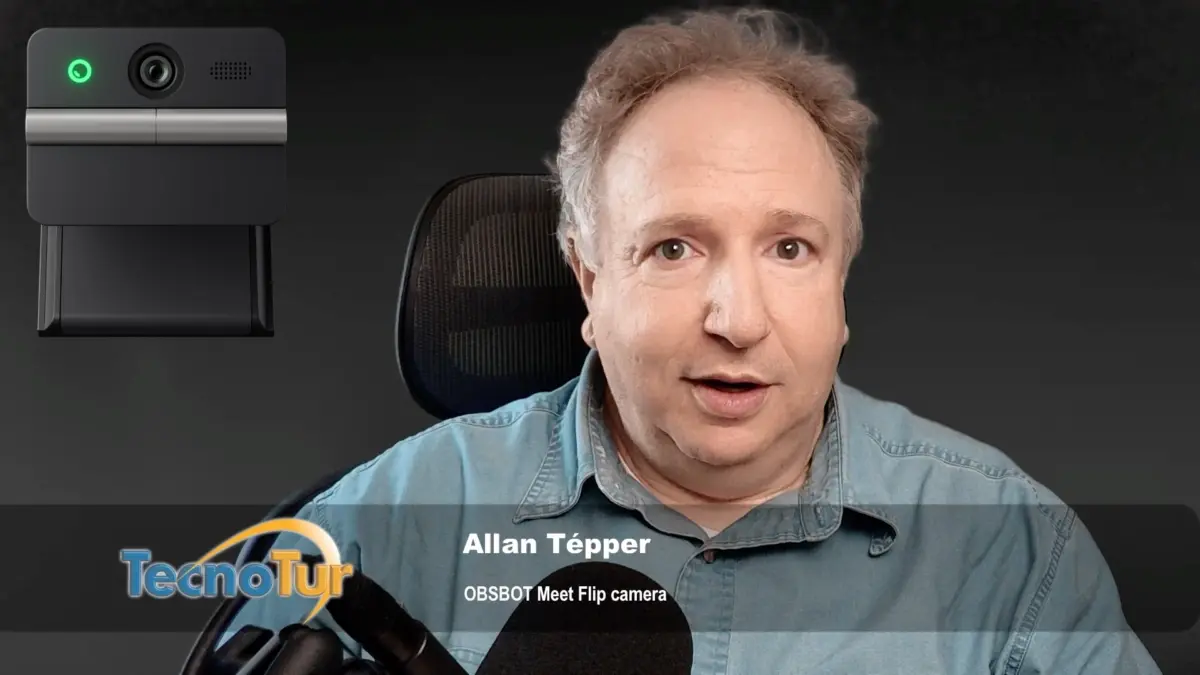
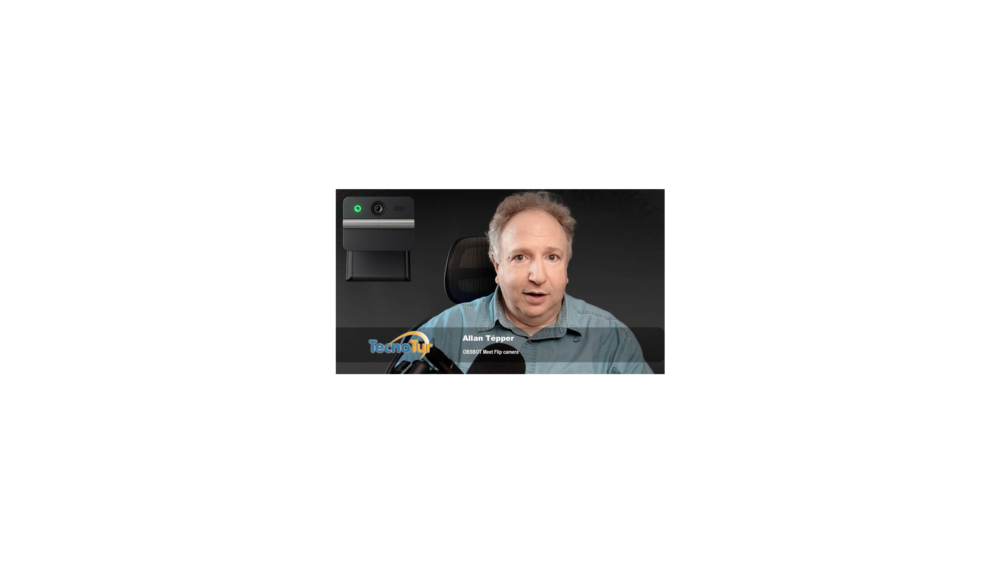
The source videos utilized for these tests were extracted from a recent hands-on review of the OBSBOT Meet Flip—a high-performance 4K UHD UVC camera designed for broadcast television and online conferencing. This footage provided an ideal test bed: a single, clear, front-facing subject with consistent studio lighting, minimal background noise, and distinct facial features.
                    +-----------------------------+
                    |      Source Video File      |
                    | (OBSBOT Meet Flip Footage)  |
                    +--------------+--------------+
                                   |
            +----------------------+----------------------+
            |                                             |
            ▼                                             ▼
  [Phase 1: US English Source]                 [Phase 2: Castilian Spanish Source]
            |                                             |
            +----------------------+----------------------+
                                   |
            +----------------------+----------------------+
            |        Target Languages (Both Phases)       |
            |  - Canadian French     - European French    |
            |  - German              - Greek              |
            +---------------------------------------------+
Phase 1: US English Source File
The first testing phase utilized a high-definition English-language recording. This file was processed through Descript’s automated pipeline to generate dubs and corresponding lip-syncs for four distinct target profiles:
- Canadian French (fr-CA): Testing for regional accent patterns and North American French phrasing.
- European French (fr-FR): Testing for standard continental phonetics and distinct lip-rounding characteristics.
- German (de-DE): Testing how the system handles complex compound words, extended sentence structures, and consonant-heavy phonemes.
- Greek (el-GR): Testing a non-Germanic, non-Romance language with unique phonetic rhythms and rapid syllable transitions.
Phase 2: Castilian Spanish Source File
The second phase utilized a native Castilian Spanish source video, originally recorded for a review published on the audio-first Spanish-language platform Escuchalibros.com.
This phase was designed to test cross-linguistic translation efficiency: does Descript perform better when translating from a Romance language (Spanish) to other Romance languages (French), compared to translating from a Germanic language (English)? The Spanish source was processed into the same four target profiles: Canadian French, European French, German, and Greek.
Performance Analysis & Visual Evaluation
The visual and acoustic output of both testing phases yielded highly sophisticated results, though they also highlighted key technical nuances.
| Target Profile | Visual Sync Accuracy | Audio-to-Video Cohesion | Linguistic Nuance & Pronunciation |
|---|---|---|---|
| Canadian French (fr-CA) | Excellent (9.5/10) | High | Accurately captured regional phonetic cues and pacing. |
| European French (fr-FR) | Excellent (9.2/10) | High | Clear distinctions in lip-rounding compared to the Canadian French output. |
| German (de-DE) | Very Good (8.8/10) | Medium-High | Handled complex syntax well, though rapid syllable sequences caused minor blending artifacts. |
| Greek (el-GR) | Good (8.2/10) | Medium | Occasional micro-stutters during rapid phonetic transitions, but highly legible. |
Visual Synthesis and Jawline Integration
Across all test cases, the generative video model maintained impressive structural integrity. The transition boundary—where the original video frame meets the AI-generated lower third of the face—was virtually imperceptible.
The software successfully maintained consistent skin textures, adjusted to subtle shifts in head position, and accurately replicated the ambient studio lighting of the OBSBOT Meet Flip source footage.
Phonetic and Visemic Realism
The lip-sync accuracy was remarkably precise. In the German-language exports, which typically present a challenge for dubbing due to long, multi-syllable compound words, the generative model adjusted the speaker’s mouth movements to match the language’s unique cadence.
Similarly, the distinction between Canadian and European French was reflected not just in the acoustic pronunciation, but in the subtle differences in lip-rounding and mouth-opening widths, proving that the generative model is tightly coupled with the specific linguistic nuances of the synthesized audio track.
Minor Visual Artifacts
While the results are highly convincing, close inspection reveals minor digital artifacts. During rapid transitions or when the speaker pronounced plosive consonants (such as p, b, or m), there were occasional micro-stutters where the AI-generated mouth briefly struggled to blend with the natural movement of the jawline.
However, for standard viewing distances and platforms like YouTube, LinkedIn, or corporate training portals, these artifacts are negligible and do not detract from the overall viewing experience.
The Localization Dilemma: Machine Translation vs. Human Curation
While Descript deserves praise for its technical achievements in generative video synthesis, its current user-experience design reveals a critical flaw for professional localization workflows.
   [Creator Plan Workflow] (Linguistic Risk)
   Source Video -> AI Translation -> AI Dubbing & Lip-Sync (No opportunity to edit text)
   *Result: Risk of embarrassing mistranslations and grammatical errors.*

   [Business/Enterprise Workflow] (Professional Standard)
   Source Video -> AI Translation -> HUMAN REVIEW & EDIT -> AI Dubbing & Lip-Sync
   *Result: Culturally accurate, grammatically correct, polished output.*
The Imperative of the Human-in-the-Loop (HITL)
As certified translation professionals will attest, fully automated machine translation is inherently prone to errors. It frequently misses cultural context, idiomatic expressions, technical jargon, and brand-specific terminology.
Releasing an automatically translated and dubbed video without human review is a significant risk for any business. An uncurated translation can result in grammatical errors, cultural insensitivity, or completely inaccurate technical specifications.
Descript’s Pricing Tier Restriction
In Descript’s current software ecosystem, the ability to edit and correct the auto-generated translation before the voiceover is synthesized and the lip-sync is rendered is locked behind the Business or Enterprise subscription plans. Users on the entry-level Creator plan are forced to accept a fully automated, uncurated translation.
This structural limitation is highly counterproductive:
- The Creator’s Frustration: Independent creators on budget-conscious tiers are forced to output potentially flawed translations, risking their credibility in international markets.
- The Professional’s Friction: Freelance translators and localization editors cannot use the lower-tier plans to quickly prototype and polish translations for clients without committing to a costly enterprise-level monthly subscription.
To democratize high-quality global communication, Descript should decouple basic text-editing capabilities from its high-end corporate tiers. Allowing Creator-level users to manually edit the translated transcript before rendering the final video would ensure linguistic accuracy without requiring Descript to provide professional translation services. Users simply need the agency to hire their own translators to review and polish the text.
Ethical Horizons and Industry Implications
The emergence of seamless, accessible generative lip-syncing technologies like Descript’s introduces profound ethical and operational questions that extend far beyond simple localization.
                      +-----------------------------+
                      |   Ethical & Industry Risks  |
                      +--------------+--------------+
                                     |
         +---------------------------+---------------------------+
         |                                                       |
         ▼                                                       ▼
[Synthetic Identity & Consent]                         [Economic Disruption]
Unauthorized voice/face cloning                        Displacement of traditional
and potential for misinformation.                      voice actors and translators.
Synthetic Identity and Consent
The ability to alter a person’s face to speak entirely different words in a foreign tongue borders on deepfake technology. While Descript operates as a secure, creative utility, the democratization of such tools raises concerns regarding identity theft, unauthorized voice cloning, and the generation of misleading content.
Establishing clear digital rights management (DRM) and robust consent verification protocols for speakers whose likenesses are processed through these systems remains a pressing industry challenge.
Economic Realignment of the Localization Sector
For voice actors, traditional translators, and dubbing studios, generative AI represents a massive shift in the industry’s economic landscape. While high-end theatrical releases will likely continue to rely on human voice actors for artistic nuance, mid-tier corporate videos, educational content, and independent media are rapidly migrating to AI-driven pipelines.
To remain competitive, modern localization professionals must transition from primary creators to strategic editors, taking on the crucial role of "Human-in-the-Loop" controllers who oversee, refine, and certify AI-generated outputs.
Future Outlook: The Next Paradigm of Global Media Distribution
Despite current pricing limitations, Descript’s generative translation and lip-sync technology represents a major step forward for digital media. The visual cohesion achieved by reconstructing the lower face via generative AI—rather than relying on archaic rotoscoping techniques—sets a high standard for the industry.
                           [Future State]
                                 │
         ┌───────────────────────┴───────────────────────┐
         ▼                                               ▼
[Hyper-Localized Media]                         [Democratized Education]
Real-time, multi-lingual broadcasts             Global access to specialized
with perfect visual synchronization.            knowledge without language barriers.
As these neural rendering models continue to mature, we can expect:
- Near-Zero Latency Processing: Real-time translation and lip-syncing for live broadcasts, international video conferences, and global webinars.
- Enhanced Micro-Expression Tracking: The elimination of minor visual stutters, allowing the AI to perfectly capture subtle facial movements, emotional micro-expressions, and physiological indicators like swallowing or breathing.
- Democratized Access to Global Markets: The complete removal of the language barrier for independent educators, journalists, and small businesses, allowing content to find global audiences instantly.
For Descript to solidify its position as the premier tool for this new era, it must address the workflow bottlenecks in its subscription tiers and empower users at all levels to prioritize linguistic accuracy. Ultimately, the future of global media distribution belongs to platforms that successfully pair advanced generative technology with the indispensable precision of human expertise.