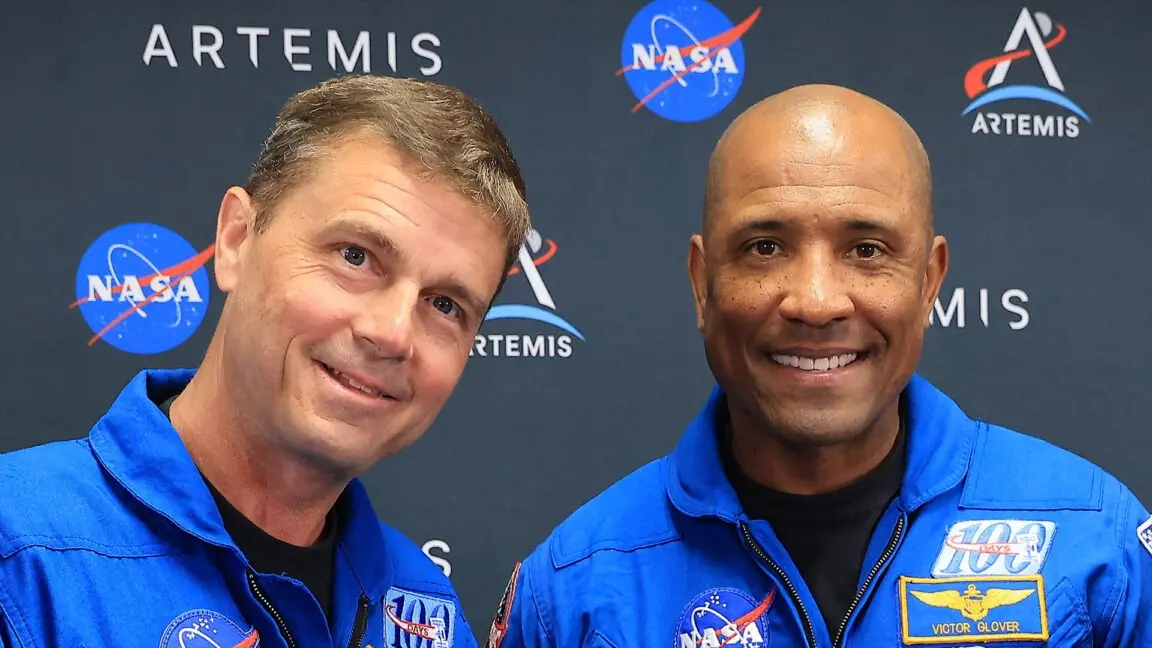
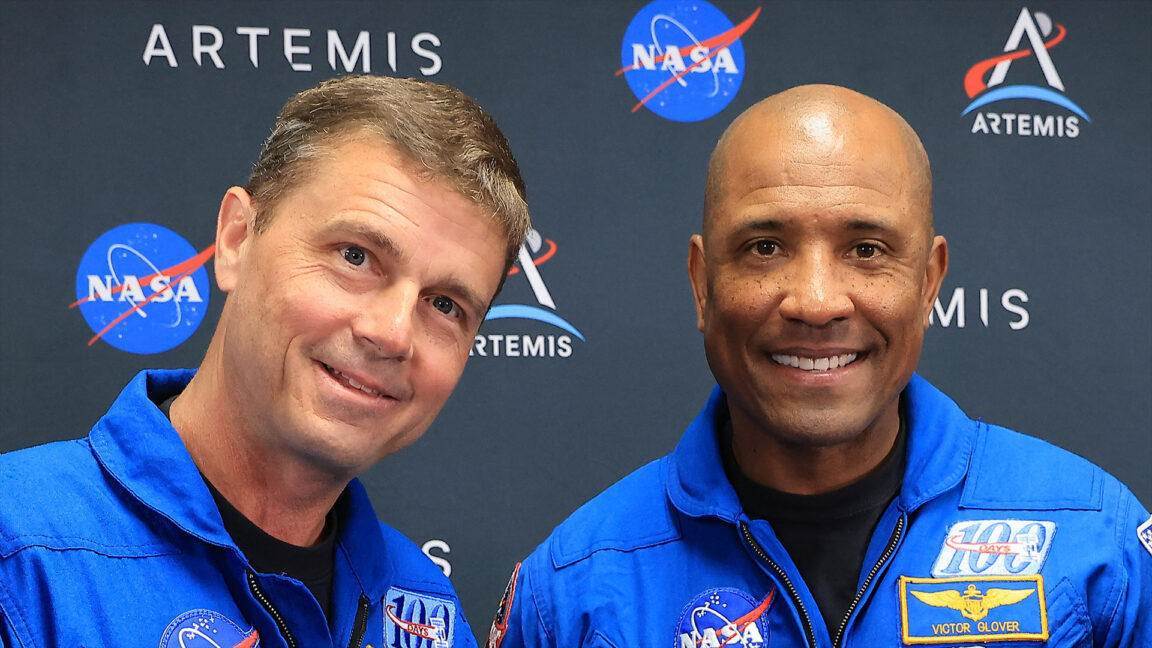
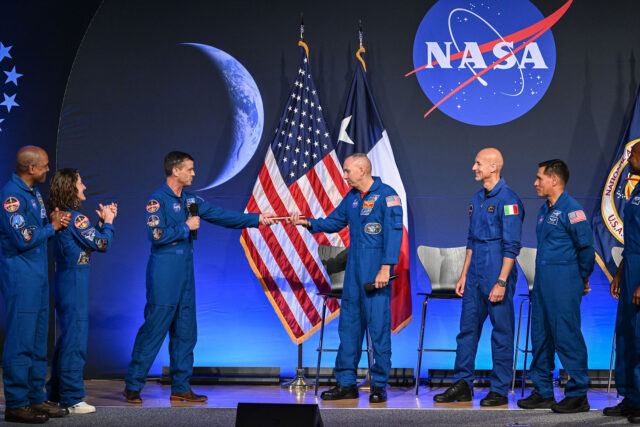
Five months after splashing down from a historic, record-shattering voyage around the Moon, NASA astronauts Reid Wiseman and Victor Glover are redefining what it means to leave the active space program. Rather than accepting a traditional, clean-break retirement from the agency, the commander and pilot of the Artemis II mission have accepted a newly minted designation: NASA’s first-ever astronaut emeriti.
Announced in September 2026, this unique framework allows veteran spacefarers to step away from active flight status while retaining their ties to the Johnson Space Center in Houston. By trading their flight suits for emeritus status, Wiseman and Glover can seamlessly transition into external career opportunities—such as administrative leadership in higher education—while keeping their institutional memory, technical wizardry, and invaluable mentorship available to the next generation of lunar explorers.
Historically, astronauts wishing to enter private industry, political office, or military retirement faced an all-or-nothing choice: remain an active-duty management astronaut or sever ties with the agency entirely. The emeritus designation bridges this long-standing divide, establishing a flexible, renewable, year-to-year status that taps into elite expertise without locking down active flight slots. As NASA eyes the upcoming Artemis III mission and looks toward a permanent human footprint on the lunar surface, the agency’s pioneering moonwalkers are proving that for modern astronauts, leaving flight status doesn’t mean leaving the mission.
Detailed Chronology: From Lunar Orbit to the Emeritus Program
The creation of NASA’s astronaut emeritus program follows the monumental success and subsequent wind-down of the Artemis II mission, an undertaking that cemented its crew in the annals of space exploration history.
The Artemis II Campaign and Post-Flight Debriefs
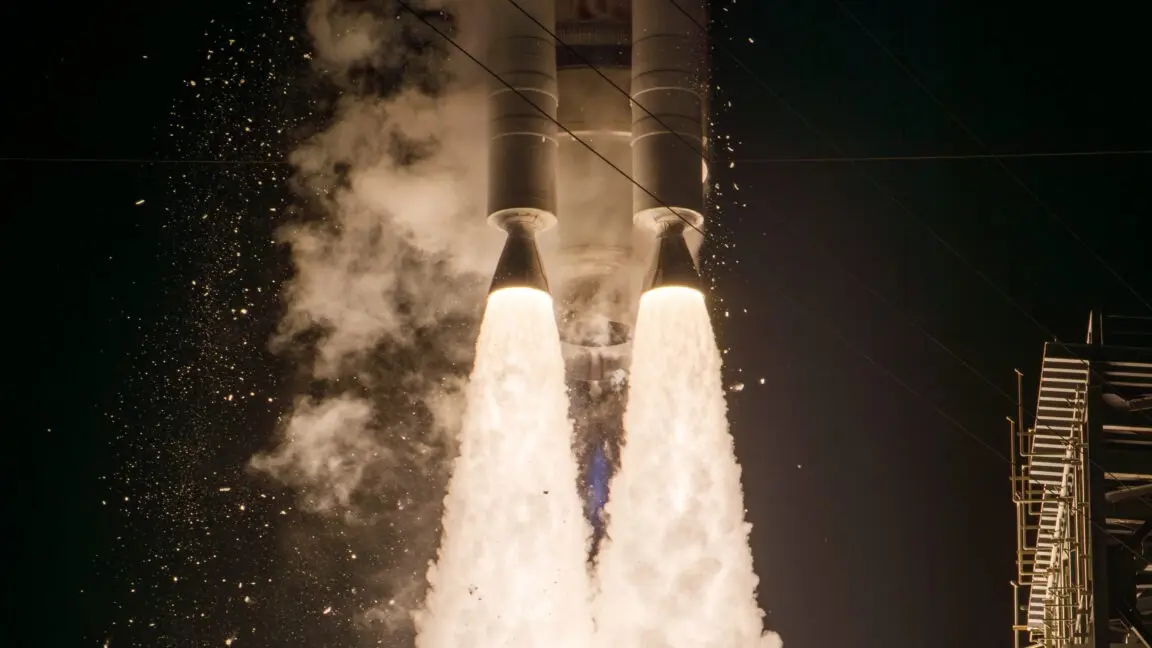
Earlier in 2026, Artemis II commander Reid Wiseman, pilot Victor Glover, and mission specialists Christina Koch and Jeremy Hansen executed a flawless 10-day loop around the Moon. Flying farther into deep space than any humans in history, the four-person crew stress-tested the Orion spacecraft’s life support systems and navigation architecture while in the punishing environment of cislunar space.
Following their triumphant splashdown and subsequent recovery, the crew embarked on a rigorous, months-long post-flight debriefing schedule. This mandatory phase included comprehensive medical evaluations, engineering reviews, public appearance circuits, and deep-dive data analysis sessions.
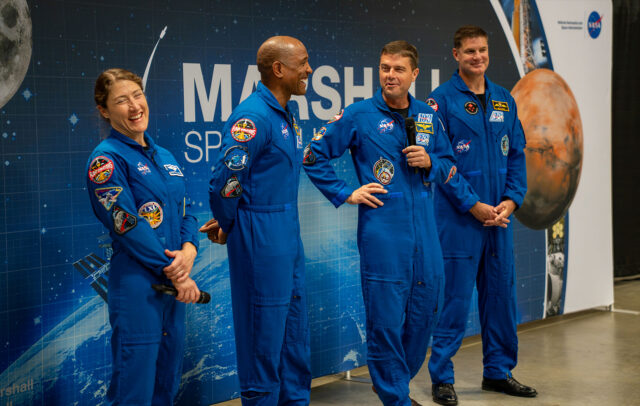
The post-flight period culminated in early September 2026 with a final collective crew appearance at NASA’s Marshall Space Flight Center in Huntsville, Alabama. With those final debriefs wrapped up, the formal chapter of Artemis II officially closed.
Structuring the Transition
As the mission wound down, the crew members began charting their respective futures. Jeremy Hansen stepped away from his full-time role with the Canadian Space Agency (CSA) to pursue new professional pathways and transition to a reservist role within the Royal Canadian Air Force. Victor Glover timed his departure from NASA with his formal retirement from the United States Navy—a milestone Reid Wiseman had achieved prior to launching on Artemis II.
Rather than completely disappearing from the halls of the Johnson Space Center, however, Wiseman and Glover opted into the agency’s nascent emeritus program. This innovative path allows them to maintain access badges, consult on ongoing program developments, and participate in training simulations on a voluntary, uncompensated (gratis) basis.
Supporting Context & Metrics: The Weight of Experience
To understand the value of the emeritus program, one must examine the extraordinary depth of experience that Wiseman and Glover bring to the table. Both commanders represent the cream of the crop of NASA’s modern astronaut corps, boasting extensive flight hours and multifaceted backgrounds.
Career Metrics and Spaceflight Tally
Reid Wiseman (Artemis II Commander): Selected as part of NASA’s 20th astronaut class, Wiseman is a seasoned veteran. Prior to leading the Artemis II lunar flyby, he served aboard the International Space Station (ISS) after launching via a Russian Soyuz spacecraft. From 2020 to 2022, he anchored the agency’s ground operations as the Chief of the Astronaut Office. Across his career, Wiseman has logged a cumulative 174 days, 9 hours, and 33 minutes in space.
Victor Glover (Artemis II Pilot): A member of NASA’s 21st astronaut class, Glover made history as the pilot on SpaceX’s first operational Crew Dragon flight (Crew-1) to the ISS under the Commercial Crew Program. Combined with his Artemis II lunar mission, Glover has notched a total of 176 days, 8 hours, and 1 minute in space.
Historical Precedents for Agency Re-Entry
While Wiseman and Glover are the first to hold the official title of "astronaut emeritus," NASA has a storied history of astronauts taking leaves of absence, returning after resignation, or providing advisory support long after their active flight days concluded. However, these past instances often involved complex administrative workarounds rather than a streamlined program:
Scott Carpenter (1965): The Mercury-Atlas 7 astronaut took a temporary leave from NASA to serve as an aquanaut in the U.S. Navy’s SEALAB II project on the ocean floor. Though he returned to NASA, an arm injury sustained during his time away restricted him to management roles until his final resignation in 1967.
Edward Gibson (1974–1982): Following his grueling 84-day stint on the final Skylab mission (Skylab 4), Gibson resigned from NASA, only to return three years later as chief of the scientist-astronaut candidates. Though he hoped to fly again, he ultimately retired in 1982 without a second flight assignment.
Tony England (1967–1988): Selected as a scientist-astronaut, England left NASA in 1972 due to a drought of available flight assignments. He returned in 1979 as a mission specialist, flew aboard Space Shuttle Challenger (STS-51F) in 1985, and retired a second time in 1988.
Anna Lee Fisher (1989–2017): One of NASA’s first six female astronauts, Fisher took an extended, year-by-year leave of absence to raise her family. Though she never flew again upon her return in 1995, she dedicated decades to designing hardware for the International Space Station and the Orion spacecraft.
Sally Ride and Neil Armstrong: Following their landmark flights, both legends continued serving NASA indefinitely, lending their names and expertise to elite blue-ribbon investigation committees following major space shuttle accidents and helping shape the long-term strategic vision of American space exploration.
Despite these historical precedents, none of these figures operated under a formalized, renewable emeritus framework designed specifically to let astronauts seamlessly toggle between private sector leadership and volunteer agency consulting.
Official Statements and Perspectives
The philosophical shift behind the emeritus program highlights a deep-seated institutional loyalty among astronauts, many of whom view spaceflight not merely as a job, but as an enduring lifelong commitment.
In an interview with collectSPACE, Victor Glover elaborated on the linguistic distinction and the realities of his new status:
"I have asked NASA… to not use the term ‘retire’ as much, but technically emeritus is a retirement program," Glover explained. "It’s something we have typically done for scientists when they have groundbreaking research, and they want to go back to academia to teach or to research and publish."
Glover has accepted a full-time administrative leadership role at his alma mater, California Polytechnic State University (Cal Poly) in San Luis Obispo, where he will help shape long-term institutional strategies. Simultaneously, he has committed to serving NASA without financial compensation.
"You can be paid or you can be a gratis service, which is compensation waived, and that’s what I’m doing," Glover said. "So I’m not going to be paid for it, but I’ll be able to voluntarily be an advisor or a consultant providing insight into what living in Orion is like."
Glover also outlined his plans to secure an access badge, attend training simulation runs, and help lay the groundwork for a new collaborative initiative: the United States Space Academy, designed to serve both NASA and the U.S. Space Force.
"I want to work on that as they start building its foundation because that signals exactly what I care about: building the future of the technical workforce leaders," Glover noted. "So this is really amazing timing."
Reflecting on the tight-knit fraternity of space explorers, Glover captured the sentiment shared by his peer:
"Being an astronaut is already a lifelong commitment, and when you’re a former [astronaut] you’re always one of us, always a part of this small community of people who have flown off the planet, but this is a new way for us to continue to execute that lifelong commitment."
Echoing these thoughts, NASA leadership and programmatic updates confirm that Reid Wiseman intends to leverage his emeritus status to mentor upcoming crews. Wiseman plans to share his hard-earned insights regarding deep-space navigation, life support management, and psychological resilience with the next wave of spacefarers.
Future Outlook: The Road to Artemis III and Beyond
The timing of Wiseman and Glover’s transition aligns precisely with NASA’s aggressive pivot toward the next major milestones in the Artemis campaign.
With Artemis II securely in the rearview mirror, attention has shifted entirely to Artemis III. Targeted for no earlier than mid-2027, the Artemis III mission will task its newly announced crew with testing the Orion spacecraft’s rendezvous and docking capabilities against commercial human landing systems in low-Earth orbit. As the agency fine-tunes these complex procedures, the operational lessons gleaned by Wiseman and Glover during their historic lunar flyby will serve as foundational blueprints.
Furthermore, with Christina Koch remaining as the sole active Artemis II astronaut—while her post-flight path with the agency remains unannounced—the presence of Wiseman and Glover as emeriti provides a vital bridge of continuity. By returning to Houston for simulations, debriefs, and advisory sessions, they ensure that the institutional knowledge gained from pushing humanity farther than it has been in half a century is not lost to bureaucratic turnover.
As space exploration enters a new era defined by public-private partnerships, commercial landers, and international coalitions, NASA’s astronaut emeritus program offers a brilliant structural template. It acknowledges a simple truth: once someone has crossed the threshold of Earth’s atmosphere to touch the void, their value to the cosmic endeavor never truly expires.