Executive Overview
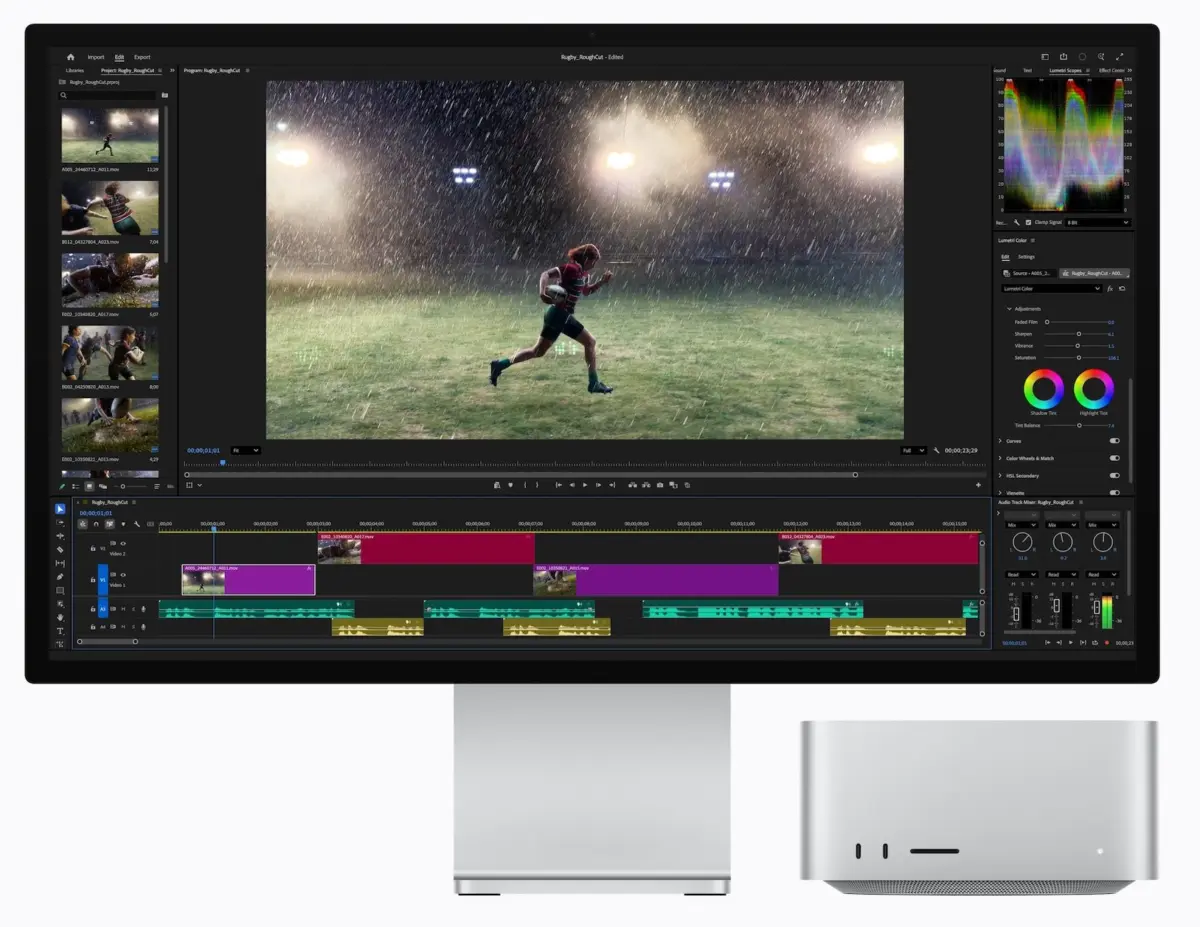
In a move that has caught both hardware analysts and the consumer market off guard, Apple has officially unveiled its next-generation desktop lineup, featuring thoroughly redesigned Mac Studio and Mac mini models. Defying the prevailing consensus of the tech rumor mill—which had predicted prolonged supply constraints and a slower release cadence—Apple’s announcement marks a massive leap forward in its silicon transition.
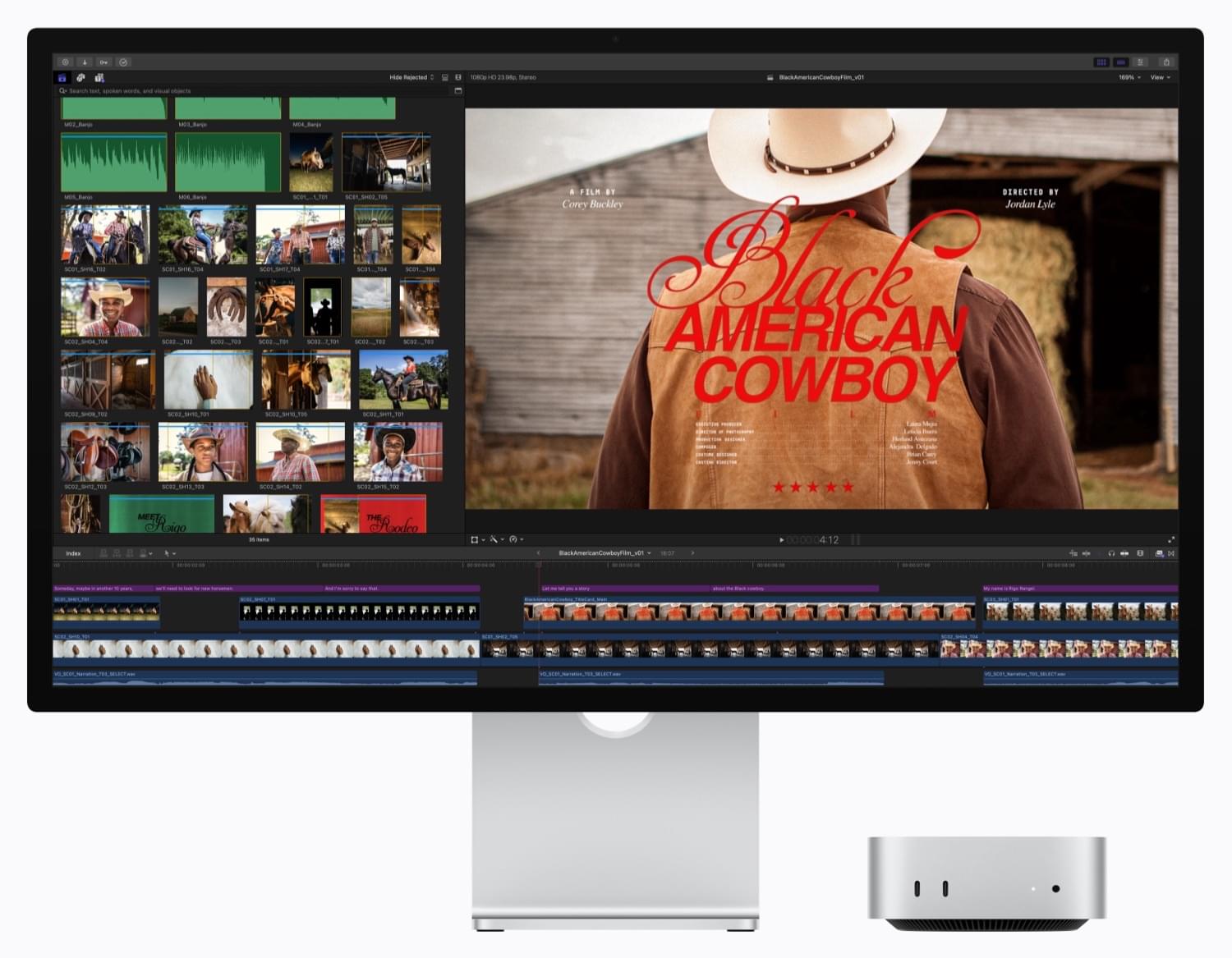
The headline of this launch is twofold: the debut of the M5 Max and M5 Ultra chips for the Mac Studio, and the introduction of the groundbreaking M6 and M5 Pro chips for the ultra-compact Mac mini. Notably, Apple has bypassed the M4 Ultra generation entirely for the Mac Studio, transitioning directly from the M3 Ultra to the M5 platform to deliver unprecedented architectural gains.
This hardware refresh represents a fundamental shift in Apple’s desktop strategy. Rather than focusing merely on incremental CPU and GPU clock-speed bumps, these systems have been engineered from the ground up to handle high-throughput, local, "agentic" artificial intelligence. By integrating cutting-edge manufacturing processes—including Apple’s first commercial 2nm node silicon—and vastly expanding memory bandwidth, Apple is positioning these machines as the premier localized workstations for AI developers, enterprise researchers, and high-end creative professionals.
Pre-orders for all configurations are currently live, with retail availability and global shipping slated to begin on September 22.
Detailed Chronology: Architectures of the M5 Ultra and M6 Silicon
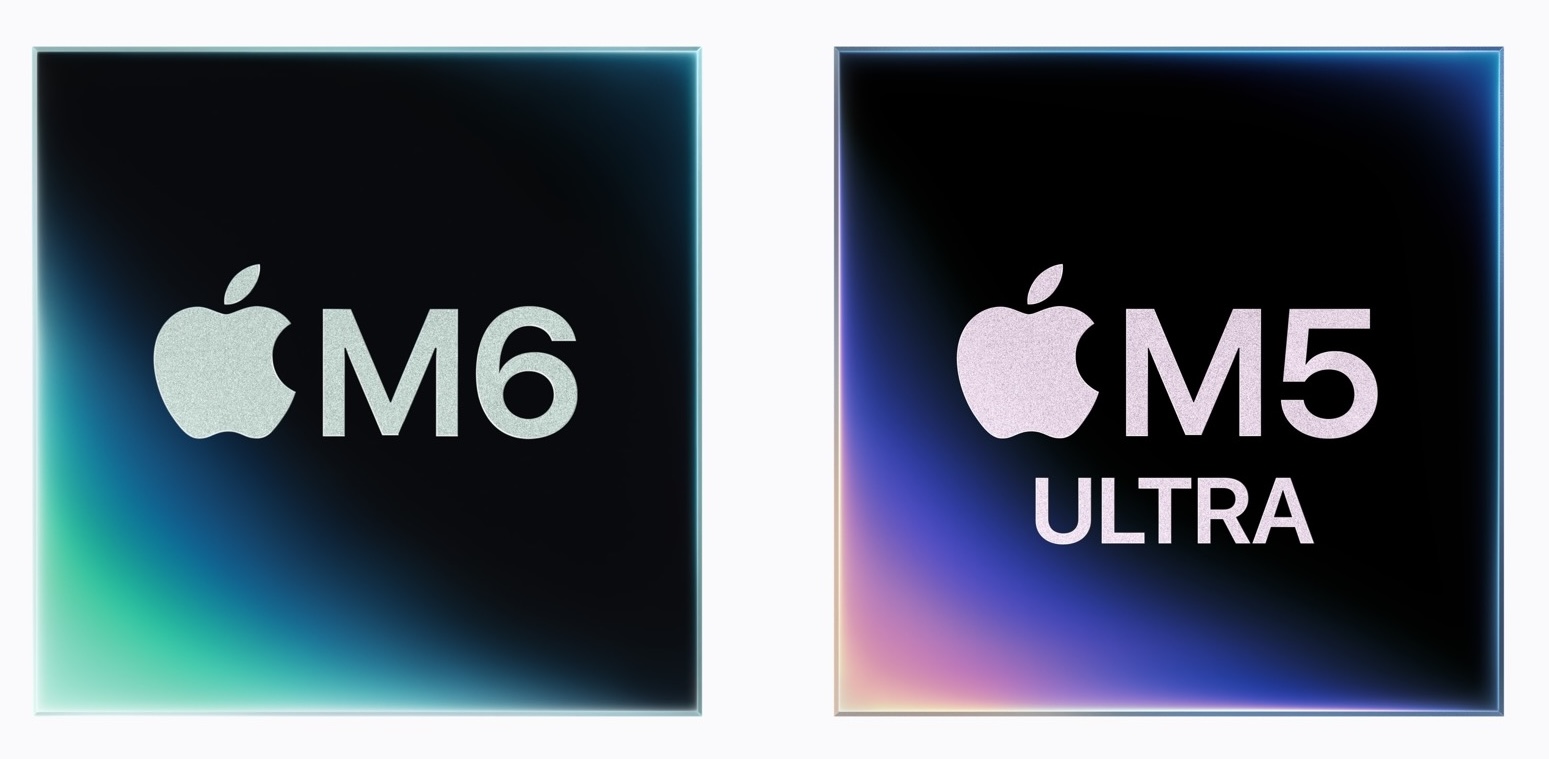
To understand the capability of these new desktops, one must examine the silicon that powers them. Apple’s dual-track release introduces two distinct generations of chip design simultaneously: the refinement of the M5 family and the architectural premiere of the M6 generation.
+-----------------------------------------------------------------------------+
|                          APPLE SILICON COMPARISON                           |
+----------------------+-----------------------------+------------------------+
| Feature              | M6 (Mac mini Base)          | M5 Ultra (Mac Studio)  |
+----------------------+-----------------------------+------------------------+
| Process Node         | 2nm (TSMC N2)               | 3nm Enhanced           |
| CPU Cores            | 12-Core                     | Up to 36-Core          |
| GPU Cores            | 12-Core (Neural Accel.)     | Up to 80-Core          |
| Neural Engine        | Dual 16-Core                | Next-Gen Ultra NE      |
| Max Unified Memory   | Configuration Dependent     | Up to 512GB            |
| Memory Bandwidth     | Standard Bus                | 1.2 TB/s               |
| Architecture         | Single-Die                  | Quad-Die Interconnect  |
+----------------------+-----------------------------+------------------------+
The M5 Ultra: A Quad-Die Masterpiece
For the Mac Studio, Apple skipped the M4 generation entirely. The newly introduced M5 Ultra represents a massive engineering achievement, utilizing Apple’s first commercial quad-die interconnect design.
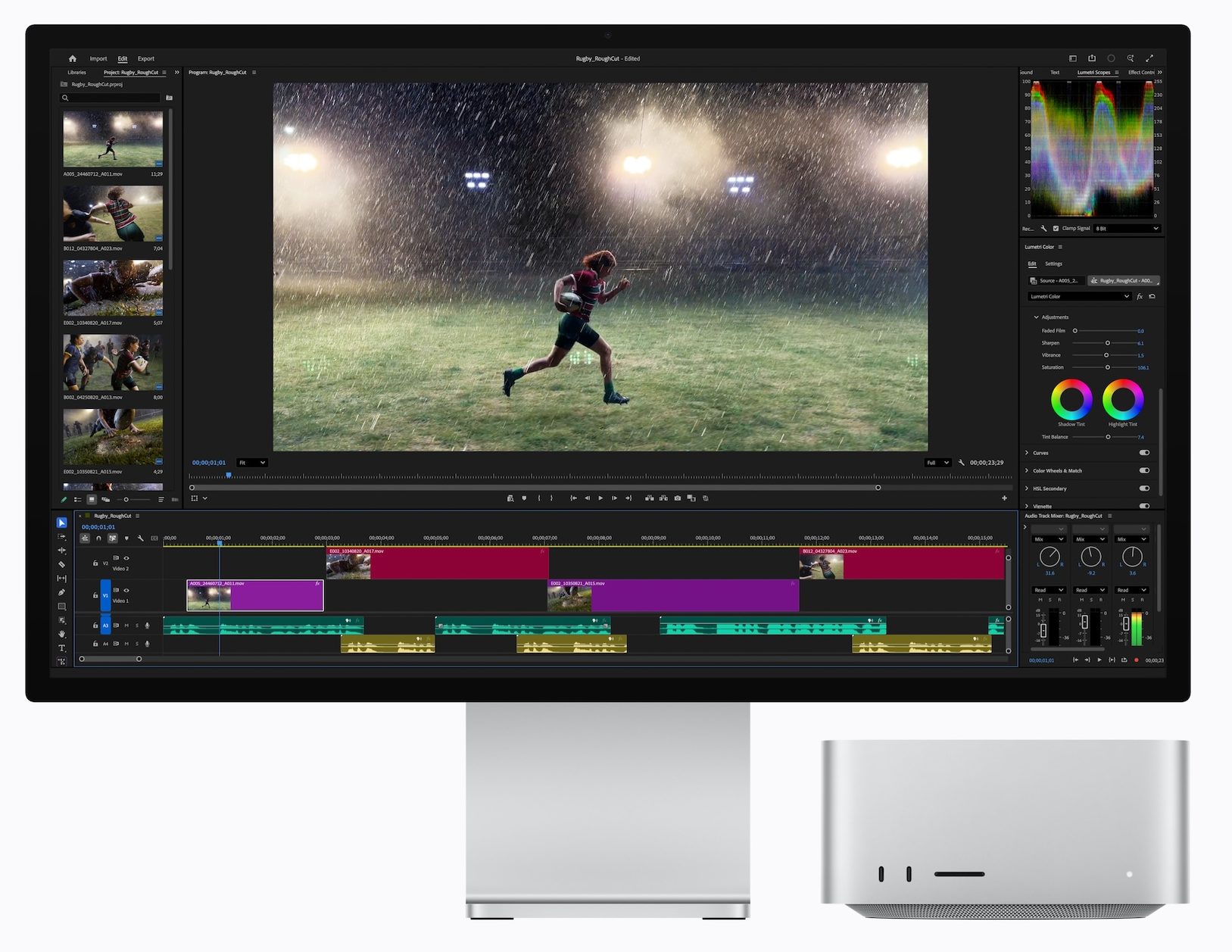
By linking four individual silicon dies with an ultra-low latency, high-bandwidth fabric, the M5 Ultra achieves:
- A massive CPU core count of up to 36 cores.
- A monstrous GPU configuration topping out at 80 cores.
- An unprecedented 1.2 TB/s of unified memory bandwidth, allowing the system to pool up to 512GB of unified memory.
This ultra-fast interconnect ensures that the entire system views the quad-die matrix as a single, cohesive processor, eliminating the latency penalties typically associated with multi-socket or multi-chip module (MCM) designs on traditional x86 platforms.
The M6: Apple’s First 2nm Lithography
While the Mac Studio pushes the boundaries of multi-die scaling, the new Mac mini serves as the launchpad for Apple’s next-generation lithography: the M6 chip. Built on a cutting-edge 2nm manufacturing process, the M6 packing density allows Apple to squeeze extraordinary performance out of a highly thermal-efficient, single-die form factor.
The M6 architecture features:
- A 12-core CPU split between high-performance and high-efficiency cores.
- A 12-core GPU equipped with hardware-accelerated ray tracing and dedicated Neural Accelerators.
- A Dual 16-core Neural Engine designed specifically to process localized LLMs (Large Language Models) with minimal power draw.
For users seeking intermediate power, Apple also offers the Mac mini configured with the M5 Pro chip. This option bridges the gap by delivering elevated GPU core counts and advanced I/O capabilities, such as native Thunderbolt 5 support, which remains absent on the standard M6 model.
Supporting Context & Metrics: Hardware Specs and the Global RAM Crisis
The rollout of these systems comes at a complex economic juncture for the semiconductor industry. While the technical achievements of the M5 and M6 platforms are undeniable, they arrive alongside rising hardware costs driven by a global supply crunch in high-performance memory.
The Impact of the AI RAM Crisis
The explosive demand for enterprise AI hardware has triggered what industry analysts refer to as the "AI Rampocalypse." Enterprise server farms and hyperscalers are consuming massive volumes of high-density DRAM (including HBM and LPDDR5X) to train cloud-based models. This has led to severe supply constraints and unprecedented price increases for high-performance memory components.
Apple has not been immune to these macroeconomic forces. To maintain its signature Unified Memory Architecture (UMA)—which requires high-grade, low-latency DRAM packages soldered directly to the silicon substrate—Apple has adjusted its pricing structure across its entire desktop portfolio:
- The M5 Max Mac Studio starts at approximately $3,800 for a configuration featuring a 40-core GPU, 64GB of unified memory, and a 1TB SSD. The entry-level variant ships with a base configuration of 36GB of RAM.
- The M5 Ultra Mac Studio commands a premium starting price of approximately $5,500. Crucially, Apple has addressed professional feedback by equipping the base M5 Ultra with a generous 96GB of unified memory, making it ready for high-end video production and local AI deployment right out of the box.
Professional I/O and the Introduction of Genlock over USB-C
Beyond computational performance, Apple has significantly overhauled the connectivity suites of both machines to accommodate modern professional workflows:
+-----------------------------------------------------------------------------+
|                         CONNECTIVITY & I/O UPGRADES                         |
+----------------------+-----------------------------+------------------------+
| Feature              | Mac Studio (M5 Max/Ultra)   | Mac mini (M6 / M5 Pro) |
+----------------------+-----------------------------+------------------------+
| Wireless             | Wi-Fi 7 / Bluetooth 6       | Model Dependent        |
| Storage Interface    | PCIe Gen 6 SSDs             | PCIe Gen 4/5 SSDs      |
| Thunderbolt Port     | Thunderbolt 5               | TB4 (M6) / TB5 (M5 Pro)|
| Hardware Genlock     | Yes (via USB-C)             | Yes (M5 Pro only)      |
+----------------------+-----------------------------+------------------------+- Thunderbolt 5 Integration: Available on the M5 Max/Ultra Mac Studio and the M5 Pro Mac mini, Thunderbolt 5 offers bi-directional bandwidth of up to 80 Gbps, with a Bandwidth Boost capability of up to 120 Gbps for high-resolution multi-display setups.
- PCIe Gen 6 Storage: The Mac Studio integrates ultra-fast PCIe Gen 6 solid-state storage, doubling the read/write speeds of the previous generation to streamline workflows involving uncompressed 8K and 12K video footage.
- Hardware Genlock over USB-C: In a surprise addition for broadcast engineers and virtual production studios, both the Mac Studio and the M5 Pro Mac mini support hardware-level genlock synchronization over USB-C. This enables frame-accurate synchronization between connected professional display monitors and external camera systems, such as the iPhone 17 Pro, eliminating phase offsets and rolling-shutter artifacts in multi-camera capture environments.
Official Statements & Market Positioning
Apple’s marketing campaign for this launch marks a distinct shift in how the company positions its high-end silicon. While past product cycles focused heavily on creative benchmarks like ProRes video transcoding and 3D rendering speeds, the M5 and M6 launch is centered squarely on localized, "agentic" artificial intelligence.
According to Apple’s product documentation, the M5 Ultra delivers up to 4.3x faster AI performance and 1.8x faster graphics rendering than its predecessor. Rather than routing complex AI queries to third-party cloud servers, Apple is positioning these desktops as self-contained AI powerhouses.
                                  +-----------------------+
                                  |   Local M5/M6 Mac     |
                                  +-----------+-----------+
                                              |
                     +------------------------+------------------------+
                     |                                                 |
                     v                                                 v
        +-------------------------+                       +-------------------------+
        |   Zero Token Costs      |                       |  Zero Network Latency   |
        |  No subscription or API |                       |   Instant offline execution|
        |  fees for local LLMs    |                       |   of multi-step agents  |
        +-------------------------+                       +-------------------------+
By running large language models (LLMs) and autonomous agents locally, enterprise clients can operate with:
- Absolute Data Privacy: Sensitive proprietary code, financial records, and creative assets never leave the physical workstation.
- Zero Token Costs: Organizations can run continuous, complex agentic workflows without incurring recurring API call fees from cloud providers.
- Zero Network Latency: Real-time agent execution operates independent of external network speeds or server downtime.
For creative professionals, Apple emphasizes that the massive memory bandwidth of the M5 Ultra (1.2 TB/s) and the specialized Neural Accelerators of the M6 are not just for text-based models. These hardware components translate directly into real-time tracking in DaVinci Resolve, automated rotoscoping in Adobe Premiere, and instant, hardware-accelerated spatial audio rendering in Logic Pro.
Future Outlook: Implications for the Tech Landscape
The unexpected arrival of the M5 Ultra and M6 desktops signals a highly aggressive cadence for Apple Silicon. By skipping the M4 Ultra entirely, Apple has demonstrated its willingness to disrupt its own release cycles to maintain a commanding lead in hardware capability.
For the creative industry, the longevity of these machines remains a major selling point. While the initial capital expenditure for a well-configured M5 Ultra Mac Studio is high, the integration of Wi-Fi 7, Bluetooth 6, Thunderbolt 5, and expandable local AI capabilities ensures these workstations will remain highly viable assets for years to come.
Furthermore, the introduction of the M6 on a 2nm node indicates that TSMC’s next-generation fabrication processes are maturing faster than many industry observers anticipated. This development will undoubtedly put pressure on competitors like Intel, AMD, and Qualcomm, who are currently racing to field their own dedicated AI-PC processors.
As developers continue to transition away from cloud-dependent APIs toward localized "agentic" workflows, Apple’s high-bandwidth, unified memory architecture stands out as a formidable competitive advantage. With shipping set to begin on September 22, the industry will soon see how these new machines perform in real-world professional environments. If Apple’s performance claims hold true, the M5 Ultra and M6 platforms will set a new benchmark for what professional creators and AI developers expect from their desktop hardware.