








Executive Overview
At the 2026 Black Hat USA conference, software supply chain security pioneer RapidFort made a landmark announcement that fundamentally redefines how organizations protect open-source software (OSS). The company officially launched the RapidFort Runtime platform, extending its industry-leading threat elimination capabilities from development pipelines directly into live production environments.
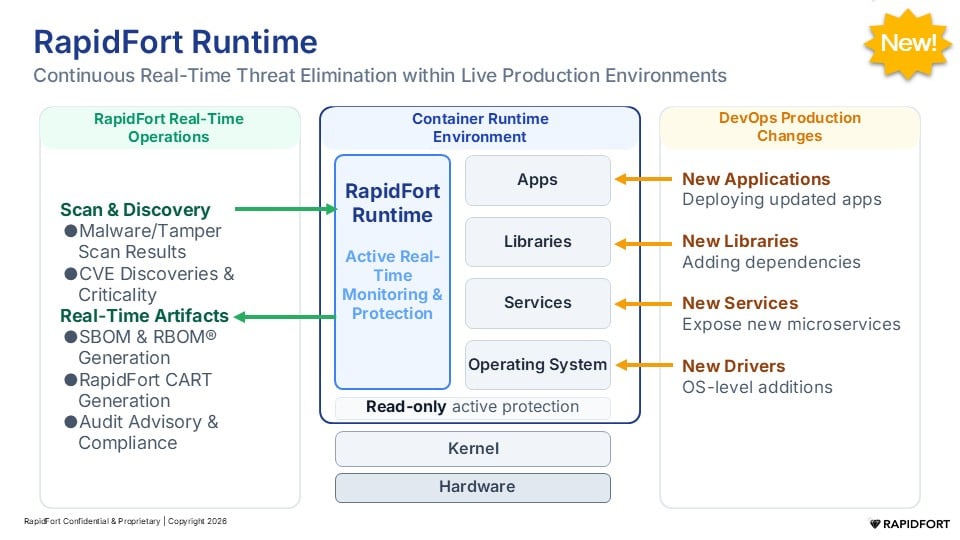
For years, DevSecOps teams have struggled with a persistent vulnerability gap: while code can be meticulously scanned, minimized, and patched during the continuous integration/continuous delivery (CI/CD) phase, once containers and applications are deployed into production, visibility often drops, and runtime drift introduces unmonitored risk. RapidFort’s latest platform bridges this chasm. By introducing a continuous, read-only monitoring layer driven by a novel Runtime Bill of Materials (RBOM), the platform detects unauthorized system modifications, maps deep system behavior, and proactively assesses the real-world blast radius of newly disclosed Common Vulnerabilities and Exposures (CVEs).
This release arrives at a precarious inflection point in cybersecurity history. Driven by the proliferation of artificial intelligence (AI), cybercriminals are now capable of weaponizing newly discovered vulnerabilities within hours of public disclosure. Simultaneously, AI-driven automation is unearthing thousands of legacy flaws faster than resource-constrained DevOps and security teams can manually apply patches. By combining automated open-source curation, binary-level analysis via a strategic integration with ReversingLabs, and real-time production enforcement, RapidFort is offering an operational lifeline to organizations locked in an asymmetric race against time.
Detailed Chronology: From Build-Time Security to Live Production Defense
The evolution of RapidFort’s product strategy mirrors the changing architecture of modern cloud-native applications. To understand the significance of the RapidFort Runtime platform, it is necessary to examine how application security has shifted from static code analysis to dynamic, runtime visibility.
The Traditional Blind Spot in Production
Historically, software supply chain security has been heavily front-loaded. Enterprises utilized Software Bill of Materials (SBOM) generators, static application security testing (SAST), and software composition analysis (SCA) tools to evaluate codebases before they were packaged into container images.
However, once an image was deployed to a Kubernetes cluster or virtualized production environment, it entered a operational "black box." Security teams lost granular visibility into how software packages behaved in the wild. If a critical CVE was announced for an open-source library running inside a production container, security analysts had to scramble:
- Determine if the vulnerable library was actually loaded into memory or reachable.
- Coordinate with DevOps teams to rebuild the container image.
- Schedule maintenance windows to deploy the updated image without disrupting business continuity.
This manual, reactive loop routinely took weeks or months—an eternity in an era where exploit development cycles have compressed into a matter of hours.
The Black Hat USA 2026 Unveiling
Recognizing this operational bottleneck, RapidFort leveraged the global stage of Black Hat USA to unveil its end-to-end continuous threat elimination model. Michael Wood, Chief Marketing Officer for RapidFort, articulated the core vision behind the launch during the conference sessions: bridging the gap between curated open-source software packages and live production environments.
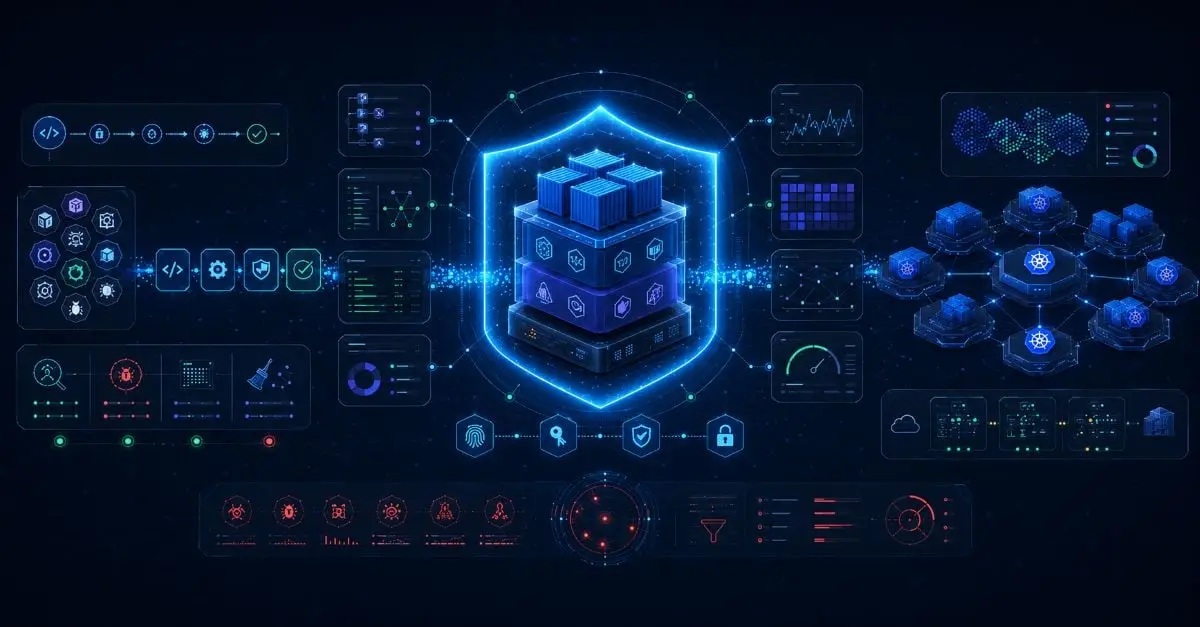
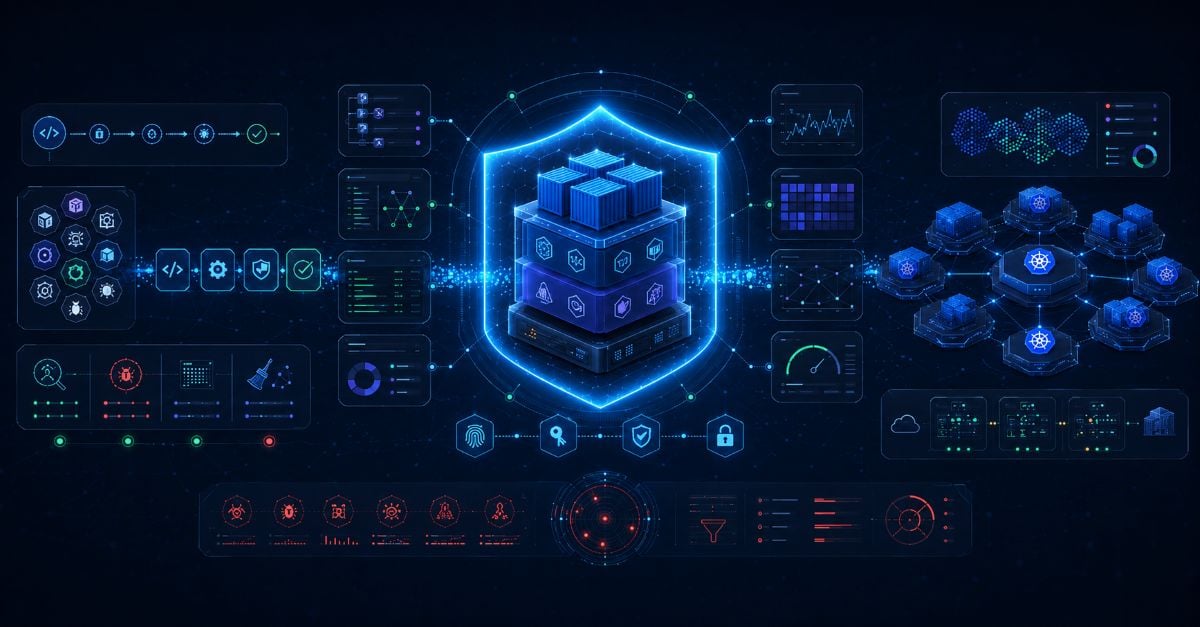
At the heart of the RapidFort Runtime platform is the introduction of the Runtime Bill of Materials (RBOM). Unlike a traditional static SBOM—which merely lists what files are supposed to be inside a container image—an RBOM provides a dynamic, living inventory of what resources are actively interacting with the system at runtime.
The mechanism operates through deep instrumentation integrated directly into CI/CD pipelines. Using lightweight APIs, the platform maps critical system metrics:
- System Calls (syscalls): Monitoring how applications interact with the underlying operating system kernel.
- Network Utilization: Tracking unexpected outbound or inbound socket connections that could indicate lateral movement or data exfiltration.
- Memory Usage: Observing memory allocations to spot memory-corruption anomalies.
- Process Execution: Identifying unauthorized binaries spawned within the container boundary.
Operating in a continuous read-only mode, the platform tracks state changes in real time. As production environments update, scale, or shift, RapidFort Runtime surfaces actionable mitigation recommendations, allowing DevSecOps teams to harden their environments dynamically rather than relying on reactive fire-fighting.
Supporting Context & Metrics: The AI-Driven Threat Landscape
To fully grasp why RapidFort’s expansion into runtime security is timely, one must analyze the broader macroeconomic and technological forces pressuring modern engineering organizations.
The AI Vulnerability Explosion
The software ecosystem is facing an unprecedented volume of risk. For decades, legacy software contained latent bugs and architectural flaws that went undiscovered simply because human security researchers lacked the time and resources to audit every line of code.
Today, malicious actors and enterprise security teams alike are deploying generative AI and machine learning models to scour legacy codebases. This automation has triggered a seismic shift: vulnerabilities are being discovered at a scale of thousands per week. Unfortunately, enterprise development teams do not scale at a corresponding rate. Organizations are drowning in vulnerability alerts, forcing security teams into a state of chronic triage where true critical risks are frequently obscured by waves of false positives and low-priority CVEs.
+-------------------------------------------------------------------+
                   THE COMPRESSED EXPLOIT TIMELINE
+-------------------------------------------------------------------+
  [ Vulnerability Discovered ] ---------> [ AI-Driven Exploit Built ]
             (Day 0)                               (Hours Later)
                                                        |
                                                        v
  [ Enterprise Patch Applied ] <--------- [ Production Attack Occurs ]
        (Weeks / Months)                    (Immediate Threat)
+-------------------------------------------------------------------+
Compounding this issue is the dependency on open-source software (OSS). Modern applications are rarely written from scratch; up to 90% of a typical commercial application is composed of open-source components, libraries, and frameworks. When a vulnerability is found in an open-source project, enterprise developers cannot fix it themselves. They are entirely dependent on project maintainers to write, test, and release a patch. This structural dependency creates a dangerous lag time during which production systems remain exposed.
Shrinking the Attack Surface: Unused Files and Binaries
Beyond patching known CVEs, RapidFort’s platform addresses an often-overlooked contributor to cloud risk: application bloat. Standard container images often bundle entire operating system distributions, complete with development tools, shell utilities, and shared libraries that an application never actually executes.
These unused files serve a single purpose from an attacker’s perspective: they widen the attack surface. If a threat actor achieves remote code execution within a container, the presence of pre-installed administrative utilities (such as curl, wget, or package managers) makes it exponentially easier for them to download secondary payloads, escalate privileges, and pivot across the network.
RapidFort Runtime combats this by identifying and stripping away unused files and binaries within applications. By minimizing the attack surface down to the exact components required for execution, the platform drastically reduces the blast radius of any potential security breach. Furthermore, RapidFort’s integration with ReversingLabs empowers teams to scan binaries for deeply embedded vulnerabilities both before deployment and continuously post-deployment.
Official Statements & Industry Collaboration
RapidFort’s product expansion is supported by strategic industry collaborations aimed at fortifying the open-source supply chain at a structural level.
Leadership Insights
Michael Wood emphasized that the overarching mission of the platform is to simplify the operational burden on DevOps teams while establishing an unyielding security posture.
"The RapidFort Runtime platform makes it possible to now monitor open source software deployed within a container image to detect unauthorized or unexpected changes, and proactively assess the impact any report of a newly discovered CVE might have," said Michael Wood, CMO of RapidFort. "The overall goal is to make it simpler for DevOps teams to run the curated open source software packages that RapidFort already provides in their production environments."
Wood further highlighted the friction inherent in traditional open-source management:
"In general, RapidFort is making a case for deploying a curated set of open source software that have been patched to remove known vulnerabilities in a way that also seamlessly integrates with most existing package managers. That approach enables DevSecOps teams to rapidly update applications that include open source software components at a time when artificial intelligence models are now discovering thousands of vulnerabilities in legacy software. The issue is that most DevOps teams lack the resources required to apply patches to all their legacy applications before many of those vulnerabilities are exploited."
The Akrites Initiative and Linux Foundation Partnership
Recognizing that individual vendor tooling is insufficient to secure the global open-source commons, RapidFort has taken a leading role in community-driven defense. The company is a founding member of the Akrites initiative, launched under the auspices of the Linux Foundation (as highlighted in recent industry reporting).
The Akrites initiative represents a concerted attempt to protect the open-source ecosystem from AI-driven attacks. It establishes a shared Security Incident Response Team (SIRT) and a standardized Coordinated Vulnerability Disclosure (CVD) process. By pooling intelligence and resources across the open-source community, Akrites aims to accelerate the remediation of vulnerabilities in critical open-source projects before malicious actors can weaponize them.
RapidFort’s integration of these community standards into its commercial platform ensures that enterprises utilizing RapidFort-curated packages are directly aligned with elite, open-source threat intelligence networks.
Future Outlook: The Race Against Time in the AI Era
As the cybersecurity industry looks toward the remainder of the decade, the implications of RapidFort’s runtime security expansion are profound.
The traditional paradigm of "shift left"—pushing security checks earlier into the development lifecycle—has proven necessary, but it is no longer sufficient. Security cannot stop at the moment of deployment. Because threat actors have weaponized automation, reducing the window of exploitation from weeks to mere hours, enterprise security architectures must embrace continuous validation and automated threat elimination across the entire software lifecycle.
What This Means for DevSecOps Teams
For engineering leaders, CISOs, and DevOps practitioners, platforms like RapidFort Runtime signal a shift toward autonomic security operations. Moving forward, the expectation is that production environments should be self-monitoring, self-hardening, and natively resilient against supply chain drift.
Key operational trends expected to accelerate in the wake of this announcement include:
- Widespread Adoption of RBOMs: Just as SBOMs became mandatory for compliance and procurement, Runtime Bill of Materials will likely become standard operating procedure for monitoring production container integrity.
- Ephemeral Production Hardening: Automated stripping of unused container binaries will become automated standard practice, severely limiting post-exploitation tactics such as living-off-the-land techniques.
- Ecosystem-Wide Collaboration: Participation in initiatives like the Linux Foundation’s Akrites will transition from a nice-to-have community contribution to an essential enterprise risk-management strategy.
Conclusion
RapidFort’s announcement at Black Hat USA is more than a routine product launch; it is a direct response to the existential pressures facing modern software engineering. By extending continuous threat elimination into live production environments, RapidFort is helping organizations reclaim the initiative in an era where AI-driven attacks threaten to overwhelm traditional defense models. For DevSecOps teams locked in a relentless race against time, runtime visibility and automated hardening are no longer luxuries—they are the baseline requirements for survival in the cloud-native age.