Executive Overview
The modern landscape of digital copyright enforcement is a high-stakes, multi-jurisdictional battleground where domain registrars, hosting providers, search engines, and national regulatory bodies intersect. Few cases illustrate this complex dynamic better than the recent saga surrounding Series.ly, once one of Spain’s most infamous and heavily trafficked pirate link hubs.
Originally shuttered and embroiled in high-profile criminal investigations in the mid-2010s—proceedings that ultimately culminated in the acquittal of its original administrators—the Series.ly domain experienced a resurrection. In 2021, a new team of operators acquired the domain at auction, explicitly distancing themselves from the site’s turbulent past. Reimagined as a login-walled community link aggregator, the new iteration of Series.ly quietly amassed nearly two million monthly visits, with roughly 90% of its traffic originating from Spain.
However, modern rightsholders and anti-piracy watchdogs remain vigilant. The site’s rapid resurgence caught the attention of EGEDA, the prominent Spanish audiovisual producers’ rights management organization. Seeking a swift and definitive takedown, EGEDA filed a formal complaint with Spain’s Intellectual Property Commission (Sección Segunda de la Comisión de Propiedad Intelectual), operating under the Ministry of Culture.
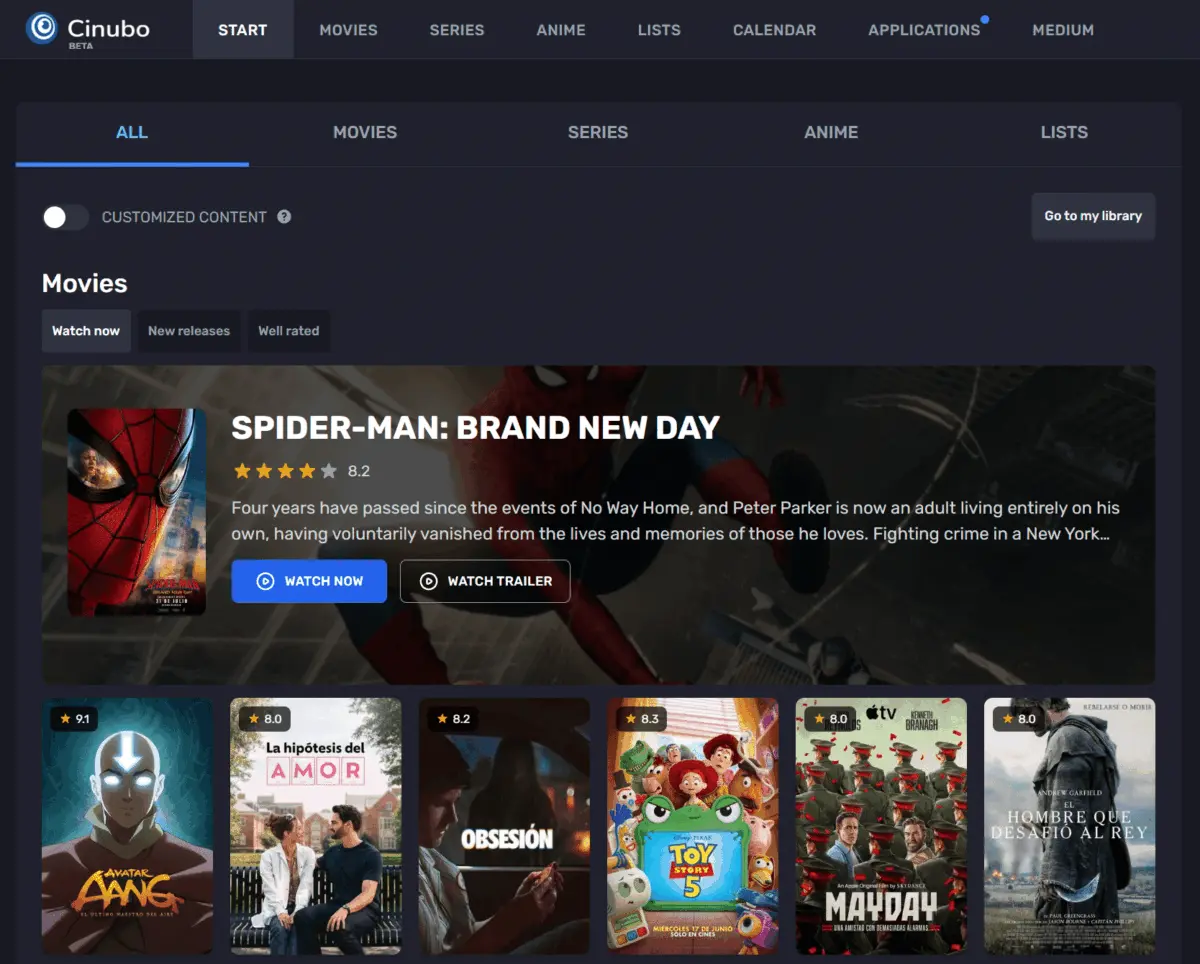
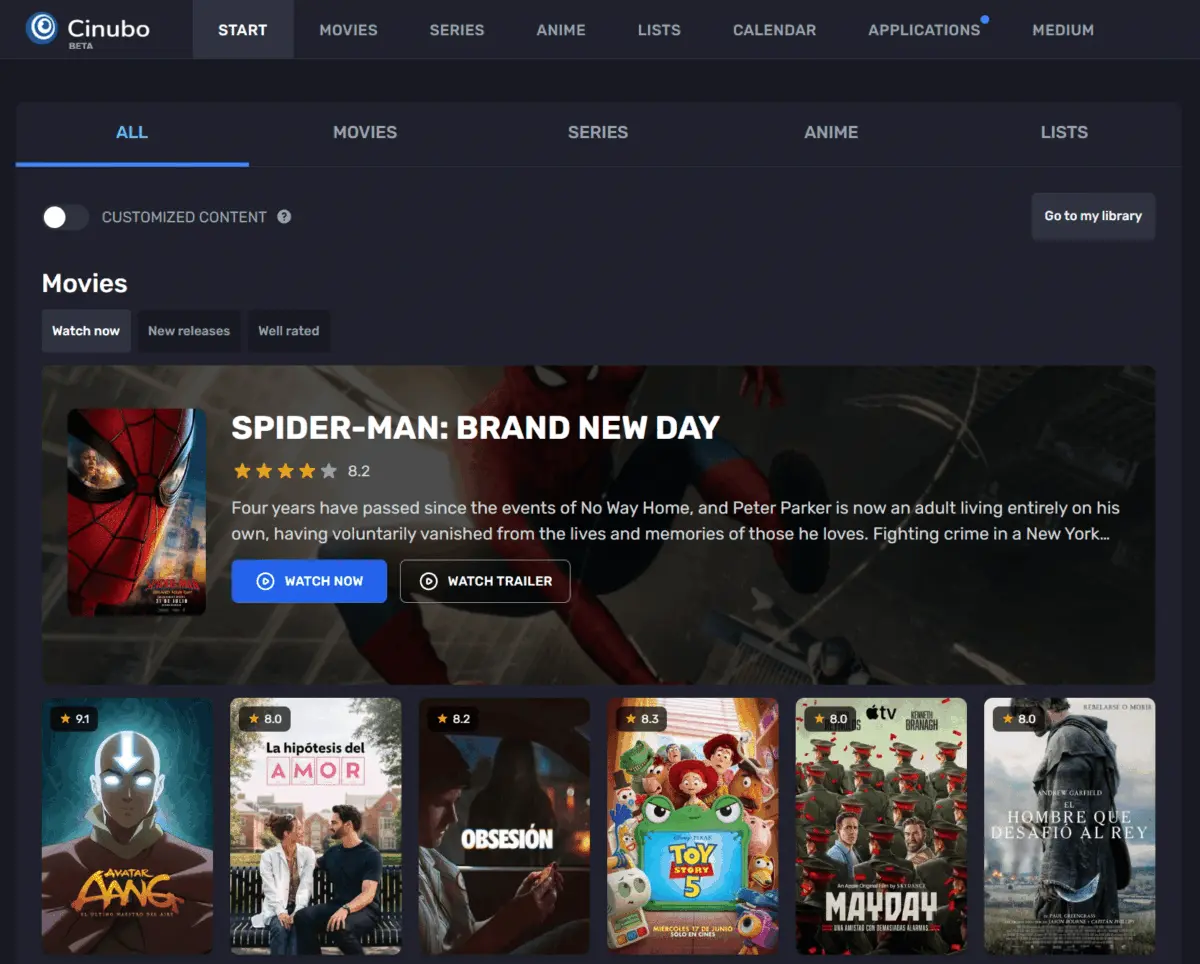
What followed was a textbook exercise in modern administrative site-blocking. Armed with investigative findings, court-approved enforcement mechanisms, and international registrar compliance, Spanish authorities succeeded in temporarily seizing the iconic domain. Yet, rather than fading quietly into digital obscurity, the operators behind Series.ly orchestrated a nimble pivot—rebranding their efforts under a new banner, Cinubo, before ultimately negotiating a return of the original domain strictly as an archival and historical ledger. This comprehensive report breaks down the timeline, the mechanics of the takedown, the legal justifications, and the broader implications for international domain governance and digital piracy.

Detailed Chronology: From Auction Block to Administrative Takedown
1. The Resurrection and Rise of the New Series.ly
To understand the recent regulatory crackdown, one must first look at the site’s transition of power. The original Series.ly operation famously stripped away its controversial streaming and downloading links in late 2014, bowing to mounting legal pressure. Years later, in 2021, the coveted domain name was put up for auction.
A new administrative team purchased the domain, maintaining that they held no operational or legal ties to the individuals who ran the original pirate venture. Operating behind a mandatory login wall, the resurrected Series.ly quickly gained traction. By early 2023, the platform was pulling in nearly two million monthly visits. While the site did not directly host video files on its own infrastructure, it functioned as a community-driven index where registered users could share and discover links to third-party streaming and download providers.
2. The EGEDA Complaint and Regulatory Investigation
Series.ly’s sudden re-emergence on the traffic charts did not go unnoticed. In May, EGEDA initiated formal legal maneuvers by lodging a complaint with the Second Section of Spain’s Intellectual Property Commission.
The administrative machinery moved quickly. Commission investigators conducted a randomized sampling of the 110 specific titles flagged in EGEDA’s complaint. Out of a test sample of 42 titles, investigators successfully streamed or downloaded 35 directly via Series.ly links.

In July, the Commission issued an administrative warning ordering Series.ly to scrub the infringing content. According to regulatory filings, the site’s operators never formally responded to the directive—a misstep attributed partly to misrouted administrative notices. The site’s listed contact emails differed from the address where the Commission’s communications were delivered, leaving the operators largely in the dark until enforcement measures were already underway.
3. Unleashing the Intermediaries: Google, ISPs, and Registrars
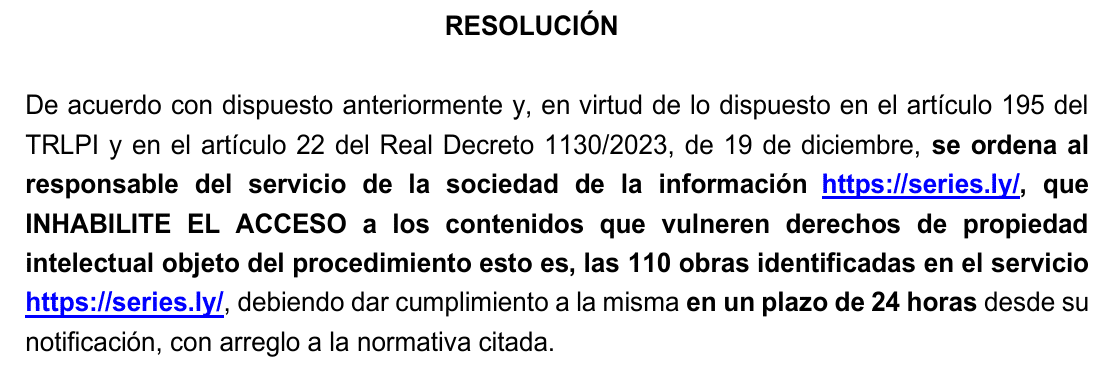
Lacking a direct response from the platform, the Intellectual Property Commission escalated its approach at the end of July by sanctioning a comprehensive array of anti-piracy countermeasures. Moving beyond simple content removal, the resolution targeted the entire ecosystem of third-party intermediaries supporting the domain:
- Search Engine De-indexing: Tech giants Google and Bing were formally instructed to scrub Series.ly from their search results, effectively cutting off the site’s primary discovery pipeline.
- ISP Domain Blocking: Spanish internet service providers (ISPs) controlling a market share greater than 1% were mandated to block the
series.lydomain name. - Government Redirection: Blocked users attempting to access the site were automatically redirected to an official Spanish government landing page. This page explicitly informed visitors that the domain had been restricted “for having illegally facilitated access to content protected by intellectual property rights.”
- Infrastructure Targeting: The resolution formally listed major global infrastructure players, including Cloudflare, Ukrainian hosting provider Virtual Systems (VSys Host—whose Kyiv data centers were concurrently impacted by regional conflict), and Series.ly’s domain registrar, the Libyan Spider Network.
Crucially, under Spanish administrative law, these sweeping measures required judicial authorization before they could be legally enforced. On September 28, a judge at the Central Court of First Instance in Madrid reviewed the case, concluded that the proposed measures were entirely proportionate, and officially approved the enforcement order.
4. The Libyan Registrar Intervenes
Barely a week after receiving judicial sign-off, the enforcement cascade triggered its first major domino. On the backend, Libyan registrar Libyan Spider stepped in to execute the court’s mandate.
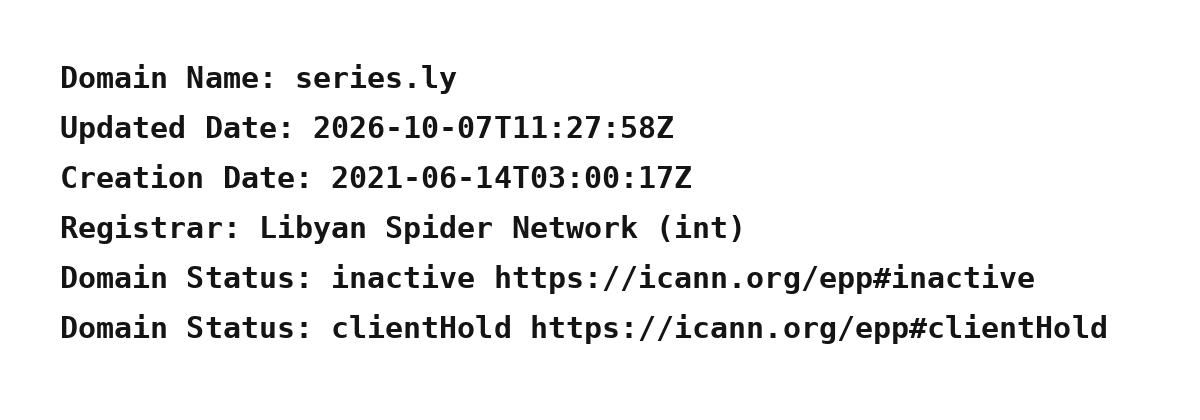
WHOIS registry data confirmed that series.ly had been shifted to a clientHold status—an administrative designation utilized by domain registrars to yank a domain entirely out of the active .ly zone root servers. Consequently, the domain stopped resolving globally.
When questioned by researchers, the Series.ly operators revealed that they received notice of the action through the digital auction house that had originally sold them the domain, which also acts as a local reseller for Libyan Spider. The explanation given to the operators was unambiguous: a Spanish copyright resolution and a corresponding judicial order necessitated the immediate suspension of the domain.
5. The Birth of Cinubo and the Nevis-Based Defense
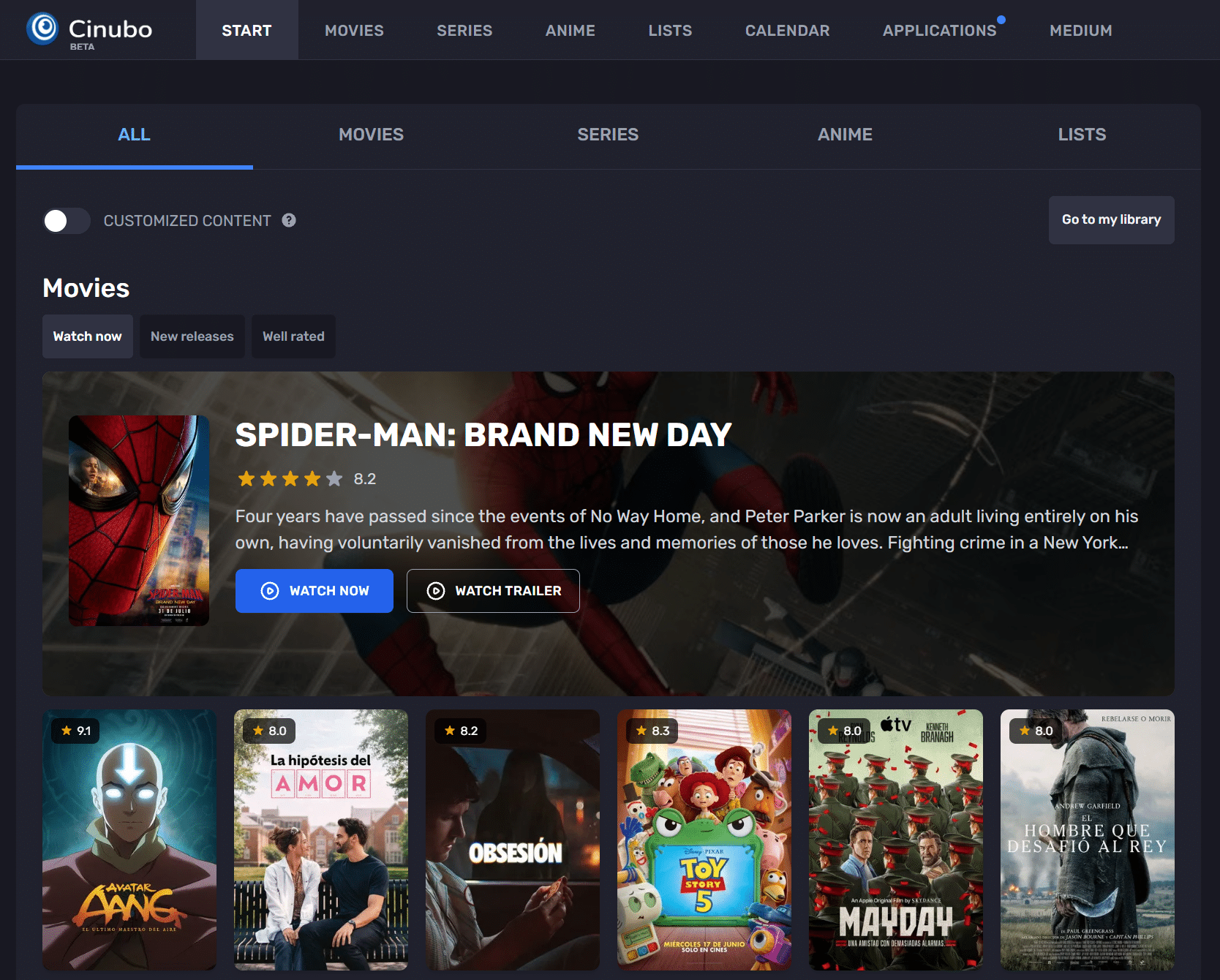
Faced with the imminent neutering of their primary web property, the team behind Series.ly did not remain idle. Almost immediately following the domain suspension, a nearly identical platform operating under the brand Cinubo surfaced on the web. Simultaneously, the community management channels for Series.ly—including its official Telegram and Discord servers—were rapidly rebranded to reflect the Cinubo moniker.
Despite the swift pivot, the operators maintained a defiant posture regarding the legal reach of the Spanish authorities. The corporate entity backing the project is legally domiciled in Nevis, a Caribbean island jurisdiction known for privacy and corporate shielding.
In statements to industry press, the operators questioned the extraterritorial overreach of the Spanish Commission:
"We question whether a procedure handled in Spain justifies suspending our domain worldwide, which also affects email and services that have nothing to do with the works in question."
Furthermore, the operators defended their architectural philosophy, noting that Series.ly operated strictly as a non-profit entity that had generated zero revenue since its relaunch. Because the platform did not host video files and relied entirely on community-submitted links, the operators argued that liability should fall squarely on the third-party hosts actually distributing the media files, characterizing the total domain suspension as an inherently disproportionate remedy.
Supporting Context & Metrics: The Anatomy of Modern Site Blocking
The crackdown on Series.ly highlights several evolving trends in global anti-piracy enforcement:
- The Multi-Tiered Intermediary Strategy: Modern copyright enforcement rarely targets anonymous operators directly; instead, it leverages structural intermediaries. By compelling registrars (like Libyan Spider), content delivery networks (Cloudflare), hosting firms, and search engines to act in concert, rightsholders can inflict crippling logistical damage on rogue web properties without ever identifying the individuals behind them.
- Traffic Concentration and Domestic Exposure: Series.ly’s reliance on the Spanish market—where nearly 90% of its two million monthly visitors originated—made it uniquely vulnerable to localized ISP blocks and national regulatory oversight. Had its traffic been globally distributed, localized administrative blocks would have had a negligible impact on its bottom line.
- The Whack-A-Mole Phenomenon: The rapid emergence of Cinubo underscores the resilience of modern linking communities. When an established brand is legally compromised, operators frequently deploy pre-configured backup infrastructure, seamlessly migrating their user base across encrypted communication channels like Telegram and Discord.
Official Statements and Regulatory Documents
The legal validity of the operation rests upon meticulous administrative documentation. Key evidentiary filings from the case have been made publicly accessible for legal and academic analysis:
- The Administrative Resolution: A comprehensive breakdown of the findings by Spain’s Intellectual Property Commission is preserved in the official expediente documentation (PDF Link).
- Judicial Authorization: The formal legal approval handed down by the Central Court of First Instance in Madrid is likewise detailed in court records (PDF Link).
Future Outlook: A Surprising Twist and Ongoing Precedents
The Series.ly narrative took another unexpected turn in October 2026. Weeks after the initial administrative seizure and domain suspension, the registrar quietly lifted the clientHold status, restoring control of the series.ly domain back to its owners.
However, this restoration came with strict operational caveats. The domain was explicitly barred from ever again being utilized to link, index, or direct users toward copyright-infringing content. True to this agreement, visiting series.ly no longer redirects to a streaming portal or a community link-sharing hub. Instead, the domain now functions purely as an archival webpage documenting the complex history of the web address itself.
Key Takeaways for the Future
- Registrar Compliance is Critical: The cooperation of foreign registries—such as the Libyan Spider Network—demonstrates that even domains registered outside of Western jurisdictions are increasingly vulnerable to coordinated international court orders if they serve localized populations.
- The Evolution of Link Sites: Platforms are learning that aggressive link aggregation models operating within clear geographic sightlines of bodies like EGEDA are exceptionally fragile. The pivot to alternative brands like Cinubo demonstrates that while domains can be seized, decentralized communities remain highly adaptable.
- Archival Compromises: The final resolution of the Series.ly domain—transforming a once-notorious pirate link repository into an inert historical archive—provides a novel blueprint for how domain disputes can ultimately settle without permanent forfeiture, provided the underlying operators fully divest from infringing activities.