








Executive Overview
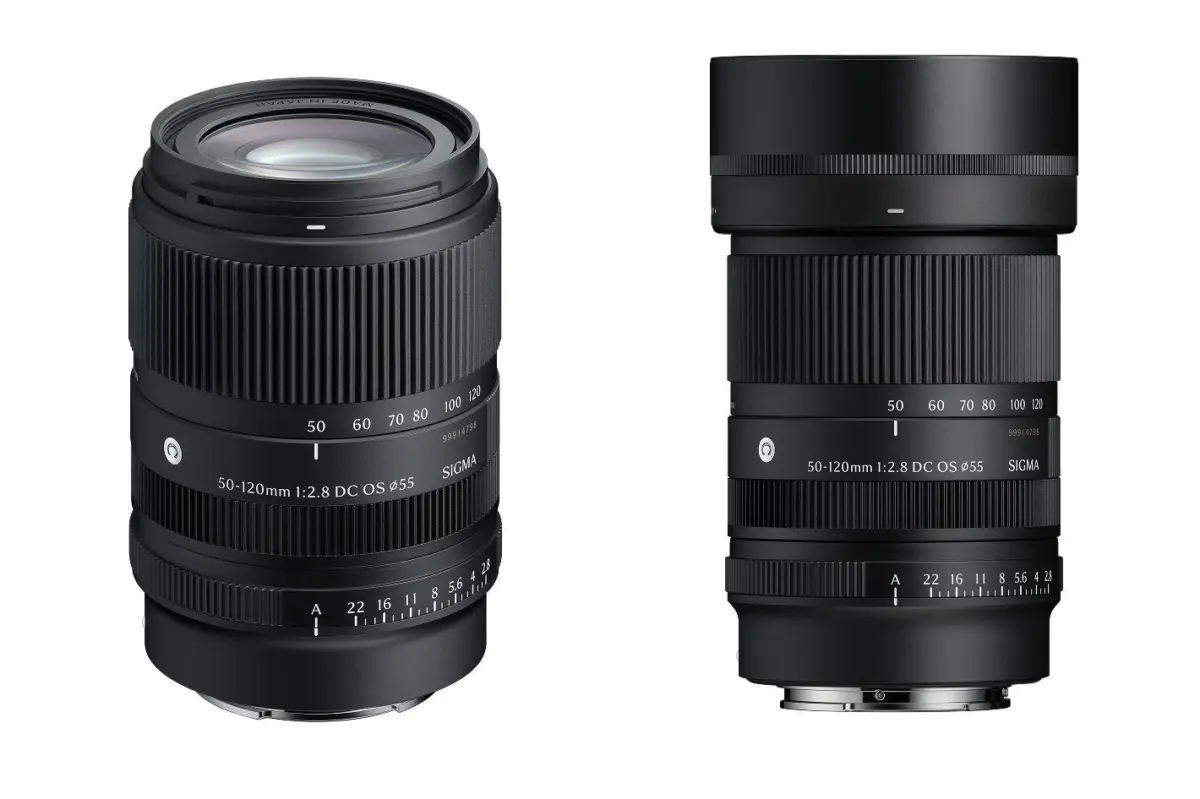
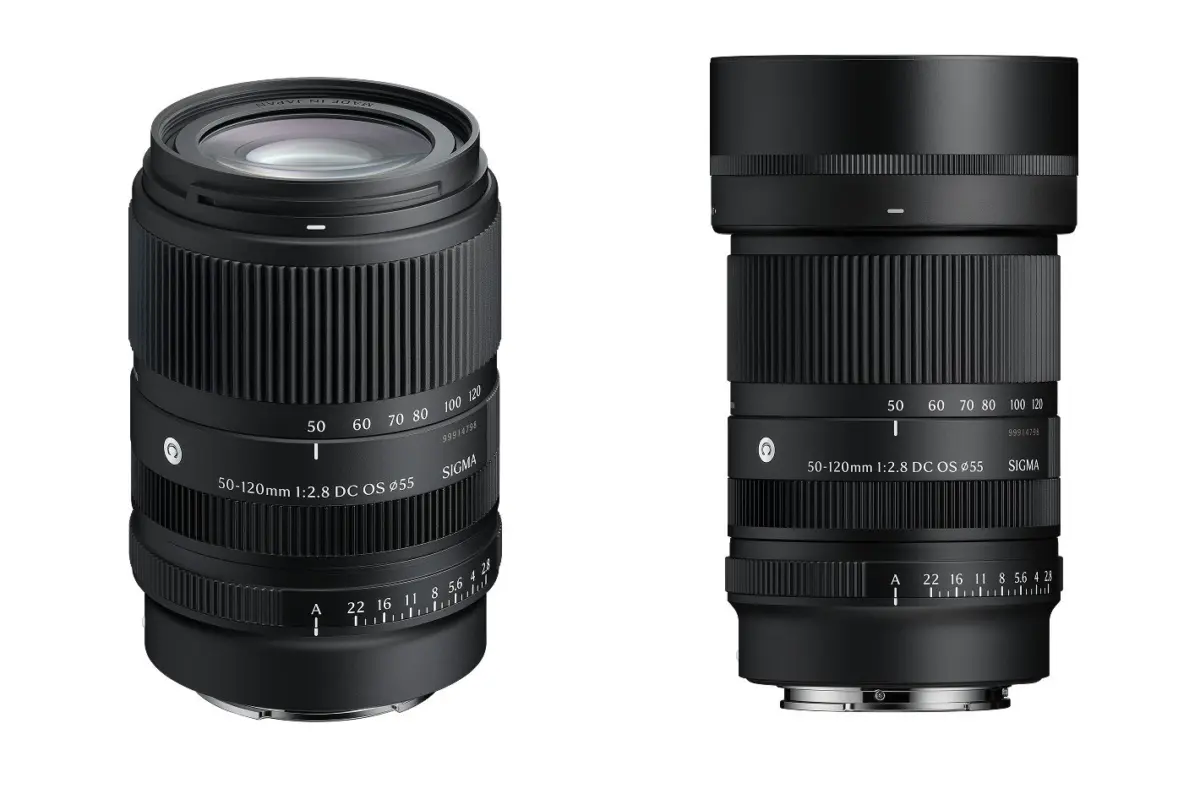
In an era where the boundary between professional cinema production and run-and-gun content creation has thoroughly dissolved, optical manufacturers are facing unprecedented demands. Creators no longer want to choose between the pristine image quality of heavy, full-frame systems and the nimble portability of smaller formats. Responding to this market shift, Sigma Corporation has officially announced the release of the Sigma 50-120mm F2.8 DC OS | Contemporary lens.
Priced at $799 USD and scheduled for release on Thursday, October 22, 2026, this compact telephoto zoom represents a significant milestone for crop-sensor (APS-C) camera systems. Offering an equivalent focal range of approximately 75-180mm in 35mm full-frame terms, the lens is designed to serve as a compact, lightweight alternative to the traditional, bulky 70-200mm F2.8 workhorse.
+-----------------------------------------------------------------------------+
|                         SIGMA 50-120mm F2.8 DC OS | CONTEMPORARY            |
+----------------------+------------------------------------------------------+
| Format               | APS-C (DC)                                           |
| Focal Length         | 50-120mm (75-180mm full-frame equivalent)            |
| Max Aperture         | F2.8 (Constant)                                      |
| Image Stabilization  | Optical Stabilizer (OS) up to 6.5 stops              |
| Autofocus Motor      | High-response Linear Motor                           |
| Special Features     | Dedicated Physical Aperture Ring, Weather-Sealing    |
| Release Date         | Thursday, October 22, 2026                           |
| Price                | $799 USD                                             |
+----------------------+------------------------------------------------------+
The 50-120mm F2.8 is more than just an isolated product launch; it is the final piece of a strategic puzzle. By joining the highly acclaimed 10-18mm F2.8 DC DN and 18-50mm F2.8 DC DN, this telephoto zoom completes Sigma’s high-speed, constant-aperture Contemporary zoom trilogy. For the first time, APS-C operators can carry a complete ultra-wide to telephoto production package (covering 15mm to 180mm equivalent at a constant F2.8) that collectively weighs less than an average ultraportable laptop.
Crucially, the 50-120mm is the first lens in Sigma’s Contemporary APS-C lineup to feature a physical, dedicated aperture ring—a design choice tailored specifically to hybrid videographers and manual-exposure purists.
Detailed Chronology: The Evolution of Sigma’s APS-C Ecosystem
To understand the disruptive potential of the Sigma 50-120mm F2.8, one must look at the historical trajectory of crop-sensor lens development over the past decade.
Phase 1: The DSLR Era and the Fight for Legitimacy
For years, major camera manufacturers treated APS-C formats as an entry-level stepping stone toward full-frame acquisition. Consequently, first-party crop-sensor lenses were frequently slow, variable-aperture "kit" zooms encased in plastic. Sigma broke this mold in the DSLR era with legendary glass like the 18-35mm F1.8 DC HSM Art, proving that smaller sensors deserved premium, high-speed optics.
Phase 2: The Mirrorless Transition and the "Contemporary" Reimagining
With the rise of mirrorless mounts (Sony E, Fujifilm X, L-Mount, and Nikon Z), Sigma pivoted its strategy. The manufacturer introduced the "Contemporary" line, which redefined the balance between optical excellence and physical size.
- The 18-50mm F2.8 DC DN | Contemporary was launched to widespread critical acclaim, offering a standard zoom that fit in the palm of a hand.
- The 10-18mm F2.8 DC DN | Contemporary followed, capturing the ultra-wide market and becoming an instant favorite for vloggers, gimbal operators, and landscape photographers.
Phase 3: Completing the Holy Trinity (Late 2026)
Despite the success of the wide and standard zooms, a glaring gap remained in the telephoto region. Creators needing telephoto reach were forced to adapt heavy full-frame 70-200mm lenses, which offset the weight and size advantages of using an APS-C body.
The development of the 50-120mm F2.8 DC OS was initiated to solve this exact bottleneck. By optimizing the optical path specifically for the smaller image circle of APS-C sensors, Sigma’s engineers spent years refining a telephoto design that maintained a constant F2.8 aperture without the physical bulk associated with full-frame glass. The October 2026 launch represents the culmination of this multi-year roadmap, delivering a highly portable, professional-grade telephoto solution to the market.
Supporting Context & Metrics: Technical Deep Dive
Sigma’s engineering department has packed an array of premium, high-performance features into the compact chassis of the 50-120mm F2.8 DC OS | Contemporary. Below, we analyze the metrics and mechanics that differentiate this lens from its competitors.
                  THE SIGMA F2.8 APS-C TRILOGY WEIGHT COMPARISON

  [Sigma 10-18mm F2.8]    ~260g  ■■■■■
  [Sigma 18-50mm F2.8]    ~290g  ■■■■■■
  [Sigma 50-120mm F2.8]   ~500g  ■■■■■■■■■■
  ------------------------------------------------------------------------
  TOTAL TRIO WEIGHT:      ~1,050g (2.31 lbs)

  *Comparison: A single typical full-frame 70-200mm F2.8 lens weighs between
   1,000g and 1,480g alone.
Optical Stabilization (OS) Performance
Telephoto focal lengths are inherently susceptible to camera shake, which can ruin images and make handheld video footage unusable. Sigma has integrated an advanced Optical Stabilizer algorithm capable of delivering up to 6.5 stops of stabilization at the telephoto end.
This is particularly critical for crop-sensor users, as many compact APS-C camera bodies omit In-Body Image Stabilization (IBIS) to keep manufacturing costs and camera sizes down. The 6.5-stop optical compensation ensures sharp handheld shooting even in low-light environments, such as indoor sports arenas, theater stages, or twilight receptions.
The Aperture Ring: A Contemporary First
While physical aperture rings are common on Sigma’s high-end "Art" series and select "I-series" prime lenses, their absence in the Contemporary zoom line was a frequent point of feedback from the creative community.
The 50-120mm addresses this feedback directly by incorporating a dedicated physical aperture ring. This feature allows filmmakers to pull iris transitions smoothly and enables photographers to adjust exposure instinctively without taking their eyes off the viewfinder.
Linear Motor Autofocus & Video Optimization
For autofocus, the lens utilizes a high-speed linear motor. Unlike traditional stepping motors, linear motors move the internal focusing groups electromagnetically, resulting in:
- Near-silent operation: Essential for capturing clean audio when microphones are mounted directly on the camera hot shoe.
- Instantaneous focus acquisition: Crucial for tracking fast-moving subjects like athletes, pets, or wildlife.
- Minimal focus breathing: Sigma’s optical formula is designed to suppress the shifting of focal length during focus transitions, a feature highly prized by cinematographers executing narrative focus pulls.
Environmental Sealing and Durability
Despite its "Contemporary" classification—which historically favored lightweight materials over rugged builds—the 50-120mm boasts robust weather sealing. The mount, zoom ring, and focus ring feature dust- and splash-resistant gaskets. Furthermore, the front element is treated with a water- and oil-repellent coating, allowing shooters to operate in adverse outdoor conditions without fearing element ingress or permanent smudging.
Official Statements
The strategic positioning of the 50-120mm F2.8 emphasizes a commitment to democratizing high-end optical features for crop-sensor users. Mark Amir-Hamzeh, President of Sigma Corporation of America, highlighted this design philosophy during the product announcement:
"Sigma’s Contemporary line has always emphasized an exceedingly compact form factor and reduced weight without compromising our standard for image quality. The 50-120mm F2.8 meets that benchmark while pushing the line forward in build and handling, including an aperture ring not found on its sister lenses."
Amir-Hamzeh’s statement underscores a pivotal shift in how Sigma views its Contemporary series. The inclusion of a tactile aperture ring and advanced optical stabilization suggests that the boundary between the "Art" (uncompromised quality) and "Contemporary" (compact utility) lines is blurring, with the latter receiving premium, filmmaker-focused upgrades.
Future Outlook: The Mirrorless Landscape in 2026 and Beyond
The release of the Sigma 50-120mm F2.8 DC OS | Contemporary arrives at a fascinating juncture for the global camera market.
The APS-C Resurgence
For a period in the late 2010s, it appeared that full-frame sensors would entirely dominate the enthusiast and professional spaces. However, escalating inflation, travel-oriented lifestyles, and the explosive growth of solo content creators have fueled a massive APS-C renaissance.
Platforms like TikTok, YouTube, and independent documentary filmmaking have created a massive market of users who value mobility above all else. A camera package that is painful to carry is a camera package that gets left at home. By offering an F2.8 trinity that fits in a small shoulder bag, Sigma is capitalizing directly on this shift toward "micro-rigs."
Competitive Analysis
The $799 price point places the Sigma 50-120mm in a highly competitive, yet uniquely advantageous position:
- vs. First-Party Alternatives: First-party options, such as Sony’s or Fujifilm’s premium telephoto zooms, often cost upwards of $1,200 to $1,900. While they offer excellent performance, they are frequently heavier and lack the specific compact optimization of the Sigma.
- vs. Full-Frame Adaptations: Adapting a full-frame 70-200mm F4 or F2.8 lens remains an option, but the user is forced to carry glass designed to project a much larger image circle, resulting in unnecessary weight, unbalanced handling on small camera bodies, and a significantly higher financial investment.
Final Verdict
The Sigma 50-120mm F2.8 DC OS | Contemporary is poised to become an indispensable tool for APS-C shooters. By addressing long-standing user demands—specifically the integration of an aperture ring, robust optical stabilization, and linear autofocus motors—Sigma has not only completed its F2.8 zoom trilogy but has also elevated expectations for what a compact telephoto lens can achieve. When it hits store shelves in late October 2026, it will likely secure its place as a modern classic for event, portrait, and travel shooters worldwide.