








Executive Overview
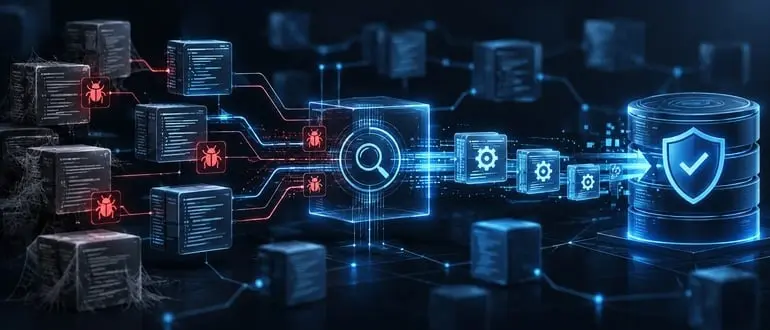
In an alarming indicator of the hidden risks lurking within enterprise software supply chains, tech giants IBM and Red Hat have announced that their joint Lightwell initiative has successfully identified and remediated more than 400 previously unknown security vulnerabilities in Java libraries. Launched earlier this year, the initiative was designed to proactively scan, analyze, and patch legacy open-source software dependencies before malicious actors could weaponize them.
Alongside this milestone, IBM and Red Hat announced the general availability of the Lightwell Clearinghouse, a specialized program that allows IT and security organizations to submit specific open-source dependencies for priority review, verification, and remediation.
While the discovery of 400 zero-day vulnerabilities in a relatively short timeframe is a testament to the efficacy of the Lightwell initiative, it also serves as a stark warning. According to enterprise architecture and security leaders, this figure represents double the number of flaws initially anticipated. Industry experts warn that this is merely the tip of the iceberg. As artificial intelligence (AI) tools become more sophisticated, accessible, and widely adopted by both security researchers and cybercriminals, the velocity and scale at which legacy code vulnerabilities are uncovered—and subsequently exploited—is accelerating exponentially.
This investigative report examines the mechanics of the Lightwell initiative, the broader implications for enterprise DevSecOps pipelines, the economic asymmetries favoring modern threat actors, and the urgent paradigm shift required as application security enters the age of artificial intelligence.
Detailed Chronology and the Genesis of the Lightwell Initiative
The modern enterprise software ecosystem is built upon a towering mountain of open-source dependencies. From foundational operating systems to complex enterprise frameworks, applications routinely rely on thousands of third-party components. While this modular approach accelerates software development, it simultaneously creates a sprawling attack surface. Historically, many of these third-party libraries—particularly older Java archives—have suffered from a lack of systematic auditing, leaving latent security flaws hidden in plain sight for years.
Recognizing this systemic vulnerability across the global IT landscape, IBM and Red Hat pooled their resources earlier this year to launch the Lightwell initiative. The core objective was unambiguous: deploy advanced code analysis and human expertise to unearth zero-day vulnerabilities in critical open-source libraries, remediate the code, and fortify enterprise software pipelines.
The Milestones of Lightwell:
- Early 2023–2024 (Conceptualization & Pilot): IBM and Red Hat engineers begin formulating automated code-scanning frameworks tailored to unearth deeply buried bugs in legacy Java libraries.
- Mid-2024 (Initiative Launch): The Lightwell initiative officially goes live, deploying advanced code-analysis engines to evaluate high-risk open-source dependencies.
- Late 2024 (Clearinghouse General Availability): Following successful pilot phases, the Lightwell Clearinghouse opens its doors to external IT organizations, allowing enterprises to request priority audits for their unique software dependencies.
- Current Status: Over 400 previously unknown vulnerabilities in Java libraries have been identified, remediated, and safely contributed back to upstream open-source projects via responsible disclosure channels.
Unlike closed-source security patches that remain proprietary, the fixes generated through the Lightwell framework are systematically fed back into upstream open-source communities. This ensures that the entire software ecosystem—not just paying enterprise customers—benefits from enhanced security postures, adhering strictly to responsible disclosure protocols.
Supporting Context, Metrics, and the DevSecOps Paradigm Shift
The sheer volume of newly discovered flaws has caught even veteran security practitioners off guard. Ben Bread, a senior principal product manager for Red Hat, revealed that the 400 unknown vulnerabilities uncovered to date represent twice the number that was originally projected.
The Expanding Threat Matrix: Beyond Java
While the initial phase of the Lightwell initiative focused heavily on Java libraries—a staple of enterprise backend systems—Bread warns that DevSecOps teams should brace themselves for similar discoveries across libraries written in other popular programming languages, including Python, C/C++, JavaScript, and Go. Legacy codebases across all languages harbor structural blind spots that traditional, manual code reviews have historically failed to catch.
The Mechanics of Remediation
While IBM and Red Hat have declined to disclose the exact number of enterprise organizations currently leveraging the Lightwell network, the mechanics of the delivery model are clear. Remediated code is distributed via secure, private repositories that integrate seamlessly into existing software build and deployment workflows.
Through the Lightwell Network, IT teams can:
- Access pre-verified, secure patches for otherwise vulnerable open-source dependencies.
- Ingest remediated software directly into existing continuous integration/continuous deployment (CI/CD) pipelines.
- Establish an ongoing, repeatable process for vulnerability management.
According to Bread, the degree of automation embedded within an organization’s DevSecOps pipeline directly correlates with its remediation velocity. Organizations that rely on manual code validation are finding themselves hopelessly outpaced.
The Death of Traditional Patching Cycles
For decades, the standard enterprise cybersecurity playbook relied on monthly or quarterly patching cycles. In the era of AI-driven cyber warfare, this cadence is dangerously obsolete.
"Organizations that today require three months to validate a single code fix are simply not going to be able to keep pace with the vulnerability deluge," Bread noted.
As continuous scanning uncovers a near-constant stream of newly minted issues, DevSecOps teams must transition from episodic patching to continuous patching. This operational transformation requires organizations to place heavy investments in automated test platforms, robust regression testing suites, and intelligent software composition analysis (SCA) tools. Without these automated guardrails, security teams will drown in a sea of alerts and manual validation bottlenecks.
The AI Factor: The Asymmetry of Modern Cyber Warfare
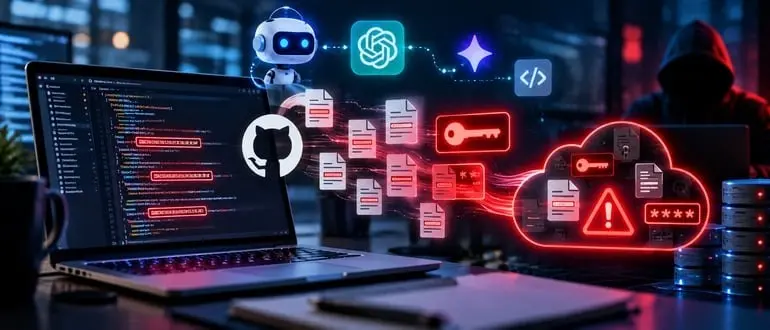
Perhaps the most chilling dimension of the current security landscape is the role that artificial intelligence plays in both defense and offense. While platforms like Lightwell utilize AI and advanced analytics to defend software supply chains, malicious actors are simultaneously weaponizing parallel AI models to compromise them.
Speed and Scale: Exploitation in Hours
In previous eras, discovering a zero-day vulnerability required specialized human expertise, extensive reverse-engineering, and days—if not weeks—of trial and error. Today, cybercriminal syndicates and advanced persistent threat (APT) groups are deploying custom large language models (LLMs) and automated fuzzing frameworks to discover and weaponize vulnerabilities in a matter of hours.
This compression of the attack lifecycle creates a nightmarish scenario for enterprise defenders. If an AI model can scan a public or legacy repository, identify a flaw, and write a functional exploit script before a human security engineer even finishes their morning coffee, traditional defensive measures are rendered virtually useless.
The Economics of Attack vs. Defense
Compounding the technological challenge is a stark economic reality: the cost of discovering a vulnerability has plummeted to as low as $30.
Automated scanning tools and commoditized AI scripts mean that threat actors can probe thousands of enterprise applications for pennies, while defenders must invest millions of dollars in comprehensive security infrastructure, specialized personnel, and continuous auditing. The economics of application security overwhelmingly favor the attacker.
Denial and Complacency in the Enterprise
Despite these sobering realities, Bread points out a persistent and dangerous cultural hurdle: many organizations are still not taking the existential threats posed by AI-driven cyber attacks seriously enough.
A dangerous psychological bias persists within many corporate boardrooms—the assumption that legacy codebases are inherently secure simply because "they have been running smoothly for ten years without an incident."
This illusion of security is shattered only when organizations grant security teams the visibility to preview what modern AI models can uncover. Once executives see firsthand how easily an automated AI agent can fracture their supposedly bulletproof applications, the true scope of enterprise risk finally becomes apparent.
Future Outlook: A Call to Action for Enterprise Leadership
As we look toward the horizon of enterprise software development, the questions facing Chief Information Security Officers (CISOs) and Chief Technology Officers (CTOs) are no longer theoretical.
The security industry has arrived at a definitive tipping point. The findings from the IBM and Red Hat Lightwell initiative demonstrate that our foundational software infrastructure is far more porous than previously understood. When combined with the exponential acceleration of AI-driven threat actor capabilities, the modern enterprise faces a critical juncture.
Key Recommendations for Enterprise Leaders:
- Embrace Continuous Remediation: Abandon outdated monthly or quarterly patching cycles. Modern DevSecOps pipelines must be architected for continuous, automated patch ingestion and deployment.
- Leverage Ecosystem Initiatives: Organizations should actively participate in clearinghouse frameworks—such as the Lightwell Clearinghouse—to tap into priority reviews and verified patches for high-risk open-source dependencies.
- Invest in Test Automation: To keep pace with the influx of automated vulnerability discoveries, enterprises must fund robust automated testing and validation platforms to eliminate manual bottlenecks.
- Shed the Illusion of Legacy Security: Conduct immediate, aggressive security assessments on aging codebases, assuming that legacy software is inherently compromised until proven otherwise through rigorous inspection.
Ultimately, security experts caution that it should not require a catastrophic, headline-grabbing corporate breach to shock organizations into prioritizing application security. In the age of artificial intelligence, a security breach is no longer a matter of if, but when—and the severity of that breach will be dictated entirely by how proactively enterprises choose to secure their software supply chains today.