








Executive Overview
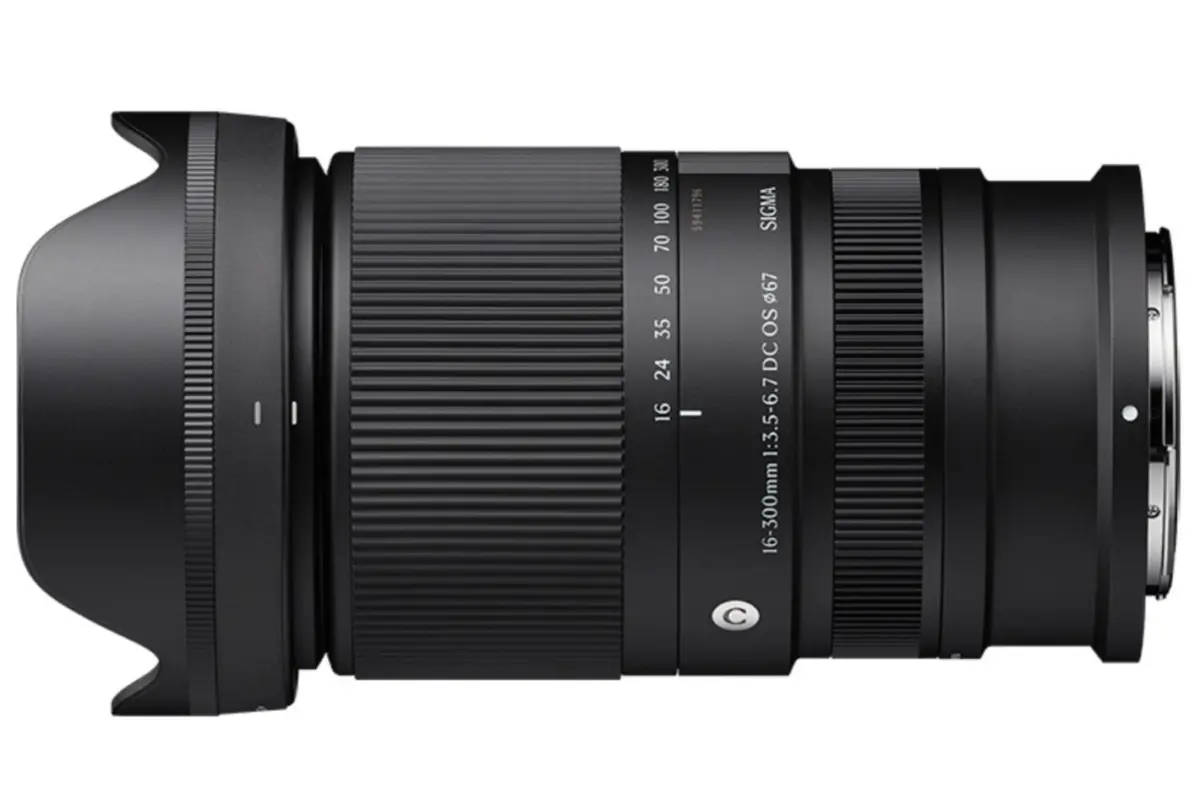
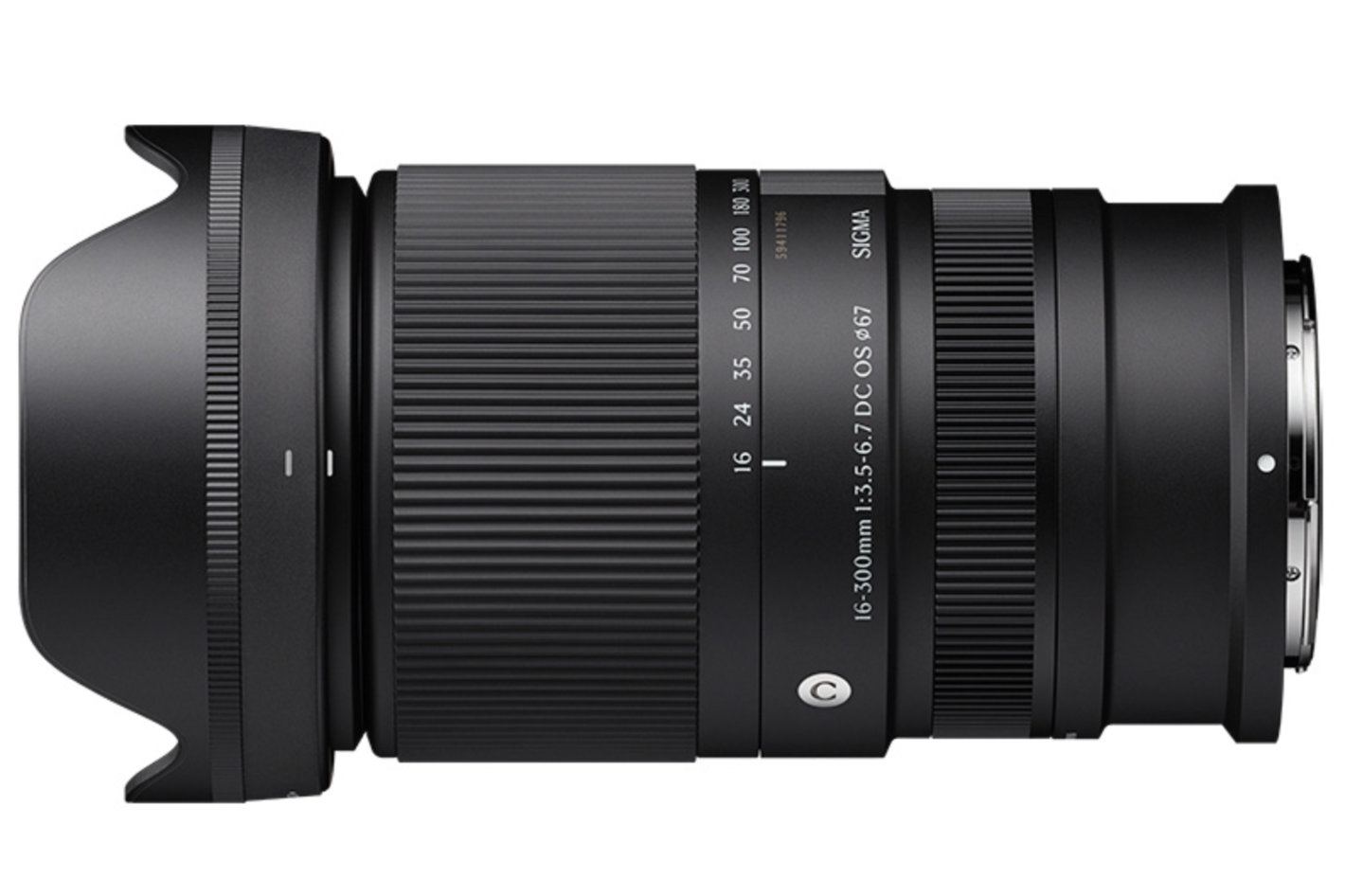
In a strategic move that further solidifies third-party support for Nikon’s mirrorless ecosystem, Sigma has officially announced the release of the 16-300mm F3.5-6.7 DC OS | Contemporary lens for Nikon Z Mount cameras. Scheduled for market release on November 5 at a retail price of $769 USD, this lens represents a significant milestone in optical engineering. It is billed as the world’s first mirrorless-dedicated lens to achieve an approximate 18.8x zoom ratio, packing an unprecedented focal range into a highly portable form factor designed specifically for APS-C (DX-format) sensors.
For years, travel photographers, multimedia journalists, and hobbyists have sought the elusive "one-lens solution"—an optic versatile enough to capture sweeping landscapes, intimate portraits, and distant wildlife without the necessity of frequent, field-disruptive lens changes. By bringing this ambitious focal range to the Nikon Z mount, Sigma addresses a critical vacancy in Nikon’s proprietary DX-format lens catalog.
Equipped with Sigma’s advanced High-response Linear Actuator (HLA) autofocus motor, built-in Optical Stabilization (OS) offering up to 6 stops of compensation, and a macro-capable 1:2 maximum magnification ratio, the 16-300mm F3.5-6.7 DC OS | Contemporary aims to redefine the performance expectations of all-in-one superzoom lenses.
+-------------------------------------------------------------------------+
|                  SIGMA 16-300mm F3.5-6.7 DC OS | CONTEMPORARY           |
+-------------------------------------------------------------------------+
| Format: APS-C (Nikon DX)     | Zoom Ratio: 18.8x                        |
| Focal Range: 16-300mm        | 35mm Equiv: 24-450mm                     |
| Max Aperture: F3.5-6.7       | Autofocus: HLA (Linear Motor)            |
| Image Stabilisation:         | Close Focus Magnification: 1:2           |
|   - Wide: 6.0 Stops          | Release Date: November 5                 |
|   - Tele: 4.5 Stops          | Price: $769 USD                          |
+-------------------------------------------------------------------------+
Detailed Technical Deep Dive
Optical Architecture and the Power of 18.8x Zoom
Designing an 18.8x zoom lens for mirrorless cameras presents a monumental challenge for optical engineers. The transition from a wide-angle focal length of 16mm (which translates to a highly usable 24mm equivalent in the 35mm full-frame format) to a super-telephoto reach of 300mm (450mm equivalent) requires intricate optical path configurations.
Historically, superzooms have suffered from a reputation of compromised image quality, characterized by soft edges, chromatic aberrations, and heavy distortion at the extreme ends of the zoom range. Sigma’s Contemporary line addresses these challenges through a combination of specialized low-dispersion glass elements and aspherical lenses designed to minimize optical anomalies.
The inclusion of a 16mm wide-angle starting point is a key competitive differentiator. Many competing travel zooms begin at 18mm (a 27mm equivalent). While a 2mm difference may seem negligible on paper, in practice, the wider field of view at 16mm is crucial for interior photography, sweeping landscapes, and architectural shots where physical space to step back is limited.
High-Response Linear Actuator (HLA) Autofocus
At the heart of the lens’s mechanical design is the High-response Linear Actuator (HLA). This represents Sigma’s latest advancement in focusing motor technology, departing from traditional stepping motors (STM) or gear-driven systems.
The HLA motor operates via magnetic drive mechanics, resulting in near-silent, exceptionally rapid, and highly accurate focus acquisition. This speed is particularly critical when shooting at the telephoto end of the spectrum. At 300mm, the depth of field is naturally narrow, making fast-moving subjects—such as birds in flight, aircraft, or field sports—difficult to track. The HLA system ensures that the lens can keep pace with the high-speed continuous shooting capabilities of modern Nikon Z cameras, maintaining sharp focus on subjects moving rapidly toward or away from the sensor.
Linear Actuator (HLA) Advantage:
[Magnetic Drive] ---> [Direct Linear Motion] ---> [Instantaneous Focus]
  * Eliminates gear friction
  * Maximizes battery efficiency
  * Achieves silent operation for video recording
Dual-Tier Optical Stabilization (OS)
Camera shake is the primary adversary of sharp imagery, especially when shooting hand-held at extended focal lengths or in low-light environments. To combat this, Sigma has integrated an advanced Optical Stabilizer algorithm into the 16-300mm lens:
- Wide-Angle Stabilization (16mm): Offers up to 6 stops of stabilization. This allows photographers to shoot hand-held at shutter speeds as slow as half a second or more under ideal conditions, opening up creative possibilities for capturing motion blur in water or traffic without a tripod.
- Telephoto Stabilization (300mm): Offers up to 4.5 stops of stabilization. At a 450mm equivalent focal length, even minor muscle tremors can ruin an exposure. The 4.5-stop compensation minimizes viewfinder jitter, assisting both the autofocus system and the photographer’s ability to frame shots accurately.
True Close-Up Capability: 1:2 Macro Magnification
Beyond its landscape and telephoto capabilities, the Sigma 16-300mm F3.5-6.7 DC OS | Contemporary doubles as a highly capable close-up lens. It boasts a maximum magnification ratio of 1:2 (0.5x) at its minimum focusing distance.
While not a "true" 1:1 macro lens, a 1:2 ratio is incredibly versatile. It enables photographers to capture intricate details of flowers, insects, product designs, and textures without needing to carry a dedicated macro lens. This macro capability, when combined with the 18.8x zoom range, makes this optic a true generalist tool.
Supporting Context & Market Metrics
The Nikon Z DX Landscape
To understand the strategic importance of this release, one must analyze the current state of Nikon’s APS-C (DX-format) mirrorless system. Nikon currently offers several popular Z-mount DX bodies, including the content-creator-focused Nikon Z30, the retro-styled Nikon Zfc, and the enthusiast-oriented Nikon Z50.
While these camera bodies have been widely praised for their ergonomics, sensor performance, and autofocus capabilities, Nikon’s native DX lens roadmap has remained relatively conservative. The primary native options include:
- NIKKOR Z DX 16-50mm f/3.5-6.3 VR (Ultra-compact pancake zoom, limited reach)
- NIKKOR Z DX 50-250mm f/4.5-6.3 VR (Capable telephoto, but requires lens changes)
- NIKKOR Z DX 18-140mm f/3.5-6.3 VR (The standard travel zoom, but limited to a 7.8x zoom ratio)
Before this Sigma release, Nikon DX shooters looking for extreme telephoto reach without changing lenses had to rely on heavy full-frame (FX) lenses or use F-mount adapters, which compromise the balance and portability of compact DX bodies.
| Feature/Specification | Sigma 16-300mm F3.5-6.7 DC OS | Nikkor Z DX 18-140mm f/3.5-6.3 VR | Tamron 18-300mm F/3.5-6.3 Di III-A |
|---|---|---|---|
| Mount Compatibility | Nikon Z (APS-C) | Nikon Z (APS-C) | Nikon Z (APS-C) |
| Focal Range (35mm Equiv.) | 16-300mm (24-450mm) | 18-140mm (27-210mm) | 18-300mm (27-450mm) |
| Zoom Ratio | 18.8x | 7.8x | 16.6x |
| Maximum Aperture | F3.5-6.7 | F3.5-6.3 | F3.5-6.3 |
| AF Motor Type | HLA (Linear) | STM (Stepping) | VXD (Linear) |
| Max Magnification | 1:2 | 1:3.3 | 1:2 (at wide end) |
| Stabilization (OS/VR) | Yes (Up to 6.0 Stops) | Yes (Up to 5.0 Stops) | Yes |
| MSRP (USD) | $769 | $639 | $699 |
Competitive Differentiation
The most direct competitor to the new Sigma lens is the Tamron 18-300mm F/3.5-6.3 Di III-A VC VXD. While the Tamron lens offers a slightly brighter maximum aperture at the telephoto end (F6.3 versus Sigma’s F6.7), Sigma gains a distinct advantage at the wide end.
The jump from 18mm to 16mm is optically significant. It provides a 84° diagonal angle of view compared to the 76° offered by an 18mm lens. For landscape, architectural, and travel photographers who often find themselves in tight European streets or capturing wide vistas, the extra 2mm of wide-angle coverage is frequently more valuable than the fractional light-gathering advantage of an F6.3 aperture at the telephoto end.
Official Integration & Engineering Philosophy
A common concern with third-party lenses is how seamlessly they communicate with the camera body. To address this, Sigma has developed a proprietary control algorithm specifically optimized for Nikon Z Mount interchangeable lenses.
This integration is not merely physical; it is deeply electronic. The control algorithm optimizes the AF drive speed and data communication rates between the lens and the camera’s EXPEED processor.
Nikon Z Body [EXPEED Processor]
       ^
       | (High-Speed Data Bus)
       v
Sigma Lens Custom Algorithm ---> Real-Time Aberration Correction
                            ---> Continuous AF (AF-C) Synchronization
                            ---> Optical Stabilization (OS) Coordination
Key benefits of this custom firmware integration include:
- Continuous Autofocus (AF-C) Support: The lens fully supports Nikon’s high-speed continuous tracking modes, including Subject Detection (People, Animals, and Vehicles).
- In-Camera Aberration Correction: When mounted on compatible Nikon Z bodies, the camera automatically identifies the lens profile and applies real-time corrections for vignetting, chromatic aberration, and geometric distortion. This ensures that JPEG files straight out of the camera are highly optimized, while RAW files retain the necessary metadata for seamless correction in post-processing software like Adobe Lightroom or Capture One.
- Dust and Splash Resistant Structure: As a lens in the Contemporary line designed for outdoor and travel use, the mount features a rubber sealing ring to prevent environmental contaminants from entering the camera sensor chamber.
Future Outlook
The introduction of the Sigma 16-300mm F3.5-6.7 DC OS | Contemporary for Nikon Z mount represents a broader shift in the mirrorless industry. Historically, camera manufacturers guarded their lens mount protocols closely, forcing third-party manufacturers to reverse-engineer autofocus communication. Nikon’s decision to license the Z-mount specifications to manufacturers like Sigma has dramatically enriched the ecosystem, offering consumers more choices without sacrificing performance.
For the APS-C mirrorless segment, this lens could act as a catalyst for renewed interest in DX-format systems. While full-frame cameras continue to dominate professional marketing campaigns, APS-C systems remain the pragmatic choice for travel, wildlife, and everyday photography due to their smaller footprint and lower cost. A single lens that covers a 24-450mm equivalent range with high-speed autofocus and optical stabilization makes a system like the Nikon Z50 or Zfc an incredibly compelling, lightweight alternative to heavy full-frame kits.
As Sigma continues to expand its Z-mount portfolio, the 16-300mm F3.5-6.7 DC OS | Contemporary stands out as a highly versatile option. By marrying extreme focal range with modern autofocus and stabilization technologies, Sigma has delivered a compelling tool that meets the rigorous demands of modern multimedia creators.