





Executive Overview
As artificial intelligence coding agents transition from experimental novelties to frontline software engineering workhorses, they have introduced a quiet, insidious problem to the developer workflow: resource exhaustion by attrition. When a developer initiates a complex, multi-step task within an advanced terminal-based coding agent like Claude Code, the session begins a silent consumption marathon.
Background operations eat away at the context window. Multi-hour rate limits tick down. Weekly consumption caps are quietly approached, and operational budgets drain token by token. For the most part, engineers remain entirely oblivious to this background burn until a hard wall is hit—an agent stops mid-sentence because a rate limit has been breached, or a budget threshold has been abruptly crossed.
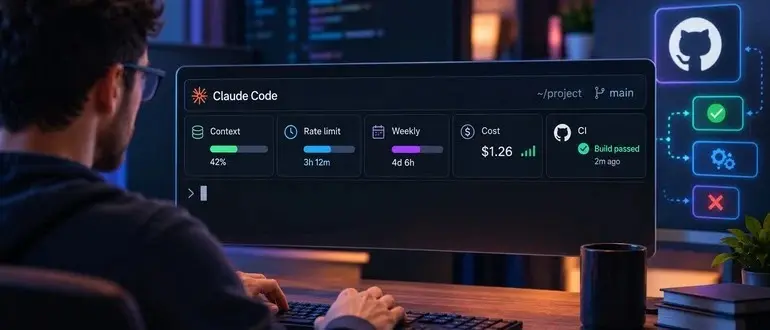
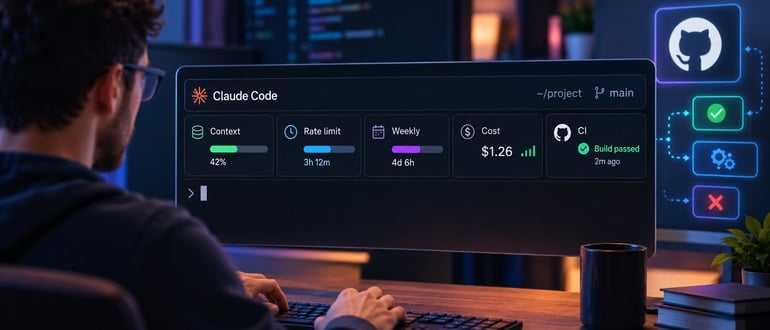
This visibility gap is the primary hurdle facing individual developers and platform engineering teams alike. Enter Claude Statuspane, a lightweight, open-source project developed by Anji Xu and published on GitHub under the permissive MIT license. Statuspane attempts to solve this localized telemetry crisis by introducing a floating status card directly above the Claude Code prompt inside the terminal.
By offering real-time visualization of active models, context utilization, rate-limit countdowns, git branches, running costs, and even GitHub Actions CI states, Statuspane provides a microscopic lens into agent resource consumption. Yet, while the tool serves as a brilliant band-aid for the individual programmer, industry experts warn that it merely scratches the surface of a much larger architectural challenge.
As autonomous AI agents scale to handle longer, unsupervised workloads, organizations require far more than a personal terminal gauge—they demand enterprise-grade governance, centralized telemetry, and auditable compliance.
Detailed Chronology & Technical Architecture: How Statuspane Works
To understand why a tool like Claude Statuspane is necessary, one must examine the current friction points of terminal-native AI development environments. Historically, tools like Claude Code offered rudimentary monitoring capabilities, such as a basic statusLine setting capable of executing a shell script to print a single, static line of text at the bottom of the prompt. While functional, this approach offered zero interactivity, minimal aesthetic integration, and severe data density limitations.
Statuspane breaks away from this limitation by leveraging Claude Code’s emerging, early-access mod system. This experimental framework allows third-party plugins to draw dynamic interface elements directly inside an active terminal session. Because it relies on bleeding-edge API features, the project’s official documentation carries a persistent warning: the underlying APIs are subject to change without notice across subsequent Claude Code releases, making Statuspane an inherently experimental piece of software.
The Anatomy of the Status Card
Rather than dumping raw text logs or overwhelming the developer with endless console outputs, Statuspane maps complex telemetry into clean, intuitive UI components:
- Context Window Gauges: The card displays precise token consumption metrics, visualizing percentages alongside raw numbers (e.g., showing 42% utilization, or 222,000 out of 1 million tokens). To prevent catastrophic session failures, the visual bars dynamically shift colors, turning to a warning yellow at 60% and an aggressive error red at 85%.
- Proactive Interventions: Sitting directly adjacent to the context gauge is a compact button that allows developers to trigger the
/compactcommand manually, pruning context bloat before the session hits a hard wall. - Rate Limit and Cost Tracking: The interface monitors burn rates against rigid five-hour and seven-day rate limits, complete with live reset countdowns, while concurrently computing the running financial cost of the active session.
- Environment & Git Awareness: It pulls real-time contextual data regarding the active AI model, reasoning effort level, current working directory, and active Git branch.
Closing the CI Loop: GitHub Actions Integration
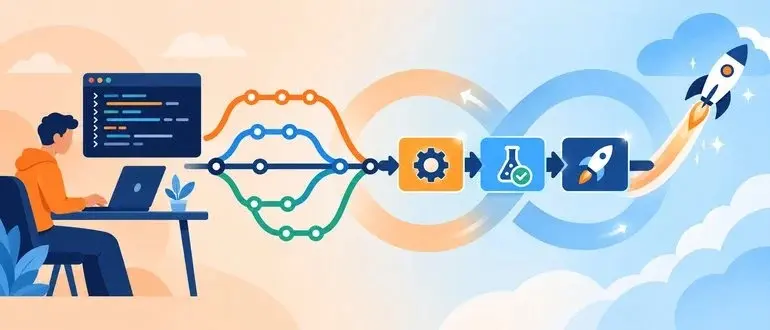
Perhaps the most sophisticated feature built into Statuspane is its seamless integration with GitHub CI pipelines. For developers working in fast-paced trunk-based development models, AI agents frequently write code, commit changes, and push branches—leaving the human developer to manually switch browser tabs, navigate to GitHub, and check whether the CI/CD pipeline survived the agent’s modifications.
Statuspane bridges this cognitive context-switch. By interfacing with the local GitHub CLI (gh), the status card polls the latest GitHub Actions run for the current active branch. It checks status updates every minute under normal conditions, ramping up to every 10 seconds during an active pipeline execution.
Furthermore, a secondary tracking mode monitors runs triggered by explicit git push events or pull request merges, keeping the build status pinned to the terminal screen for 10 minutes post-completion. Developers can instantly see whether a deployment job is running, failed, or successfully shipped, alongside a timestamp of how long ago the event occurred. This keeps the human engineer and the autonomous agent looking at the exact same operational reality.
The Progress API and Localized Guardrails
Beyond native integrations, Statuspane provides a dead-simple, file-based Progress API. Any local script or custom mod can write a lightweight JSON payload to a dedicated progress folder. This payload includes:
- A descriptive label
- A completion percentage
- A concise text status field
- A Time-To-Live (TTL) integer
- A state indicator (
running,ok, orerror)
The status card polls the 20 most recently written JSON files, refreshing the display every second. Once a job’s TTL expires, its corresponding row vanishes automatically, preventing stale background jobs from cluttering the terminal interface. To streamline adoption, the project ships with out-of-the-box helper scripts for both shell environments and Python.
Crucially, author Anji Xu built rigorous security guardrails into the data-ingestion pipeline. The progress folder explicitly restricts inputs to JSON files under 64 KB. More importantly, it actively strips out control characters, bidirectional Unicode marks, and zero-width characters from all text fields.
In the era of AI-driven software development, anything rendering untrusted text inside an agent’s operational terminal represents a potential vector for prompt injection or malicious terminal escape sequences. By forcing local-only execution and relying exclusively on the developer’s authenticated GitHub CLI credentials—rather than routing sensitive repository telemetry through an external third-party SaaS proxy—Statuspane maintains a strong local security posture.
Supporting Context & Metrics: The Resource Economics of AI Coding
The rise of tools like Statuspane highlights a fundamental economic shift in software engineering: the transition from capital expenditure on static hardware to variable operational expenditure driven by token consumption.
Modern Large Language Models (LLMs) used in coding assistants (such as Claude 3.5 Sonnet, OpenAI’s o3-mini, or specialized developer variants) operate on vast context windows scaling up to 200,000 or even 1,000,000 tokens. However, this convenience comes with a steep logistical tax. Every time an agent reads a sprawling repository, references historical error logs, or executes a multi-file refactoring loop, the context window expands exponentially.
Consider the underlying mathematics of token burn:
- Input vs. Output Costs: While input tokens are relatively cheap, agentic reasoning loops—where the model writes code, reviews its own output, encounters a compilation error, and rewrites the module—generate massive cascades of output tokens.
- Rate Limit Volatility: Cloud-hosted AI APIs enforce strict rate-limiting tiers (measured across rolling 5-hour windows and 7-day epochs). Hitting these limits during a critical production hotfix can freeze an engineering team’s momentum entirely.
- The "Black Box" Phenomenon: Without real-time telemetry like Statuspane, developers treat AI expenditure as an opaque black box. They discover costs only at the end of the billing cycle, or discover rate limits only when an agent abruptly halts operations mid-task.
Market analysts note that as software teams increasingly deploy autonomous coding agents to handle routine maintenance, test generation, and boilerplate refactoring, individual token burn translates directly to corporate financial exposure. A single developer running unmonitored, deeply recursive agent sessions can easily rack up hundreds of dollars in API consumption over a few days of heavy debugging.
Official Statements & Industry Perspectives
While individual programmers have embraced Statuspane for its immediate utility in calming terminal chaos, seasoned enterprise architecture leaders urge caution, distinguishing between developer-level convenience and true organizational governance.
Mitch Ashley, Vice President and Practice Lead for CIO & Technology Buyers and Software Lifecycle Engineering at The Futurum Group, offered a sobering assessment of the project’s broader implications:
"Statuspane gives one developer a gauge, which is useful and stops short of governance," Ashley noted. "Agent deployment pace is set by what an organization can observe, control, and prove, and a personal status card shows a team none of those."
Ashley emphasized that enterprise software engineering organizations cannot rely on fragmented, local terminal cards to manage multi-million-dollar AI operational expenditures. The true test of maturity for AI agent platforms lies in centralized observability:
"The test is whether spend, limits, and pipeline outcomes per agent session can be collected centrally and audited. Watch whether agent platforms ship that telemetry natively."
This perspective highlights a stark division in the current developer tooling landscape. On one side are grassroots open-source developers building tactical, localized interfaces to solve immediate terminal-workflow annoyances. On the other side are platform engineering teams struggling with enterprise compliance, cost allocation, SOC2 auditing, and secure credential management across dozens or hundreds of distributed AI agents.
Future Outlook: The Road Ahead for Agentic Telemetry
Claude Statuspane is, by all metrics, a nascent project. It currently boasts a modest adoption footprint, relies heavily on an early-access API subject to breaking changes, and operates strictly within the confines of a single developer’s local machine. Teams evaluating it today should treat it as an innovative, highly functional experiment rather than a production-ready enterprise standard.
Nevertheless, the philosophical thesis underlying Statuspane is entirely sound: You cannot manage what you cannot see.
As AI coding agents evolve from simple chat-based completions into fully autonomous, multi-agent orchestrators capable of running unattended jobs over hours or days, the human developer’s role will shift from writing code to monitoring automated workflows. In this future paradigm, digging through dense, retrospective log files to figure out why an agent stalled or why a budget vanished will no longer be viable.
The immediate future of developer tooling will likely see a convergence of two worlds:
- Developer-Facing Ergonomics: Lightweight, highly responsive local UI elements—much like Statuspane—will become standard features across terminal environments, IDEs, and desktop wrappers, giving programmers instant visibility into active model reasoning, context limits, and build pipelines.
- Platform-Level Telemetry: Enterprise AI providers and internal platform engineering teams will build native, centralized auditing layers. These systems will aggregate per-session token spend, rate-limit thresholds, and pipeline outcomes into shared dashboards, allowing finance and engineering leadership to govern AI adoption at scale.
Until major agent platforms bake this level of comprehensive observability natively into their core architectures, open-source community projects like Statuspane will continue to fill the gap—proving that even the most advanced autonomous workflows ultimately rely on a simple human need: a reliable dashboard to see where things stand before the fuel runs out.