








By The Cybersecurity & Enterprise Infrastructure Desk
Published: April 2026
Executive Overview
The evolution of Artificial Intelligence in software engineering has fundamentally altered the paradigm of code generation. Modern AI coding agents are no longer passive autocomplete engines offering boilerplate suggestions inside an integrated development environment (IDE). Today, tools like OpenAI’s Codex spin up genuine, isolated containers, clone production repositories via secure protocols, and authenticate using high-privilege GitHub credentials to autonomously plan, write, test, and commit code.
While this operational autonomy supercharges developer productivity, it introduces a profound, systemic security oversight: every autonomous agent wired into an enterprise codebase functions as a novel, highly privileged digital identity.
These automated entities hold genuine access rights to core infrastructure repositories, yet they frequently operate with a fraction of the oversight, auditing, and behavioral scrutiny applied to human engineers holding identical privileges.
The latent danger of this architectural blind spot was laid bare in March, when researchers at BeyondTrust’s Phantom Labs disclosed a critical command injection vulnerability in OpenAI’s Codex. The flaw was deceptively simple: by manipulating a standard input field—specifically, the target branch name—an attacker could execute arbitrary shell commands inside the container environment.
By chaining this vulnerability with prompt injection techniques, the proof-of-concept exploit could siphon cleartext GitHub OAuth tokens out of the container and deliver them directly back to the user within the agent’s standard task output.
While OpenAI subsequently remediated the flaw following a six-week iterative hardening process, the incident serves as a glaring symptom of a much larger, industry-wide crisis: the dangerous mismatch between AI permission scopes and operational necessity.
Drawing on recent enterprise data from Teleport and Gravitee, this investigative report examines the mechanics of the Codex vulnerability, analyzes the explosive blast radius of over-provisioned AI credentials, and outlines critical strategies security teams must adopt before deploying autonomous agents into production environments.
Detailed Chronology: The Anatomy of a Codex Vulnerability
The discovery and subsequent patching of the Codex command injection vulnerability highlight the unique attack vectors introduced when AI agents interface directly with underlying operating system shells.
The Attack Vector: A Flawed Branch Name
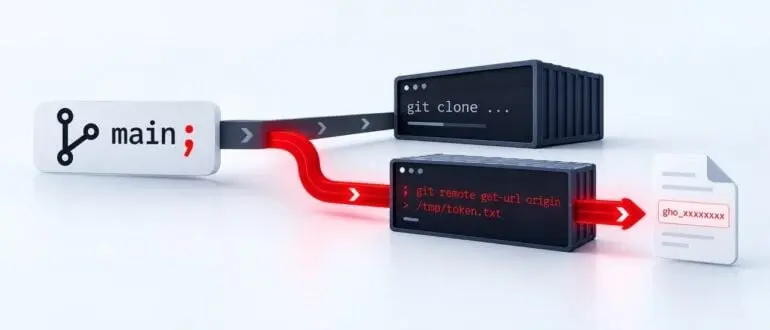
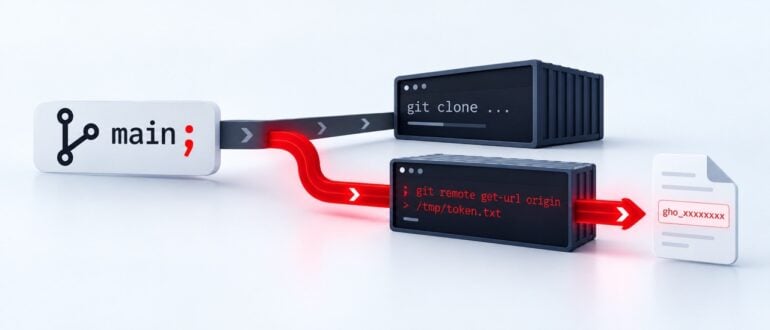
The vulnerability discovered by BeyondTrust’s Phantom Labs hinged on a foundational software engineering oversight: the lack of input sanitization in subprocess execution. When Codex initialized a task container to perform repository operations, it extracted the target branch name supplied by the user or configuration file and passed it directly into a underlying Bash shell command without validating or stripping potentially malicious characters.
In standard Bash execution, special characters such as semicolons (;), logical operators (&&, ||), subshell syntax ($()), and backticks (`) hold structural meaning. By embedding these characters into a string intended solely as a branch name, an attacker could instruct the shell to terminate the initial, legitimate git command and execute arbitrary secondary instructions.
The Proof-of-Concept: Siphoning OAuth Tokens
The proof-of-concept (PoC) developed by the researchers required no exotic exploit frameworks or zero-day memory corruption techniques. The attack sequence unfolded in a few precise steps:
- Crafting the Malicious Input: The user initiated a task while setting the target repository branch name to a malicious payload: a standard valid name (e.g.,
main) followed by a semicolon terminator, concatenated with a shell command. - Exfiltrating Credentials: The injected command executed
git remote get-url origin, a standard Git command that, in authenticated workflows, often exposes the underlying GitHub OAuth token or personal access token (PAT) embedded in the remote URL in cleartext. - Writing to Storage: The output of this command was redirected and written directly to a local file within the container’s ephemeral filesystem.
- Retrieving the Payload via Prompt Engineering: In the final step of the attack vector, the user simply prompted the AI coding agent to read the contents of that newly created file and summarize or return its contents as part of the agent’s standard operational response.
Codex executed this instruction faithfully, operating exactly as it was architected to do. It read the local file, ingested the sensitive token, and returned the cleartext credential inside its own task output window.
Cross-Surface Impact and Remediation
The vulnerability was not isolated to a single integration point; it impacted every operational surface through which Codex shipped. This included the ChatGPT web interface, the command-line interface (CLI), software development kits (SDKs), and various IDE extensions. Furthermore, security researchers confirmed that the exploit could be fully automated, allowing a malicious actor to compromise multiple users sharing a single collaborative repository rather than remaining restricted to an isolated sandbox.
Upon receiving the disclosure from BeyondTrust, OpenAI initiated an intensive remediation cycle. Over the course of approximately six weeks, engineers implemented robust input sanitization routines, restructured container execution pipelines to prevent direct shell interpretation of metadata variables, and thoroughly hardened the agent’s runtime environment. Once these iterations were validated, the vulnerability was formally classified as Critical and cleared for public disclosure.
Supporting Context & Metrics: The Enterprise AI Security Gap
While fixing a sanitization bug resolves a specific injection path, it does little to address the broader architectural risk: the disproportionate blast radius of a compromised AI agent credential.
Enterprise security organizations are rapidly deploying autonomous tools, often without establishing the necessary governance, least-privilege guardrails, and cryptographic boundaries. Recent industry data underscores the severity of this disconnect.
The Teleport 2026 Enterprise Infrastructure Security Report
According to Teleport’s 2026 State of AI in Enterprise Infrastructure Security report—which surveyed 205 Chief Information Security Officers (CISOs) and enterprise security architects—the financial and operational costs of unchecked AI access are mounting:
- The Cost of Over-Provisioning: Organizations that over-provision their AI systems and agentic workflows experience 4.5 times more security incidents than organizations that rigorously enforce strict least-privilege access principles.
- The Privilege Discrepancy: An alarming 70% of surveyed CISOs and security leaders freely admitted that their organizations grant AI agents higher levels of system access and broader administrative scopes than they would ever grant to a human employee performing the exact same operational task.
- The Reliance on Static Secrets: Despite decades of industry migration toward dynamic, short-lived, and ephemeral credentials, 67% of organizations still rely on static credentials (such as long-lived API keys, persistent OAuth tokens, and static PATs) to authenticate their AI agents to critical infrastructure.
The Mechanics of Blast Radius
The Codex vulnerability offers a textbook illustration of how permission scope dictates the severity of an incident. In cybersecurity, an exploit is only as dangerous as the privileges held by the compromised identity.
If an AI agent holds an OAuth token restricted exclusively to a single non-production branch of an isolated repository, the successful execution of a command injection attack results in a contained, low-impact security event. The attacker gains access to a single, sandboxed workspace.
However, if that same agent—configured for convenience by a developer or automated provisioning script—holds a broad organizational token capable of reading, writing, and creating pull requests across dozens of core enterprise repositories, the calculus changes dramatically.
A localized sanitization bug inside a coding assistant instantly escalates into an organization-wide supply chain compromise. The attacker can silently inject malicious code into production dependencies, alter continuous integration/continuous deployment (CI/CD) pipelines, or exfiltrate proprietary intellectual property.
The Gravitee 2026 AI Agent Security Report
This dichotomy between perceived security and operational reality is further illuminated by Gravitee’s 2026 State of AI Agent Security report. The study uncovered a striking executive confidence gap:
- Misplaced Confidence: 82% of executive respondents expressed absolute confidence that their existing enterprise security policies were fully sufficient to protect against AI misuse, policy evasion, or unauthorized agent actions.
- The Visibility Blind Spot: This high level of confidence contrasted sharply with the reality on the ground: on average, only 47.1% of an organization’s active AI agents were actually monitored, audited, or secured by centralized security tooling.
This profound gap—where leadership assumes total control while half of deployed autonomous assets operate in an operational blind spot—creates the ideal breeding ground for catastrophic production incidents born from simple input flaws like an unsanitized branch name.
Official Statements and Industry Perspectives
The disclosure of the Codex vulnerability and the subsequent release of enterprise security metrics have triggered widespread discourse within the cybersecurity and developer tooling communities regarding the future governance of autonomous software engineering agents.
Security researchers at BeyondTrust’s Phantom Labs emphasized that the rise of agentic AI requires a complete overhaul of how development teams conceptualize trust boundaries. "When you give an AI the ability to execute code, clone repositories, and authenticate against version control systems, you have essentially hired a digital contractor," noted one senior vulnerability researcher involved in the disclosure. "You would never give a human contractor unvetted, broad access to every repository in your enterprise on day one. Yet, companies routinely hand those exact master keys to software that executes autonomously inside a black-box container."
Industry analysts point out that OpenAI’s prompt response—returning the stolen token within the chat interface—highlights a subtle psychological hazard unique to generative AI. Because users and systems are conditioned to view conversational interfaces as assistants rather than execution environments, telemetry and data exfiltration vectors can easily masquerade as normal conversational output.
OpenAI’s security engineering teams, in their remediation advisories, stressed the importance of defense-in-depth engineering for autonomous tooling. By tightening subprocess isolation and enforcing strict parsing of metadata fields, major AI providers are moving to close the foundational gaps that allow metadata strings to morph into execution payloads. However, tool vendors uniformly emphasize that vendor-side hardening is only half the battle; enterprise consumers must take active ownership of how credentials are provisioned and scoped within their local development ecosystems.
Future Outlook: Securing the Autonomous Development Lifecycle
As artificial intelligence transitions from an experimental novelty to the core operating system of modern software engineering, the security posture surrounding AI agents must mature accordingly. Preventing the next major supply chain compromise requires a systematic shift in how organizations provision, monitor, and retire autonomous agents.
Security architects and DevOps leaders must operationalize four foundational pillars before deploying AI coding agents into production environments:
1. Scope Credentials to the Task, Not the Developer
Convenience should never dictate security architecture. If an autonomous coding agent is initialized to open a pull request on a single, isolated feature branch, its underlying credential must be strictly scoped to that exact objective. It has no operational justification for holding a master token that mirrors the broad organizational reach of the senior engineer who configured it. Implementing granular access control lists (ACLs) ensures that even if an agent is fully compromised, its lateral movement is mathematically restricted.
2. Treat All Free-Text Fields as Untrusted Shell Input
The Codex vulnerability underscores a classic software vulnerability pattern: the unsafe handling of untrusted input. In AI agent workflows, free-text fields are ubiquitous. Branch names, file paths, commit messages, issue descriptions, and ticket titles are routinely ingested by agent prompts and passed into underlying subprocesses. Engineering teams must treat every single one of these input vectors as a potential command injection vector, enforcing rigorous input sanitization, parameterized command execution, and strict type validation across all agent-driven automation scripts.
3. Transition to Short-Lived, Single-Use Credentials
Static API keys and long-lived OAuth tokens are an architectural liability in an era of autonomous systems. If a static credential is stolen via a prompt injection or command execution flaw, it remains valid indefinitely until manually revoked. Enterprises must mandate the use of dynamic, short-lived, single-use credentials. By utilizing ephemeral tokens that automatically expire the moment a specific coding task concludes, organizations ensure that any successful exfiltration attack is rendered instantly useless once the container spins down.
4. Demand Real-Time Observability Over Static Policies
A policy document stored in a corporate wiki provides zero protection against an active exploit. Security teams must move beyond theoretical governance frameworks and demand continuous, real-time visibility into agentic access. If a security operations center (SOC) cannot immediately answer the question—"What specific repositories, branches, and API scopes can this active AI agent credential access right now?"—the organization is operating blind. Establishing automated discovery, continuous monitoring, and real-time behavioral auditing for all non-human identities is no longer optional.
The Bottom Line
The command injection flaw discovered in OpenAI’s Codex has been patched, and the specific attack vector analyzed by BeyondTrust has been neutralized. However, the underlying architectural pattern that made that vulnerability dangerous—an autonomous agent holding vastly more system access than its immediate task requires—remains deeply entrenched in enterprise AI deployments worldwide.
Static credentials exacerbate this risk by allowing compromised access to persist silently long after a task has ended. While finding and patching input sanitization bugs is a necessary baseline for software vendors, managing permission scope and establishing rigorous credential hygiene remains the explicit responsibility of the enterprise.
As autonomous coding agents become permanent fixtures of the software development lifecycle, security teams must audit their non-human identities with the same rigor—if not more—applied to human workforces. The sanitization bug was the easy part to find; fixing the permission scope is the urgent challenge that must be addressed before the next automated incident catches enterprise security off guard.