Executive Overview
The modern software supply chain is facing an existential crisis of confidence. According to a comprehensive new survey commissioned by software artifact management platform provider Cloudsmith—polling 400 platform and security engineers across the United States and the United Kingdom—nearly three-quarters of technical professionals harbor profound doubts about the efficacy of their current security posture.
Specifically, 73% of respondents stated they are either only moderately confident (58%) or outright not confident (15%) in the ability of their existing toolsets to prevent sophisticated, targeted attacks against their software supply chains.
This widespread apprehension is not unfounded. As organizations increasingly rely on complex, interdependent open-source ecosystems, third-party libraries, and automated generation tools, the attack surface has expanded exponentially. Cybercriminals are no longer content with targeting perimeter defenses; instead, they are shifting their focus to the very foundational blocks of software development—software artifacts, repositories, and binary code.
Compounding the problem is a severe deficit in automated remediation. While nearly half of all organizations can successfully identify an intrusion within their supply chain, they remain heavily reliant on slow, manual intervention to enforce quarantines and resolve vulnerabilities. Only a privileged minority possess the real-time telemetry and automation required to intercept threats at machine speed.
As the software development lifecycle accelerates into the era of generative artificial intelligence (AI), these vulnerabilities threaten to paralyze enterprise digital transformation initiatives. Industry leaders are now being forced to re-evaluate traditional compliance frameworks, pivot toward proactive binary security, and redefine organizational accountability before malicious actors exploit what many experts are now calling the soft underbelly of software engineering.
Detailed Chronology: The Evolution of Software Supply Chain Vulnerabilities
To understand how enterprise software security reached this precarious juncture, it is vital to examine the historical trajectory of supply chain attacks and how development paradigms have shifted over the past decade.
Phase 1: The Open-Source Explosion and Dependency Blindness (Pre-2018)
For years, the acceleration of software delivery was fueled by open-source adoption. Developers shifted away from writing proprietary utilities from scratch, opting instead to import modular packages from public repositories like npm, PyPI, and Maven Central.
While this dramatically reduced time-to-market, it introduced unprecedented dependency depth. A single application might rely on hundreds of transitive dependencies—code written by strangers, maintained on a volunteer basis, and rarely audited for malicious intent. Cybercriminals quickly recognized that compromising a widely used open-source package granted them immediate, unauthorized access to thousands of downstream enterprise consumers.
Phase 2: The Proliferation of Advanced Persistent Threats (2018–2022)
High-profile supply chain breaches, most notably the SolarWinds Orion compromise and subsequent attacks on major repository ecosystems, transformed software supply chain security from an obscure compliance checkbox into a boardroom-level emergency. Attackers realized that poisoning code long before it reached production—either by infiltrating developer endpoints, compromising CI/CD (Continuous Integration/Continuous Deployment) pipelines, or typosquatting popular libraries—yielded massive dividends.
Despite these wake-up calls, enterprise tooling remained heavily focused on source code analysis (SAST) and runtime monitoring, leaving a dangerous blind spot at the binary and artifact management layers.
Phase 3: The Generative AI Era and Machine-Speed Exploitation (Present Day)
Today, the software supply chain is entering its most volatile phase yet. The integration of generative AI tools into the developer workflow has supercharged the velocity of code creation. Developers can now generate functional blocks of code, microservices, and entire architectures in seconds.
However, this hyper-acceleration has introduced entirely new threat vectors. Threat actors are now leveraging AI to generate malicious code variants that blend seamlessly into normal developer activities, bypass traditional static analysis, and manipulate software builds at scale. As cyberattacks are increasingly launched at machine speed, human-led security operations centers (SOCs) are finding themselves catastrophically outpaced.
Supporting Context & Metrics: A Deep Dive into the Cloudsmith Survey Data
The Cloudsmith survey provides a stark, empirical window into the daily operational realities, anxieties, and compliance gaps facing engineering teams in the U.S. and UK. The data reveals critical disconnects between perceived security and actual operational readiness.
The Automation Deficit in Incident Response
When an intrusion or supply chain compromise occurs, seconds matter. Yet, the survey data highlights a glaring lag in enterprise response capabilities:
- 37% of engineers reported that their organizations can automatically identify, block, and trace an intrusion within minutes.
- 48% of respondents stated they can identify an intrusion, but must rely entirely on manual efforts to enforce quarantines, revoke access, or resolve the underlying vulnerability.
- The remaining balance suffers from even greater visibility gaps, leaving them vulnerable to prolonged, undetected dwell times.
Top Threats Keeping Engineers Awake at Night
When asked to categorize the most alarming vectors threatening their software supply chains, respondents pointed to sophisticated, automated, and obfuscated attacks:
- AI-Generated Malicious Dependencies: The exploitation of AI-generated code to subtly introduce malicious or vulnerable dependencies into repositories.
- Camouflaged Supply Chain Attacks: Compromises that deliberately mimic, blend into, or piggyback upon normal, benign DevOps and CI/CD activities.
- Automated Scale Manipulation: Automated malicious systems directly modifying software packages and binaries at scale before they are deployed to production.
Auditing Anxiety and the Compliance Paradox
Regulatory bodies and enterprise risk committees are demanding rigorous proof of software provenance, yet organizations remain poorly equipped to prove compliance under pressure.
- Only 27% of surveyed engineers expressed high confidence that their organization could successfully pass an unexpected, comprehensive audit of their software supply chain.
- 95% of respondents claim to generate Software Bill of Materials (SBOM) data, signaling widespread awareness of compliance mandates.
- However, only 25% integrate and automate SBOM verification directly into their security gatekeeping processes.
- A staggering 75% admit to utilizing SBOM data purely for ad hoc, reactive compliance reporting when forced by auditors or clients, rather than as a continuous security control.
The AI Paradox: Trust vs. Verification
Generative AI tools (such as GitHub Copilot, ChatGPT, and specialized coding assistants) are now ubiquitous across enterprise engineering teams. Engineers display a curious dichotomy when evaluating AI-related risks:
- 61% of respondents reported being at least moderately confident that AI coding tools are not actively introducing additional vulnerabilities into their software supply chains.
- Despite this optimism, risk mitigation practices remain lax: only 32% actively scan the proprietary or open-source AI models they employ for specialized threats.
- Meanwhile, 41% perform basic integrity checks (such as verifying cryptographic checksums and provenance data).
- 22% rely entirely on generic runtime monitoring tools, while 50% utilize provenance or attestation data (such as SLSA frameworks) to validate software builds.
DevSecOps Burnout and Compromise
The relentless pressure to ship features faster has eroded adherence to security best practices. Nearly half (49%) of respondents confessed that their organizations occasionally skip implementing new security or developer features under schedule pressure, while 28% admitted to doing so on a regular basis. This cultural friction between velocity and security continues to leave structural gaps in the deployment pipeline.
Official Statements and Expert Analysis
The widening chasm between software delivery speed and supply chain security has prompted urgent warnings from industry leaders.
Glenn Weinstein, CEO of Cloudsmith, emphasizes that the industry is experiencing a fundamental paradigm shift regarding where and how software must be secured. According to Weinstein, the traditional practice of attempting to catch every flaw at the source code level is no longer sufficient in an environment dominated by compiled binaries, external dependencies, and AI-driven development.
"As it becomes more apparent in the AI era that changes will be made to how software supply chains need to be secured, there will be more focus on securing binaries after applications are deployed," Weinstein notes.
He highlights that cybercriminals have evolved their methodologies to target compiled binaries directly, launching attacks at machine speed. Consequently, enterprise security strategies must adapt.
"More resources will need to be allocated to automating DevSecOps workflows within a curated repository that limits the number of potential vulnerabilities that might find their way into a software supply chain," Weinstein explains. "The challenge is that securing binaries is a much more complicated challenge than simply trying to fix issues at the source code level."
Security architects echo these sentiments, pointing out that open-source consumption models have historically treated external code with an unearned level of implicit trust. When a developer pulls a package into a repository, that package is often granted unchecked execution privileges within the build pipeline. Without rigorous artifact curation, isolated registries, and automated cryptographic verification, organizations are essentially inviting unvetted foreign actors into their core manufacturing processes.
The Accountability Crisis: Who Owns Software Supply Chain Security?
Compounding technical and tooling challenges is a persistent organizational ambiguity: Who is ultimately responsible for securing the software supply chain?
The Cloudsmith survey underscores a deep organizational disconnect regarding accountability. When asked which department is most vocal or concerned about dependency-led attacks, more than three-quarters of respondents pointed directly to the security team.
However, when the conversation shifts from worrying about threats to making actionable operational decisions—specifically, deciding whether to trust and ingest a specific open-source dependency—ownership fractures:
- 39% of respondents believe the decision should rest with a centralized security, platform, or governance team.
- 37% argue that it is a shared, collaborative responsibility distributed directly among developers.
- The remaining balance leaves the decision to ad hoc departmental discretion, creating dangerous operational silos where developers prioritize speed and security teams prioritize restriction, often resulting in friction and bypassed controls.
This lack of clear, unambiguous ownership creates fertile ground for attackers. When security is treated as everyone’s job, it frequently becomes no one’s specific operational mandate until a breach occurs.
Future Outlook: Navigating the Road Ahead
As enterprises confront the sobering realities highlighted by the Cloudsmith data, a reactive security posture is no longer viable. To survive and thrive in the era of machine-speed cyber threats, organizations must enact a fundamental transformation across three strategic pillars:
1. Shifting Left Meets Locking Down the Middle (Binary Curation)
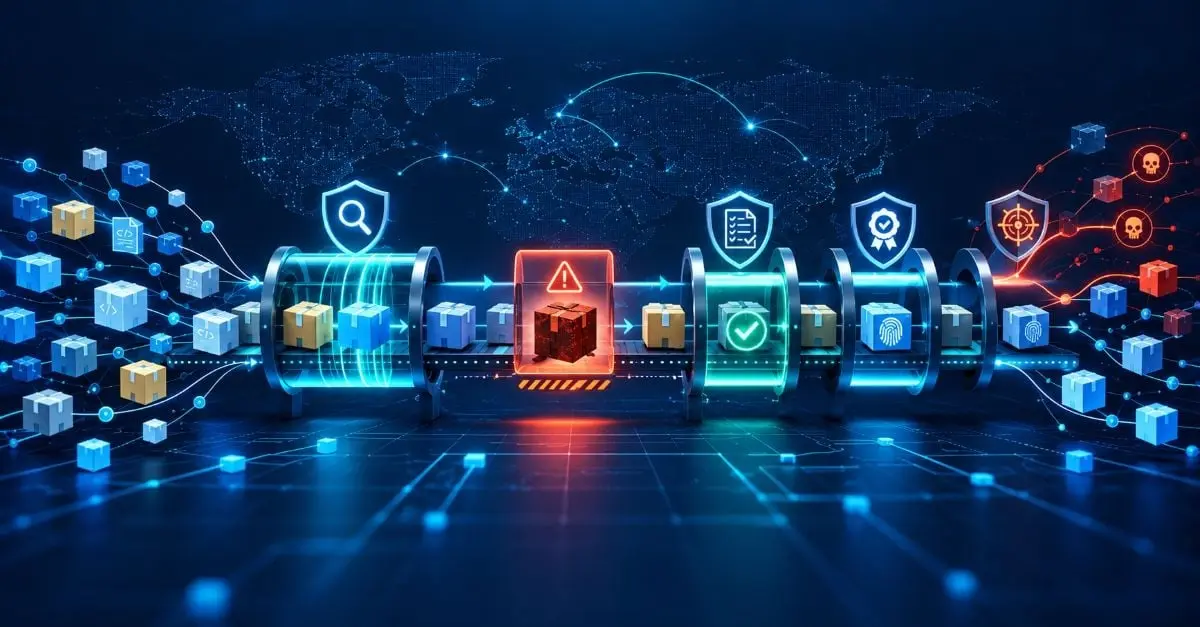
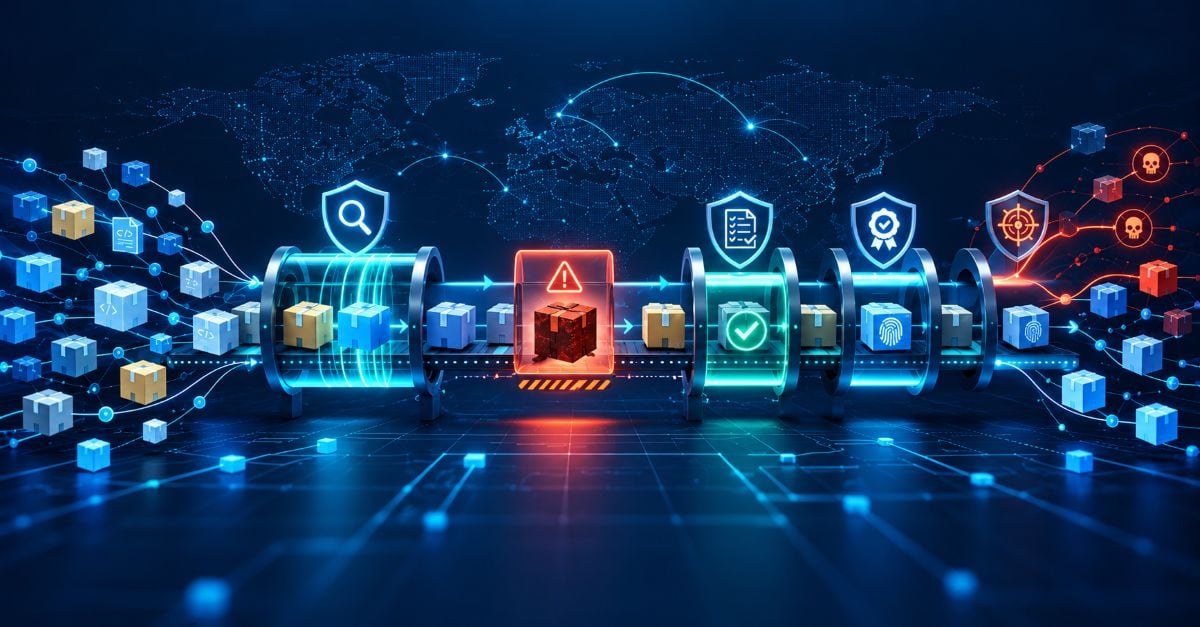
While source code analysis remains essential, organizations must expand their security perimeter to encompass artifact management and binary repositories. Implementing a curated repository model—where all external dependencies, container images, and build artifacts must pass through automated, stringent security gates before entering the enterprise environment—will be critical. By controlling what enters the artifact registry, organizations can effectively choke off malicious dependencies before they ever touch a build pipeline.
2. Embracing Autonomous Remediation
The days of relying on manual intervention, human-led triage, and delayed quarantines are over. Security tooling must evolve to match the velocity of modern development. Enterprises must invest in automated orchestration platforms capable of identifying, isolating, tracing, and neutralizing supply chain intrusions within minutes—without requiring human bottlenecks. Furthermore, the automation of SBOM generation and continuous verification will transition compliance from an administrative nightmare into an active, real-time defense mechanism.
3. Establishing Clear Governance and Unified Accountability
Organizations must resolve the internal turf wars between developers, platform engineers, and security teams. Establishing clear lines of accountability—supported by automated guardrails that empower developers rather than slowing them down—will bridge the cultural divide. Security policies must be codified directly into the developer workflow, ensuring that compliance is maintained by default, even under intense delivery deadlines.
Ultimately, the software supply chain remains the most critical underbelly of the modern digital economy. As cybercriminals grow more sophisticated, automated, and relentless, the organizations that successfully harden their software artifacts, automate their response workflows, and clarify their internal governance will be the ones that secure their future in an increasingly hostile digital landscape.