







Executive Overview
The landscape of European enterprise IT infrastructure is undergoing its most profound structural realignment in decades. Following Broadcom’s acquisition of VMware and the subsequent overhaul of its licensing framework—transitioning heavily toward bundled subscription models and per-core pricing—European Chief Information Officers (CIOs) have fundamentally altered how they evaluate virtualization and cloud investments.
What began as localized resistance to rising software renewal costs has rapidly matured into a data-driven, strategic reassessment of the entire enterprise stack. European enterprises are no longer simply shopping for a direct, "like-for-like" VMware replacement. Instead, infrastructure and architecture teams are mapping a diverse and competitive field, balancing five-year Total Cost of Ownership (TCO), strict data sovereignty regulations (including GDPR and Schrems II compliance), application support matrices, and disaster recovery dependencies.
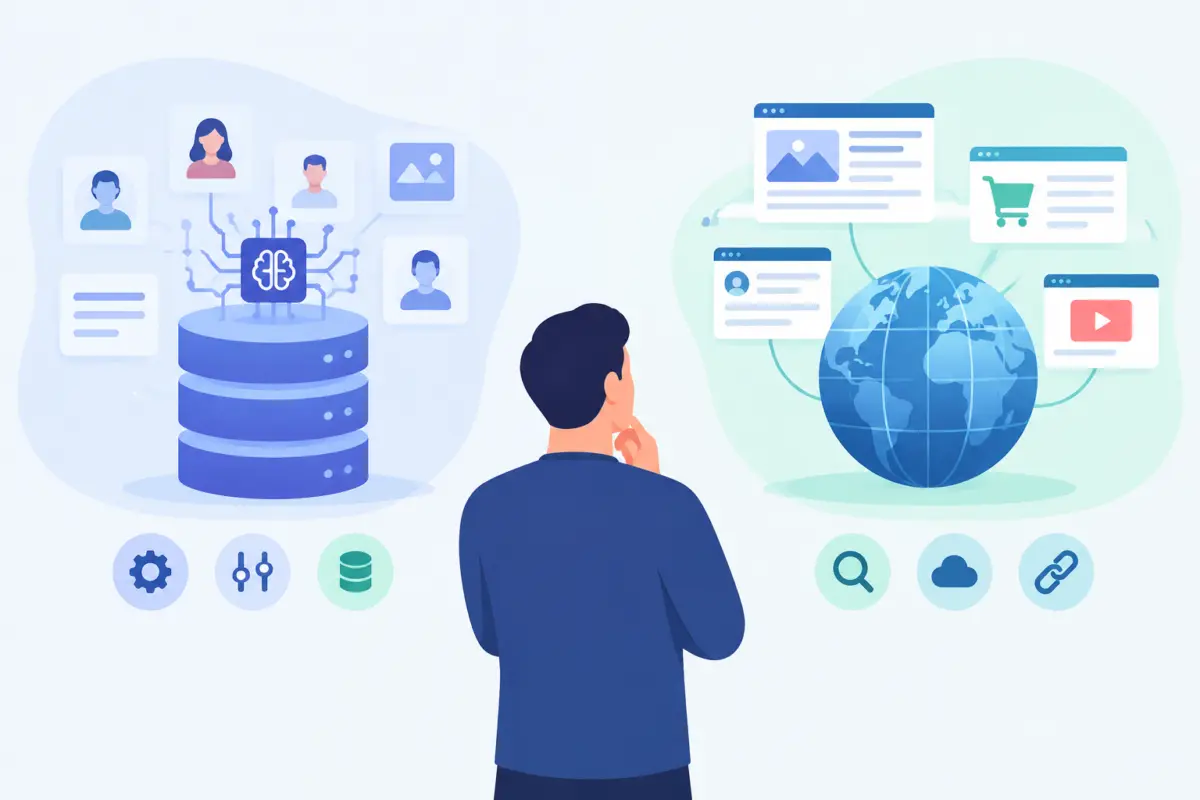
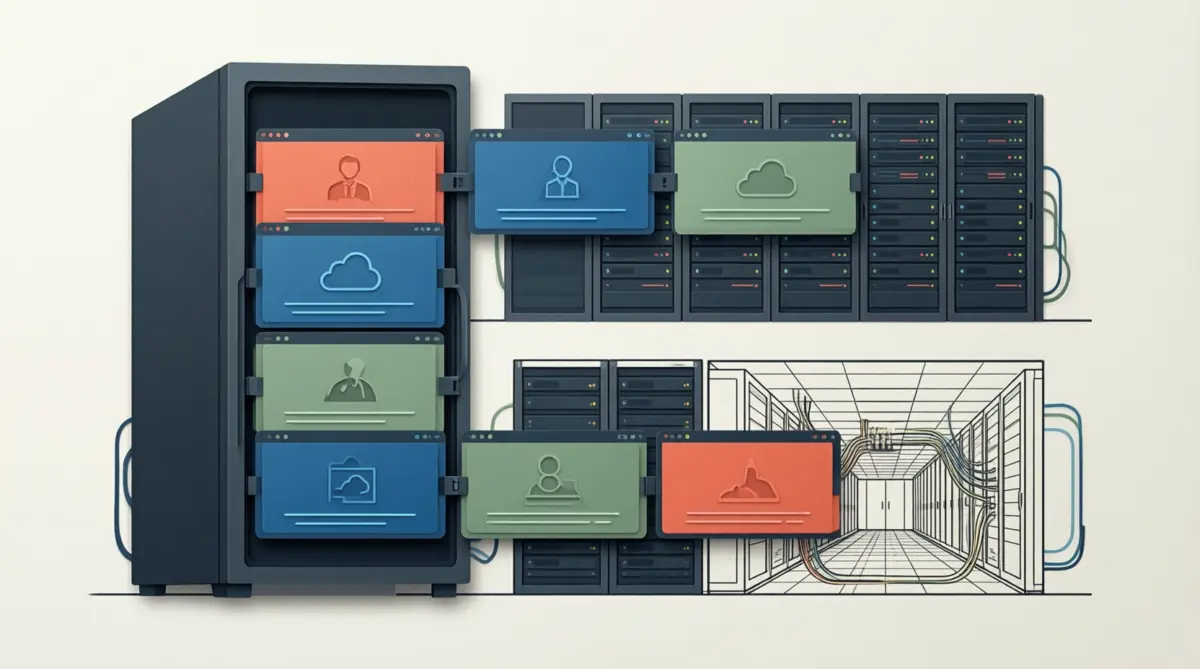
The modern decision-making matrix requires separating workloads that demand high-performance, on-premises Hyper-Converged Infrastructure (HCI) from those ideally suited to pan-European public cloud providers or container-native virtualization platforms like KubeVirt and OpenShift Virtualization. As organizations implement rigorous pilot testing, workload segmentation, and multi-cloud data governance, the market for VMware alternatives in Europe has expanded to include global enterprise-grade HCI vendors like Sangfor, Huawei, and ZStack, alongside localized cloud operators such as OVHcloud and Exoscale. This report investigates the macroeconomic drivers, competitive positioning, cost structures, and technical realities shaping the European VMware exit strategy.
Detailed Chronology: The Evolution of the European Virtualization Crisis
To understand the urgency driving European infrastructure teams toward alternative platforms, it is necessary to examine the chronological sequence of events that disrupted the status quo of enterprise virtualization.
Phase 1: Pre-Acquisition Stability and Perpetual Budgets
For well over a decade, VMware’s ESXi hypervisor and vCenter management suite formed the bedrock of enterprise private clouds across Europe. Perpetual licensing models, predictable renewal brackets, and deep integration with enterprise application vendors meant that infrastructure teams could forecast budgets across multi-year cycles. Virtualization was viewed as a solved problem, and hypervisor selection rarely reached the desk of the C-suite.
Phase 2: The Broadcom Acquisition and Licensing Overhaul
The inflection point arrived with Broadcom’s acquisition of VMware. Almost immediately, market signals indicated a pivot away from standalone perpetual licenses toward unified, bundled subscription suites. While Broadcom maintained that platform capabilities remained uncompromised, the shift to per-core pricing models and forced feature bundling triggered a dramatic escalation in software renewal quotations for many large-scale European deployments.
Infrastructure teams that had relied on specific standalone products suddenly found themselves budgeting for comprehensive suites they may not have fully utilized. This commercial friction forced CIOs to pose a question they had not seriously entertained in years: What is our exit strategy?
Phase 3: The Rise of Sovereign Regulations and Data Residency Pressures
Concurrently, regulatory pressures within the European Union intensified. Independent of virtualization costs, European enterprises faced stricter interpretations of data sovereignty, cross-border data transfer limitations, and operational security mandates. Enterprises realized that any migration away from VMware had to solve a dual problem: escaping unpredictable licensing costs while simultaneously guaranteeing absolute compliance with European data residency laws.
Phase 4: Pilot Testing and Multi-Platform Hedging
By late 2024 and moving into 2026, the strategy of European enterprises matured from reactive complaining to proactive experimentation. Organizations began deploying structured multi-platform proofs of concept (PoCs). Rather than executing a high-risk, "big bang" cutover, risk-averse CIOs adopted a hedging strategy: maintaining legacy VMware clusters in production while piloting alternative HCI stacks or pan-European cloud environments for new or non-critical workloads. Workload analytics, performance benchmarking, and exit-path testing officially entered the enterprise procurement playbook.
Supporting Context & Metrics: The Competitive Landscape in Europe
The modern array of VMware competitors can be broadly categorized into three distinct operational vectors: on-premises Global Hyperconverged Infrastructure (HCI) vendors, pan-European cloud Infrastructure-as-a-Service (IaaS) providers, and container-native virtualization ecosystems.
1. Global HCI Vendors (On-Premises Infrastructure)
For enterprises constrained by latency requirements, legacy application dependencies, or strict security perimeters requiring data to remain on local hardware, global HCI platforms offer an integrated approach by merging compute, storage, and networking into a single unified stack.
- Sangfor HCI: Emerging as a top-tier alternative on European enterprise shortlists, Sangfor combines compute, storage, and networking into a streamlined, converged architecture. Unlike platforms that require numerous add-on licenses to match standard enterprise features, Sangfor integrates security directly into the platform layer. Backed by a global footprint spanning APAC, EMEA, and LATAM, and recognized as a Representative Vendor in the 2026 Gartner Market Guide for Cloud Infrastructure Sovereign Solutions, Sangfor has established strong enterprise traction in Europe—exemplified by deployments such as Italy’s ENAIP Friuli Venezia Giulia vocational training institution, which utilized Sangfor HCI and aDesk VDI to modernize aging infrastructure and scale automated backups.
- Huawei: Bringing deep telecommunications and heavy-infrastructure engineering backgrounds to the enterprise space, Huawei delivers high-performance HCI solutions. While its architecture offers immense operational depth—particularly beneficial for organizations already utilizing Huawei networking hardware—enterprises must carefully evaluate potential hardware coupling and proprietary elements against their long-term architectural flexibility.
- ZStack: Backed by enterprise cloud expertise and alignment with Alibaba Cloud ecosystems, ZStack provides a scalable HCI and enterprise cloud portfolio. While analysts have noted its market momentum, procurement teams typically perform direct evaluations of its feature sets and regional support capabilities before committing to large-scale migrations.
2. Pan-European Cloud Providers (SaaS / IaaS Models)
For workloads that do not require physical, on-premises server racks, pan-European cloud providers offer an alternative path by shifting the responsibility of hardware management to specialized, regional operators.
- OVHcloud: Headquartered in France, OVHcloud represents the largest European-born cloud provider. It serves as a natural landing zone for workloads migrating away from VMware environments that can transition cleanly to a multi-tenant or dedicated cloud architecture.
- Exoscale: Operating out of Switzerland, Exoscale focuses heavily on secure, sovereign cloud infrastructure. Its value proposition is tailored specifically to European enterprises facing acute regulatory scrutiny regarding data residency, administrative access, and jurisdictional control.
3. Container-Native Virtualization (Kubernetes-Centric Routes)
For organizations aggressively modernizing their software development lifecycles, platforms utilizing KubeVirt or OpenShift Virtualization allow virtual machines to run natively alongside containerized microservices within a Kubernetes control plane. While this approach aligns infrastructure with modern DevOps pipelines, it demands a specialized skill set and rigorous validation of existing VM backup and recovery workflows.
Comparative Matrix: Licensing, Security, and EU Presence
To assist infrastructure architects in distinguishing between software deployed on self-managed hardware and cloud services consumed as a utility, the following market comparison details core operational differences:
| Category | Market Position | Licensing & Pricing Model | Built-in Security | European Presence & Footprint |
|---|---|---|---|---|
| Sangfor HCI | Global enterprise HCI vendor | Simplified, converged subscription/perpetual | Native, integrated security stack | Established & growing rapidly across EMEA |
| Huawei | Telecom-rooted global HCI vendor | Enterprise licensing, hardware-tied elements | Varies by specific deployment | Established enterprise presence |
| ZStack | Enterprise cloud and HCI vendor | Subscription-based scaling | Modular, varies by deployment | Emerging footprint in Europe |
| OVHcloud | Pan-European cloud provider | Consumption-based IaaS/PaaS | Provider-managed infrastructure | Headquartered in France; pan-EU datacenters |
| Exoscale | Sovereign cloud provider | Consumption-based secure cloud | Provider-managed security | Headquartered in Switzerland; EU-aligned |
(Note: Enterprise architects should verify current pricing tiers, regional regulatory updates, and specific service-level agreements directly with vendors prior to finalizing production migrations.)
Official Statements and Industry Insights
Industry analysts and institutional researchers have consistently emphasized that migrating away from entrenched enterprise virtualization is an operational marathon rather than a short sprint.
In recent evaluations, industry analysts have highlighted that enterprise migration drivers—ranging from cost optimization and platform modernization to post-acquisition subscription inflation—require tailored scheduling. According to insights published in Communications of the ACM, operational challenges in VMware migration demand careful categorization of workloads. A low-stakes, disposable test virtual machine cannot and should not follow the same cutover blueprint as a mission-critical, high-transaction relational database.
Furthermore, platforms like Portworx and various enterprise architectural frameworks emphasize that container-native virtualization and alternative hypervisors must be stress-tested against real-world recovery scenarios. An architectural shift justified by Kubernetes alignment or licensing savings is ultimately judged by a single operational metric: Can the enterprise successfully restore production operations within its defined Recovery Time Objective (RTO) and Recovery Point Objective (RPO) after a failure event?
Future Outlook: Strategic Recommendations for European CIOs
As European enterprises look toward the remainder of the decade, the infrastructure playbook has permanently evolved. The era of blind vendor loyalty is over, replaced by a permanent posture of multi-platform awareness and continuous risk mitigation.
1. Enforce Rigorous Pilot Testing and Reversibility
No migration project should be cleared for production deployment based solely on vendor marketing sheets or preliminary feature checklists. Infrastructure teams must execute live migration pilots that include a verified "return journey"—demonstrating that workloads can be exported, restored, and functionally validated on alternate infrastructure without data corruption or configuration loss.
2. Factor Hidden Costs into Five-Year TCO Models
Finance departments must look beyond initial subscription cost reductions. True TCO calculations must account for overlapping platform run-costs during the migration window, staff retraining expenses, external consulting fees, and potential productivity dips during cutover phases.
3. Prioritize Data Sovereignty by Design
For European entities governed by GDPR, Schrems II, and localized data residency requirements, compliance must be verified at every layer of the infrastructure stack—including backup repositories, telemetry logs, and administrative support access paths.
By treating infrastructure selection as an ongoing, data-driven governance process, European CIOs can successfully navigate the post-Broadcom era, ensuring their organizations remain agile, cost-efficient, and fully compliant with both technical demands and regulatory mandates.