








Executive Overview
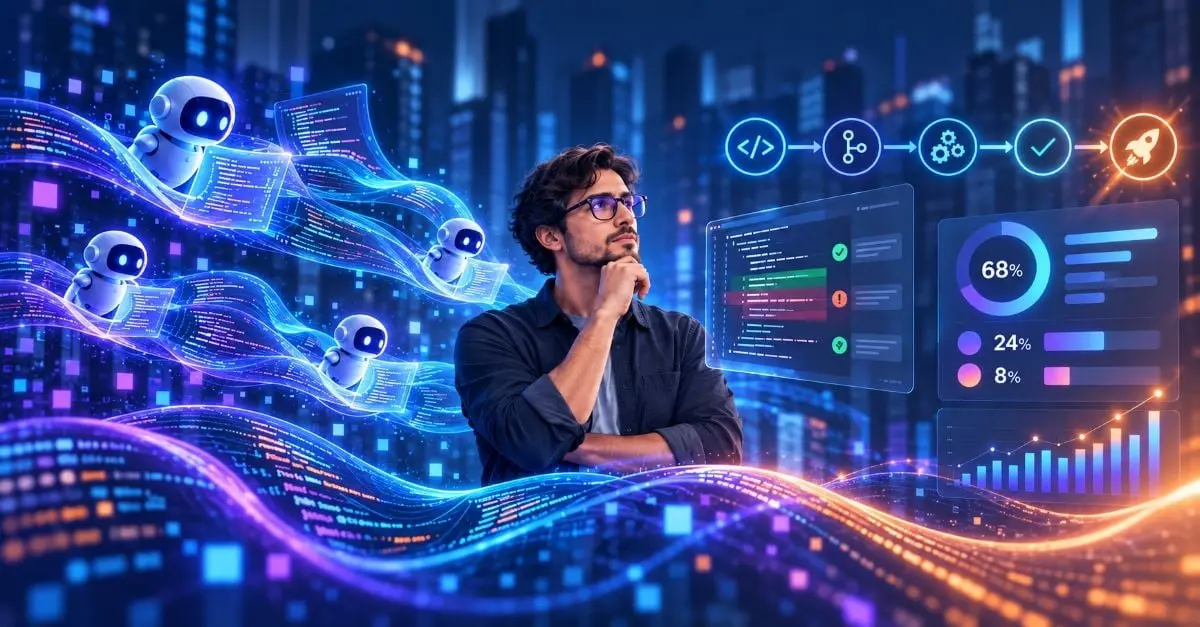
The landscape of software engineering is undergoing its most profound structural shift since the advent of open-source software and cloud computing. Artificial intelligence is no longer merely an assistant sitting quietly in the sidebar of an integrated development environment (IDE); it has become a core engine driving the generation of software worldwide.
According to a comprehensive global survey conducted by software development services provider BairesDev—which polled 705 developers and IT leaders—artificial intelligence now writes at least half of the code for 42% of respondents. This single data point marks a stark and rapid departure from traditional programming paradigms. Writing boilerplate logic, crafting initial functions from scratch, and manually translating product requirements into foundational syntax are rapidly receding into the background of daily engineering tasks.
Instead, the modern software engineer’s role is shifting upward in the abstraction stack. Developers are spending significantly less time writing raw code and vastly more time functioning as reviewers, debuggers, architects, and supervisors of automated outputs. Nearly 80% of surveyed developers now report spending less than half of their working week actively writing new code.
While this productivity boost translates into an average savings of 13 hours per week per developer, it introduces a complex set of systemic challenges. The sheer volume of AI-generated code is beginning to overwhelm legacy deployment pipelines, forcing DevOps teams to rethink continuous integration and continuous deployment (CI/CD) methodologies. Simultaneously, engineers are dedicating roughly nine hours a week to upskilling—mastering new AI tooling, system architecture frameworks, and specialized governance models.
Far from signaling the obsolescence of the human programmer, the rise of agentic AI is redefining human value in the tech ecosystem. Developers report higher levels of job fulfillment and professional satisfaction, even as accountability remains firmly anchored to the individual. As the software industry transitions into an era dominated by autonomous and semi-autonomous coding agents, the critical bottleneck is no longer human writing speed, but rather human oversight, pipeline capacity, and organizational governance.
Detailed Chronology of the Shift: From Copilot to Autonomous Agents
To understand how the software industry arrived at this juncture, it is helpful to trace the rapid evolution of AI coding assistants over recent years.
Phase 1: The Era of Code Completion (2021–2023)
In the early days of generative AI code models, tools primarily functioned as advanced auto-complete engines. Trained on vast corpuses of public code repositories, these early models predicted the next few lines of code based on immediate context and comments. While useful for reducing repetitive typing, developers still maintained granular control over every keystroke and logic block. The AI suggested; the human wrote.
Phase 2: Conversational and Multi-File Generation (2023–2025)
As Large Language Models (LLMs) scaled in parameter size and context windows, capabilities expanded rapidly. AI tools evolved from simple inline auto-complete functions to conversational sidebars capable of generating entire modules, writing comprehensive unit tests, and refactoring legacy codebases across multiple files simultaneously. During this phase, developers began shifting from "writers" of code to "editors" of AI-generated drafts.
Phase 3: The Agentic AI Era (2025–Present)
Today, the industry has crossed into the agentic AI era. Autonomous and semi-autonomous agents are capable of executing complex, multi-step engineering workflows—from ingesting bug reports and writing patches to executing local tests and opening pull requests. The BairesDev survey captures this exact pivot: 42% of respondents state that AI writes at least half of their code, while only 21% still spend more than half their week writing new code from scratch.
This chronology illustrates a relentless compression of the software development lifecycle’s foundational stages. What once took days of manual scaffolding can now be spun up in minutes via prompt engineering and agent orchestration, forcing every layer of the engineering organization to adapt.
Supporting Context & Metrics: Inside the BairesDev Global Survey
The empirical data gathered by BairesDev provides a granular look at how everyday engineering routines, compensation structures, and professional sentiments are shifting under the weight of artificial intelligence.
Time Reclamation and the Reallocation of Focus
The most immediate impact of generative AI is the dramatic reclamation of developer time. Survey respondents report saving an average of 13 hours per week on coding tasks. However, this saved time is not necessarily converted into leisure; rather, it is immediately reinvested into higher-order cognitive tasks.
- 67% of developers report spending more time reviewing AI-generated output.
- 52% of developers are dedicating increased hours to debugging complex interactions within AI-written logic.
- 9 hours per week are spent, on average, by developers learning new AI tools, frameworks, and foundational technologies.
This reallocation of hours underscores a fundamental truth of software engineering: AI eliminates the tedious mechanics of syntax generation, but it does not eliminate the need for deep cognitive engagement. Instead of thinking about how to write a loop or structure a database query, engineers are now thinking about whether the generated logic aligns with security standards, performance requirements, and long-term architectural health.
The Financial and Career Impact of AI Fluency
Far from devaluing engineering skills, the AI revolution is creating a clear hierarchy of compensation tied directly to tool fluency and advanced technical competence. The survey highlights three primary drivers of pay increases for developers in the current climate:
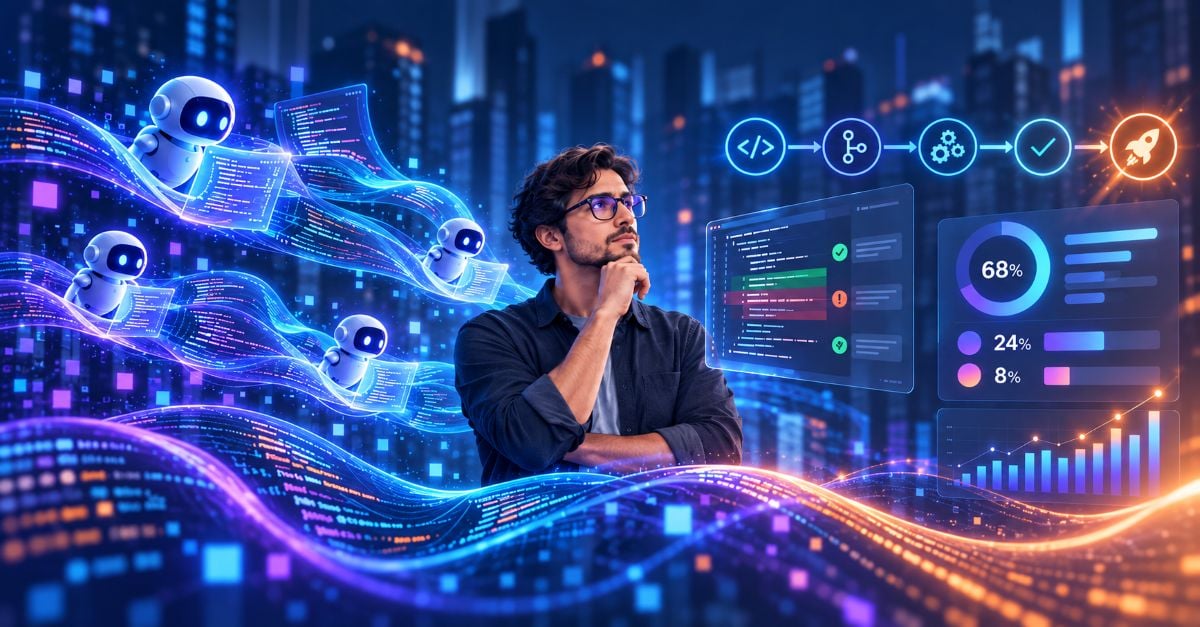
- AI Tool Fluency (29%): Mastery over prompt engineering, context window management, and the integration of specialized coding agents directly correlates with higher earning potential.
- System Architecture (20%): As writing code becomes commoditized, the ability to design resilient, scalable, and secure system architectures has become immensely valuable.
- Human Skills (15%): Collaboration, cross-functional communication, and complex problem-solving remain uniquely human advantages that drive compensation growth.
Accountability and Professional Fulfillment
One of the most surprising findings of the survey revolves around developer sentiment and professional accountability. Despite the complexities of managing non-deterministic code, 86% of respondents report finding their role more fulfilling. By removing the monotonous burden of boilerplate coding, AI allows engineers to focus on creative problem-solving and architectural design, leading to higher job satisfaction.
However, this freedom comes paired with strict individual responsibility. 51% of developers noted that accountability for AI-generated code sits with them personally. When an AI hallucinates an insecure dependency or introduces a subtle race condition into a production environment, the human engineer whose name is on the commit remains fully responsible for the outcome.
Official Statements and Industry Insights
Commenting on the survey results, BairesDev CTO Justice Erolin offered critical insights into the broader implications of these trends for enterprise software development.
"While AI has transformed coding, the rest of the software development lifecycle remains a work in progress," noted Erolin.
This observation hits at the heart of modern engineering bottlenecks. While developers can generate thousands of lines of code in seconds, downstream processes—such as security auditing, integration testing, quality assurance, and deployment approvals—often remain tethered to human-centric speeds.
The survey data illustrates this lag clearly:
- Only 7% of developers report that the final ship decision has been entirely delegated to AI without human input.
- 32% of developers state that ship decisions are delegated to AI, but with a mandatory "human-in-the-loop" review gate.
- The remaining majority still rely on traditional, highly manual release governance models.
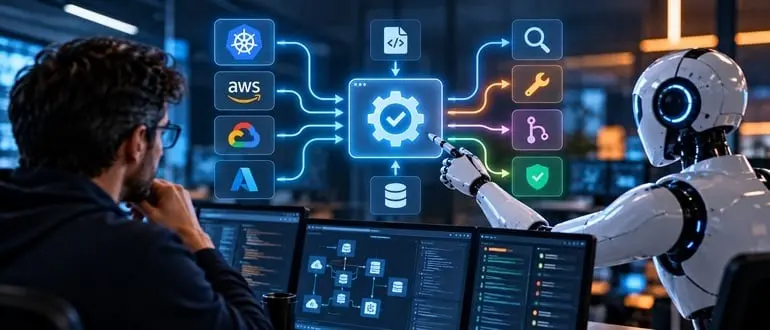
Erolin emphasizes that in the agentic AI era, human engineers will not occupy the middle of the DevOps loop in the traditional sense. Instead, their role will evolve into that of supervisors and observers monitoring the autonomous activities of AI agents.
"Otherwise, human engineers will eventually become just another bottleneck slowing down the pace at which software is built and deployed," Erolin warned. Conversely, he cautioned that "AI agents that are not properly governed will simply run amok in ways that would be too difficult for most DevOps teams to discover and contain on their own."
Future Outlook: Re-engineering DevOps for the Agentic Era
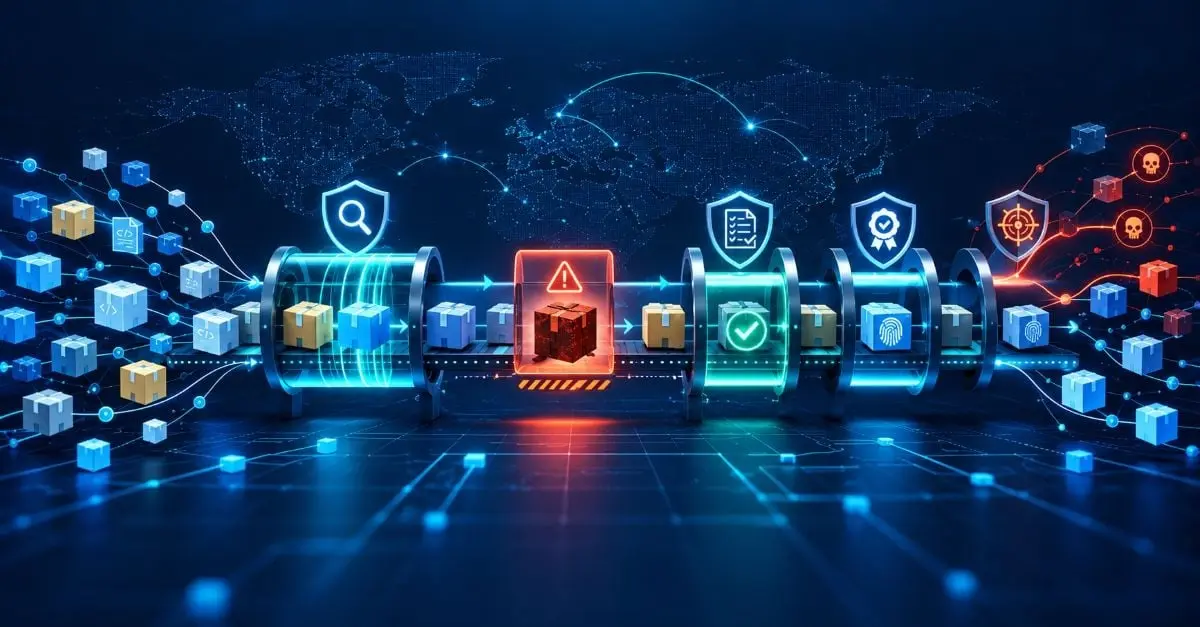
As organizations generate unprecedented volumes of source code, existing continuous integration and continuous deployment (CI/CD) pipelines are showing strain. Pipelines built a decade ago to handle human-paced commits are buckling under the sheer velocity of automated code generation.
The Pipeline Bottleneck
When developers produce code five to ten times faster than before, downstream testing and security scanning environments quickly become saturated. Pull request queues grow longer, code review backlogs swell, and staging environments experience resource contention. Simply throwing more human reviewers at the problem is a losing battle; human attention is finite, whereas AI generation is virtually limitless.
The Rise of Autonomous CI/CD
To resolve this imbalance, forward-thinking DevOps teams are beginning to re-engineer their workflows for the agentic AI era. This transformation involves several key pillars:
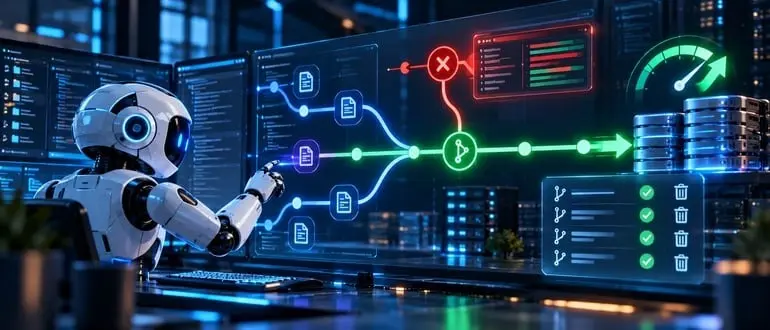
- AI-Driven Code Reviews: Deploying specialized secondary AI agents to conduct initial static analysis, security vulnerability scanning, and style compliance checks before a human reviewer ever opens the pull request.
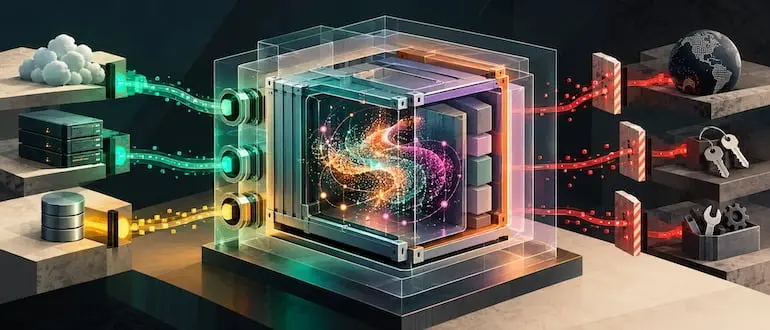
- Automated Test Generation & Execution: Utilizing AI agents to dynamically generate targeted unit and integration tests based on the specific logic modified in a commit, executing them in ephemeral sandbox environments instantly.
- Intelligent Pipeline Orchestration: Re-architecting CI/CD platforms to intelligently prioritize builds, automatically triage flaky tests, and flag anomalous code patterns without requiring manual intervention.
Investment and Strategic Adaptation
Re-engineering DevOps workflows requires significant organizational commitment and capital investment. For some enterprises, this will take the form of comprehensive upskilling programs designed to transition traditional software engineers into AI operations (AIOps) and agent supervisors. For others, it will require ripping out legacy CI/CD tooling and replacing it with cloud-native, AI-first orchestration platforms.
There is, at this juncture, no turning back. The productivity gains realized by leveraging artificial intelligence are too substantial for any competitive enterprise to ignore. The defining challenge and opportunity for engineering leaders in the years ahead will not be learning how to generate more software, but rather mastering how to safely, securely, and scalably deploy code at a velocity that would have seemed completely unimaginable just a few short years ago.